.svg)





B2B Claims and Dispute Processing: How Autonomous Commerce Resolves Returns and Credits Without Escalation
B2B claims and disputes are not a customer service cost. They are an order-to-cash architecture problem. Autonomous execution classifies, validates, and resolves claims without manual escalation, freeing finance and CSR teams for exceptions that genuinely require judgment.
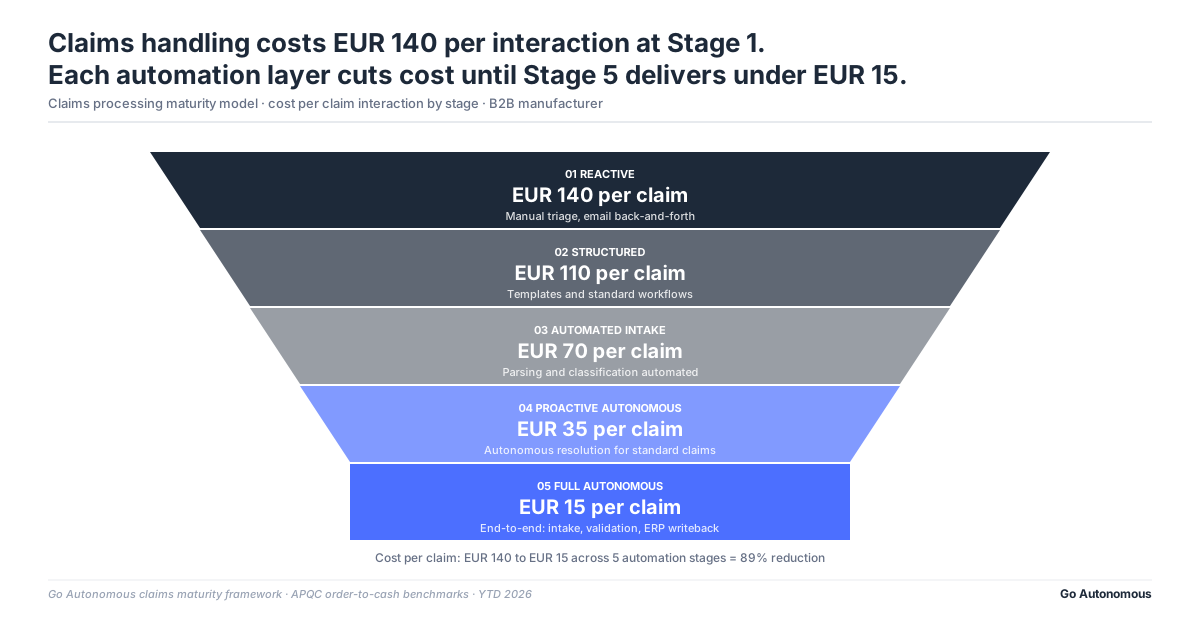
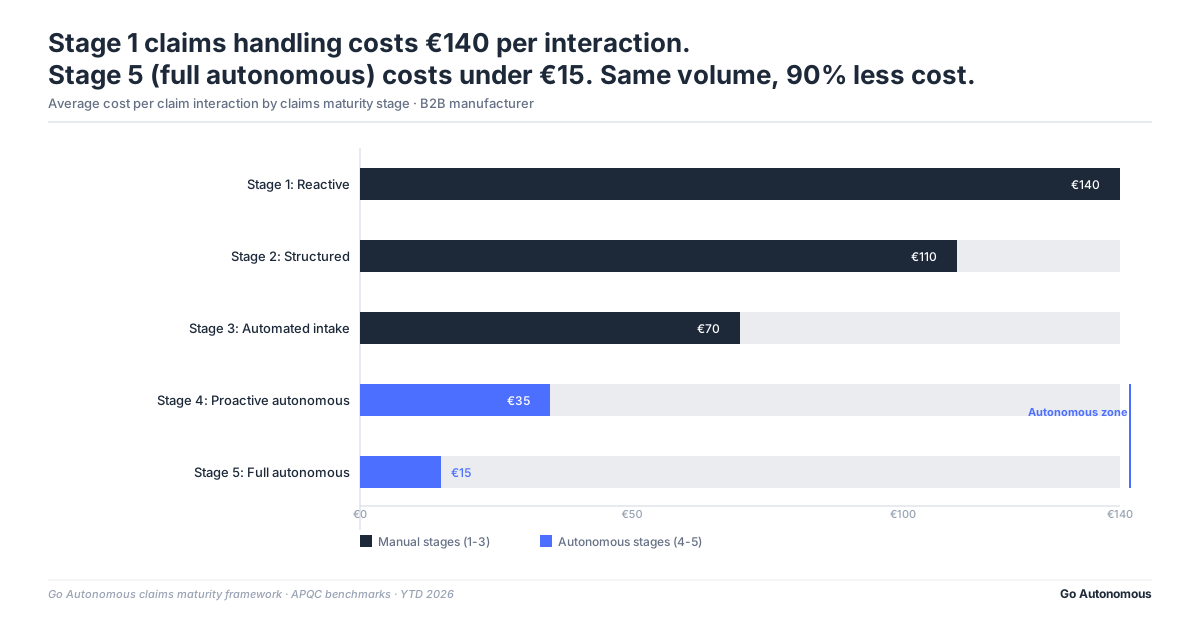
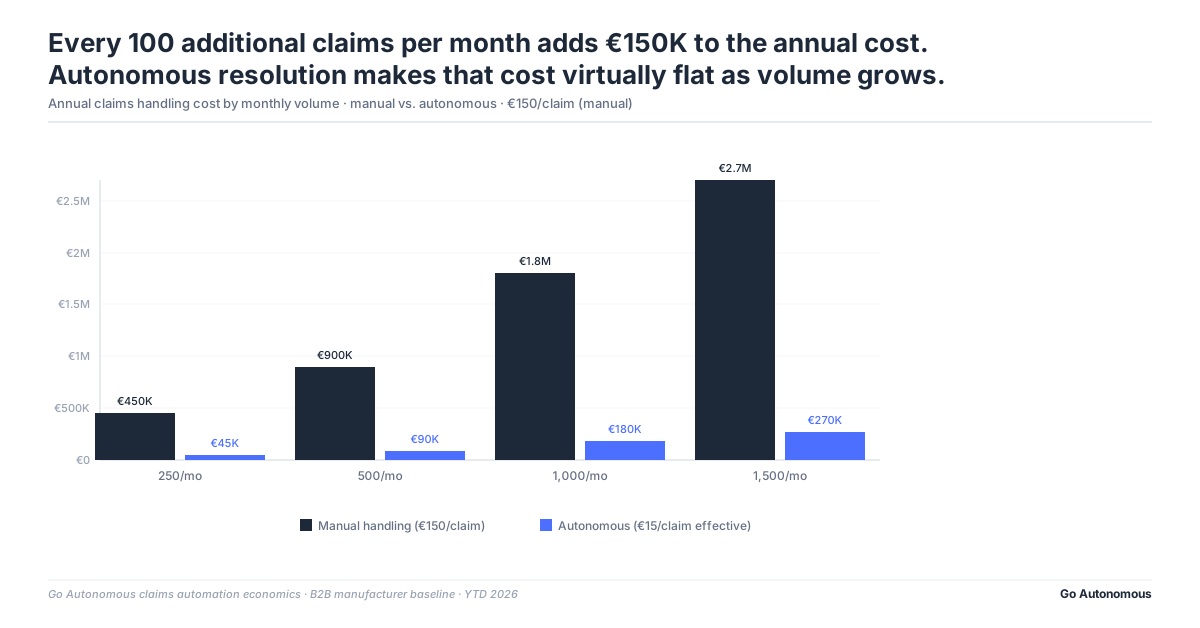
What does your CFO think each claims dispute costs to resolve? Most finance teams track the credit memo value. Almost none measure the total processing cost: the back-and-forth between the customer, the account manager, the customer service representative, the finance team, and sometimes the logistics partner before a credit memo is issued. Research on B2B service cost indicates that a fully loaded dispute resolution interaction runs 60 to 150 EUR in processing cost. A 300 EUR credit note can cost more to process than it was worth to approve.
B2B claims and dispute processing automation is the mechanism that closes this gap. Not by processing disputes faster within the existing manual workflow, but by eliminating the manual workflow for the majority of claim types, leaving humans responsible only for cases that genuinely require judgment. This post maps the architecture, the integration requirements, and the maturity progression for manufacturers and distributors evaluating this capability.
Table of Content
- Why B2B Claims Processing Is the Most Underestimated Cost in Order-to-Cash
- The Technical Architecture of Autonomous Claims and Dispute Processing
- How Autonomous Claims Processing Integrates With SAP, Oracle, and Dynamics 365
- What B2B Manufacturers and Distributors Need Before Autonomous Claims Processing Can Scale
- See How Autonomous Claims Processing Works in Your Environment
- Frequently Asked Questions
- What is autonomous claims processing in B2B manufacturing?
- How does autonomous execution handle price dispute resolution for B2B distributors?
- What EDI message types are used for B2B claims and credit adjustments?
- How does autonomous claims processing integrate with SAP S/4HANA credit memos?
- What types of B2B claims can be resolved autonomously without human intervention?
- How long does autonomous claims processing take compared to manual dispute resolution?
- What is the ROI of automating B2B claims and dispute processing for a distributor?
Why B2B Claims Processing Is the Most Underestimated Cost in Order-to-Cash
B2B claims and disputes sit outside the standard order-to-cash visibility window. They arrive after revenue is booked, which means they are often managed by a different team with different KPIs than the order management function. Finance sees the credit memo value. Operations sees the return logistics cost. Customer service sees the interaction volume. Nobody is totaling the processing cost across all three functions for a single dispute, which means the real cost per claim remains unknown in most organizations.
What Are the Three Main Types of B2B Claims?
B2B claims fall into three categories with different processing profiles and resolution requirements. Return claims involve physical product returns, condition disputes, or wrong-item-shipped scenarios. Price disputes arise when the invoiced amount differs from the PO price or contract rate at the time of order. Short-ship and delivery disputes cover quantity shortfalls, delivery date misses, and carrier damage claims. Each type has a distinct validation path and a different set of data sources required for resolution.
Claims volume grows with revenue. More orders mean more complexity, more exceptions in the original order flow, and more downstream disputes when those exceptions are not resolved correctly at source. Without autonomous execution, the claims team must grow proportionally. The ratio of claims specialists to order volume remains constant or worsens as product complexity increases.
This is the same structural pattern visible in Friction Debt accumulation across the full order-to-cash cycle. Claims are not random events. They are accumulated friction from earlier exceptions that were not resolved correctly, pricing agreements that were not codified completely, or delivery commitments that were made without automated confirmation from the fulfillment layer. The claims team is resolving upstream failures, one dispute at a time, at 60 to 150 EUR per interaction.
Why Does Claims Volume Increase After a Revenue Growth Phase?
Claims volume typically spikes 6 to 12 weeks after a period of accelerated order intake. The mechanism is straightforward: exceptions that were resolved manually under time pressure during the peak, with pricing approximations, delivery date commitments that could not be confirmed, or quantity adjustments that were not reflected in the customer’s system, surface as disputes when the invoice arrives. Growth periods that stress order management create a deferred claims burden that arrives after the quarter closes.
For a healthcare distributor such as Mediq, processing 4,000 orders per week across Nordic and UK markets, this dynamic is particularly acute. Mediq achieved 75 percent faster processing and absorbed that volume without adding headcount, specifically because the autonomous execution layer resolved exceptions correctly at intake rather than deferring them as disputes. Read the Mediq case study for the full picture on how autonomous execution changes the claims dynamic in a high-volume distribution environment.
Adopting Autonomous Commerce at Danfoss is not just about speed and efficiency. It’s about empowering our customer service teams and sales force to focus on building relationships and providing personalized support.

The Technical Architecture of Autonomous Claims and Dispute Processing
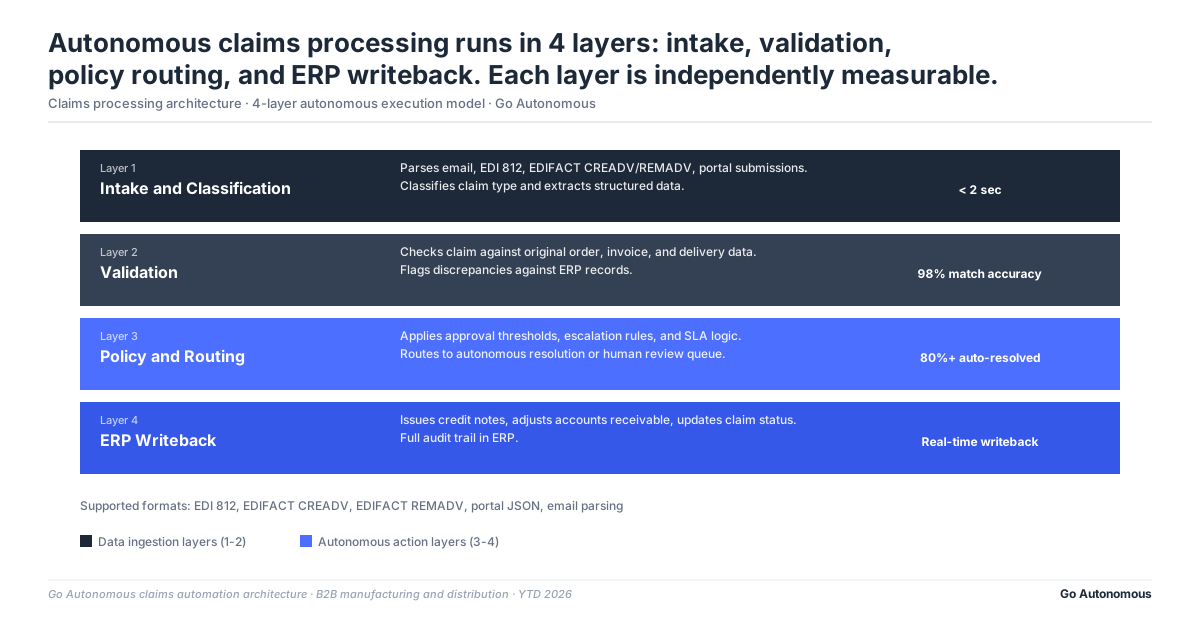
Autonomous claims processing operates across four layers. Each layer handles a distinct function. Together, they move a claim from intake to resolution without requiring a human decision on any case that falls within codified policy parameters.
Layer 1: Intake and Classification
The intake layer monitors every channel through which claims arrive: inbound email, EDI message types including EDI 812 Credit/Debit Adjustment and EDI 820 Remittance, and customer portal submissions. The AI reads each incoming claim, extracts the claim type, the stated amount, the original order reference, and the reason code. This extraction happens regardless of format. A claim arriving as a structured EDI 812 message and a claim arriving as a free-text email with a PDF attachment both produce the same structured claim record for processing.
This intake normalization is the foundation for everything that follows. Without it, claim processing remains dependent on a human reading each submission and manually categorizing it before any validation can begin.
Layer 2: Validation Against Original Order Data
The validation layer matches the claim against the original order record. For a price dispute, it retrieves the line-item pricing from the original PO, the contract rate at the time of order, and the invoiced amount. For a short-ship claim, it pulls the original quantity from the order confirmation, the goods issue record from the warehouse management system, and the delivery confirmation from the carrier. For a return claim, it verifies the original order, the product condition terms in the customer contract, and the return authorization policy.
This cross-reference runs against SAP SD module records, Oracle Order Management history, or Microsoft Dynamics 365 order data depending on the ERP environment. The validation layer does not require a human to navigate between systems. It retrieves the relevant data autonomously and flags discrepancies for the classification layer to process.
Layer 3: Classification, Policy Application, and Routing
The classification layer applies the organization’s claims policy to the validated claim. Pre-approved claim categories, such as short shipments below a defined threshold or price disputes where the contract price is documented and confirmed, are resolved autonomously without routing to a human. The AI issues a resolution decision, prepares the credit memo, and notifies the customer.
Novel or high-value claims, including large credit requests outside the autonomous approval threshold or disputes involving conflicting contract interpretations, route to a human reviewer. The key difference from a manual workflow is that the human receives a fully pre-populated case: claim type, validated order data, policy match or gap, recommended resolution, and the specific reason the case requires human judgment. The reviewer makes a decision. The system acts on it immediately.
Layer 4: Resolution, ERP Writeback, and Audit Trail
For approved credits, the resolution layer writes back to the ERP without manual intervention. In SAP S/4HANA, this means generating the credit memo via standard BAPI or S/4HANA API calls, updating the SAP FI module for accounts receivable, and triggering customer notification. In Oracle Cloud Order Management, the Oracle Accounts Receivable cloud API handles the credit adjustment. In Microsoft Dynamics 365, credit notes are created via the Business Central or Finance and Operations API depending on the deployment configuration.
Every autonomous resolution creates a complete audit trail: the original claim, the validation data retrieved, the policy rule applied, the resolution decision, and the ERP transaction reference. This audit trail is available for finance review, compliance reporting, and post-period analysis without any manual documentation step. The Autonomous Commerce platform makes this the standard operating state rather than an exception.
How Autonomous Claims Processing Integrates With SAP, Oracle, and Dynamics 365
Integration depth determines whether autonomous claims processing delivers genuine zero-touch credit issuance or simply automates the routing while leaving ERP writeback as a manual step. The distinction matters operationally and for the ROI calculation.
What EDI Message Types Are Used for B2B Claims and Credit Adjustments?
The primary EDI standards for B2B claims and credit processing are EDI 812 (Credit/Debit Adjustment) under ANSI X12, and EDIFACT CREADV (Credit Advice) and REMADV (Remittance Advice) under UN/EDIFACT. EDI 812 is the standard for issuing and receiving credit and debit adjustments between trading partners in North American and international manufacturing contexts. CREADV and REMADV are the European equivalents used across Nordics, DACH, and Benelux manufacturing and distribution networks. Autonomous intake processes both message types natively, extracting claim data regardless of which standard the customer transmits.
How Does Autonomous Claims Processing Integrate With SAP S/4HANA Credit Memos?
SAP S/4HANA integration for autonomous credit memo creation runs through the SAP SD (Sales and Distribution) and SAP FI (Financial Accounting) modules. The autonomous execution layer calls the standard BAPI_SALESORDER_CREATEFROMDAT2 or the S/4HANA OData API to create the credit memo request in SD, triggers the credit memo in FI via the billing document creation API, and updates the open items in accounts receivable. The result is a fully posted credit memo in SAP, with all line items, GL codes, and customer account entries populated, without a finance team member opening a SAP transaction.
For distributors and manufacturers already running EDI through providers such as TrueCommerce, SPS Commerce, or DiCentral, the autonomous execution layer receives the EDI 812 from the EDI provider and acts on it directly, without manual handoff between the EDI queue and the ERP.
For finance teams evaluating the implementation model, the Autonomous Execution Fabric white paper maps the five integration lessons that determine whether this architecture delivers reliable ERP writeback or creates a new category of integration debt.
The healthcare industry is undergoing a significant transformation, and digitalization is no longer a choice. It’s a necessity. Automating repetitive processes not only ensures operational efficiency but also enables us to focus on delivering exceptional value to our customers.
What B2B Manufacturers and Distributors Need Before Autonomous Claims Processing Can Scale
Autonomous claims processing does not require a claims operation to be fully mature before deployment. However, the maturity stage at which an organization enters determines how quickly the system reaches its autonomous rate ceiling and how much policy codification work is required upfront. The table below maps each stage, what it looks like in practice, and the signal that it is time to move to the next level.
| Claims Processing Maturity Stage | What It Looks Like in Practice | When to Move On |
|---|---|---|
| Stage 1: Reactive and manual | Claims arrive via email, tracked in spreadsheet or inbox, each investigated individually, credit memos issued manually in ERP | When claim volume exceeds 20 per week per CSR, or resolution time consistently exceeds 5 business days |
| Stage 2: Structured but fully manual | Claims categorized in CRM or ERP, routing rules for type, templates for standard responses, still requires human decision at each step | When more than 30 percent of claims require senior authorization for routine amounts |
| Stage 3: Partially automated | Macros and workflow automation via ServiceNow or UiPath handle routing and notifications; ERP credit memo for pre-approved cases; human still approves most claims | When automated rate is below 40 percent and exception escalation remains constant despite the tooling |
| Stage 4: Autonomous resolution | AI classifies, validates, applies policy, issues credit or routes exception; ERP writeback autonomous; humans see only genuine novel cases requiring judgment | When you are scaling to new markets or adding product lines and cannot grow the claims team proportionally |
| Stage 5: Proactive autonomous | System detects potential claim conditions before customer contacts, such as short shipment detected or delivery missed SLA, and initiates resolution proactively | When reactive claim volume drops below 5 percent and customer experience differentiation is a strategic priority |
Most manufacturers and distributors operating at 500M to 5B EUR revenue sit at Stage 2 or Stage 3 today. The gap between Stage 3 and Stage 4 is not a technology gap. It is a policy codification gap. Stage 4 requires that the organization has defined, documented, and reviewed the claims policies that the autonomous execution layer will apply. Where those policies exist but are held as tacit knowledge in experienced staff, the deployment process surfaces and codifies them. Where they do not exist, they must be created as part of implementation.
The efficiency gains from moving from Stage 2 to Stage 4 are documented across Go Autonomous deployments in manufacturing and distribution. The structural change is not incremental. It is the difference between a claims team that processes disputes and a claims function that manages exceptions. See the full picture of customer outcomes across verticals.
For organizations concerned about the customer experience dimension of claims resolution speed, the customer experience outcomes from autonomous claims processing show a consistent pattern: faster resolution, proactive communication, and higher first-time-right resolution rates reduce customer escalations more than any service level agreement revision does.
Sources
- Gartner: Order-to-Cash Automation and Claims Processing – Research on O2C automation maturity and claims processing optimization for enterprise finance and operations teams.
See How Autonomous Claims Processing Works in Your Environment
If your claims team is processing disputes manually through email and ERP, or if your automated rate at Stage 3 has plateaued below 40 percent, the architecture described in this post applies directly to your situation. The transition from routing disputes to resolving them autonomously is not a project that requires replacing your ERP or rebuilding your claims workflow from scratch. It builds on your existing SAP, Oracle, or Dynamics 365 environment and integrates with your current EDI infrastructure. Go Autonomous works with 500M to 20B EUR manufacturers and distributors in the Nordics, DACH, Benelux, UKI, and France. We can show you what autonomous claims processing looks like in your specific environment: your claim types, your ERP configuration, your customer contract structure, and your current resolution time profile. Book a conversation with our team.
Frequently Asked Questions
What is autonomous claims processing in B2B manufacturing?
Autonomous claims processing in B2B manufacturing is an execution architecture that classifies incoming claims by type, validates them against original order data, applies codified policy rules, and issues credit memos or routes exceptions to humans without manual intervention at each step. It integrates with SAP, Oracle, and Microsoft Dynamics 365 to write approved credits directly to the ERP and create an audit trail without requiring finance staff to open an ERP transaction. The result is that routine claim types are resolved autonomously, and humans handle only cases that require genuine judgment.
How does autonomous execution handle price dispute resolution for B2B distributors?
Autonomous execution handles B2B price disputes by retrieving the original purchase order price, the customer contract rate at the time of order, and the invoiced amount from the ERP order history. It compares the three values, identifies the discrepancy source, and applies the organization’s pricing dispute policy. Where the contract price is documented and the discrepancy falls within the pre-approved resolution threshold, the system issues a credit memo autonomously. Where the dispute involves a contract interpretation or an amount outside the autonomous approval threshold, it routes the case to a human reviewer with full context pre-populated.
What EDI message types are used for B2B claims and credit adjustments?
The primary EDI message types for B2B claims and credit adjustments are EDI 812 (Credit/Debit Adjustment) under ANSI X12, used widely in North American and international manufacturing contexts, and EDIFACT CREADV (Credit Advice) and REMADV (Remittance Advice) under UN/EDIFACT, used across European manufacturing and distribution networks including Nordics, DACH, and Benelux. EDI 820 (Payment Order/Remittance Advice) is also relevant for remittance-level dispute communications. Autonomous intake processes all these message types natively without requiring manual categorization.
How does autonomous claims processing integrate with SAP S/4HANA credit memos?
Autonomous claims processing integrates with SAP S/4HANA through the SAP SD and SAP FI modules. The execution layer creates the credit memo request in SAP SD via standard BAPI or S/4HANA OData API calls, triggers the credit memo in SAP FI through the billing document creation API, and updates open items in accounts receivable automatically. The result is a fully posted credit memo in SAP with all line items, GL codes, and customer account entries populated, without a finance team member opening a SAP transaction. The full audit trail is available in SAP for compliance review.
What types of B2B claims can be resolved autonomously without human intervention?
B2B claim types that resolve autonomously without human intervention include: short-ship claims where the quantity discrepancy is confirmed by goods issue data and falls within the pre-approved credit threshold; price disputes where the contract price is documented in the ERP and the invoice discrepancy matches the contract rate; return claims for wrong-item-shipped scenarios where the product code mismatch is verified against the original order; and delivery disputes where the carrier data confirms a missed SLA and the compensation policy is codified. High-value claims, novel contract interpretations, and cases outside policy thresholds route to human reviewers with full context pre-populated.
How long does autonomous claims processing take compared to manual dispute resolution?
Manual B2B dispute resolution typically takes 3 to 10 business days per claim, depending on claim type and the number of handoffs required between customer service, finance, and logistics. Autonomous claims processing resolves policy-compliant claims in minutes: intake and classification are immediate, ERP validation runs in seconds, and credit memo issuance follows automatically once the policy rule is applied. The practical reduction in resolution time for routine claims is from days to under an hour, including the ERP writeback and customer notification. Complex or high-value claims that require human review still benefit from autonomous pre-population of the case context, which reduces human review time significantly.
What is the ROI of automating B2B claims and dispute processing for a distributor?
The ROI of B2B claims processing automation for a distributor has three components. Direct processing cost reduction: at 60 to 150 EUR per manual dispute interaction, a distributor handling 500 claims per month saves 30,000 to 75,000 EUR monthly in processing cost alone when autonomous resolution handles the majority of cases. Working capital improvement: faster credit issuance resolves open AR items sooner, reducing days sales outstanding and releasing working capital. Customer retention improvement: consistent fast resolution on routine claims reduces escalations and churn risk on accounts where repeated dispute delays signal poor service quality. Together, these three components typically deliver payback within 12 months for distributors processing more than 200 claims per month.