
.svg)





Price Inquiry Automation
Six minutes per inquiry. Two hundred a day. Go Autonomous responds in seconds.








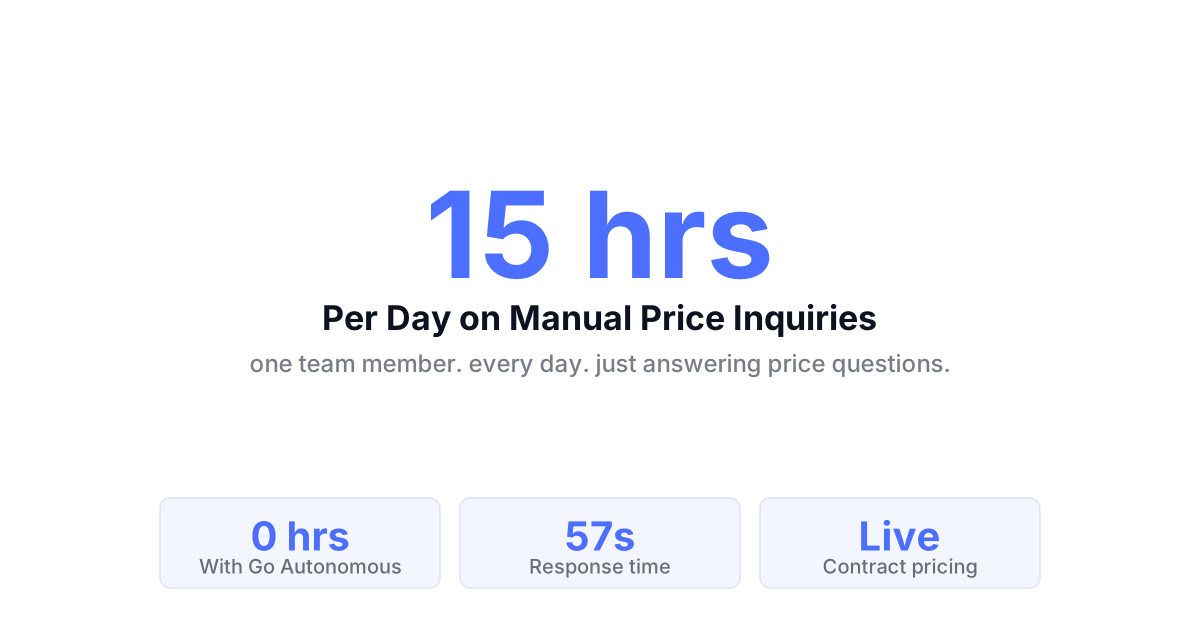
15 Hours a Day. Just on Price Questions.
15 Hours a Day. Just on Price Questions.
The Labour Cost of Manual Price Responses
150 inquiries x 6 minutes = 15 person-hours daily.
At 150 price inquiries per day, six minutes each, that is 15 person-hours consumed daily on a task that does not close deals. At 24 euros per hour: 86,400 euros per year just to answer pricing questions manually — before counting lost orders from slow response.
Slow Response Loses the Order. Always.
Slow Response Loses the Order. Always.
Why First Response Wins Price-Sensitive Deals
Buyer asked three suppliers. Yours arrived third.
Every price inquiry is a live purchase signal. In B2B, buyers have backup suppliers for almost every category. When your rep reaches the inquiry at 10:45am, the buyer has had 90 minutes to send the same question to a competitor. First accurate response wins.
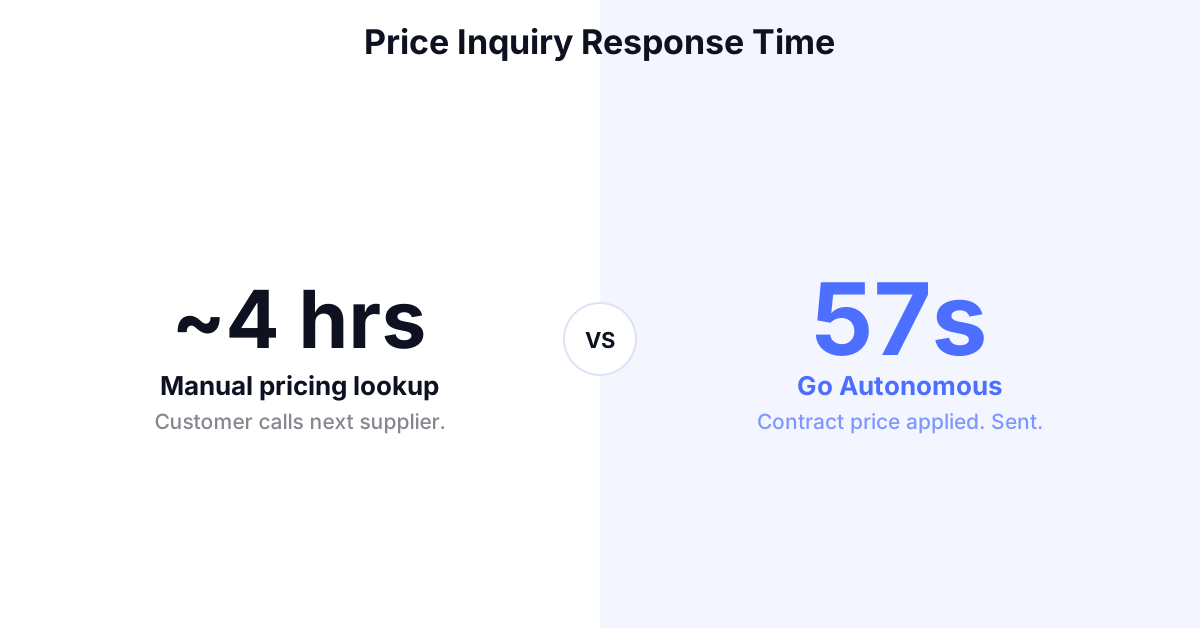
A price inquiry is a purchase signal. Your response speed determines whether you capture it.
B2B buyers have backup suppliers for almost every category. When your response takes hours, the signal has cooled and the competitor has landed. Autonomous price execution responds in seconds — every inquiry, from your live ERP data, with all customer-specific rules applied. No rep required.

A price inquiry is a purchase signal. Your response speed determines whether you capture it.
B2B buyers have backup suppliers for almost every category. When your response takes hours, the signal has cooled and the competitor has landed. Autonomous price execution responds in seconds — every inquiry, from your live ERP data, with all customer-specific rules applied. No rep required.
Every Rule Applied. Accurate Response in Seconds.
Every Rule Applied. Accurate Response in Seconds.
Contract tier, volume discounts, promotions — right.
Go Autonomous reads the inquiry, identifies the customer account, retrieves the full pricing context from your live ERP — contract tier, volume thresholds, promotional rates, available stock — and returns an accurate response. All rules applied. Every time.
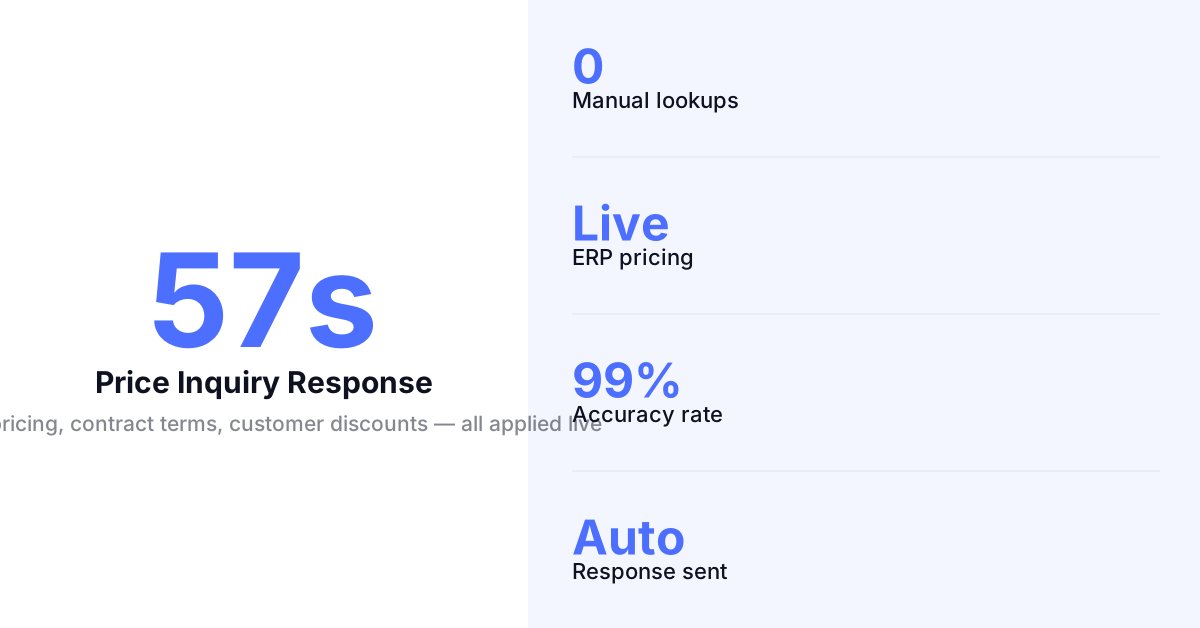
Pricing Confirmed. Order Executed. No Handoff.
Pricing Confirmed. Order Executed. No Handoff.
Buyer confirms. Order writes to ERP automatically.
When a buyer responds with a confirmation, Go Autonomous executes: validates quantities, checks live stock, writes to ERP, and returns the order acknowledgement. Price inquiry to confirmed order — no rep involved at either step.
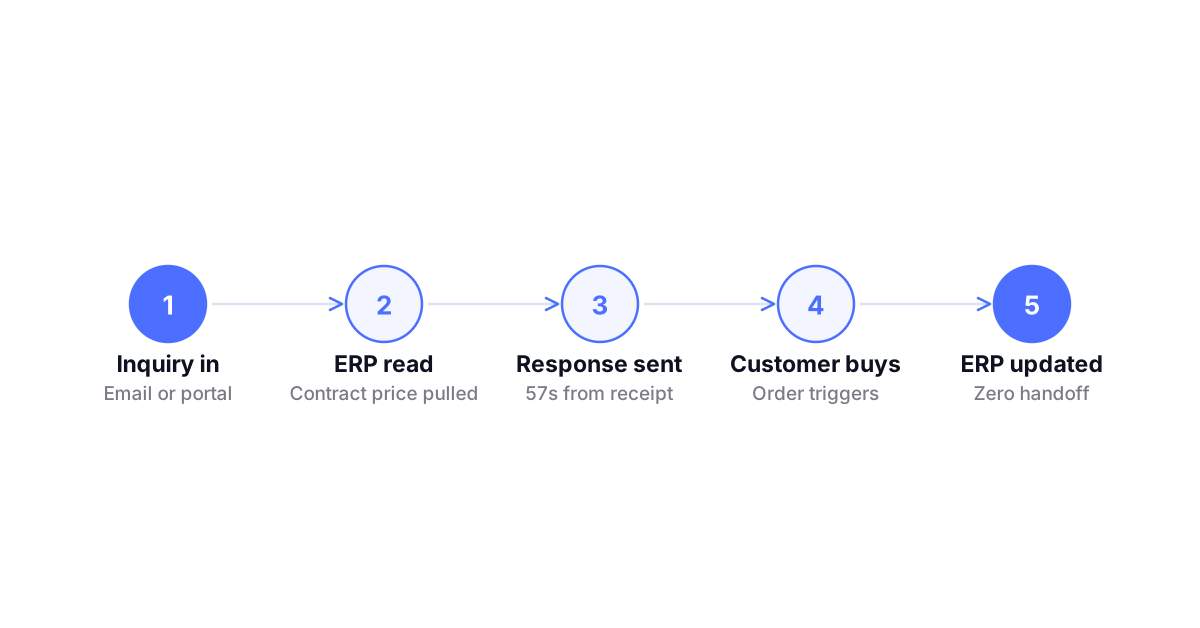
What Changes for Your Sales and Operations Teams.
Sales reps reclaim 3 hours per day.
The time spent answering pricing questions redirects to prospecting, account management, and closing.
Pricing consistency eliminates margin leakage.
Every response calculated from the same live ERP data. No outdated price sheet, no missed contract discount.
Response time measured in seconds, not hours.
The buyer who gets an accurate answer first tends to confirm the order. Yours arrives before competitors finish reading.
Inquiry-to-order conversion rate improves.
Fast, accurate pricing feeds directly into order execution. The conversion path from inquiry to confirmed order has no manual gap.
Price Inquiry Execution. By the Numbers.
Price Inquiry Execution. By the Numbers.
Inquiry to price response
Win rate on quoted deals
Capacity freed in pricing
Live ERP pricing accuracy
Complex Contract Pricing. Applied Correctly.
Complex Contract Pricing. Applied Correctly.
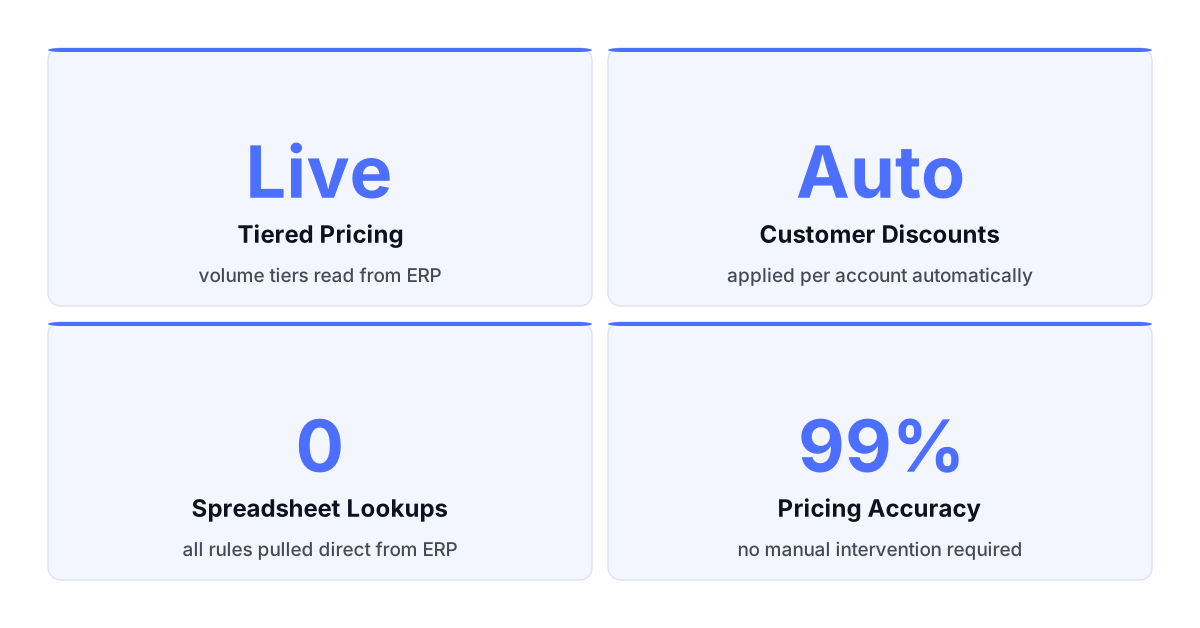
Contract tier, volume break, promotion — all right.
Pricing in a large B2B operation is genuinely complex: customer-specific tiers, volume thresholds at multiple levels, promotional windows, and currency adjustments. Go Autonomous reads all of it from your live ERP and applies it correctly — every time, every customer.
Multi-Product Inquiries. One Accurate Response.
Multi-Product Inquiries. One Accurate Response.
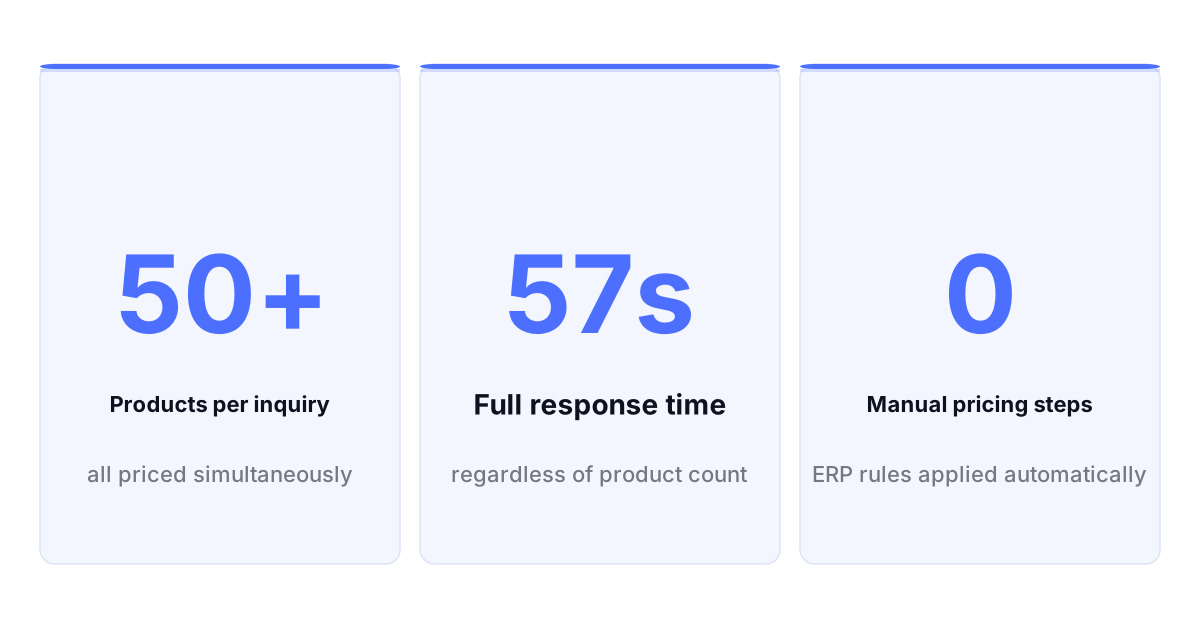
10 products. 10 pricing tiers. One response.
When a buyer asks for pricing on 10 products in one request, each with different pricing logic, Go Autonomous processes every line simultaneously — each against the correct customer-specific agreement — and returns a single accurate, complete response.
First Response. Every Inquiry.
Danfoss — Price confirmations and orders returned in under one minute across 26 countries. Read the press release
Mediq — Autonomous price and order response across thousands of weekly transactions without manual involvement. See the success case
Aerospheres — An aviation distributor where price response speed directly determines whether a deal closes or goes to a competitor. See success cases
Common Questions
What is B2B price inquiry automation?
B2B price inquiry automation is the use of AI to respond to incoming customer price requests — by email, chat, portal, or other channels — without requiring a sales rep or customer service agent to handle each one manually. Autonomous price inquiry execution replaces the manual sequence: AI agents read the inquiry, retrieve the correct pricing from your live ERP data, apply all applicable rules, and return an accurate response to the buyer in seconds.
How does autonomous price response handle contract and tiered pricing?
Go Autonomous reads pricing data directly from your ERP in real time. For each incoming inquiry, the AI identifies the customer account and retrieves the full applicable pricing context: standard tier, any customer-specific contract pricing, active promotional rates, and volume discount thresholds. All rules apply simultaneously. The price returned to the buyer is the same price a correctly informed rep would quote, applied consistently across every inquiry.
What happens when an inquiry falls outside standard pricing rules?
Inquiries involving non-standard pricing are surfaced in a supervised execution interface with the full context: the original inquiry, the account information, the specific item requiring judgment, and a recommended resolution path. The exception rate is low — the vast majority of price inquiries are handled by rules that already exist in your ERP.
Does autonomous price response connect to order execution?
Yes. When a buyer responds to a price quote with a purchase confirmation, Go Autonomous reads that confirmation as an order instruction and executes it — validating quantities, checking live stock, writing the order to ERP, and sending the order confirmation back to the buyer. The full path from price inquiry to confirmed order executes without any manual involvement at either stage.
How quickly can price responses be deployed and what does integration require?
Deployment connects to your existing ERP — SAP, Oracle, Infor, IFS, Microsoft Dynamics — and reads from your existing customer master, pricing master, and product catalogue. It does not require ERP migration or new pricing infrastructure. Most customers go live within 6 to 12 weeks of contract signature.
What channels can Go Autonomous receive price inquiries from?
Go Autonomous receives and processes price inquiries from all inbound channels your customers currently use: email in plain text and with attachments, EDI price enquiry messages, customer portal requests, and structured messaging channels. The same pricing retrieval and response logic applies regardless of channel.
How does pricing accuracy affect margin performance?
Pricing inconsistency from manual responses typically costs 1 to 3 percent of revenue on quoted business. At 100 million euros in quoted revenue, that is 1 to 3 million euros in margin leakage per year — invisible in any single transaction, significant in aggregate. When every response is calculated from the same live ERP data, the variation disappears and margin leakage from inconsistent manual pricing stops.
How does price inquiry automation affect the sales team’s working day?
Sales reps who currently spend 3 hours per day answering price inquiries reclaim that time for prospecting, account management, and closing work. The high-frequency, low-complexity task that was consuming the most commercially valuable hours in their day is removed entirely. Their focus shifts to the work that creates pipeline — not the work that services existing customers at the commodity end of the interaction.
Voice of the Customers



Explore what autonomous execution means for your operations.
Talk to an expert or see Go Autonomous in action.

Explore what autonomous execution means for your operations.
Talk to an expert or see Go Autonomous in action.