
.svg)





Order-to-Cash Automation
Divide your revenue by 365. That is the cost of each extra day in your O2C cycle.








Every Day in the O2C Cycle Has a Price.
Every Day in the O2C Cycle Has a Price.
The Working Capital Cost of Manual O2C
Revenue ÷ 365. Your daily working capital cost.
Divide your annual revenue by 365. That is the working capital your business funds for each day your O2C cycle runs. Manual order processing adds two to four days by default through inbox queues, re-entry, and validation cycles. That cost is permanent and structural.
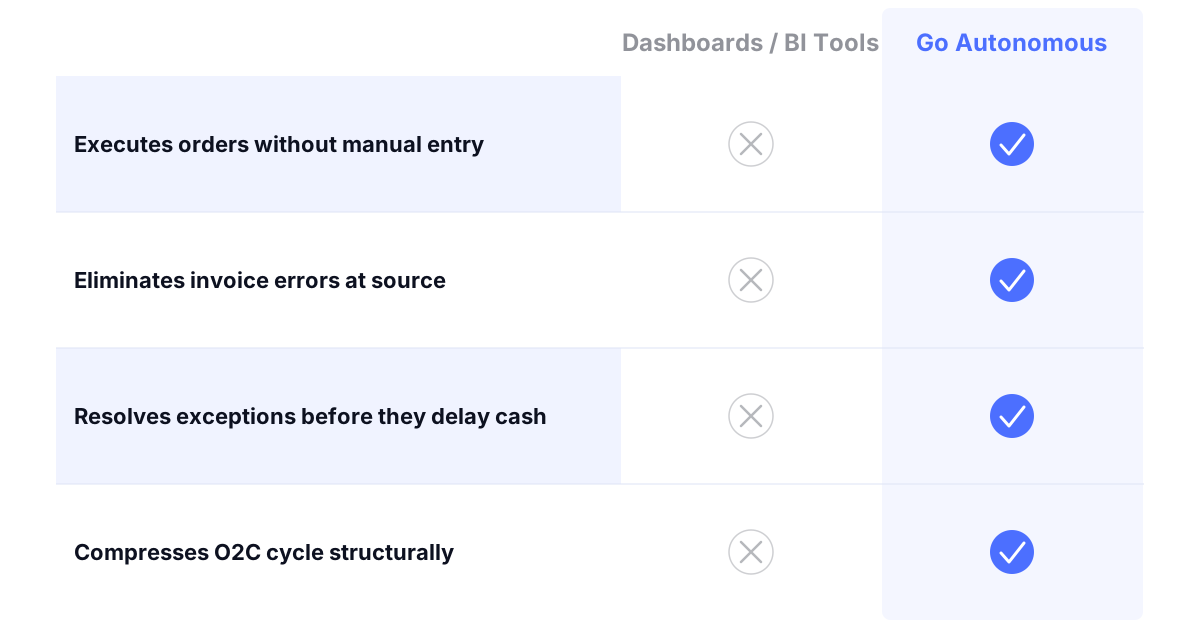
Dashboards Show the Cycle. They Do Not Fix It.
Dashboards Show the Cycle. They Do Not Fix It.
Why O2C Visibility Tools Left the Problem Intact
Measurement is not execution. The queue remained.
O2C analytics tell you exactly how long each stage takes. They do not change the underlying execution model. The orders still sit in an inbox. The team still processes them manually. Seeing the problem clearly does not shorten the cycle.
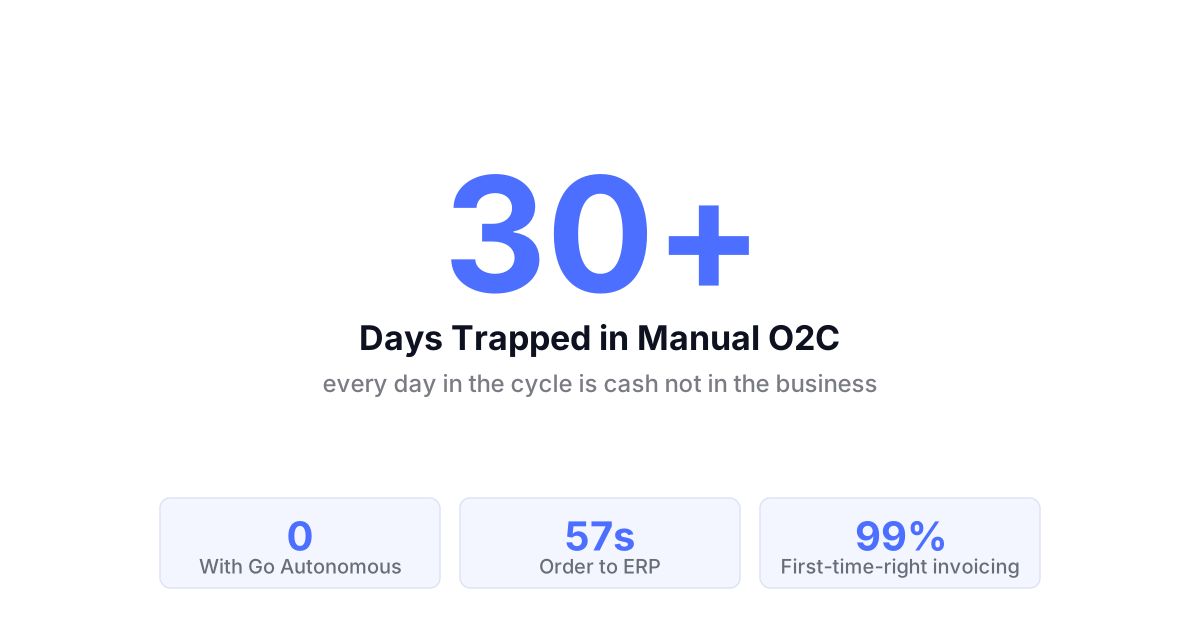
Every extra day in your O2C cycle has a number attached to it.
Divide your annual revenue by 365. That is the working capital your business funds for each extra day in your O2C cycle. Autonomous execution compresses the cycle by two to four days — not as a reporting improvement, but as a structural change to when cash arrives.

Every extra day in your O2C cycle has a number attached to it.
Divide your annual revenue by 365. That is the working capital your business funds for each extra day in your O2C cycle. Autonomous execution compresses the cycle by two to four days — not as a reporting improvement, but as a structural change to when cash arrives.
From Order Receipt to Invoice. No Manual Steps.
From Order Receipt to Invoice. No Manual Steps.
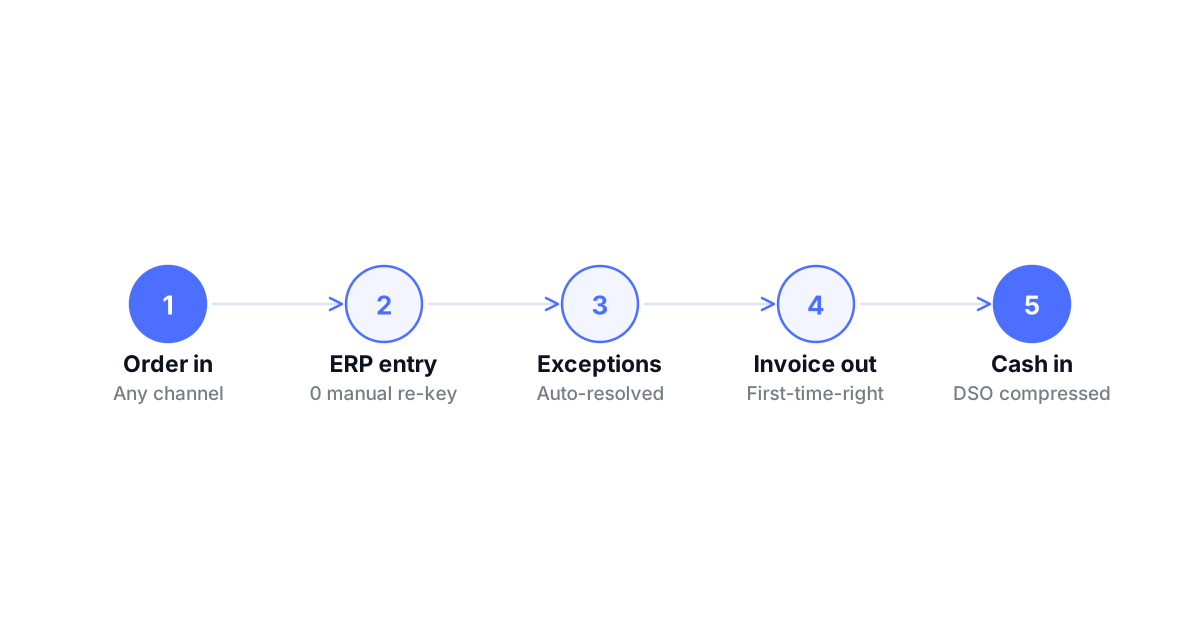
Intake, validation, fulfilment, invoice — executed.
Go Autonomous receives the order, validates pricing and stock against live ERP, triggers fulfilment, and generates an accurate invoice — without a manual handoff at any step. The O2C cycle compresses to execution speed, not inbox speed.
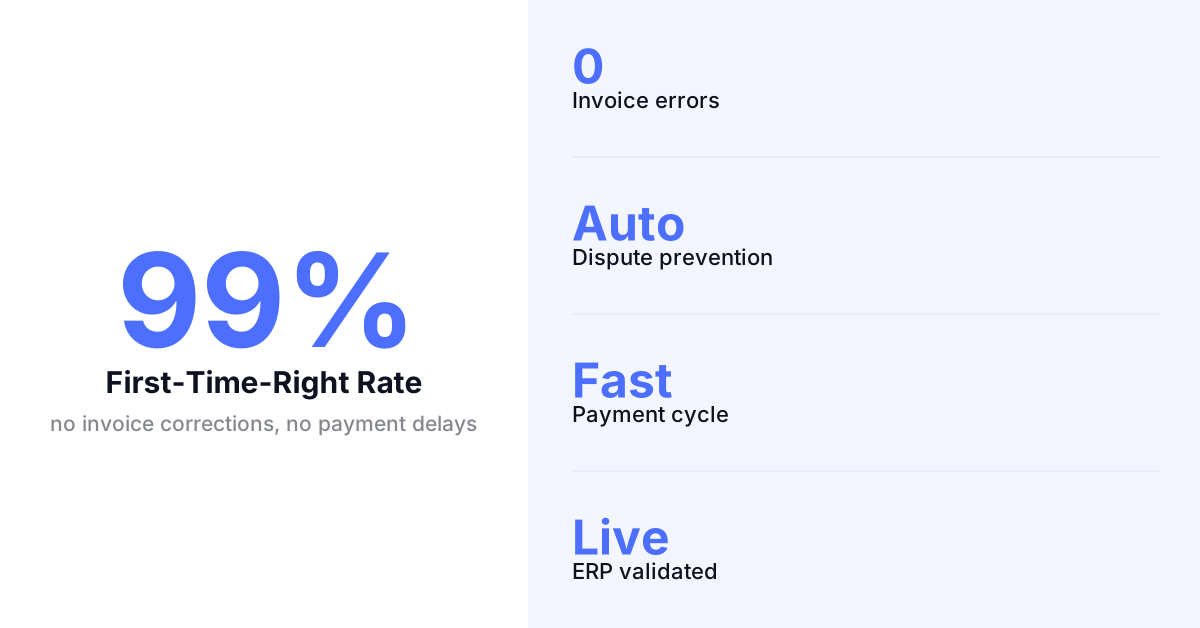
First-Time-Right Invoicing Reduces DSO.
First-Time-Right Invoicing Reduces DSO.
Invoice matches PO because the order was right.
Invoice disputes extend DSO beyond your credit terms. They originate in the order intake layer — wrong pricing, wrong quantity. When Go Autonomous executes order intake correctly, the invoice record is correct. The dispute does not occur.
What Changes on Day One of Autonomous O2C.
Working capital released within the first quarter.
Divide your revenue by 365, multiply by the days compressed. That is working capital permanently released — not a one-time recovery, a structural improvement.
DSO improves through invoice accuracy.
Invoices that match purchase orders do not get disputed. Payment arrives against original terms without AR team intervention.
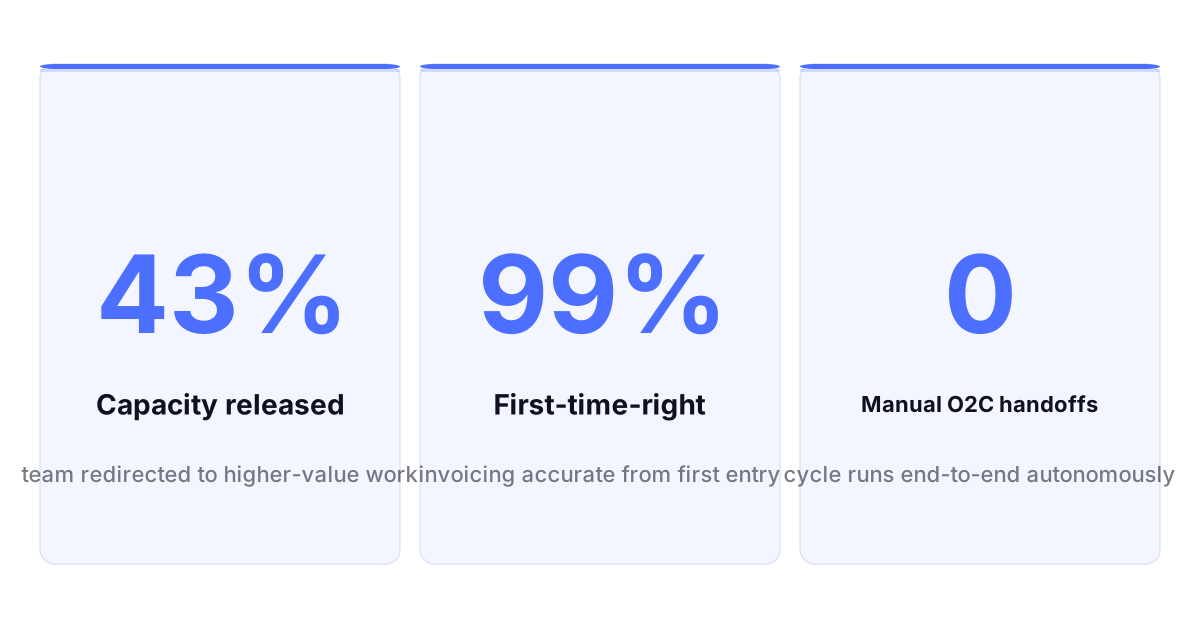
99% first-time-right removes the error chain.
No entry error means no fulfilment failure, no escalation, no credit note. The chain breaks at source.
43% capacity released from transaction processing.
Teams freed from O2C execution redirect to commercial development, exceptions, and customer relationships.
Order-to-Cash Execution. By the Numbers.
Order-to-Cash Execution. By the Numbers.
Order intake to ERP match
First-time invoicing rate
Capacity released in O2C
Throughput per ops team
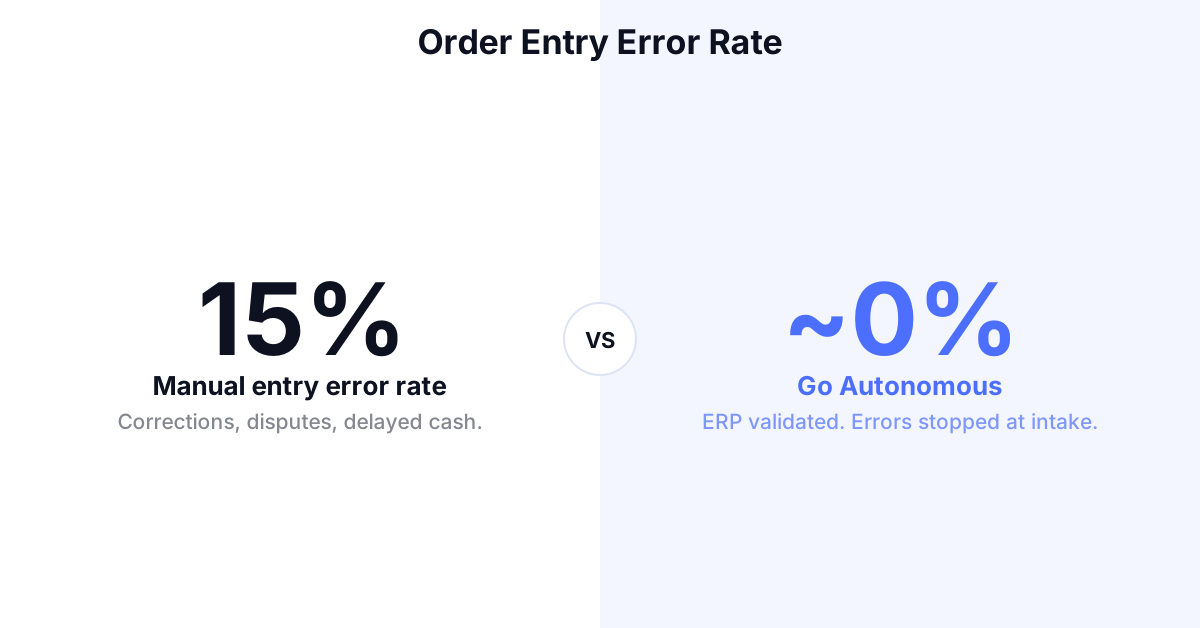
Order Entry Errors Eliminated at Source.
Order Entry Errors Eliminated at Source.
No manual re-keying means no transcription errors.
Go Autonomous validates every order against live ERP before creating a record. There is no manual entry step where a quantity gets transposed or a pricing tier misapplied. The error that drives fulfilment failures and credit notes never occurs.
Cycle Compressed. Capital Structurally Released.
Cycle Compressed. Capital Structurally Released.
Danfoss. Mediq. Nilfisk. O2C transformed at scale.
Autonomous O2C execution has released significant working capital for manufacturers and distributors at scale. Faster confirmation, first-time-right invoicing, and zero handoff delays compound across thousands of transactions per month.
Cycle Compressed. Capital Released.
Danfoss — Orders confirmed in under one minute across 26 countries, compressing the O2C cycle from day one of deployment. Read the press release
Mediq — 91% of digital revenue processed autonomously, with full O2C execution from order intake to invoice. See the success case
Nilfisk — Scaled commercial operations and working capital position improved after moving to autonomous order-to-cash execution. Read the press release
Common Questions
What is order-to-cash automation?
Order-to-cash automation covers the full commercial cycle from purchase order receipt through order validation, ERP entry, fulfilment triggering, invoicing, and payment receipt. Autonomous O2C execution replaces the manual execution layer across the entire cycle: AI agents receive the order, validate it against live ERP data, execute it, trigger fulfilment, and generate an accurate invoice — without human involvement at each step.
How does autonomous O2C execution reduce DSO?
DSO extends when invoices are disputed. Disputes arise when the invoice does not match the customer’s purchase order — a consequence of manual entry errors introduced at order intake. When Go Autonomous executes the order from intake, the order record is correct from the start. The invoice matches the customer’s PO. There is no discrepancy, no query, and no withheld payment. DSO shortens through invoice accuracy at the point of execution.
What is the working capital impact of autonomous O2C?
Each additional day in the O2C cycle represents working capital your business is funding. Divide your annual revenue by 365 — that is the daily cost. Autonomous execution typically compresses the cycle by two to four days versus manual O2C processing. That compression is not a one-time recovery — it is a permanent structural improvement to when cash arrives on your balance sheet.
How long does it take to see working capital improvement after deployment?
Most manufacturers and distributors see measurable cycle time improvement within the first full month of autonomous operation. Working capital impact becomes visible in the second month as the full O2C cycle completes at the shortened cycle time. Payback on the implementation cost is typically measured in months, not years, when the working capital component is included alongside labour and error reduction.
What ERP systems does Go Autonomous integrate with for O2C?
Go Autonomous integrates with the ERP systems used by enterprise manufacturers and distributors — including SAP, Oracle, Infor, IFS, and Microsoft Dynamics. The platform reads from your existing customer master, pricing agreements, product catalogue, and stock data, and writes executed orders and transaction records back to your ERP as clean records. There is no ERP migration required.
How does Go Autonomous handle audit trails and compliance requirements?
Every autonomous execution step is logged: the original order received, the validation checks performed, the ERP data consulted, the outcome recorded, and any exception surfaced with the decision taken. The full transaction record is available for audit at any point. Autonomous execution creates a more complete and accurate audit record than manual processes — because every step is documented by the system rather than dependent on human record-keeping.
How does autonomous O2C connect to exception handling?
Exception handling is the quality control layer of autonomous O2C. Orders that fall outside autonomous processing rules — non-catalogue items, pricing disputes, credit holds — are surfaced in the supervised execution interface with full context. Resolving these quickly prevents them from stalling in the O2C cycle and delaying invoicing and payment. Go Autonomous handles both layers: autonomous execution for standard transactions, supervised resolution for exceptions.
What is the typical ROI timeline?
ROI in autonomous O2C comes from three sources: cost reduction from labour and error resolution, working capital release from faster cycle times, and revenue impact from higher invoice accuracy and fewer disputes. In live deployments, customers have seen payback periods under 12 months when the working capital component is included in the business case alongside the direct operational savings.
Voice of the Customers



Explore what autonomous execution means for your operations.
Talk to an expert or see Go Autonomous in action.

Explore what autonomous execution means for your operations.
Talk to an expert or see Go Autonomous in action.