
.svg)





RFQ and Quote Automation
First accurate response wins. Your team is still in the queue.








Quote Speed Is a Direct Revenue Lever.
Quote Speed Is a Direct Revenue Lever.
Why Response Time Predicts Win Rate
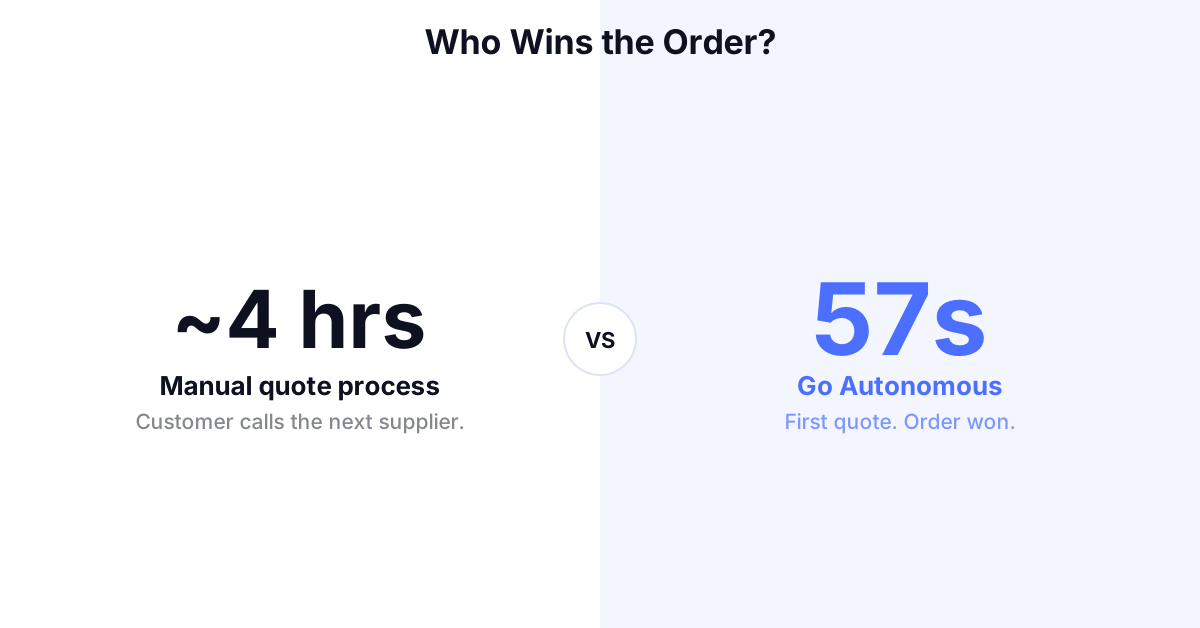
4-hour response. Competitor replied in 20 minutes.
On any multi-supplier RFQ, the buyer does not hold the decision open. The first supplier to return an accurate, compliant quote wins. At a 4-hour average response time, a significant share of your quoted pipeline is decided before your quote is even read.
CPQ Handles Outbound. Inbound Is Still Manual.
CPQ Handles Outbound. Inbound Is Still Manual.
The Inbound RFQ Gap CPQ Never Addressed
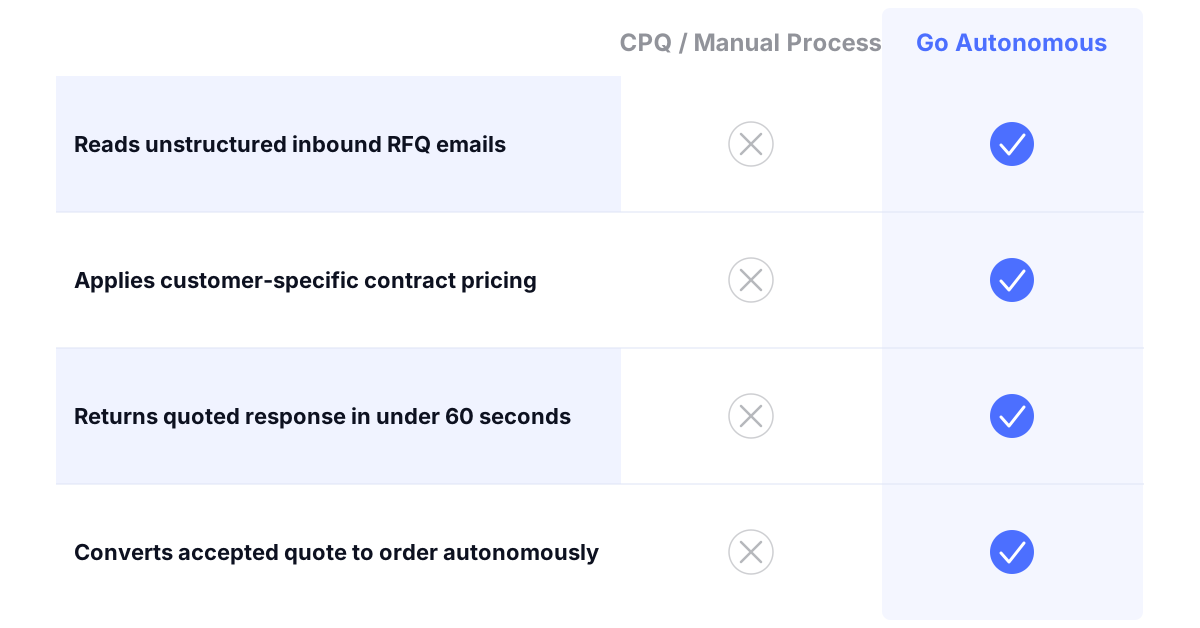
CPQ needs a rep to initiate. RFQs arrive inbound.
CPQ tools are built for outbound quoting — your rep initiates the process. They were not built for the inbound direction: a customer sends a request and needs an accurate quote back fast, without a rep building it manually. That inbound gap is what Go Autonomous owns.
The buyer sent the same RFQ to three suppliers. First accurate response wins.
This is not a capacity problem — your team can build accurate quotes. It is a speed problem. By the time the request clears the queue, the competitor has already landed. Go Autonomous responds in under 60 seconds, from your live pricing data, with no rep required.

The buyer sent the same RFQ to three suppliers. First accurate response wins.
This is not a capacity problem — your team can build accurate quotes. It is a speed problem. By the time the request clears the queue, the competitor has already landed. Go Autonomous responds in under 60 seconds, from your live pricing data, with no rep required.
RFQ to Quote. End-to-End. No Rep Required.
RFQ to Quote. End-to-End. No Rep Required.
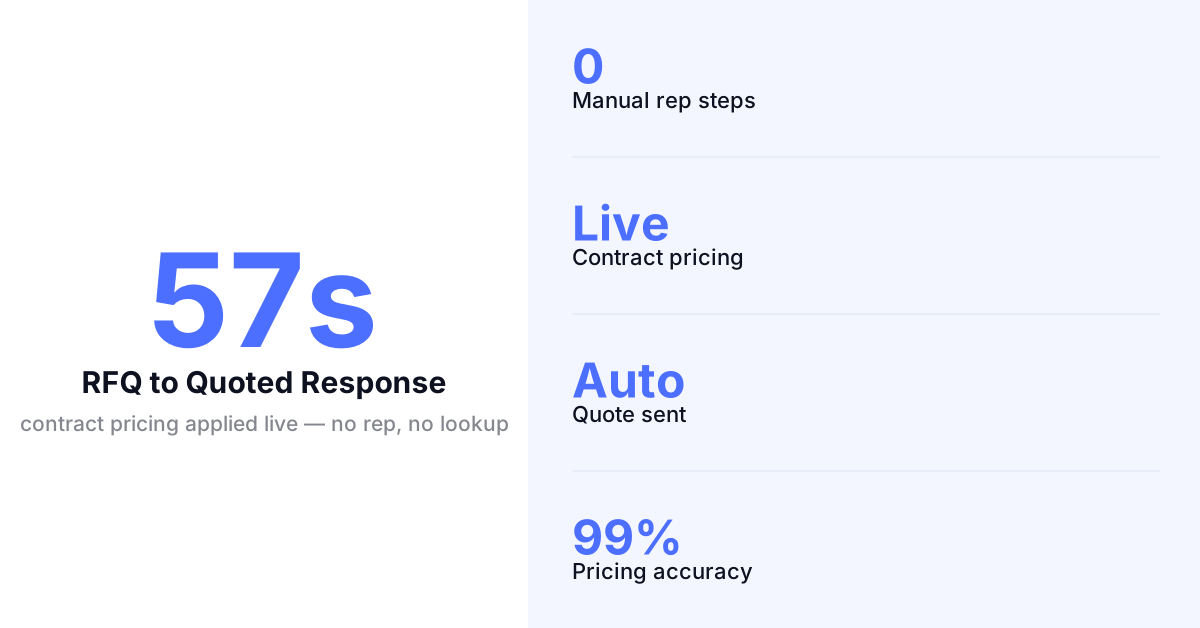
Request interpreted. Priced. Returned in minutes.
Go Autonomous reads incoming RFQs — any format, any channel — identifies the products, retrieves customer-specific pricing from your ERP, applies the correct margin logic, and sends a compliant quote back. Minutes, not hours.
Accepted Quotes Convert to Orders. Autonomously.
Accepted Quotes Convert to Orders. Autonomously.
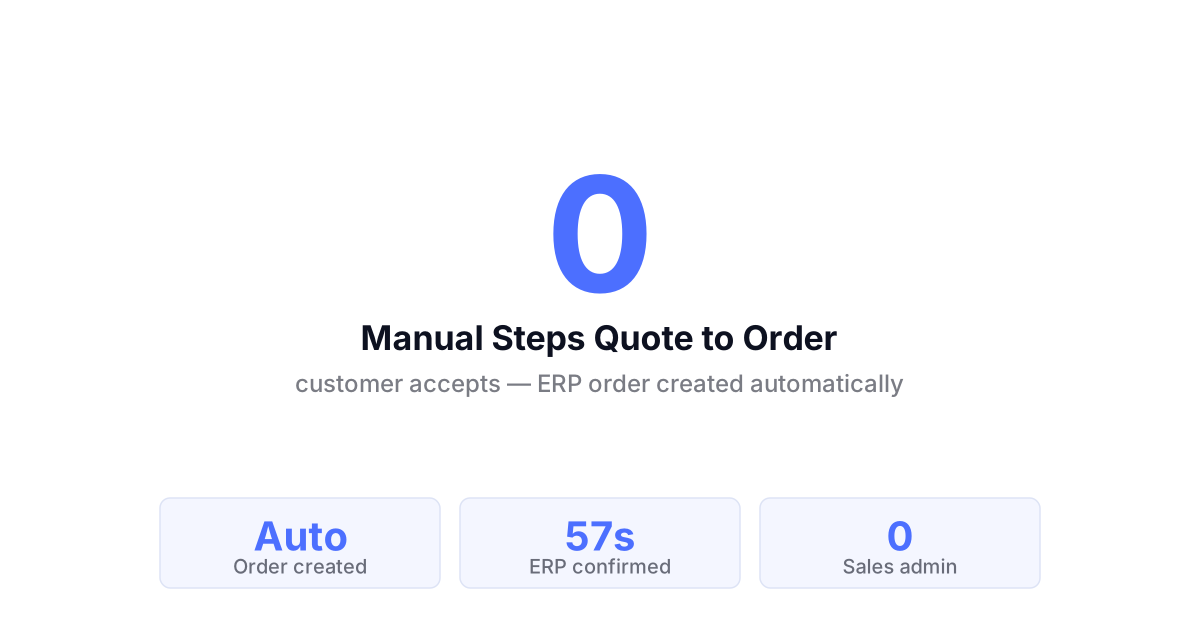
PO received. Matched to quote. Confirmed in ERP.
When a customer accepts and sends a purchase order, execution continues. The PO is matched to the accepted quote, validated against live ERP data, confirmed, and written. No handoff between quotes and order entry. No re-keying of data already in the quote.
What Changes for Your Quotes Team.
Win rate increases because response time decreases.
When your quote arrives in minutes instead of hours, you are first in the buyer’s inbox on every multi-supplier RFQ.
Quote labour released for strategic work.
Hours spent building standard quotes redirect to complex bids, strategic accounts, and new business development.
Pricing accuracy becomes structural.
Every quote priced from live ERP data. No missed discount, no wrong tier — the pricing error rate disappears.
Volume scales without headcount scaling.
RFQ volume growth — new customers, new markets, seasonal peaks — is absorbed by the platform, not by hiring.
RFQ and Quote Execution. By the Numbers.
RFQ and Quote Execution. By the Numbers.
Win rate in live deals
Average quote response
Accuracy on auto quotes
Quote team capacity freed
Multi-Product RFQs. Priced Per Customer.
Multi-Product RFQs. Priced Per Customer.
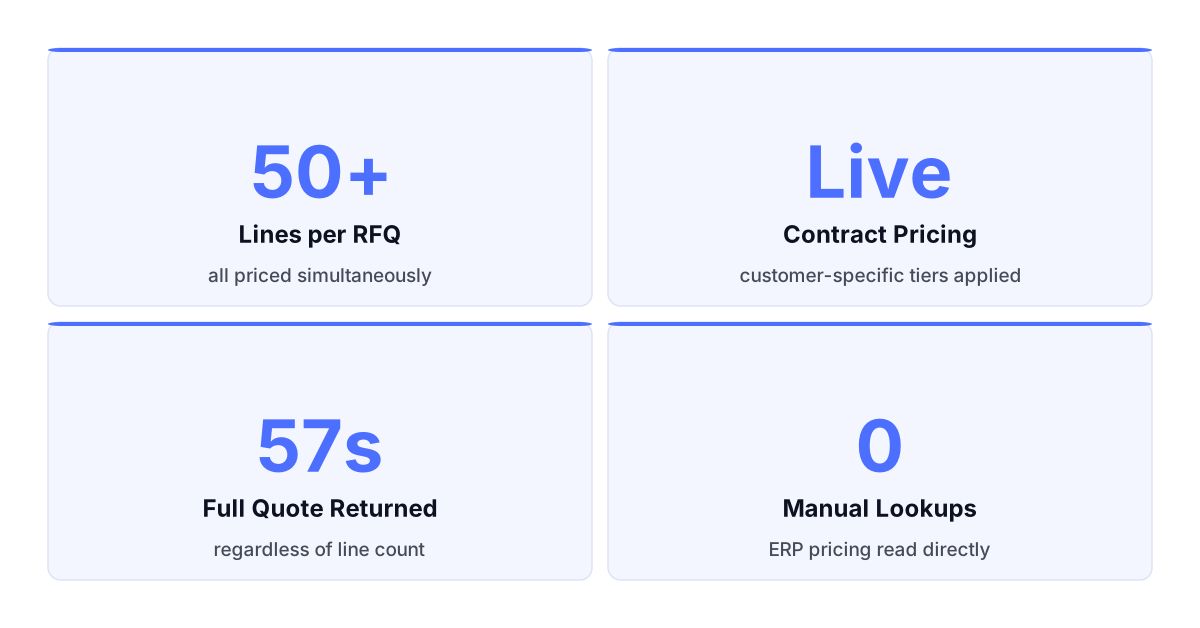
100 line items. Customer-specific pricing. Sent.
Go Autonomous processes multi-line RFQs — each product identified, each line priced against the customer’s specific contract, tier, and volume thresholds from your ERP. The full quote returns as a single accurate document.
Pricing Exceptions Surfaced. Never Silently Fixed.
Pricing Exceptions Surfaced. Never Silently Fixed.
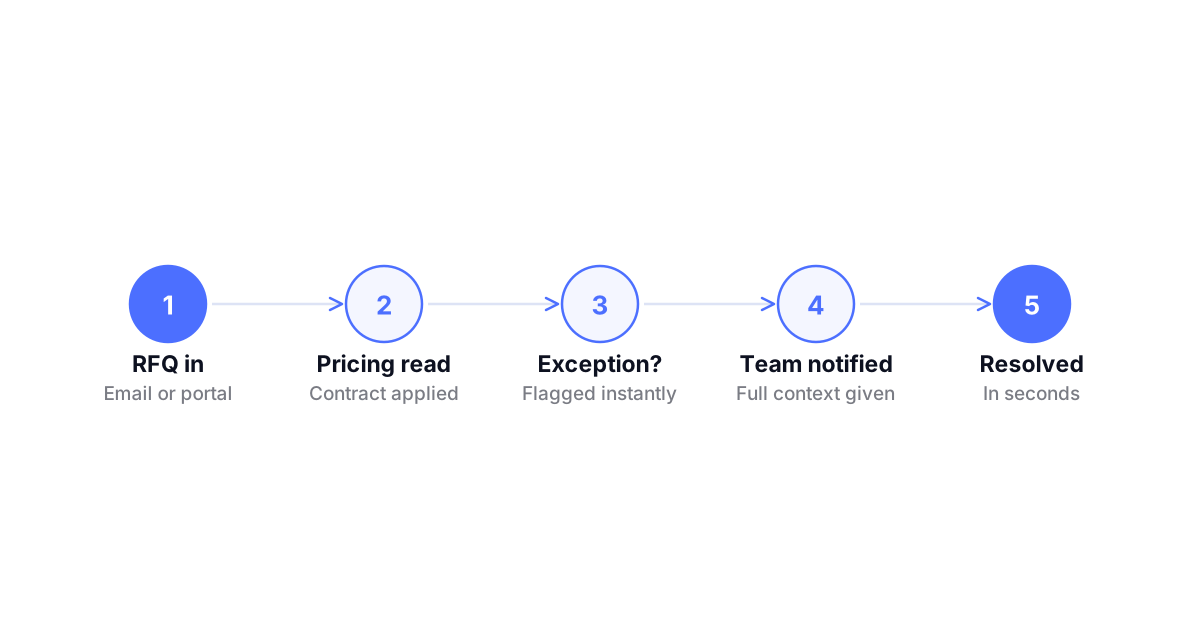
Margin floor breached — surfaced, not sent wrong.
When a quote request involves pricing outside configured agreements — a margin floor breach, a product requiring special approval, a customer with a credit flag — the exception is surfaced with full context rather than sent at an incorrect price.
Faster Response. Higher Win Rate.
Danfoss — Orders and quotes executed in under one minute across 26 countries after deploying autonomous commerce. Read the press release
Mediq — 91% of commercial requests including quotes and orders processed autonomously without manual involvement. See the success case
Aerospheres — An aviation spare parts distributor where quote response speed directly determines deal close rate. See success cases
Common Questions
What is RFQ automation for manufacturers and distributors?
Autonomous RFQ response is the execution of the inbound quote response cycle without manual human involvement. When a B2B customer sends a request for quotation, an AI agent reads the request, identifies the products, retrieves the correct customer-specific pricing from the ERP, builds the quote, and returns it to the customer — in minutes, without a sales rep or quotes coordinator touching it.
How is this different from CPQ software?
CPQ tools are built for outbound quoting — your sales team configuring and sending proposals. They require a human to initiate the process. Autonomous RFQ response handles the inbound direction: a customer sends a request and the AI executes the response end-to-end, in the customer’s format, through the channel they used, without anyone on your team building the quote manually. Go Autonomous solves the inbound gap that CPQ was never designed for.
What RFQ formats can Go Autonomous process?
Go Autonomous handles the full range of inbound RFQ formats: email text, PDF attachments, structured EDI messages, customer portal submissions, and spreadsheet-based requests. The AI interprets the customer’s intent regardless of format — including requests using customer-internal product codes, non-standard descriptions, or legacy references. There is no template requirement.
How does pricing accuracy work in autonomous quote response?
Pricing is retrieved directly from your ERP using the customer’s specific agreement data: their negotiated tier, contractual discounts, volume thresholds, and account-specific pricing rules. The AI retrieves and applies the pricing that already exists in your system for that customer. Pricing exceptions — requests outside the configured agreement, margin floor breaches, products requiring approval — are surfaced for supervised resolution rather than silently mispriced.
What happens to complex or non-standard RFQs?
Requests outside autonomous processing rules are surfaced in the supervised execution interface with full context: the original request, product matching results, the specific issue requiring judgment, and a recommended resolution. The exception rate for most operations is 10 to 20 percent of total RFQ volume and decreases as the platform learns your transaction patterns.
How does autonomous RFQ response connect to order execution?
When a customer accepts the quote and sends a purchase order, execution continues without interruption. The PO is matched to the accepted quote, validated against live ERP data, confirmed, and written. There is no handoff between your quotes team and your order entry team. The RFQ-to-confirmed-order cycle completes without anyone touching any step.
How long does deployment take?
Most manufacturers and distributors are live with autonomous RFQ response within 6 to 12 weeks. Deployment does not require replacing your ERP — Go Autonomous integrates with your existing system including SAP, Oracle, Infor, IFS, and Microsoft Dynamics, and reads from your existing customer master, pricing agreements, and product catalogue.
Can Go Autonomous handle multi-currency RFQs?
Yes. Go Autonomous reads currency settings and exchange rate logic from your ERP configuration. For multi-country operations with different pricing currencies, the correct currency is applied per customer account and market automatically. Currency adjustments, surcharges, and local pricing rules configured in your ERP are applied without manual intervention.
Voice of the Customers



Explore what autonomous execution means for your operations.
Talk to an expert or see Go Autonomous in action.

Explore what autonomous execution means for your operations.
Talk to an expert or see Go Autonomous in action.