
.svg)





Autonomous Commerce for Spare Parts and MRO Distributors
In MRO, every unconfirmed order is a maintenance job on hold. Go Autonomous confirms the moment an order lands.








Unconfirmed Orders Cost More Than a Sale.
Unconfirmed Orders Cost More Than a Sale.
Why MRO Operates Under a Different Urgency
Every unconfirmed order is a maintenance job on hold.
When a maintenance team orders a part, they are holding an open work order. The lead time on that part is the lead time on the job. The difference between a confirmation in seconds and a confirmation in hours is not a service level — it is a business continuity question.
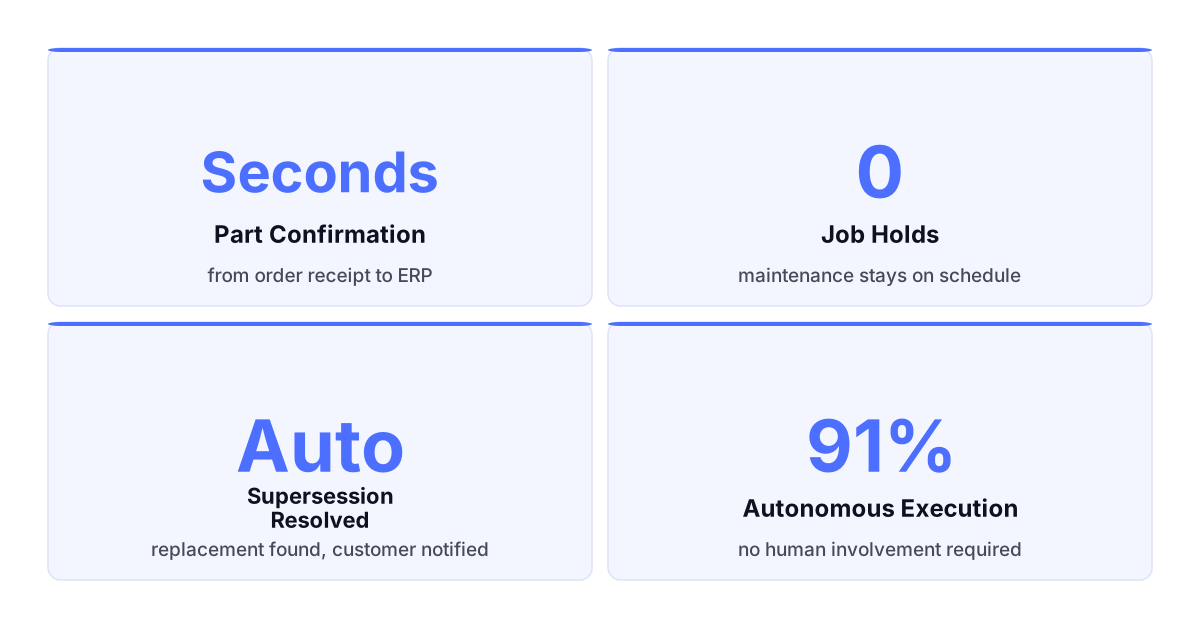
Every hour your customer waits for a confirmation is an hour of potential downtime.
Why Parts Catalogs Do Not Equal Execution
Why Parts Catalogs Do Not Equal Execution
The Catalog Characteristics Generic Tools Miss
Supersession, urgency, multi-warehouse. None handled.
Generic automation flags discontinued part numbers as unresolvable. It cannot check availability across your warehouse network in real time. It does not detect urgency signals at 2 AM. Each of these routes to a manual queue — and in MRO, every queue has a cost.
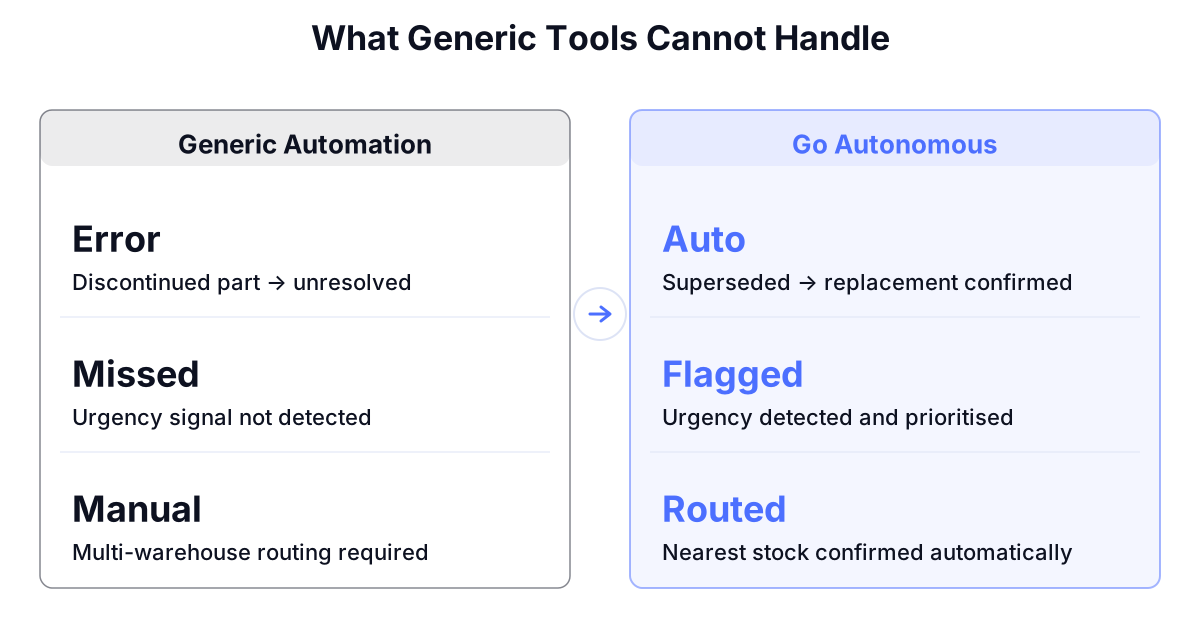
MRO Execution. Speed When It Counts.
MRO Execution. Speed When It Counts.
Fast response on requests
Accuracy on parts orders
Capacity freed from entry
More throughput per rep
Every Resolution Path. Executed Automatically.
Every Resolution Path. Executed Automatically.
From Discontinued Part to Confirmed Replacement.
Every resolution path executed at the speed of software.
Go Autonomous resolves superseded parts using your cross-reference tables, checks availability across your full warehouse network in real time, and detects urgency signals regardless of time of day. Your team receives only the decisions that require judgment.
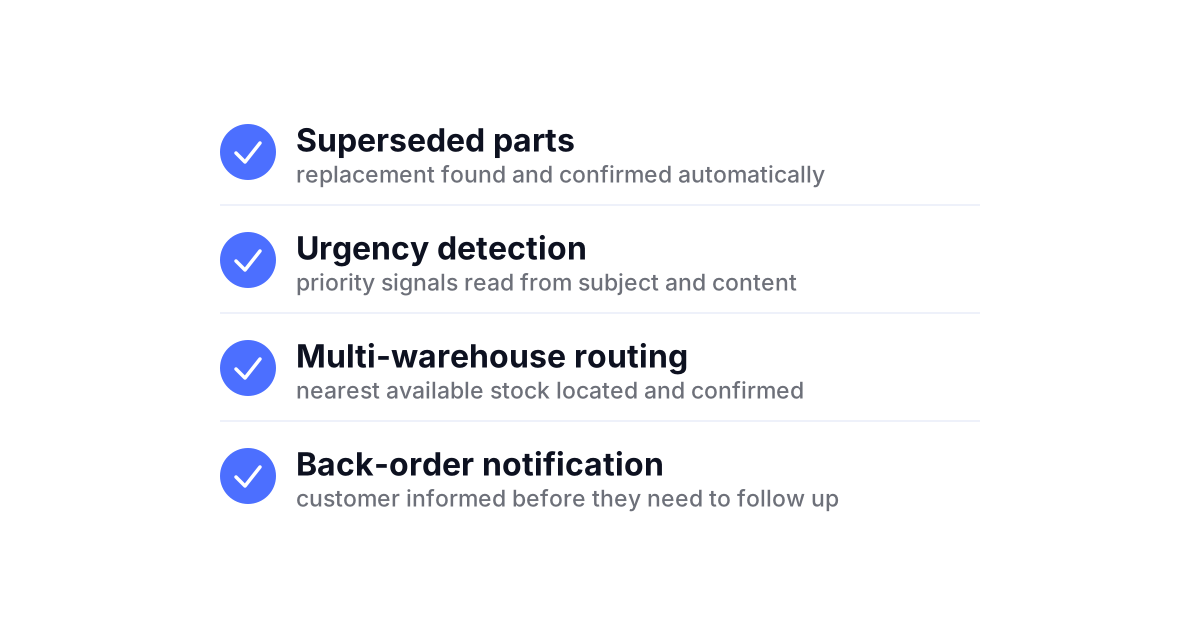
What Changes for MRO Distributors.
Urgent requests confirmed before the job escalates.
No queue. Every order acknowledged the moment it lands, regardless of time of day.
Superseded parts matched to current replacements.
Discontinuation resolved against your cross-reference tables automatically. No phone call.
Stockout alternatives communicated proactively.
Revised dates and substitution options sent before the customer follows up.
Returns and warranty claims processed without your team.
Standard resolutions complete automatically. Exceptions escalated with original order context.
This is not a catalog lookup. It is execution.
A catalog tells you what exists. Autonomous Commerce reads the request, resolves the part, confirms availability across your warehouse network, and executes — before your customer sends a follow-up.

A catalog tells you what exists. Autonomous Commerce reads the request, resolves the part, confirms availability across your warehouse network, and executes — before your customer sends a follow-up.
Parts Confirmed Before the Job Escalates.
Parts Confirmed Before the Job Escalates.
Autonomous Order Execution for MRO Distributors
Go Autonomous reads every incoming order the moment it arrives, validates the part number, availability, and pricing against your ERP, and sends an acknowledgement automatically. The customer knows their order is moving before they close the email.
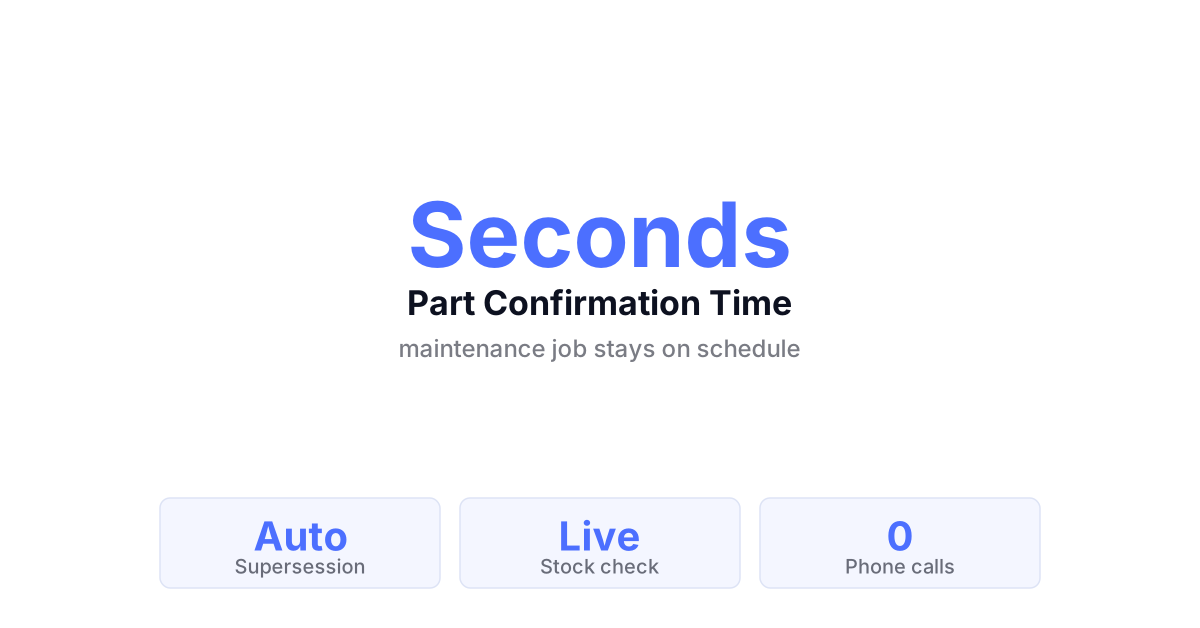
Emergency Quotes Returned. Job Still Open.
Emergency Quotes Returned. Job Still Open.
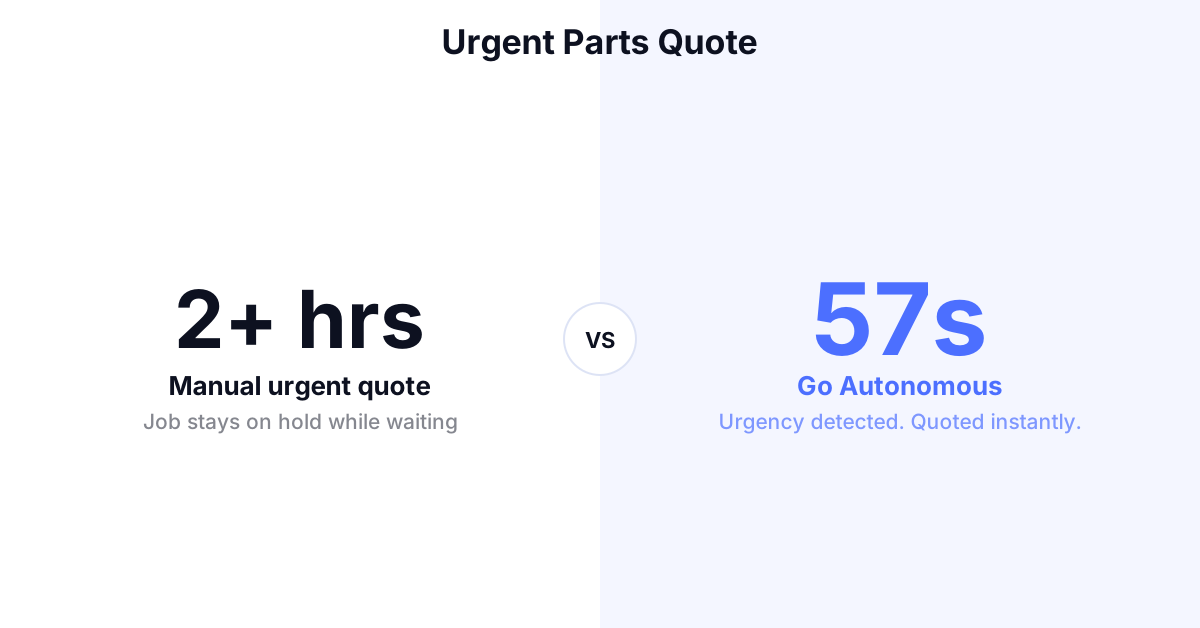
Autonomous Urgent Quote Execution for MRO
Go Autonomous captures urgent RFQs, detects urgency signals from subject lines and customer flags, resolves pricing and lead times in real time, and returns quotes automatically. No queue. No business hours dependency.
Superseded Parts Resolved. No Phone Call.
Superseded Parts Resolved. No Phone Call.
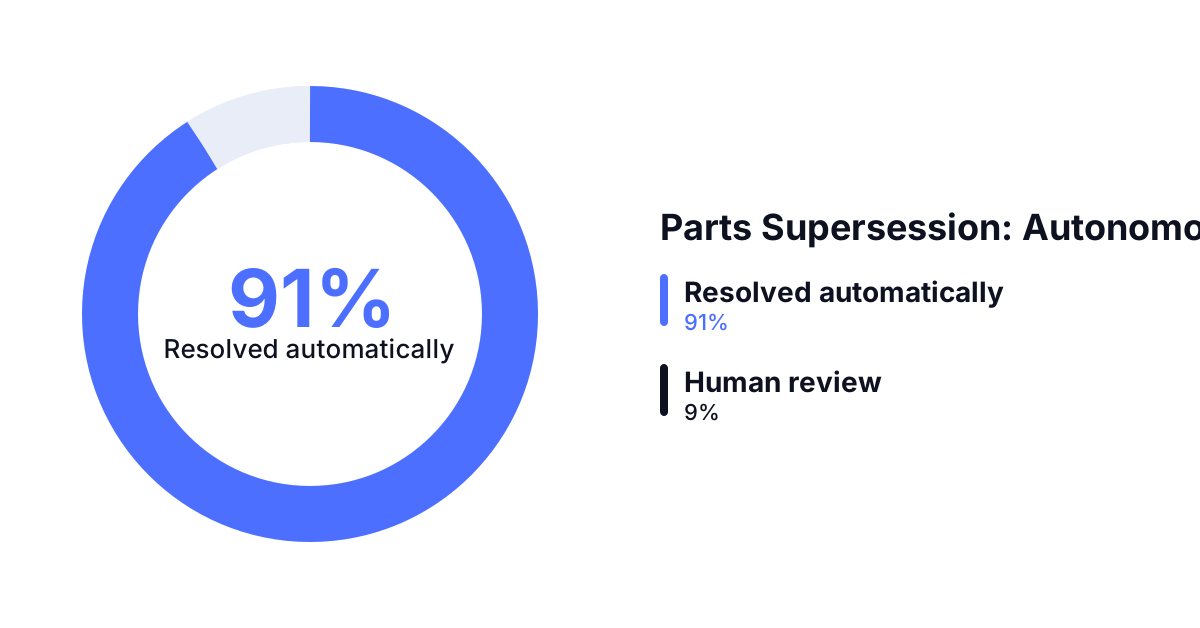
Autonomous Parts Supersession and Cross-Reference
Go Autonomous reads supersession tables from your ERP. When an order references a discontinued part, the current replacement is identified and confirmed automatically. Substitutions requiring customer approval are escalated with full context attached.
Returns Resolved. No Manual Processing.
Returns Resolved. No Manual Processing.
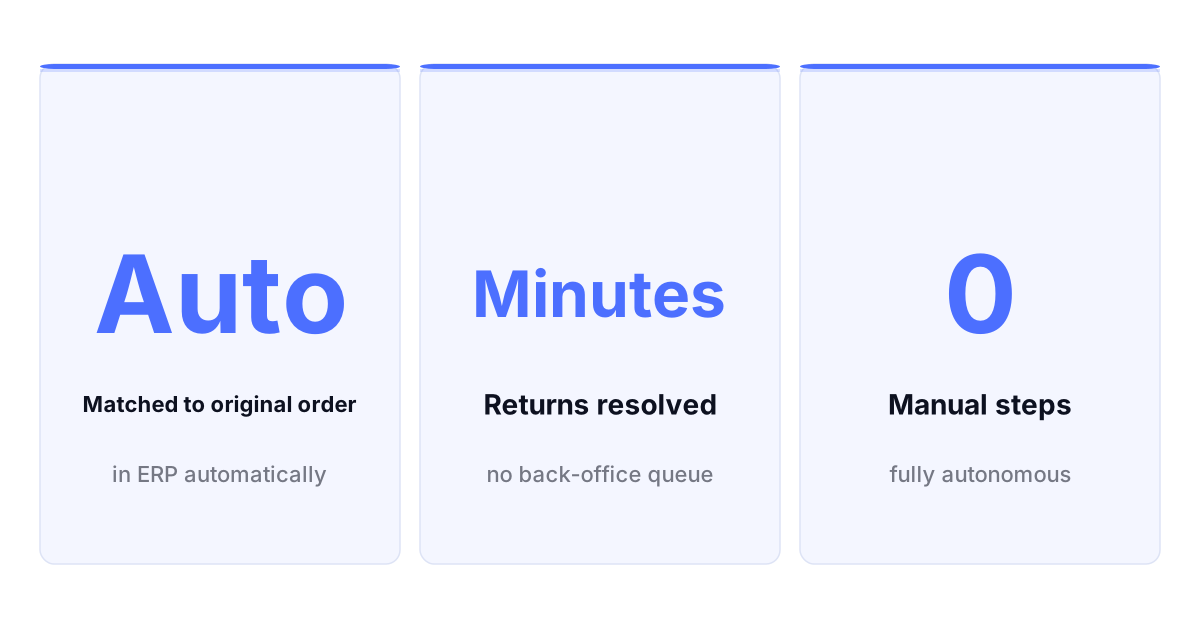
Autonomous Returns and Warranty Claim Processing
Go Autonomous reads return requests and warranty claims, matches them to original order data in your ERP, validates eligibility based on your return policy, and processes the resolution automatically. Standard returns complete without human involvement.
Results From the Field.
Laerdal Medical — Reduced the number of manual steps per order from 93 to 5 after deploying autonomous order execution. See success cases
Mediq — 4,000 orders processed per week autonomously, including urgent and time-critical requests, with zero added headcount. See the success case
Aerospheres — An aviation spare parts distributor where response speed is business-critical and every delayed quote is a potential lost order. See success cases
Autonomous Commerce Product Suite

Workstation Where your team handles exceptions, reviews complex quotes, and manages edge cases. Full context on every escalation. No chasing information.
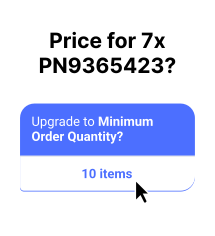
Flow Where every inbound channel connects to your ERP. Email, EDI, portal unified into one execution layer from the moment a request arrives.
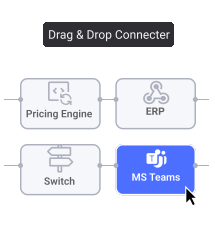
Pulse Where performance is tracked in real time. Every transaction monitored, every exception flagged before it becomes a customer problem.
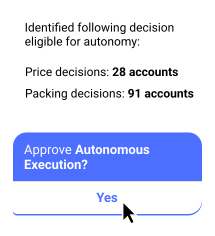
Decision Analytics Where patterns become decisions. Pricing gaps, capacity constraints, and demand signals surfaced automatically before you ask for them.
Common Questions
How does Go Autonomous handle superseded or discontinued part numbers?
Go Autonomous reads supersession tables and cross-reference data directly from your ERP or catalog system. When an incoming order references a discontinued part, the system identifies the current replacement automatically and either confirms availability on the new code or escalates if the substitution requires customer approval.
Can it route orders to the nearest warehouse with available stock?
Yes. Go Autonomous checks stock availability across your warehouse network in real time and routes fulfilment to the nearest location with the required quantity. Multi-location sourcing logic is configured based on your distribution rules and customer delivery requirements.
How does Go Autonomous handle urgent or emergency orders?
Urgency indicators in incoming orders — whether explicit flags, subject line keywords, or customer priority classifications — are detected by Go Autonomous and used to prioritise processing. Emergency orders can be configured to trigger immediate confirmation and bypass standard exception queues.
What happens with orders containing multiple line items across different lead times?
Each order line is validated independently against real-time stock and lead time data. Go Autonomous consolidates the response clearly by line, communicates different availability dates where applicable, and handles split shipment logic based on the customer agreement and your business rules.
Can Go Autonomous manage returns and warranty claims?
Yes. Go Autonomous reads incoming return requests and warranty claims, matches them to the original order and product data in your ERP, validates eligibility based on your return policy, and processes the resolution automatically. Standard returns complete without human involvement.
Voice of the Customers



Explore what autonomous execution means for your operations.
Talk to an expert or see Go Autonomous in action.

Talk to an expert or see Go Autonomous in action.