
.svg)





Email to Order Automation
The inbox is where orders go to wait. Not anymore.








Your Inbox Is a Transaction Queue.
Your Inbox Is a Transaction Queue.
The Real Cost of Inbox-Dependent Operations
200 emails per day. 66 hours of routing. Monthly.
At 200 commercial emails per day, your team spends 3.3 hours every day on triage and routing alone before a single order is touched. At 24 euros per hour, that is 1,600 euros per month just to move emails from one place to another.
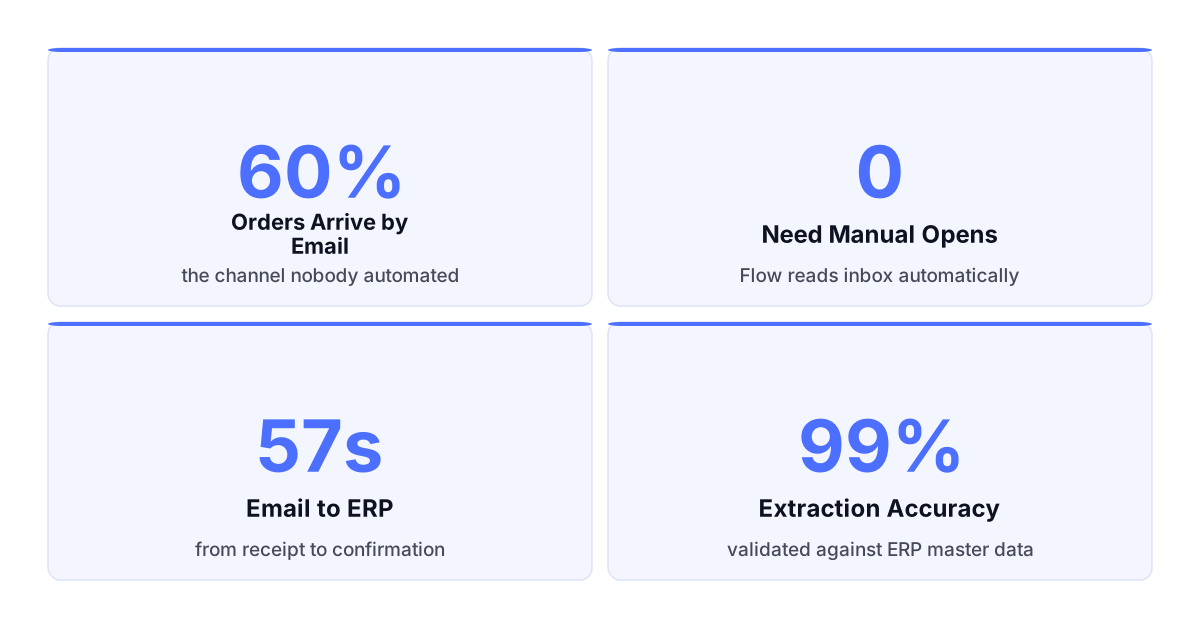
Portals and Rules-Based Tools Did Not Solve It.
Portals and Rules-Based Tools Did Not Solve It.
Why the Email Problem Outlasted Every Solution
Low portal adoption. Rules break. The inbox grew.
B2B buyers do not change how they place orders because you built a portal. Rules-based routing works on simple emails and fails on the complex ones — which are the commercially significant ones. The queue grew. The manual processing continued.
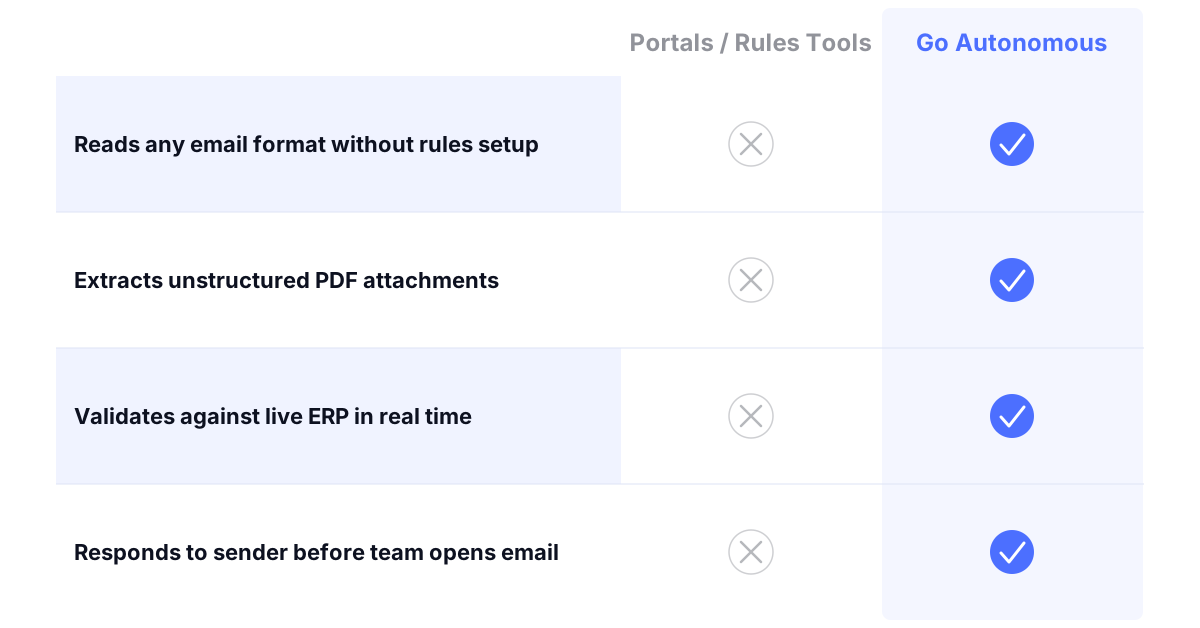
Your buyer sent the order at 8:14am. Your team touched it at 11:30.
Late acknowledgement signals operational weakness. Buyers notice — and in B2B, they have backup suppliers for every category. Autonomous email-to-order execution reads, validates, and confirms within 57 seconds of receipt — before your team logs in.

Your buyer sent the order at 8:14am. Your team touched it at 11:30.
Late acknowledgement signals operational weakness. Buyers notice — and in B2B, they have backup suppliers for every category. Autonomous email-to-order execution reads, validates, and confirms within 57 seconds of receipt — before your team logs in.
Every Email Read, Validated, and Executed.
Every Email Read, Validated, and Executed.
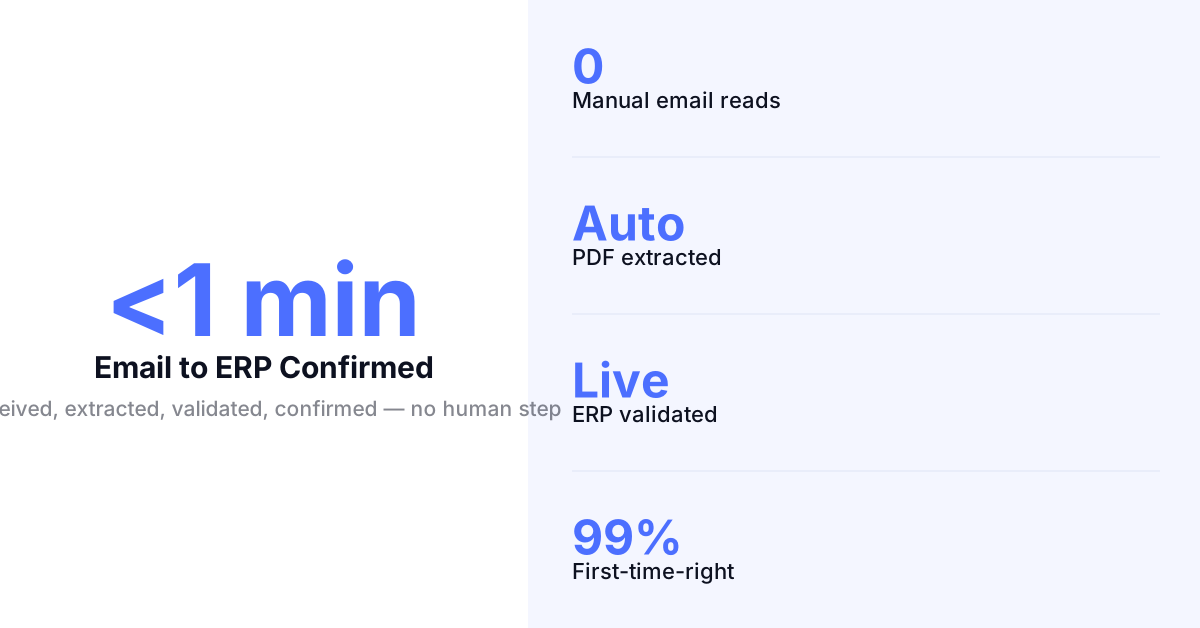
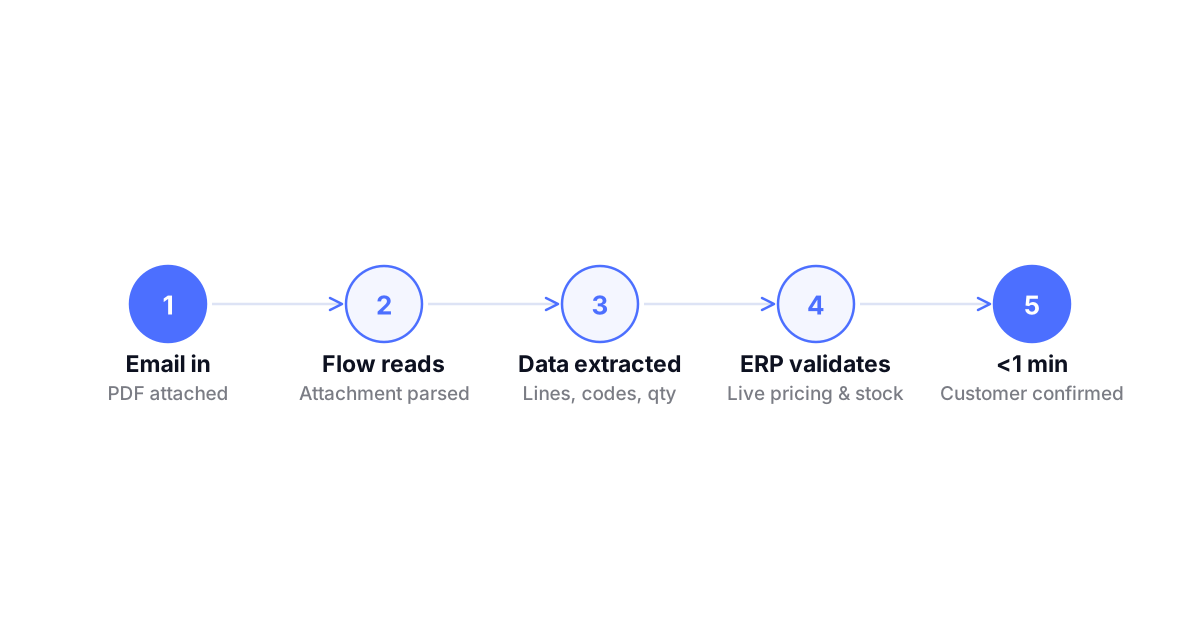
Intent extracted. ERP validated. Confirmed in seconds.
Go Autonomous reads every incoming commercial email, extracts the transaction type — order, quote, price inquiry, claim — validates it against your live ERP, and executes. The inbox empties itself. The order-to-confirmation cycle runs in seconds.
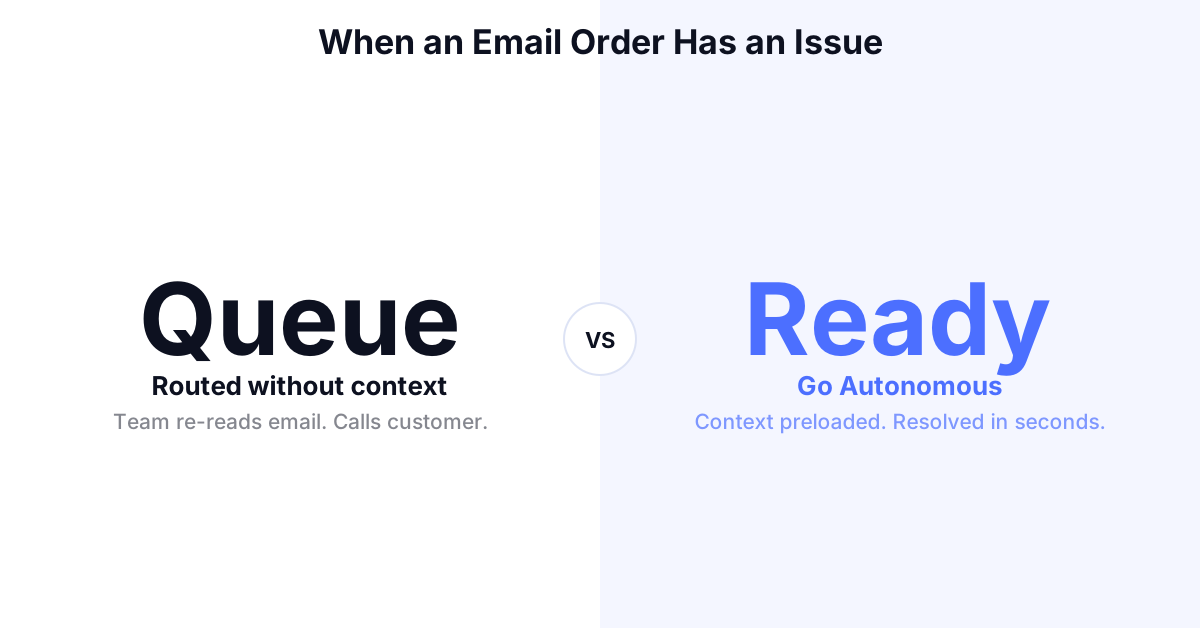
Exceptions Surface With Full Context.
Exceptions Surface With Full Context.
Ambiguous emails resolved in seconds, not hours.
When an email cannot be resolved with confidence — ambiguous intent, unresolvable product reference, commercial term requiring approval — it surfaces with a full brief: what was received, what the system interpreted, and what the specific decision point is.
What Changes From Day One.
Order confirmations in under one minute.
Customers receive responses the moment an email lands — regardless of inbox volume or time of day.
66 hours of routing labour released every month.
At 200 emails per day: every hour previously spent on triage redirects to commercial work.
First-time-right rate reaches 99%.
No misrouting. No transcription errors. Direct from email to ERP, validated at every step.
Every channel handled at the same speed.
Email, EDI, portal — one execution layer regardless of how your customers communicate.
Email-to-Order Execution. By the Numbers.
Email-to-Order Execution. By the Numbers.
Email arrival to order
Accuracy on all orders
Freed from email triage
More throughput per team
Multi-Language Emails. One Execution Layer.
Multi-Language Emails. One Execution Layer.
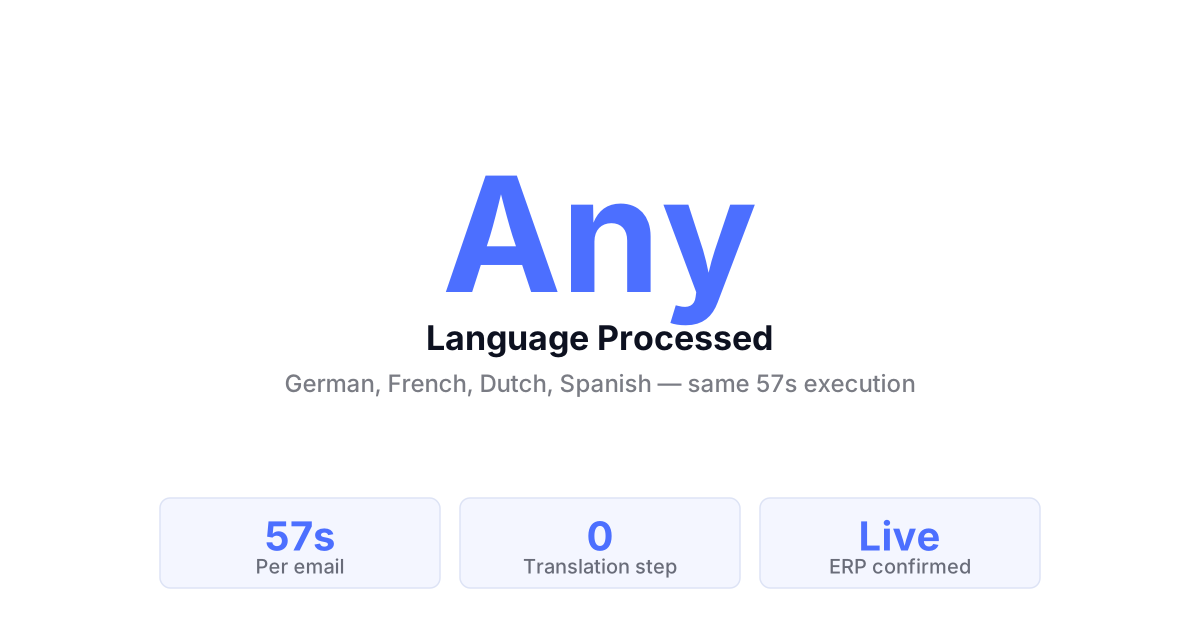
Danish, German, Dutch, French — all processed.
Go Autonomous reads commercial emails in the language they arrive in. Danfoss deployed across 26 countries simultaneously — each with local language, pricing, and customer terms. Language is never a routing decision.
PDF Attachments Processed. No Manual Read.
PDF Attachments Processed. No Manual Read.
Purchase order as PDF. Interpreted, not scanned.
Go Autonomous interprets PDF purchase orders — not with a fixed template, but with AI trained on millions of B2B transactions. Non-standard layouts, customer-specific codes, and multi-line orders are read and validated automatically.
Inbox Cleared. ERP Updated.
Danfoss — Orders confirmed in under one minute across 26 countries after deploying autonomous email-to-order execution. Read the press release
Mediq — 91% of digital revenue processed autonomously, including email-submitted orders across a complex healthcare distribution operation. See the success case
Nilfisk — Email-based order volume scaled across multiple markets without growing the customer service team. Read the press release
Common Questions
Does email to order automation require customers to change how they send orders?
No. Customers continue to send orders, quotes, and inquiries exactly as they do today — by email, with whatever format, structure, or attachment type they currently use. The AI agent adapts to how your customers communicate. You do not ask them to change their purchasing behaviour, adopt a portal, or use a structured format.
What happens to emails the system cannot process confidently?
Any email where the AI agent cannot resolve intent, validate data, or execute with sufficient confidence is flagged as an exception and routed to a human reviewer with a full context summary. Exception volume for a typical deployment is 10 to 20 percent of incoming email. The agent identifies the specific decision point and surfaces it with all relevant information pre-assembled — review time per exception is under two minutes.
How does email to order automation connect to our ERP?
Go Autonomous integrates with the ERP systems most commonly used by mid-size manufacturers and distributors, including SAP, Microsoft Dynamics, Oracle, and others. Integration is handled at deployment and does not require modifications to your existing ERP configuration. The AI agents read from and write to your ERP in real time at the point of execution.
Does the system handle emails in multiple languages?
Yes. The AI agents read and process commercial emails in the language in which they are written — Danish, German, Dutch, French, English, and others — without requiring separate translation workflows. Danfoss deployed autonomously across 26 countries in a single deployment day.
Is email to order automation the same as a rules-based routing tool?
No. Rules-based tools classify emails by keyword or sender and route them according to predefined logic. Go Autonomous AI agents understand commercial intent, handle the variability of real-world email communication, validate against live ERP data, and execute end-to-end. The distinction is between moving an email and completing the transaction it contains.
What commercial email types does Go Autonomous handle?
Go Autonomous handles all standard inbound commercial email types: purchase orders in plain text and PDF attachments, quote requests and RFQs, price inquiries, order status requests, and claims or returns submissions. Each email type is classified and routed to the appropriate execution workflow automatically.
How long does deployment take for email to order automation?
For a focused deployment covering inbound order and quote email processing integrated with a single ERP instance, initial go-live typically occurs within weeks. The system operates on your live data from deployment and does not require a long training period before becoming productive.
How does email-to-order automation affect working capital?
Every hour removed from the email-to-order confirmation cycle is an hour removed from the order-to-invoice cycle. Across thousands of transactions per month, that compression is material to cash conversion. Eliminating the queue time between email arrival and first action directly shortens your O2C cycle from the first day of deployment.
Voice of the Customers



Explore what autonomous execution means for your operations.
Talk to an expert or see Go Autonomous in action.

Explore what autonomous execution means for your operations.
Talk to an expert or see Go Autonomous in action.