.svg)





Why Your Touchless Order Rate Gets Stuck at 60 Percent
Most B2B operations teams hit 60% touchless order processing and then stall. The ceiling is not a configuration problem — it is a structural limit of rule-based automation, and the orders sitting in the remaining 40% are your most expensive. This post explains why the ceiling exists and what it takes to break it.
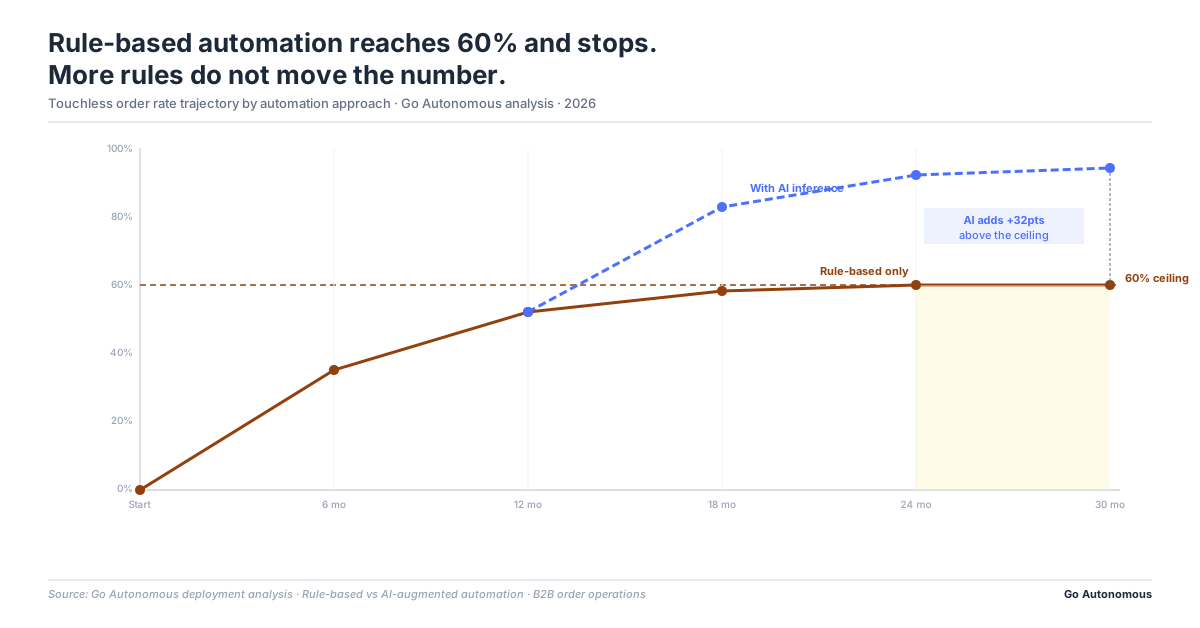
If your touchless order rate has been stuck between 55% and 65% for more than a year, the problem is not your configuration. Rule-based automation has a structural ceiling at approximately 60%, and the orders that live above that ceiling require judgment, not pattern matching. The 40% of orders that stay manual are not random: they are your highest-cost orders, your most complex customer formats, and your fastest-growing exception categories. More rules will not move the number. This post explains the mechanics of why the ceiling exists and what the architecture shift looks like for operations teams that have broken through it.
Table of Content
- 60% Touchless Is the Structural Ceiling for Rule-Based Automation
- The 40% You Cannot Automate With Rules Contains Your Highest-Cost Orders
- Adding More Rules Increases Maintenance Cost Without Improving Throughput
- AI Inference Breaks the Ceiling: 60% Becomes 85–95% Without Additional Rules
- The Autonomous Execution Fabric: Why Breaking 60% Requires a Different Architecture
- Frequently Asked Questions
- Why does my touchless order rate stay at 60% despite adding more automation rules?
- What is the difference between touchless order processing and straight-through processing?
- How do B2B manufacturers increase touchless order rates above 60%?
- What types of orders cannot be processed touchless in B2B manufacturing?
- How does AI improve touchless order rates compared to rule-based automation in distribution?
60% Touchless Is the Structural Ceiling for Rule-Based Automation
What Rule-Based Automation Actually Covers: Predictable Volume, Known Accounts
Rule-based automation works on orders that conform to known patterns. A recognized customer, a product reference that maps cleanly to your catalog SKU, a quantity that matches standard pack sizes, a price that matches the current list or contract rate: these orders pass through automation without friction. For a typical B2B manufacturer or distributor, this predictable order population covers roughly 60% of total volume. EDI orders from enterprise accounts, portal submissions from customers who completed onboarding, and repeat orders from high-volume buyers who never deviate from their standard format. These are valuable customers who represent significant revenue, and automating their orders delivers real operating cost savings.
The Ceiling Is Not a Bug — It Is the Logic Limit of If-Then Rules
The ceiling appears at 60% not because the automation was built poorly, but because if-then rules can only handle cases they were written to anticipate. A rule that says “if the customer ID matches record X and the product code matches SKU Y and the quantity is a multiple of pack size Z, then create the order” handles that specific case perfectly. It cannot handle a customer sending the same order with a slightly different product description, or a new customer whose format has never been seen. Every case outside the rules falls to a human. The comparison between RPA and AI-based approaches makes this boundary precise: rules encode patterns; inference handles variation. The 60% ceiling is the boundary between pattern and variation in a typical B2B order population.
Each time we added one or two million euros in revenue, we had to add another operator. From a cost perspective, that's an unsustainable way of operating a business.

The 40% You Cannot Automate With Rules Contains Your Highest-Cost Orders
Exception Orders, Non-Standard Formats, and New Customer Intake
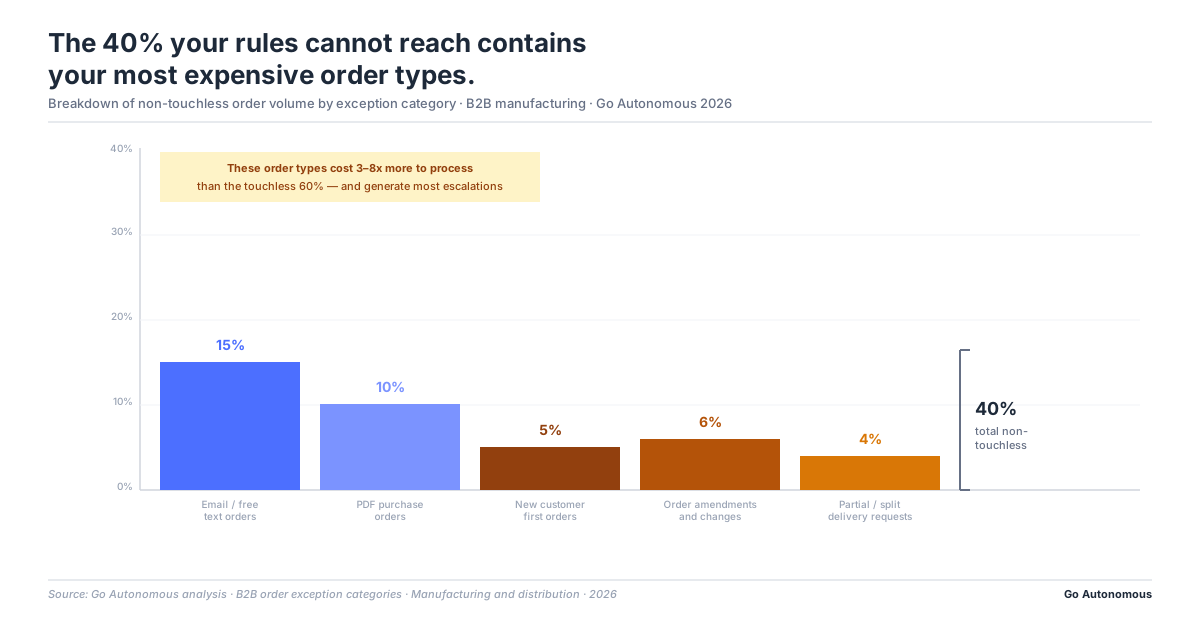
The orders that stay manual share a set of common characteristics. Exception orders: quantities that do not match pack sizes, pricing that differs from the current rate card, delivery addresses that do not match the customer master record. Non-standard formats: customers using their own product numbering system, PDF purchase orders where the line item layout varies by document, email orders where the product description is free text. New customer intake: orders from accounts who have never submitted before, whose format is entirely unknown, and whose customer master data may not yet exist in the ERP. Each of these categories requires a CSR to interpret, not just to enter. Each also costs 4–8x the base processing rate when exceptions are factored in. The 40% that stays manual accounts for a disproportionate share of total processing cost.
Why the Hard 40% Gets Harder as Your Customer Base Grows
As revenue grows, the complexity of the manual 40% increases in parallel. More customers means more formats. Global expansion means orders in additional languages, with different date formats, different unit-of-measure conventions, and different product naming standards. Distributors buying across product lines submit mixed orders that do not conform to any single category rule. Each new market or channel adds exception types that the existing rule set has never encountered. The cost impact compounds with scale: each additional €1–2M in revenue requires the operations team to absorb more order volume in the hard 40%, which means either accepting longer processing times or adding headcount. The ceiling does not lift as the business grows; the cost of operating beneath it increases.
Adding More Rules Increases Maintenance Cost Without Improving Throughput
When Automation Infrastructure Becomes Technical Debt
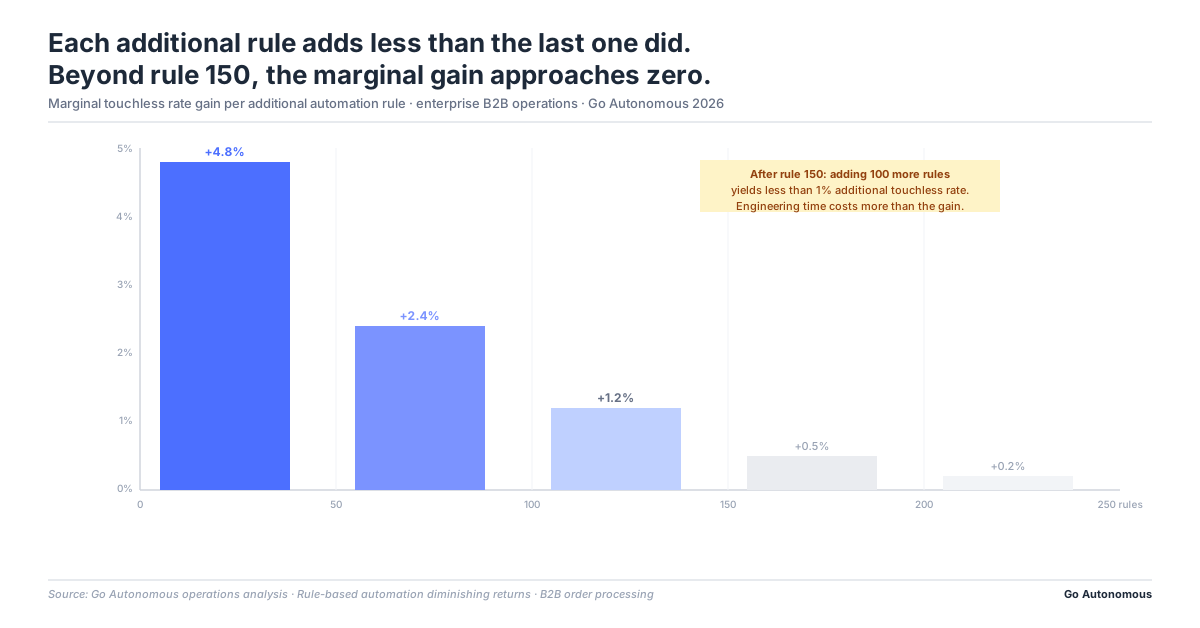
The instinctive response to stalling at 60% is to add more rules. When a new exception type appears repeatedly, write a rule for it. When a customer changes their format, update the mapping. When a new SKU description pattern emerges, add a matching condition. This approach works for the first few iterations. Over time, rule sets grow into hundreds of conditions, with exceptions to exceptions, and conditional branches that interact in ways no single person fully understands. Every update from a customer (new product codes, new PO format, new delivery address structure) and every ERP upgrade risks breaking existing rules in ways that are difficult to diagnose. The automation infrastructure that was supposed to reduce manual work now requires dedicated maintenance effort to keep running.
The Opportunity Cost of Engineering Hours Spent on Rule Maintenance
Most operations teams running mature rule-based automation spend 20–30% of their automation maintenance hours on rules that cover less than 2% of total order volume. These are the edge-case rules, the one-customer-specific mappings, and the legacy conditions written for a format that a customer stopped using two years ago. The engineering hours absorbed by this maintenance do not move the touchless rate. They hold it in place. The opportunity cost is the capability investment that does not happen: better exception routing, smarter customer onboarding workflows, integration with new channels. Rule maintenance is not automation progress; it is the cost of automation that has reached its architectural limit.
AI Inference Breaks the Ceiling: 60% Becomes 85–95% Without Additional Rules
How Inference Handles Non-Standard Inputs: Pattern Recognition, Not Rule Matching
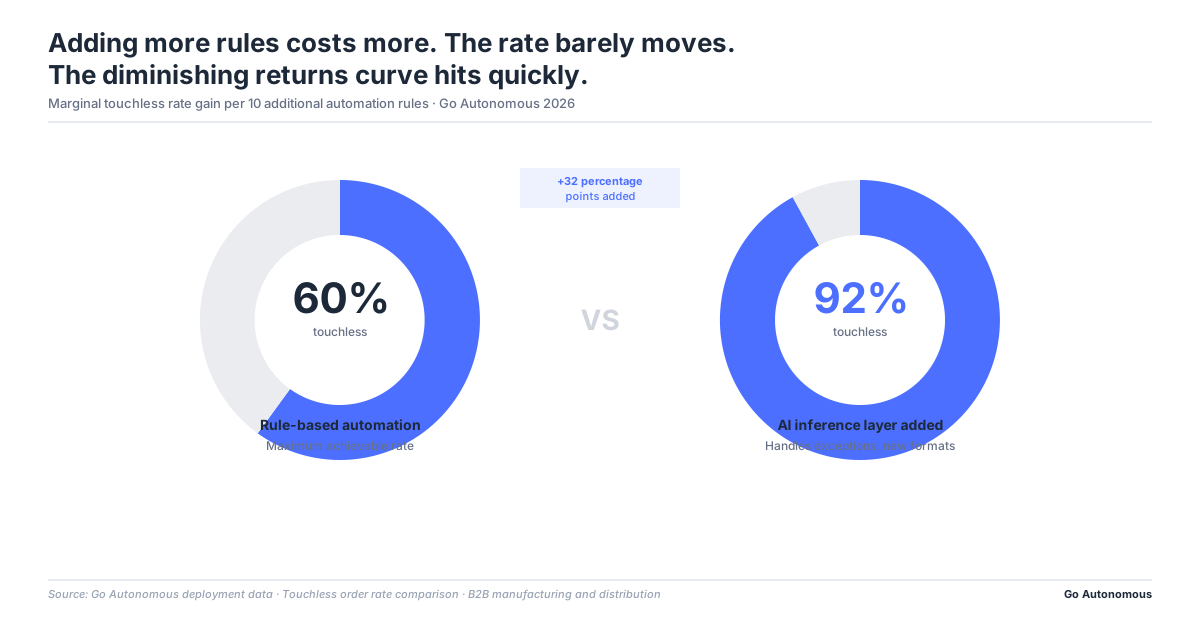
AI inference does not apply a ruleset to an incoming order. It reads the order the way a trained CSR would: identifying what the customer intended, mapping non-standard product references to the closest catalog match, recognizing that “24 units” and “2 boxes of 12” are the same quantity in different expressions, distinguishing a resolvable ambiguity from a genuine exception that needs human review. This is not pattern matching against a fixed rule; it is interpretation against a model of what correct order data looks like. Orders that would fail a rules check, triggering manual review, are instead processed automatically. The touchless rate climbs from 60% to 80–95% without writing a single new rule.
What Operations Teams Report After Crossing the 60% Ceiling
The operational outcomes after breaking through the 60% ceiling are consistent across manufacturers and distributors running autonomous execution. VELUX processes more than 130,000 orders across 9 markets with 88% decision autonomy, covering order types and customer formats that would have required manual intervention under a rules-based system. Mediq handles 4,000 orders per week at 75% faster processing rates without adding a single headcount. The CSR team, rather than processing routine orders, focuses on the genuinely complex cases: pricing disputes, order modifications, and relationship-sensitive situations where human judgment adds real value. The full set of customer outcomes shows a consistent pattern: volume scales, headcount does not, and the exception rate falls below 5%.
The Autonomous Execution Fabric: Why Breaking 60% Requires a Different Architecture
The AI inference capability described in this post is the order intake component of the Autonomous Execution Fabric. The Fabric is a full commercial execution layer that connects directly to your SAP, Oracle, or Microsoft Dynamics environment and processes every inbound commercial transaction without human assembly. It is the architecture that produces touchless rates of 80–95% rather than 60%, because it is not built on rules that must be written and maintained for each new pattern. It interprets intent and resolves variation across every transaction that arrives, regardless of format or source.
The Fabric handles more than order intake. The same intake complexity that causes your touchless rate to plateau at 60% for orders (non-standard formats, product reference mismatches, unstructured inputs) applies equally across pricing requests, quote processing, returns authorizations, credit notes, and contract tenders. Each of these transaction types arrives through email, EDI, customer portal, or direct API, and each carries the same pattern-versus-variation problem that limits rules-based automation to a 60% ceiling.
Operations teams that fix the touchless rate for orders often find the same ceiling present in adjacent transaction types. The 40% of order volume that stays manual because it requires judgment contains the same structural problem as the 40% of quote requests, return claims, and credit inquiries that also require judgment. The Autonomous Execution Fabric closes the gap across the full commercial transaction layer. That is why the architecture shift is structural rather than configurational: it removes the rule-based ceiling for every transaction type, not just the one that was diagnosed first.
For operations leaders who have been explaining the same 60% touchless rate to their CFO for three years, the explanation is structural, not operational. The system is performing correctly. It has reached the limit of what rules can do. The next move is an architecture decision, not a configuration decision. Book a session to review your current touchless rate, exception distribution, and what the path to 85–95% looks like for your order mix.
Frequently Asked Questions
Why does my touchless order rate stay at 60% despite adding more automation rules?
The 60% touchless ceiling is a structural limit of rule-based automation, not a configuration problem. Rule-based systems can only handle orders that match predefined patterns. The remaining 40% of orders contain non-standard formats, new customer intake, and exception types that require judgment rather than pattern matching. No amount of additional rules can cover cases that require interpretation. Breaking through 60% requires a shift to AI inference, which reads and processes non-standard inputs the way a trained operator would.
What is the difference between touchless order processing and straight-through processing?
Touchless order processing and straight-through processing (STP) are closely related terms. Both refer to orders that move from receipt to confirmed sales order record without human intervention. Touchless rate is typically the broader operational metric: the percentage of total order volume processed without any manual touch. Straight-through processing often refers specifically to the technical path through the ERP without exception routing. In practice, both measure the same operational outcome — how much of your order volume runs automatically.
How do B2B manufacturers increase touchless order rates above 60%?
Increasing touchless order rates above 60% in B2B manufacturing requires replacing or augmenting rule-based automation with AI inference. Rules handle predictable, known-format orders and plateau at approximately 60%. AI inference reads non-standard inputs, maps ambiguous product references to catalog items, and processes exception-prone orders automatically. Manufacturers who have made this shift report touchless rates of 80–95%, with exception rates below 5% and order confirmation times under 60 seconds.
What types of orders cannot be processed touchless in B2B manufacturing?
Orders that fall outside the touchless boundary in rule-based systems include: orders with non-standard product references or customer-specific SKU codes; partial orders where quantities do not match standard pack sizes; orders with pricing discrepancies between the purchase order and the current rate card; new customer orders where no mapping or master data exists; and orders arriving in unstructured formats such as free-text email or PDF attachments with variable layouts. These are the order types that AI inference is specifically designed to handle.
How does AI improve touchless order rates compared to rule-based automation in distribution?
Rule-based automation matches orders against predefined patterns and routes non-matching orders to human review. AI inference interprets orders, identifying customer intent and resolving ambiguities without a human in the loop. In distribution environments, where customer formats vary significantly and new customer onboarding adds format diversity continuously, AI inference handles the variation that rules cannot encode. Distributors running AI-based order processing report touchless rates of 80–95% compared to the 60% ceiling typical of rule-based systems.