.svg)





Why 50–70% of B2B Orders Never Reach SAP S/4HANA Cleanly
SAP S/4HANA is excellent at processing orders once they are structured and entered. The problem is that 50–70% of B2B order volume never arrives structured. This post explains the gap between what SAP S/4HANA requires as input and what customers actually send, and how manufacturers are closing it without replacing their ERP.
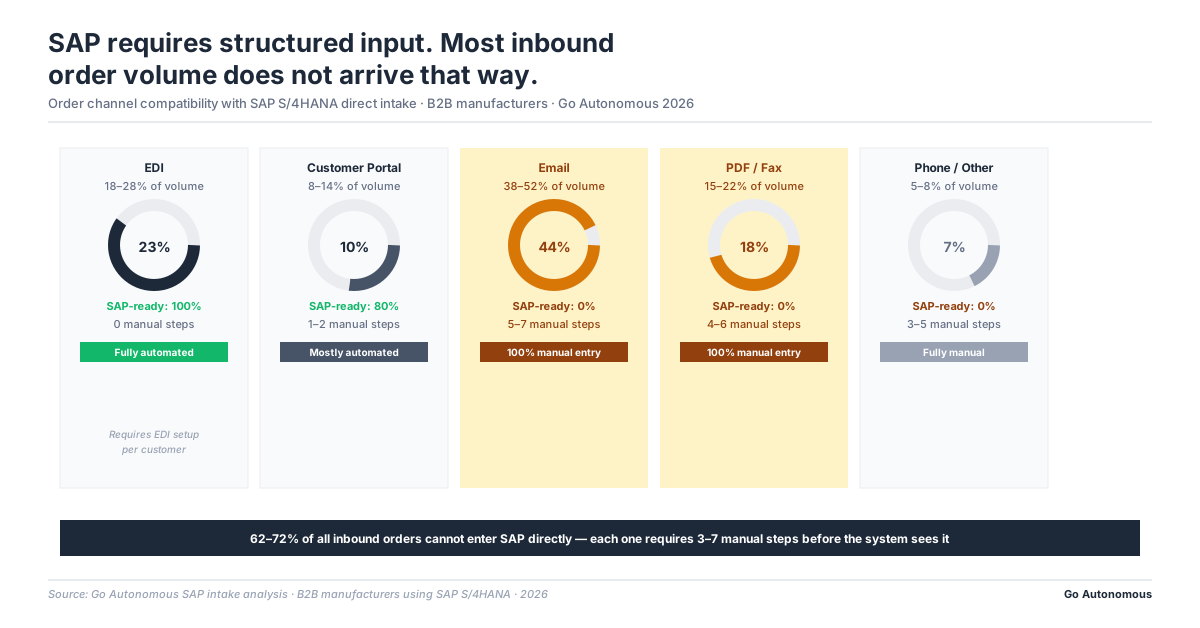
SAP S/4HANA processes orders with precision once they are structured, validated, and entered. The problem is upstream: 50–70% of B2B order volume never arrives in a format SAP can consume directly. It arrives as email text, PDF attachments, and fax images, queuing in shared inboxes while customer service teams manually bridge the gap. Every order in that queue costs €15–35 to process, takes 24–48 hours to confirm, and requires a human to perform 3–7 steps before SAP sees clean data. Manufacturers who have closed this gap did not replace SAP; they placed an AI extraction layer upstream of it. This post explains the structural mismatch, the cost it creates, and how the gap is closed.
Table of Content
- SAP S/4HANA Requires Clean, Structured Input: 50–70% of Order Volume Is Not That
- Every Unstructured Order Requires 3–7 Manual Steps Before SAP Can See It
- The SAP Intake Gap Scales Directly With Order Volume and Customer Diversity
- An AI Extraction Layer Bridges Unstructured Intake to SAP Without Replacing It
- The Autonomous Execution Fabric: Closing the SAP Intake Gap Across Every Commercial Transaction
- Frequently Asked Questions
- How does SAP S/4HANA handle email purchase orders from customers?
- What is the best way to automate unstructured order intake for SAP S/4HANA users?
- Can AI extract order data from PDFs and enter it into SAP S/4HANA automatically?
- Why do B2B manufacturers still need manual order entry with SAP S/4HANA?
- How do SAP S/4HANA users reduce order processing costs from unstructured channels?
SAP S/4HANA Requires Clean, Structured Input: 50–70% of Order Volume Is Not That
What SAP S/4HANA Expects: Field Mapping, Master Data References, Structured Transactions
SAP S/4HANA is designed to process transactions that arrive as structured data: EDI messages with defined field positions, portal submissions where each field maps to a predefined data element, or manually entered records where a human has already performed the interpretation work. The ERP expects a customer ID that matches a record in the customer master, a material number that resolves to a catalog item, a quantity expressed in the correct unit of measure, and a price that either matches the condition record or triggers a clearly defined exception workflow. When all of these conditions are met, SAP processes the order quickly and accurately. The system is not the bottleneck. The input is.
What Customers Actually Send: Email Text, PDF Attachments, Fax Images, Portal Exports
SAP S/4HANA does not read an email. It does not extract line items from a PDF. It does not interpret a free-text purchase order from a customer using a different product naming convention. For manufacturers where 50–70% of order volume arrives via email or unstructured channels, this means a large portion of order intake never reaches SAP clean. It queues in shared inboxes: customer-specific email addresses, accounts payable aliases, or regional office inboxes that feed into a manual processing workflow. The orders sit there, awaiting a person who will open the attachment, interpret the content, look up the customer and material records in SAP, and create the order manually. The Autonomous Commerce platform addresses exactly this input layer: reading inbound orders from any format and delivering structured data to the ERP without a human in the loop.
Each time we added one or two million euros in revenue, we had to add another operator. From a cost perspective, that's an unsustainable way of operating a business.

Every Unstructured Order Requires 3–7 Manual Steps Before SAP Can See It
The Handoff Sequence: From Customer Inbox to SAP Order Entry
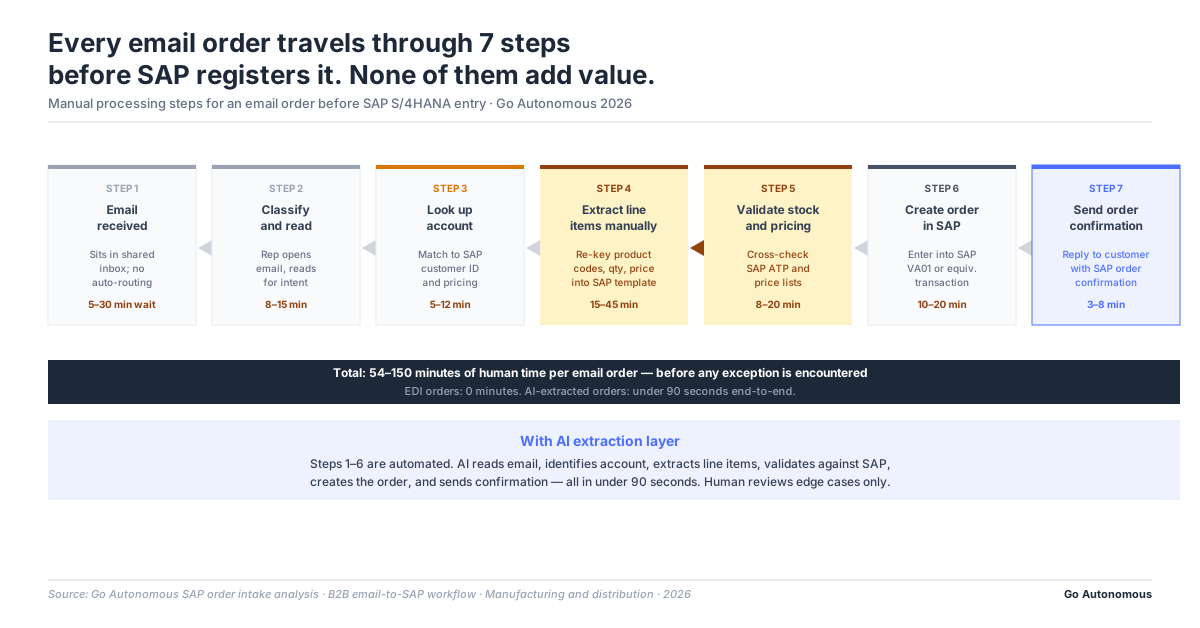
The manual workflow between inbox and SAP is invisible in most operational dashboards, but it is where most processing cost accumulates. A customer sends a PDF purchase order to a shared inbox. A customer service representative opens it, reads the document, and identifies which customer sent it. The rep opens SAP, searches for the customer record, and begins creating a sales order. For each line item, the rep reads the product description on the purchase order, searches the SAP material master for the matching item, enters the quantity, checks the unit of measure, and verifies the price against the current rate card or contract. If the customer used a non-standard product reference, the rep must perform a cross-reference lookup. If the quantity or unit of measure does not match, the rep must convert or correct. If pricing is disputed, the rep escalates. This sequence runs 3–7 steps per order, takes 20–45 minutes for a typical multi-line order, and costs €15–35 before exceptions are factored in.
What Gets Lost, Delayed, or Miskeyed in the Process
Manual data entry at this scale generates errors. Transposed digits in material numbers. Incorrect quantities when a customer’s purchase order uses a different base unit than your SAP configuration expects. Wrong delivery addresses when a customer has multiple ship-to locations and the PO does not specify clearly. Wrong prices when rate cards have been updated and the CSR is working from a cached view. Each error that reaches SAP creates a downstream correction: a credit note, a re-delivery, or a customer service call. 20–40% of B2B orders trigger at least one exception during processing, and each exception adds 4–8x the base processing time. The manual intake gap does not just add cost; it introduces variability that compounds across the order volume.
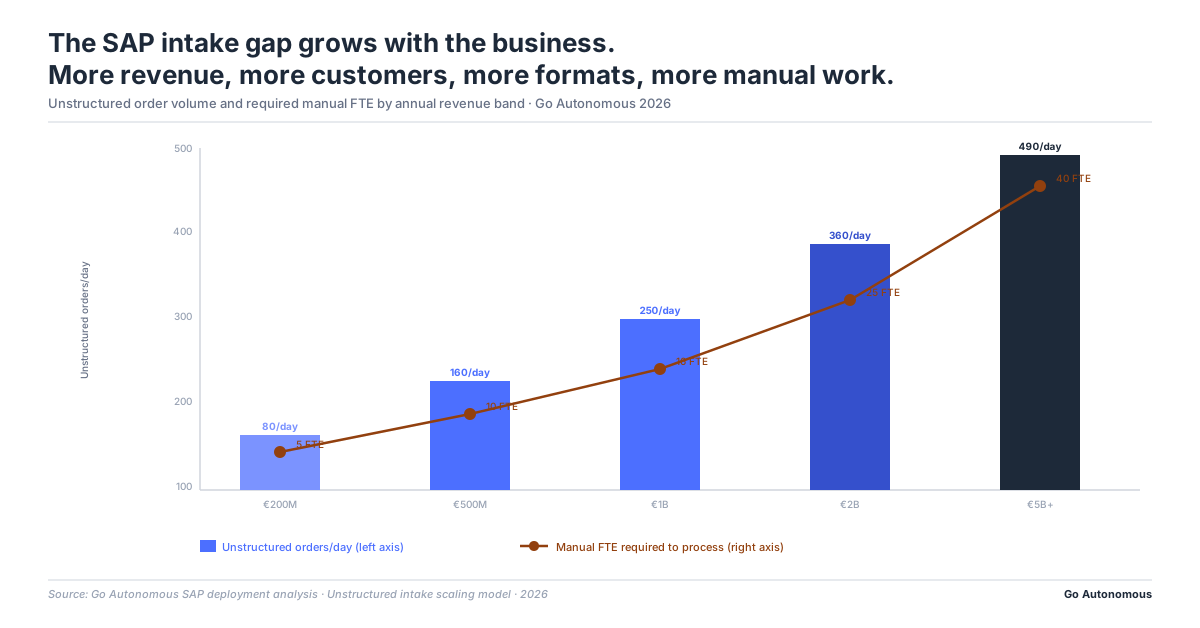
The SAP Intake Gap Scales Directly With Order Volume and Customer Diversity
Why SAP Optimization Projects Do Not Solve This: The ERP Cannot Fix Its Own Input
SAP S/4HANA optimization projects, better master data governance, faster transaction workflows, tighter condition record management, improved exception routing, address what happens inside SAP after a structured order arrives. They do not address what happens before the order reaches SAP. No amount of SAP configuration makes the ERP capable of reading a PDF. No master data project eliminates the inbox workflow. Operations teams who have completed S/4HANA migrations and optimizations often find that the intake gap is unchanged: the same shared inboxes, the same manual keying steps, the same 20–45 minutes per unstructured order. The ERP optimization and the intake problem are structurally separate. Solving one does not affect the other.
The Headcount Math: Each Additional €1–2M in Revenue Requires Another Operator
As revenue grows, the unstructured intake problem grows proportionally. More customers means more formats. New markets mean orders in new languages with different date conventions, different product naming standards, and different purchase order layouts. Distributors buying across product lines send mixed orders that do not conform to any single category mapping. Each new customer format adds processing time to the manual workflow. The result is a headcount model where each incremental revenue band requires adding another customer service operator to keep up with unstructured intake. The revenue and margin impact of this scaling trap is significant: the cost of serving new revenue erodes the margin it was supposed to generate. The intake gap does not stay constant as the business grows; it expands with it.
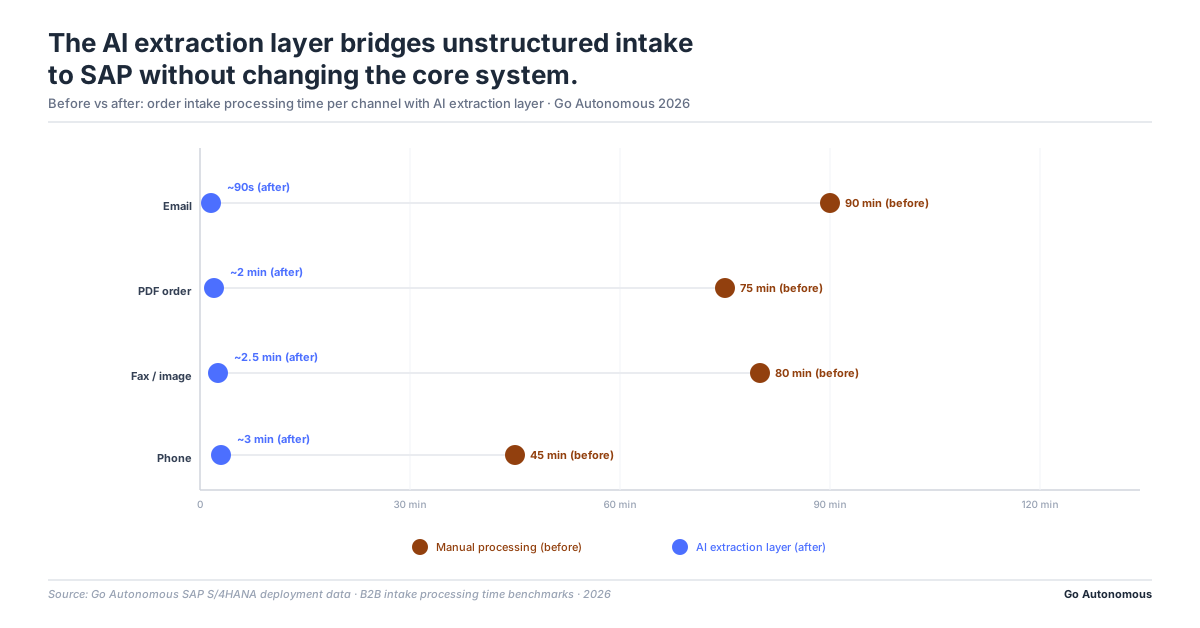
An AI Extraction Layer Bridges Unstructured Intake to SAP Without Replacing It
How Extraction Works: From Raw Input to SAP-Ready Structured Fields
The solution is not to replace SAP; it is to bridge the intake gap upstream. An AI extraction layer sits between the customer’s inbound channel (email, PDF, EDI variant, portal export) and SAP. It reads the inbound order from any format, extracts structured fields, maps product references to SAP material numbers using the customer’s cross-reference history and catalog context, validates quantities and units of measure, checks pricing against the current condition records, and presents a confirmed sales order to SAP. SAP receives clean, structured input. The shared inbox empties. The manual keying steps disappear. The customer experience improves because confirmation arrives in under 60 seconds rather than 24–48 hours. The CSR team handles genuinely complex cases, pricing disputes, multi-party coordination, relationship-sensitive modifications, rather than routine data entry.
What SAP Operations Teams Gain: Volume Capacity Without Headcount Growth
Danfoss reduced order processing from 42 hours to under 1 minute, runs 80% of its order volume autonomously, and now covers 26 countries in a single day: all without replacing SAP as the system of record. The ERP processes exactly what it was designed to process: structured, validated transactions. The difference is that those transactions now arrive automatically from any inbound format, without a human keying them in. The intake gap between what customers send and what SAP requires is closed by the AI layer, not by changing SAP or asking customers to change their formats. Across the customer base, the consistent outcome is volume capacity that no longer depends on headcount growth, and a per-order cost that falls below €2 from a previous baseline of €15–35.
The Autonomous Execution Fabric: Closing the SAP Intake Gap Across Every Commercial Transaction
The AI extraction layer described in this post is the order intake component of the Autonomous Execution Fabric. The Autonomous Execution Fabric is a full commercial execution layer that connects directly to your SAP S/4HANA environment and processes every inbound commercial transaction without human assembly. The intake gap this post describes (unstructured orders that SAP cannot consume directly) is one dimension of a broader gap: B2B commercial transactions of every type arrive from customers in the same unstructured formats and face the same mismatch between what customers send and what SAP requires.
The Fabric handles more than unstructured purchase orders. Customers request pricing updates via email, submit return requests as free-text messages, send credit claim documents as PDF attachments, and issue contract tenders as Word documents or spreadsheet files. Each of these arrives outside SAP’s structured intake layer and requires the same manual bridging steps: open the document, interpret the content, look up the relevant master data, and create the transaction record. The Autonomous Execution Fabric reads and processes all of these transaction types across every intake channel (email, EDI, customer portal, and direct API) without human assembly before the data reaches SAP.
SAP operations teams that close the unstructured order intake gap typically find the same structural gap present in adjacent transaction types. The same shared inbox that queues unstructured purchase orders also queues unstructured return requests, pricing inquiries, and claim submissions. Closing the gap for orders without closing it for the rest of the commercial transaction layer is a partial fix. The Autonomous Execution Fabric addresses the full commercial execution layer: every transaction type, every inbound channel, delivered as structured data to SAP without a manual bridging step.
For SAP operations leaders facing the same intake gap, the diagnostic is straightforward: what percentage of your order volume arrives in a format SAP cannot consume directly, and what is the per-order cost of bridging that gap manually today? If the answer is 50% or more of volume at €15–35 per order, the intake gap is your largest addressable cost line in order operations. Book a session to map your current unstructured intake volume and see what the extraction layer delivers in your SAP environment.
Frequently Asked Questions
How does SAP S/4HANA handle email purchase orders from customers?
SAP S/4HANA does not natively handle email purchase orders. The ERP requires structured input: EDI messages, portal submissions with mapped fields, or manually entered records. Email purchase orders arrive outside the SAP transaction layer and require a customer service representative to open the email, interpret the content, look up the relevant master data records, and manually create the sales order in SAP. This manual bridging step is where most unstructured order processing cost accumulates.
What is the best way to automate unstructured order intake for SAP S/4HANA users?
The most effective approach is an AI extraction layer placed upstream of SAP. The AI layer reads inbound orders from any format, email body text, PDF attachments, EDI variants, portal exports, extracts structured fields, maps product references to SAP material numbers, validates against business rules, and delivers a confirmed sales order to SAP without human intervention. This approach does not require replacing SAP or asking customers to change their formats. Manufacturers using this approach report processing costs below €2 per order and confirmation times under 60 seconds.
Can AI extract order data from PDFs and enter it into SAP S/4HANA automatically?
Yes. AI extraction systems read PDF purchase orders, identify line items, map customer product references to SAP material numbers using cross-reference data and catalog context, validate quantities and pricing against SAP condition records, and create sales orders in SAP automatically. The extraction layer handles variable PDF layouts, different product naming conventions, and non-standard field positions without requiring template configuration for each customer format.
Why do B2B manufacturers still need manual order entry with SAP S/4HANA?
Manual order entry persists because SAP S/4HANA processes structured transactions but cannot interpret unstructured input. When 50–70% of order volume arrives as email, PDF, or other unstructured formats, a human must bridge the gap between what the customer sent and what SAP requires as input. SAP optimization projects do not solve this because the intake problem is upstream of the ERP. An AI extraction layer eliminates the manual bridging step by automatically converting unstructured input into SAP-ready structured data.
How do SAP S/4HANA users reduce order processing costs from unstructured channels?
SAP S/4HANA users reduce unstructured order processing costs by deploying an AI extraction layer that reads inbound orders from email, PDF, and other formats and delivers structured data to SAP automatically. This eliminates the 3–7 manual steps required to bridge inbox to ERP, reduces per-order cost from €15–35 to below €2, and cuts confirmation time from 24–48 hours to under 60 seconds. The approach does not require replacing SAP or modifying existing ERP configuration.