.svg)





B2B Pricing Automation: Why Dynamic Pricing Tools Don’t Solve Order Execution
Dynamic pricing tools optimize what price to offer. They do not confirm the order, write to the ERP, or close the execution gap between an approved price and a fulfilled transaction. This post explains why B2B pricing automation and autonomous order execution are different layers, and what it costs to treat them as the same thing.
Your pricing team spent 18 months implementing a dynamic pricing engine. Zilliant is live. Price recommendations are flowing. Win rates are up on the accounts where the sales team actually applies the recommendations. And yet, your customer service team is still processing 300 order emails per day, manually keying line items into SAP, chasing pricing discrepancies between what the customer’s PO says and what the system recommends. The price is right. The order is still stuck.
This is the gap that Autonomous Commerce was built to close. And it is a gap that the B2B pricing automation market has systematically ignored, not because vendors are negligent, but because pricing optimization and order execution are genuinely different problems sitting on different architectural layers. Conflating them is one of the most expensive category mistakes a manufacturer or distributor can make.
Table of Content
- What Dynamic Pricing Tools Actually Do: The Decision Layer, Not the Execution Layer
- The Execution Gap: From Price Approved to Order Confirmed in ERP
- Dynamic Pricing Tools vs. Autonomous Commerce: A Capability Comparison
- Revenue Velocity: The Metric Pricing Tools Cannot Improve
- What Changes When Autonomous Execution Handles Order Processing End-to-End
- The Autonomous Execution Fabric: Closing the Gap Between Pricing Decisions and ERP Confirmation
- See How Autonomous Order Execution Complements Your Pricing Stack
- Who Should Act Now, and Who Can Wait
- Frequently Asked Questions
- What is the difference between B2B pricing automation and autonomous order execution?
- How do dynamic pricing tools like Zilliant integrate with order processing?
- Can pricing optimization software automatically confirm B2B orders?
- What is Revenue Velocity in B2B order management?
- What is Friction Debt in B2B commercial operations?
- How does B2B pricing automation affect order cycle time for manufacturers?
- How does Autonomous Commerce work alongside an existing pricing tool like PROS or Vendavo?
What Dynamic Pricing Tools Actually Do: The Decision Layer, Not the Execution Layer
B2B pricing automation tools optimize a single decision: what price should we offer this customer, on this product, in this context? They do this with genuine sophistication. Zilliant uses machine-learning models trained on transaction history, competitive signals, and customer price sensitivity. PROS applies AI-driven price guidance across complex product portfolios with thousands of SKUs. Vendavo focuses on margin management, helping commercial teams defend price across contract negotiations and spot orders. SAP Revenue Management integrates pricing logic directly into S/4HANA workflows.
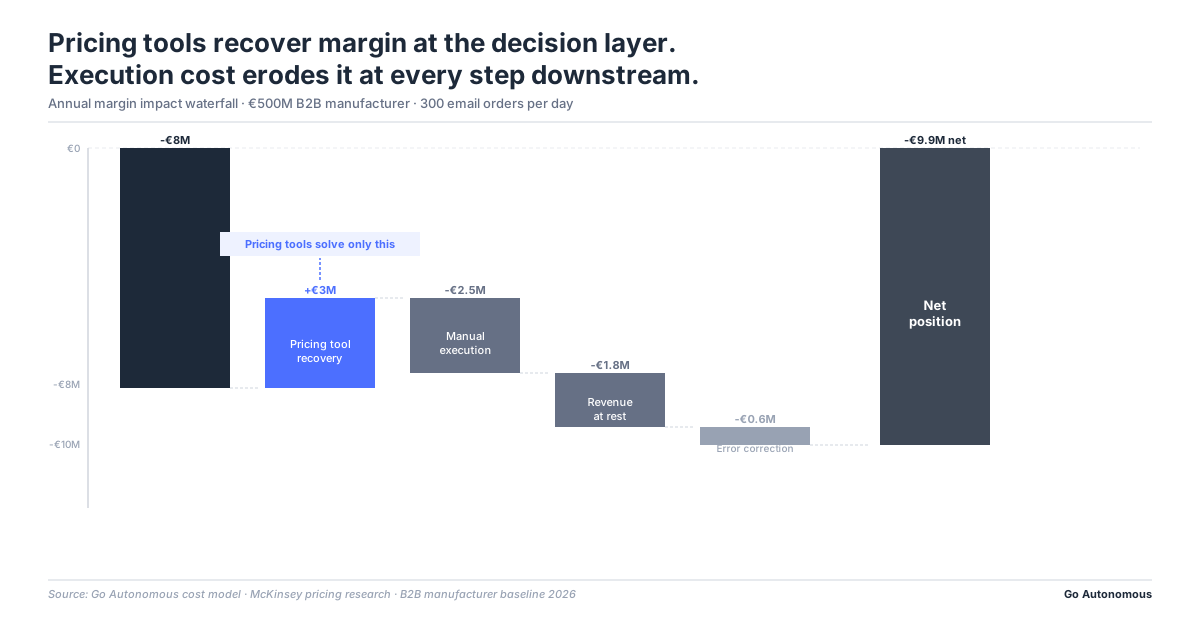
Each of these tools is solving a real problem. Poorly calibrated pricing costs B2B manufacturers 2 to 4 percentage points of margin annually, according to McKinsey’s pricing research. Systematic price optimization, applied consistently, recovers meaningful revenue.
What is the difference between B2B pricing automation and autonomous order execution?
B2B pricing automation determines the correct price for a transaction. Autonomous order execution takes the incoming order, validates it against pricing contracts and ERP master data, resolves discrepancies, and writes the confirmed order to the ERP without human intervention. Pricing automation answers the question “what should the price be?” Order execution automation answers “how does the approved transaction get completed?” These are sequential steps in the same process, but they require entirely different architectures to automate.
The handoff point between pricing and execution is where the problem lives. A pricing tool surfaces a recommended price. A human sales rep or CSR applies it to the inbound order. That application involves reading the customer’s PO, matching line items to ERP SKUs, verifying quantities against available stock, cross-checking the price against the approved contract tier, flagging exceptions for review, and finally entering the confirmed order into the ERP. None of those steps are touched by the pricing engine.
How do dynamic pricing tools like Zilliant integrate with order processing?
Zilliant and comparable dynamic pricing platforms integrate with CRM and ERP systems to surface price recommendations at the point of quoting or order entry. The integration delivers a price to the sales rep or CSR interface. The human then applies that price to the specific transaction. Zilliant does not read the incoming PO, does not extract line items, does not validate the order against inventory, and does not write to the ERP. It is a decision-support layer, not an execution layer.
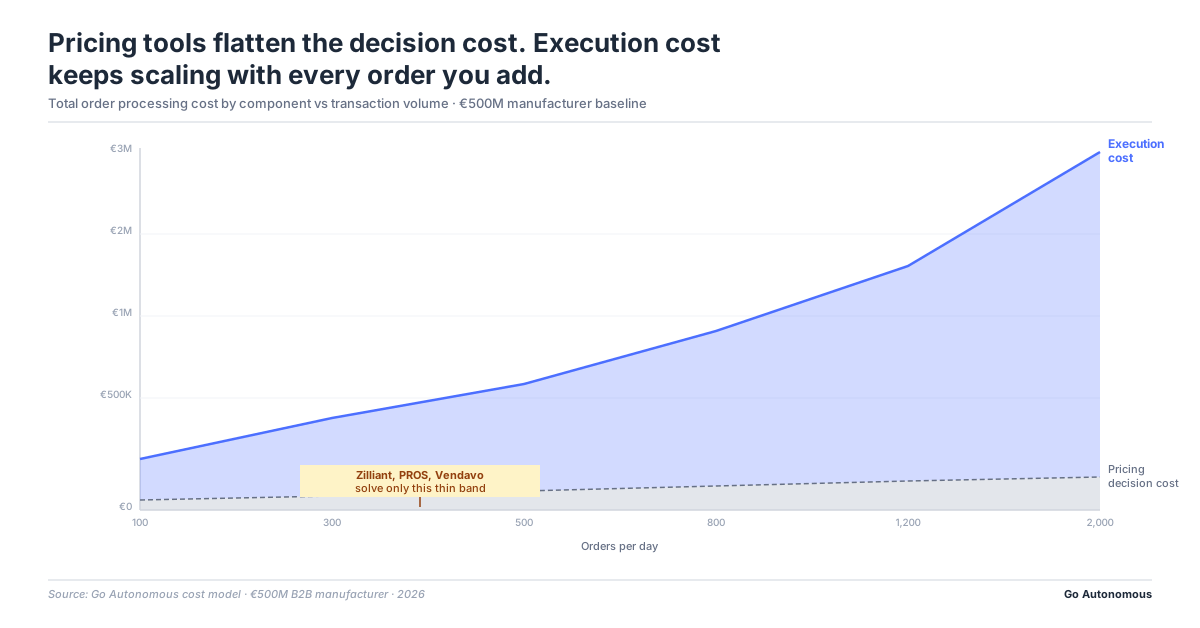
This matters because execution is where most of the cost lives. According to APQC benchmarking data, B2B companies in the top quartile for order management cost spend around $4 per order. Companies in the bottom quartile spend over $50. That 12x gap is not driven by pricing logic. It is driven by how much human labor touches each transaction between price confirmation and ERP writeback.
The Execution Gap: From Price Approved to Order Confirmed in ERP
A manufacturer processing 500 email orders per day, with an average handling time of 12 minutes per order, is committing 1,000 person-hours per week to execution. At a fully loaded cost of 45 EUR per hour, that is 2.25 million EUR per year spent on the act of receiving revenue. The pricing engine, however sophisticated, touches none of those 1,000 hours. It has already done its job by the time the CSR opens the email.
Consider what actually happens between “price approved” and “order confirmed in ERP” at a typical mid-market manufacturer:
- Customer sends a purchase order via email, PDF attachment, or EDI.
- CSR opens the PO and reads the line items.
- CSR looks up each SKU in the ERP to verify it matches the customer’s part number or description.
- CSR checks the price against the customer’s contracted pricing tier. If there is a discrepancy, it escalates.
- CSR verifies availability for each line item against current stock or confirmed delivery windows.
- CSR manually keys the order into SAP S/4HANA, Oracle Order Management Cloud, or Microsoft Dynamics 365.
- Order confirmation is sent back to the customer, manually or semi-automatically.
Steps 2 through 6 are entirely absent from every dynamic pricing tool on the market. They are also the steps where errors accumulate, exceptions pile up, and cycle time stretches from minutes into hours or days.
Can pricing optimization software automatically confirm B2B orders?
No. Pricing optimization software like PROS, Zilliant, or Vendavo does not confirm orders. These platforms provide price recommendations and guidance to sales reps and CSRs. Order confirmation requires reading the inbound transaction (email, PDF, EDI, portal), validating line items against ERP master data, resolving any discrepancies, and writing the confirmed order to the ERP system. Pricing tools are upstream of all of these steps. Autonomous Commerce platforms handle the full execution chain that pricing tools leave open.
This is what we call Friction Debt: the total monetary cost of human decisions still happening in your revenue flow. Every data field touched by a human is friction debt. Pricing tools can reduce friction debt at the pricing decision node. They cannot reduce friction debt across the broader execution chain.
Friction Debt is the operating metric of Autonomous Commerce. It captures something that order processing speed and touchless rate cannot: the cumulative cost of every manual judgment call that sits between a customer’s intent to buy and a confirmed order in your ERP. A manufacturer that has deployed a best-in-class pricing engine but still processes orders manually has reduced one component of friction debt while leaving the larger cost pool untouched.
Adopting Autonomous Commerce at Danfoss is not just about speed and efficiency. It's about empowering our customer service teams and sales force to focus on building relationships and providing personalized support.

Dynamic Pricing Tools vs. Autonomous Commerce: A Capability Comparison
The following comparison maps specific capabilities across the four dominant B2B pricing platforms against what Autonomous Commerce delivers. The intent is not to diminish pricing tools. It is to make the architectural boundary visible so that procurement decisions are made with an accurate picture of what each layer does and where it stops.
| Capability Dimension | Zilliant (AI Pricing) | PROS (Pricing Optimization) | Vendavo (Margin Management) | Autonomous Commerce |
|---|---|---|---|---|
| Price recommendation | Core capability. AI-driven, trained on transaction history and market signals. | Core capability. Real-time price guidance across complex product catalogs. | Core capability. Margin-focused price guidance with contract management. | Incorporates pricing logic from existing tools or native pricing rules. |
| Inbound order reading (email, PDF, EDI) | Not in scope. | Not in scope. | Not in scope. | Full capability. Reads email, PDF attachments, EDI 850, EDIFACT, and portal orders. |
| SKU and line-item validation against ERP master data | Not in scope. | Not in scope. | Not in scope. | Full capability. Resolves customer part numbers to ERP SKUs automatically. |
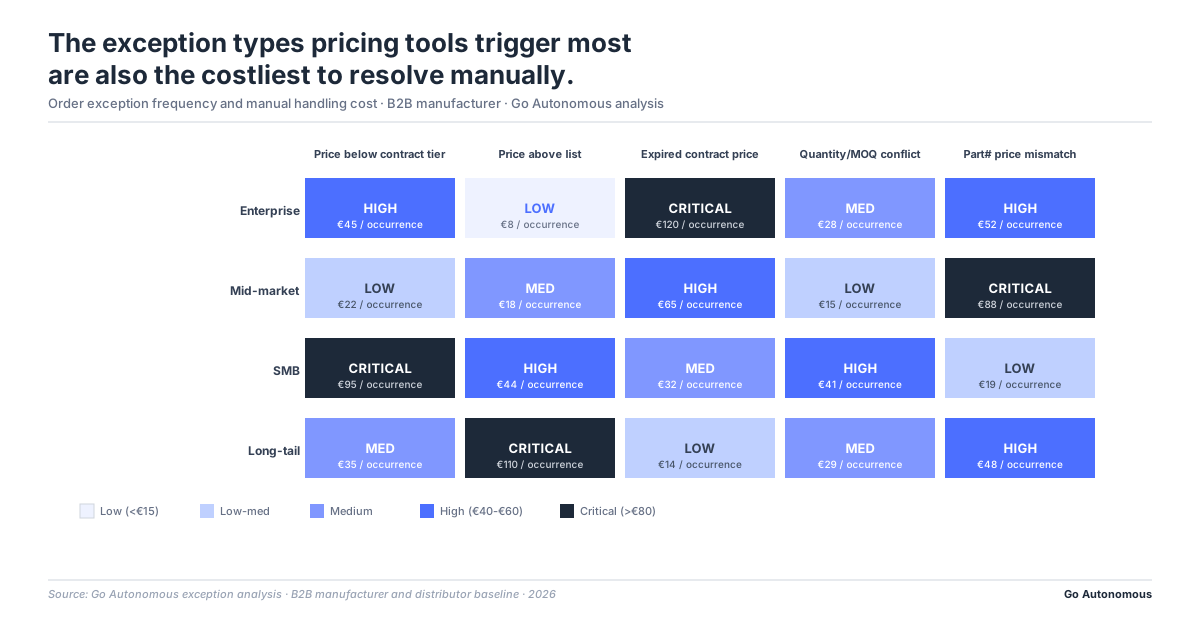
| Price discrepancy detection and resolution | Flags mismatches in CRM/quoting interface. Human resolves. | Flags mismatches in quoting workflow. Human resolves. | Flags margin exceptions. Human resolves. | Detects and resolves discrepancies autonomously within policy. Escalates genuine exceptions only. |
| ERP order writeback (SAP, Oracle, Dynamics 365) | Not in scope. Depends on separate integration layer. | Not in scope. Depends on separate integration layer. | Not in scope. Depends on separate integration layer. | Native capability. Writes confirmed orders directly to ERP without human intervention. |
| Order confirmation to customer | Not in scope. | Not in scope. | Not in scope. | Sends order confirmation autonomously, in the customer’s required format. |
| Exception handling and escalation | Routes price exceptions to sales rep. Human handles. | Routes price exceptions to sales or pricing team. Human handles. | Routes margin exceptions to commercial team. Human handles. | Handles policy-covered exceptions autonomously. Routes genuine exceptions to operators with full context. |
| Channel coverage | CRM and quoting workflow. | CRM, CPQ, and quoting workflow. | CRM and contract management. | Email, EDI, web portal, phone transcription, and direct ERP channels. |
The pattern across all three pricing platforms is consistent: they operate in the pre-transaction advisory layer. The moment a price is approved and an order arrives, their role in the transaction is complete. Everything that follows is left to existing integration layers, ERP workflows, and human operators.
Revenue Velocity: The Metric Pricing Tools Cannot Improve
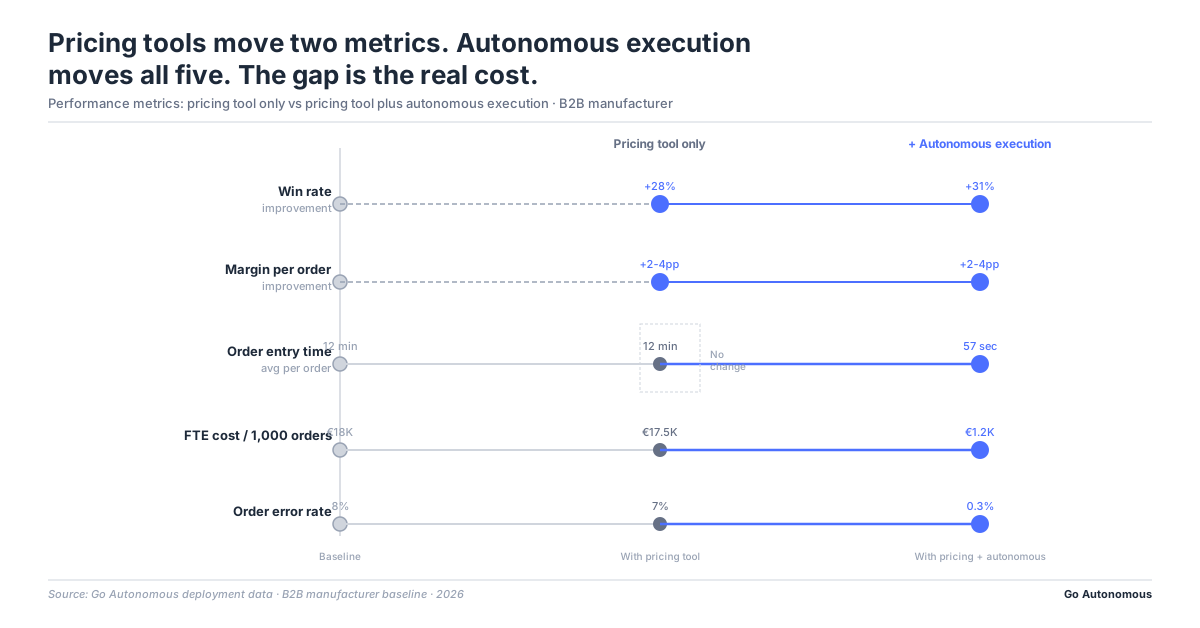
There is a measurement gap at the heart of this problem. B2B pricing teams measure win rate, margin per transaction, and price realization. These are the right metrics for a pricing tool. But they do not capture what happens between price approval and cash received.
The relevant metric is Revenue Velocity: the speed at which revenue moves through the commercial pipeline from demand signal to confirmed cash. Revenue Velocity exposes what pricing optimization cannot see. A pipeline full of price-optimized orders that sit in processing queues for 24 to 72 hours before ERP entry has strong pricing discipline and poor velocity. The pricing tool is doing its job. The execution layer is the bottleneck.
For manufacturers and distributors processing high-volume, high-complexity order flows, Revenue Velocity is the missing half of the commercial performance picture. A 3% improvement in margin per transaction means little if order cycle time is stretching by 20% year on year as volume grows and the processing team struggles to keep up.
See how autonomous execution compresses the order processing cycle across the full channel mix, not just the pricing decision point.
What is Revenue Velocity in B2B order management?
Revenue Velocity measures the speed at which revenue moves through the commercial pipeline from a confirmed demand signal to cash received. It captures what traditional pipeline metrics obscure: two companies with identical revenue volume but different cycle times have fundamentally different economics, working capital positions, and capacity to scale. Autonomous execution improves Revenue Velocity by removing human latency between demand and ERP writeback, compressing the gap that pricing tools leave open.
What Changes When Autonomous Execution Handles Order Processing End-to-End
When Autonomous Commerce is deployed alongside an existing pricing engine, the architecture changes at the execution layer. The pricing tool continues to optimize the price decision. Autonomous Commerce takes ownership of everything that happens after the price is set: reading the inbound transaction, validating it, resolving exceptions within policy, writing to the ERP, and confirming back to the customer.
For manufacturers and distributors who have already invested in pricing optimization, this is not a replacement decision. It is an extension decision. The existing pricing engine provides the pricing logic. Autonomous Commerce provides the execution fabric that applies that logic at scale without human labor in the loop.
The commercial outcomes are specific. Orders that previously took 24 to 48 hours to confirm move in under 60 seconds. Processing capacity scales with order volume without adding headcount. Exception rates drop as autonomous validation catches discrepancies earlier and resolves them faster than a manual review queue. And the customer experience improves because response time compresses from the day or more that email queues require to the minutes or seconds that autonomous processing delivers.
Go Autonomous deployments across manufacturers and distributors in the Nordics, DACH, and Benelux show consistent patterns: see published success cases for the operational and commercial outcomes across different industry contexts.
We couldn't really see that we could scale. There is definitely a direct correlation between satisfaction and revenue.
How does B2B pricing automation affect order cycle time for manufacturers?
B2B pricing automation reduces the time spent on price decisions during quote and order workflows. It does not reduce order cycle time downstream of the pricing decision. Order cycle time from receipt to ERP confirmation is driven by validation, data entry, exception handling, and manual approval steps that pricing tools do not touch. For manufacturers processing high volumes of email and PDF orders, the execution layer determines cycle time, not the pricing layer.
The distinction matters for investment prioritization. A VP Operations evaluating commercial technology stack options needs to ask: where is the actual bottleneck? If win rate is the constraint, pricing optimization is the right lever. If order throughput, processing cost, and cycle time are the constraints, the execution layer is where investment creates returns. Many manufacturers need both. Few have a clear picture of which gap is costing more.
For a broader view of how automation approaches compare on the execution question, the analysis of RPA versus AI agents for order processing is directly relevant: the same architectural boundary that separates pricing tools from execution tools separates rules-based automation from autonomous execution.
The white paper Welcome to the Era of Autonomous Commerce covers the full architectural distinction between decision-layer tools and execution-layer platforms, with context on how leading B2B manufacturers are structuring their commercial technology investments.
The Autonomous Execution Fabric: Closing the Gap Between Pricing Decisions and ERP Confirmation
The pricing optimization gap described in this post is one part of a larger architectural problem that the Autonomous Execution Fabric is designed to solve. The Fabric is a full commercial execution layer that connects directly to your SAP, Oracle, or Microsoft Dynamics environment and executes every inbound commercial transaction without human assembly. It sits between your inbound order channels and your ERP, reading, validating, and confirming transactions the moment they arrive, regardless of format or source.
The Fabric handles far more than the pricing-to-execution handoff this post covers. Across a single deployment, it processes orders from every intake channel: email, EDI, customer portal, and direct API. It handles pricing requests and quote processing, applying contract logic from your existing pricing tool or native pricing rules. It processes returns authorizations, credit notes, and contract tenders. Every commercial transaction type that currently requires a human to read, validate, and enter flows through the same execution layer, using the same ERP connection, applying the same policy rules.
Why the full scope matters: the gap between your pricing engine and your ERP is not an isolated inefficiency. It is one visible surface of a larger structural problem. The same operation that manually keys orders from email also manually processes returns requests, manually enters blanket PO call-offs, and manually handles pricing exception tickets that your dynamic pricing tool flags but cannot resolve. These are not separate problems. They share the same root cause: the absence of an execution layer that can read, decide, and act across all commercial transaction types. The Autonomous Execution Fabric closes that gap across the full transaction portfolio, not just the order entry step that first surfaces the cost.
See How Autonomous Order Execution Complements Your Pricing Stack
If your team has invested in dynamic pricing and is still seeing order cycle times measured in hours, processing costs that scale with headcount, and CSRs spending their day on data entry rather than customer relationships, the pricing layer is not the gap. The execution layer is. Go Autonomous works with 500M to 20B EUR manufacturers and distributors in the Nordics, DACH, Benelux, UKI, and France. We integrate with existing pricing tools including Zilliant, PROS, and SAP Revenue Management, and take ownership of the execution chain they leave open: from inbound order to confirmed ERP writeback, across email, EDI, portal, and phone channels. If the gap described in this post reflects your current operations, we can show you exactly what closing it looks like in your environment. Book a conversation with our team.
Who Should Act Now, and Who Can Wait
Not every manufacturer needs both a pricing engine and autonomous execution today. Here is an honest read on who faces the most urgent gap.
Act now if:
- Your customer service team is processing more than 200 email or PDF orders per day and cycle time consistently exceeds 4 hours from receipt to ERP confirmation.
- You have deployed a dynamic pricing tool and are seeing strong price realization but still struggling to scale order throughput without adding headcount.
- Your exception rate on inbound orders is above 20% and each exception requires a senior CSR or sales operations resource to resolve.
- Customer satisfaction scores are declining despite competitive pricing, because confirmation speed and order accuracy are creating friction after the price is agreed.
- Revenue is growing but processing cost per order is flat or rising, indicating the execution layer is not scaling with commercial growth.
You can wait if:
- Your order volume is under 50 per day, fully structured via EDI, and your current team handles exceptions without a measurable backlog.
- Your primary commercial constraint is pricing accuracy or margin leakage, not order throughput or processing cost.
- You are in the middle of an ERP migration that will change your order management architecture in the next 12 months. In this case, evaluate execution automation in parallel with the migration rather than layering on top of a system that is about to change.
The commercial technology stack for B2B manufacturers is not an either/or choice between pricing optimization and autonomous execution. For companies processing high-volume, multi-channel order flows, both layers are necessary. The pricing engine determines the right price. Autonomous Commerce delivers that price into a confirmed, executed order without the human labor that currently sits between the two.
Sources
Frequently Asked Questions
What is the difference between B2B pricing automation and autonomous order execution?
B2B pricing automation determines the correct price for a transaction using AI and historical data. Autonomous order execution takes an inbound order, validates it against pricing contracts and ERP master data, resolves discrepancies, and writes the confirmed order to the ERP without human involvement. Pricing automation operates at the decision layer. Order execution automation operates at the transaction layer. Both are necessary; neither replaces the other.
How do dynamic pricing tools like Zilliant integrate with order processing?
Zilliant integrates with CRM and ERP systems to surface price recommendations at the point of quoting or order entry. The platform delivers a recommended price to the sales rep or CSR interface. The human then applies that price to the specific transaction. Zilliant does not read incoming purchase orders, extract line items, validate order data against inventory, or write to the ERP. It is a decision-support layer that operates before order execution begins.
Can pricing optimization software automatically confirm B2B orders?
No. Pricing optimization platforms like PROS, Zilliant, and Vendavo do not confirm orders. Order confirmation requires reading the inbound transaction, validating line items against ERP master data, resolving discrepancies, and writing the confirmed order to the ERP. Pricing tools complete their role when a price recommendation is delivered. Autonomous Commerce platforms handle the full execution chain that pricing tools leave open.
What is Revenue Velocity in B2B order management?
Revenue Velocity measures the speed at which revenue moves through the commercial pipeline from a confirmed demand signal to cash received. It captures what traditional pipeline metrics obscure: companies with identical revenue volume but different processing cycle times have fundamentally different working capital positions. Autonomous execution improves Revenue Velocity by removing human latency between order receipt and ERP writeback, compressing the execution gap that pricing tools leave open.
What is Friction Debt in B2B commercial operations?
Friction Debt is the total monetary cost of human decisions still happening in the revenue flow. It includes decision time, decision cost, and decision drag on downstream revenue. Every data field touched by a human is friction debt. Dynamic pricing tools reduce friction debt at the pricing decision node only. Autonomous Commerce reduces friction debt across the full execution chain: order intake, validation, ERP writeback, and order confirmation.
How does B2B pricing automation affect order cycle time for manufacturers?
B2B pricing automation reduces the time spent on price decisions during quote and order workflows. It does not reduce order cycle time downstream of the pricing decision. Order cycle time from receipt to ERP confirmation is driven by validation, data entry, exception handling, and manual approval steps that pricing tools do not touch. For manufacturers processing high volumes of email and PDF orders, the execution layer determines cycle time, not the pricing layer.
How does Autonomous Commerce work alongside an existing pricing tool like PROS or Vendavo?
Autonomous Commerce integrates with existing pricing tools by consuming their price outputs and applying them at the execution layer. The pricing tool continues to optimize price recommendations. Autonomous Commerce reads the inbound order, validates it, applies the pricing logic from the connected tool, resolves exceptions within policy, and writes the confirmed order to the ERP. The result is an end-to-end execution chain that closes the gap between a recommended price and a confirmed transaction.