.svg)





Why B2B Customer Service Teams Spend More Time on Administration Than Customers
B2B customer service representatives in manufacturing and distribution spend 60–70% of their working time on administrative tasks: entering orders, resolving exceptions, checking statuses, and processing returns. Customer engagement — the proactive conversations, account development, and problem-solving that drive retention and growth — occupies the remaining 30–40%. This post explains why the ratio has inverted and what restores it.
B2B customer service representatives in manufacturing and distribution spend 60–70% of their working time on administrative tasks: manually entering orders, resolving exceptions, checking statuses, and processing returns. The proactive customer engagement that drives retention, upsell, and long-term account value occupies the remaining 30–40%. As order volumes grow with revenue, that ratio worsens. This post explains the mechanics of how administration crowded out the customer-facing role, and what restores the balance.
Table of Content
- B2B Customer Service Reps Spend 60–70% of Their Time on Administration, Not Customer Engagement
- Order Entry Is the Largest Time Consumer: Manual Entry Across Email and Phone Volume
- Exception Resolution Is the Second Largest Time Consumer and the Most Disruptive
- When Administration Is Automated, Customer Service Becomes What It Was Hired to Do
- Frequently Asked Questions
- How much time do B2B customer service reps spend on order entry vs. customer engagement?
- Why do B2B customer service teams in manufacturing spend so much time on administrative tasks?
- How does order automation change the role of customer service in B2B manufacturing?
- What is the commercial impact of freeing B2B customer service time from administrative tasks?
- How do B2B distributors improve customer service team productivity without adding headcount?
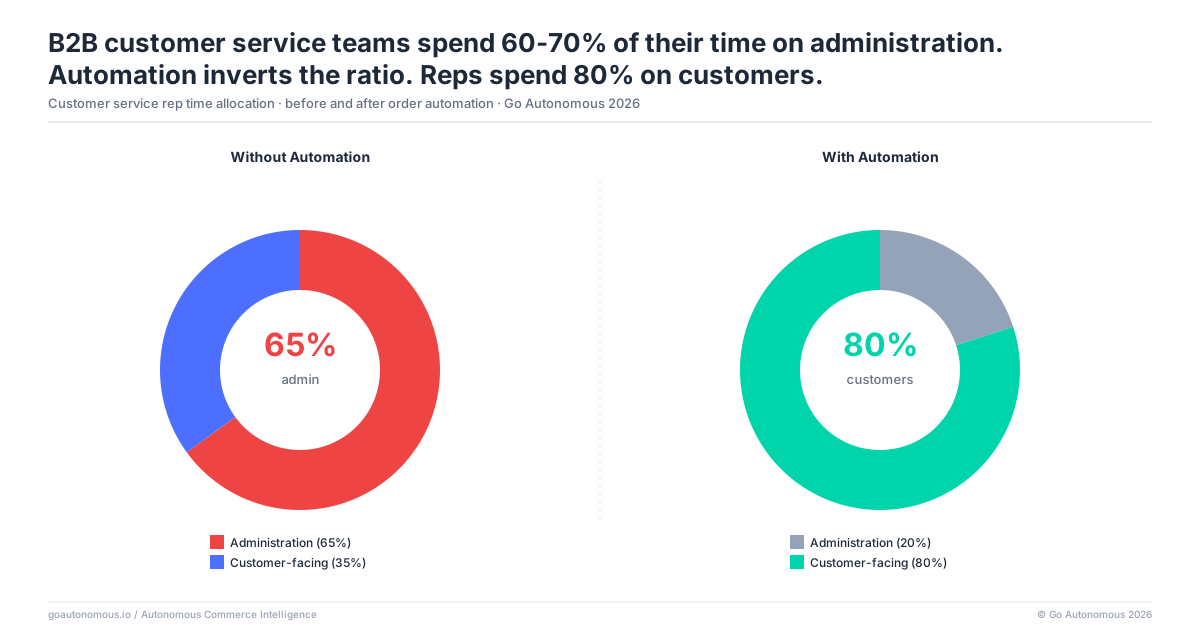
B2B Customer Service Reps Spend 60–70% of Their Time on Administration, Not Customer Engagement
The Administrative Tasks That Consume Customer Service Time in B2B Manufacturing
In B2B manufacturing and distribution, the customer service role was designed for customer engagement: understanding customer needs, resolving issues proactively, developing account relationships, and identifying upsell opportunities. In practice, the role has become predominantly administrative.
Time studies in B2B customer service environments consistently show 60–70% of working hours spent on the following tasks:
- Manually entering orders received by email or phone into the ERP
- Checking order status and relaying updates to customers
- Resolving order exceptions: pricing errors, product mismatches, delivery discrepancies
- Coordinating with warehouse or logistics on delivery issues
- Processing returns and credit notes
- Responding to inbound calls and emails about order status
The customer experience cost of this inversion is direct: when the people responsible for customer relationships are occupied with data entry and status lookups, they have no capacity for the proactive engagement that builds account value.
What Gets Crowded Out: Proactive Account Management, Upsell Conversations, Issue Prevention
The customer engagement activities that drive retention and revenue growth are compressed into the remaining 30–40% of available time. When administrative volume spikes, which it does whenever a large customer sends a complex order or an exception requires investigation, the customer-facing work is the first to be deferred. Upsell conversations that require preparation and follow-up are skipped. Early warning signals from customer behavior go unnoticed. Issues that could have been prevented escalate because no one had time to spot them.
The result is a customer service function that is technically present but operationally absent from the activities it was hired to perform. The 50–70% of order volume that arrives via email and other unstructured channels is not just an efficiency problem: it is what consumes the team’s capacity and displaces the work that would otherwise retain and grow accounts.
Each time we added one or two million euros in revenue, we had to add another operator. From a cost perspective, that's an unsustainable way of operating a business.

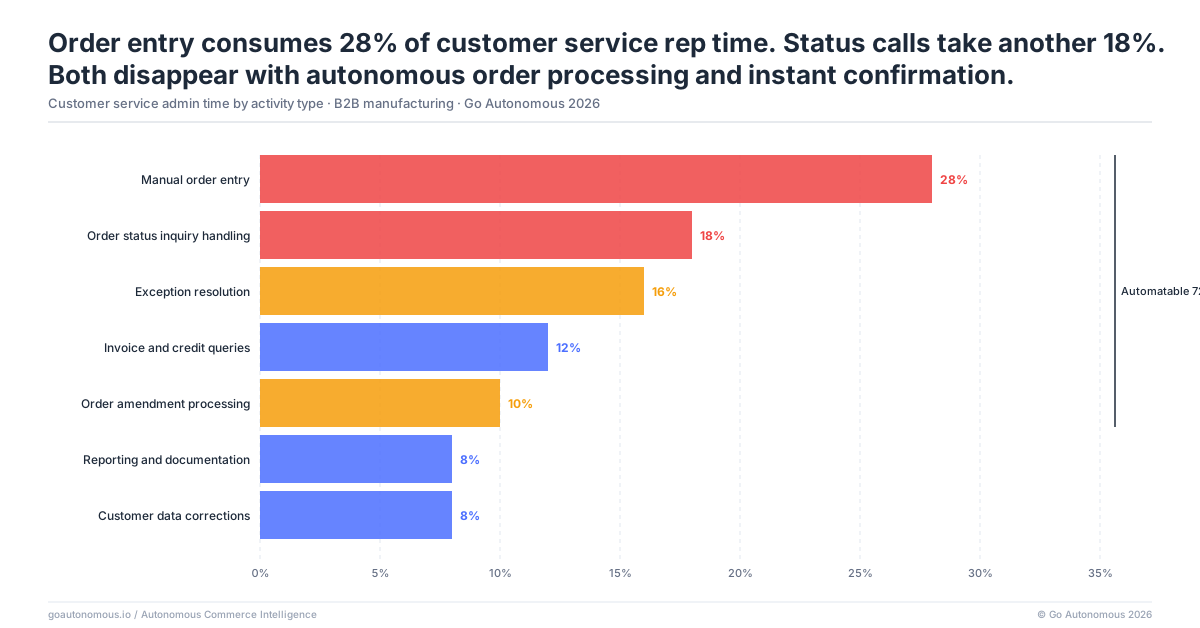
Order Entry Is the Largest Time Consumer: Manual Entry Across Email and Phone Volume
How Much of Customer Service Time Goes to Order Entry vs. Customer Interaction
Manual order entry — reading an email, opening the ERP, finding the customer record, keying each line item, validating quantities and pricing, saving the order — consumes 20–35 minutes per order for non-EDI orders. In environments where manual cost per order runs €15–35, that time cost is directly visible. For a customer service rep handling 20 orders per day, order entry alone consumes the equivalent of 7–12 hours of working time.
The math only holds because reps multitask: switching between the ERP, email, and phone in parallel rather than completing one task before starting another. But multitasking does not eliminate the time burden. It distributes it across the day in a way that makes it invisible while ensuring that every additional order in the queue compresses time available for everything else.
Why Order Entry Volume Grows With Revenue Without the Role Growing With It
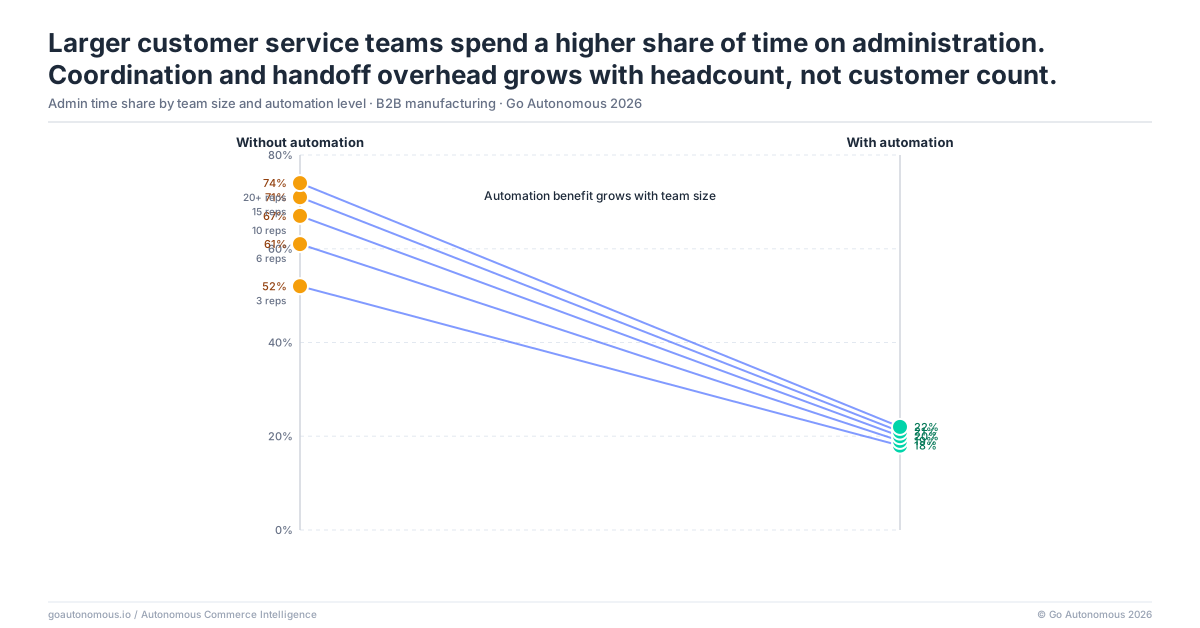
The structural problem is the relationship between revenue growth and order volume. As a manufacturer or distributor grows its customer base and transaction volume, order entry work grows in direct proportion. The headcount required to manage it grows with it, unless the method of processing changes.
This is the dynamic Mikkel Vindeløv describes precisely: each revenue increment requires a corresponding operational increment. When the operational increment is a human processing orders manually, the cost structure scales linearly with revenue rather than improving with scale. Rule-based automation addresses some of this, but it plateaus at around 60% touchless order processing. The remaining 40% of orders with any complexity or exception remain manual. Those are the orders that consume the most time and generate the most status calls.
Exception Resolution Is the Second Largest Time Consumer and the Most Disruptive
What Exception Resolution Requires: Investigation, Cross-Department Coordination, and Customer Contact
Exception resolution is not just time-consuming: it is disruptive in a way that order entry is not. Order entry is repetitive and predictable. Exception resolution requires stopping whatever else the rep is doing, investigating the issue, potentially contacting the customer for clarification, waiting for a response, coordinating with sales or finance if escalation is needed, and re-processing the order once resolved.
With 20–40% of orders triggering at least one exception, and each exception adding 4–8x the base processing time, the exception queue is a constant presence in the working day. A rep managing 20 orders per day can expect 4–8 exceptions requiring active investigation. Some of those exceptions cascade: one exception on a large order generates follow-up calls, credits, and re-confirmations that consume additional time across multiple days.
The Context-Switch Cost: Each Exception Interrupts 2–3 Other In-Progress Activities
The deeper cost of exception resolution is the context-switching it forces. Each exception interrupts 2–3 other in-progress activities: an order being entered, a status call being prepared, a customer email being drafted. Research on cognitive switching costs suggests 15–20% additional time is required to return to full productivity after an interruption. For reps managing 10–15 exceptions per day in addition to entry and status calls, that context-switch overhead is material.
The irony of the situation is self-reinforcing: the administrative overload that prevents customer engagement also reduces order accuracy, which generates more status calls and complaints from customers, which adds more administration. The comparison between rule-based automation and AI-driven execution is relevant here: RPA can automate clean orders but cannot resolve the exceptions that generate the most disruption. That gap is where the administrative burden concentrates.
When Administration Is Automated, Customer Service Becomes What It Was Hired to Do
What the Customer Service Role Looks Like When Order Entry and Status Calls Are Automated
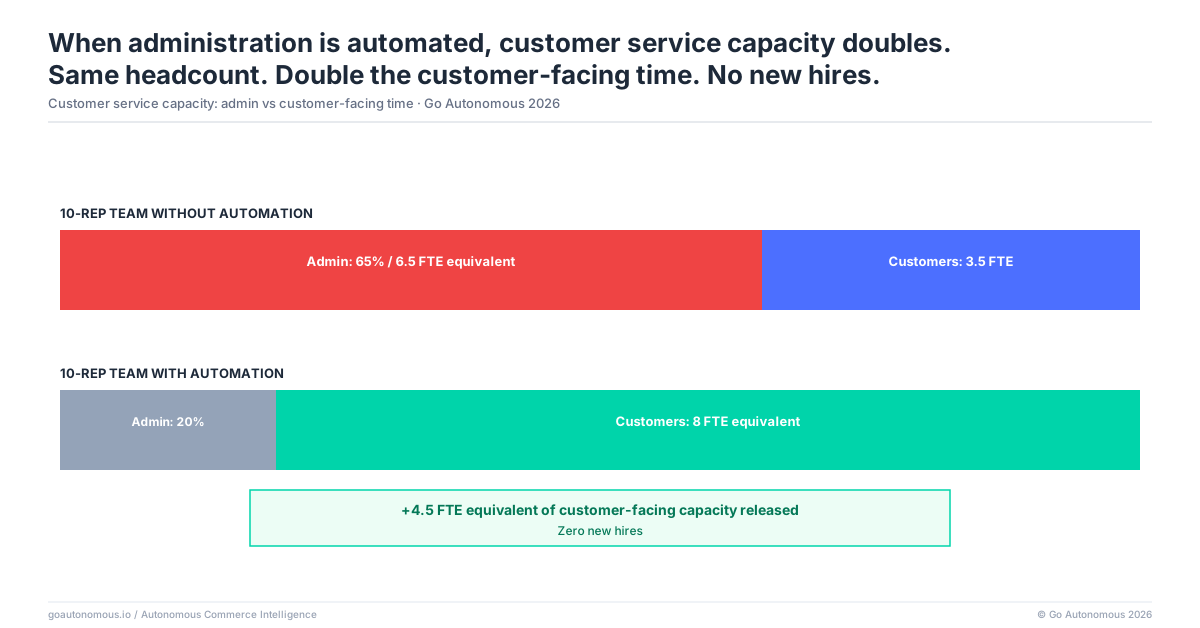
When autonomous order processing handles order entry and automated confirmation eliminates status calls, the customer service team recovers 60–70% of their working day. That is not a marginal improvement: it is a role transformation. The team that was spending most of its time on data entry and status lookups now has the capacity for the work it was designed to perform.
The autonomous commerce model processes orders end-to-end: reading the inbound purchase order from email or any other channel, extracting and validating the data, applying pricing rules, and confirming back to the customer — all without human involvement on clean orders. Exceptions are surfaced with context and proposed resolutions rather than dropped in a queue for investigation from scratch. Status inquiries are answered automatically. The customer service team’s interaction with order processing shifts from execution to exception oversight.
The Commercial Value of Restoring 60–70% of Customer Service Time to Customer Engagement
The commercial value of this shift is measurable in the outcomes it enables. Proactive account management surfaces renewal risks and expansion opportunities before they surface as churn or missed revenue. Early identification of customer issues prevents escalations that damage relationships. Upsell and cross-sell conversations that require time and preparation become possible where they were not before.
Operations that have made this transition report higher customer satisfaction scores, lower churn rates, and higher revenue per account managed, without adding headcount. The efficiency gains compound: the same team handles more volume, with more accuracy, and more customer-facing output. The revenue impact flows through account retention and expansion. See what this model looks like in practice at Go Autonomous success cases and the broader revenue picture at topline growth and margin management.
If your customer service team is spending the majority of its time on order entry and exception resolution rather than customer engagement, book a conversation with Go Autonomous to see the operational shift in a live environment.
Frequently Asked Questions
How much time do B2B customer service reps spend on order entry vs. customer engagement?
B2B customer service reps in manufacturing and distribution spend 60–70% of their working time on administrative tasks including order entry, exception resolution, status checks, and returns processing. Customer engagement activities — proactive account management, upsell conversations, issue prevention — occupy the remaining 30–40%. As order volume grows with revenue, the administrative share typically increases, further compressing time available for customer-facing work.
Why do B2B customer service teams in manufacturing spend so much time on administrative tasks?
B2B customer service teams in manufacturing spend most of their time on administration because 50–70% of order volume arrives via unstructured channels (email, phone, fax) and requires manual entry into the ERP. Manual order entry takes 20–35 minutes per order. Combined with exception resolution, which affects 20–40% of orders, and status call handling, the administrative workload consumes the majority of the working day, leaving limited time for customer engagement.
How does order automation change the role of customer service in B2B manufacturing?
Order automation changes the customer service role by removing manual order entry and routine status calls from the team’s workload. When autonomous order processing handles end-to-end execution and automated confirmation eliminates status inquiries, customer service teams recover 60–70% of their working day. That recovered time returns to proactive account management, relationship development, and commercial activities that drive retention and growth.
What is the commercial impact of freeing B2B customer service time from administrative tasks?
Freeing B2B customer service time from administrative tasks produces measurable commercial outcomes: higher customer satisfaction scores, lower churn rates, and increased revenue per account managed. Proactive engagement enabled by recovered time surfaces expansion opportunities and retention risks earlier. Operations that have made this shift report these outcomes without adding headcount, because the same team handles more volume more accurately while also increasing customer-facing output.
How do B2B distributors improve customer service team productivity without adding headcount?
B2B distributors improve customer service productivity without adding headcount by automating the order entry and exception handling processes that consume most of the team’s time. Autonomous order processing reads inbound purchase orders from any channel, extracts and validates data, applies pricing rules, and confirms to customers without manual involvement. This allows the existing team to handle higher order volume at lower cost per order while redirecting available time toward customer engagement activities.