.svg)





Why B2B Credit Notes Take 2–4 Weeks, Even on Oracle ERP Cloud
Oracle ERP Cloud handles sales order creation with automation and structure. Returns processing runs in the opposite direction through a workflow that remains largely manual in most implementations. For B2B manufacturers running Oracle, the gap between a customer's return request and a credit note in their account is typically 2–4 weeks, and the operations cost of that gap is rarely measured. This post maps why credits take weeks in Oracle environments and what the automated alternative looks like.
Oracle ERP Cloud processes sales orders with structure and automation. The same system processes returns through a workflow that is largely manual in most B2B implementations. The gap between a customer’s return request and a credit note in their account runs 2–4 weeks in typical Oracle environments, not because Oracle lacks returns functionality, but because the RMA workflow requires human initiation at each step. This post maps the specific Oracle returns process, where the delays accumulate, and what automated returns processing changes for manufacturers and distributors running Oracle.
Table of Content
- Oracle ERP Cloud Creates Orders Efficiently: Returns Flow in the Opposite Direction Without the Same Automation
- The Oracle Returns Authorization Workflow Contains 5–9 Manual Steps Before a Credit Note Exists
- Returns Credit Backlogs in Oracle Accumulate at Quarter-End: What Finance Faces
- Automated Returns Intake Triggers Oracle RMA Creation Without Manual Initiation
- Frequently Asked Questions
- Why do B2B credit notes in Oracle ERP Cloud take weeks to process?
- What is the Oracle RMA workflow for B2B returns in manufacturing environments?
- How do B2B manufacturers speed up returns processing in Oracle ERP Cloud?
- What is the operations cost of slow credit note processing in B2B distribution?
- Can AI automate the Oracle RMA creation process for B2B return requests?
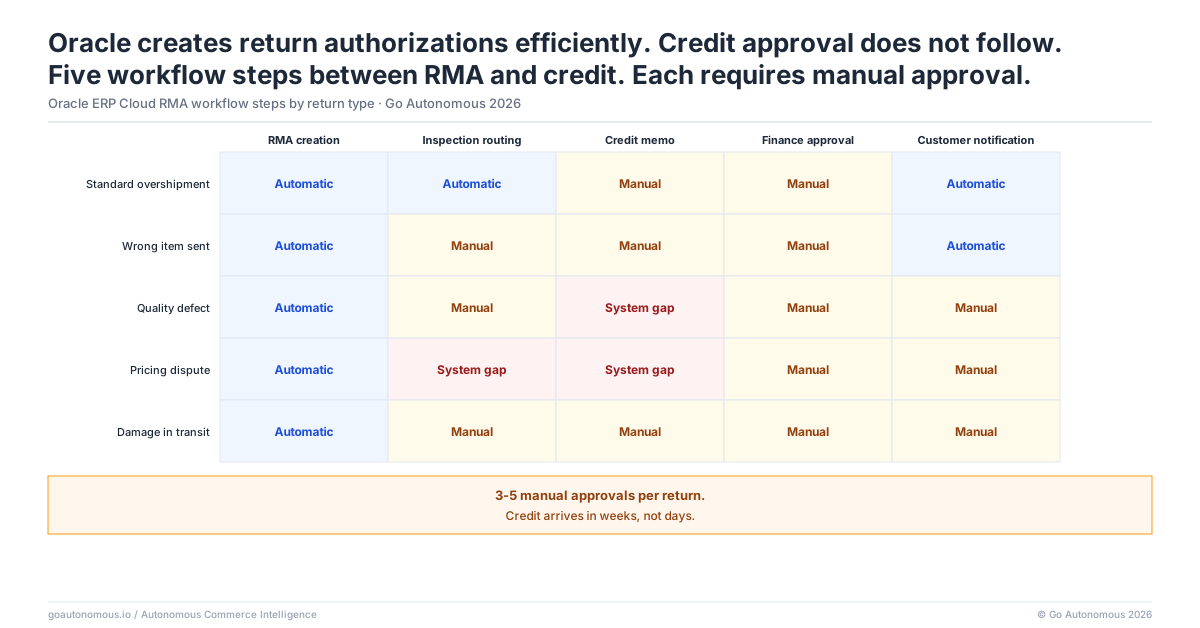
Oracle ERP Cloud Creates Orders Efficiently: Returns Flow in the Opposite Direction Without the Same Automation
What Oracle ERP Cloud Provides for Returns: RMA Functionality That Requires Manual Triggering
Oracle ERP Cloud’s order-to-cash module includes return material authorization (RMA) functionality. The capability is built into the system. Customer service teams can create RMAs, assign return reason codes, route approvals, and generate credit memos: all within Oracle. The problem is not missing functionality. The problem is that every step in the Oracle RMA workflow requires a human to initiate it.
Oracle does not automatically read a customer’s email return request and create an RMA. Oracle does not automatically issue a credit memo when warehouse confirms the return was received. The automation that exists in Oracle for order processing, interface integrations, EDI processing, configured order rules, does not extend natively to returns. The inbound return request arrives outside Oracle (typically by email or phone), requires manual interpretation, and must be manually entered as an RMA by a customer service rep before Oracle’s workflow can advance. The customer experience consequence is a 2–4 week credit cycle that customers have learned to expect and plan around, which is its own form of operational dysfunction.
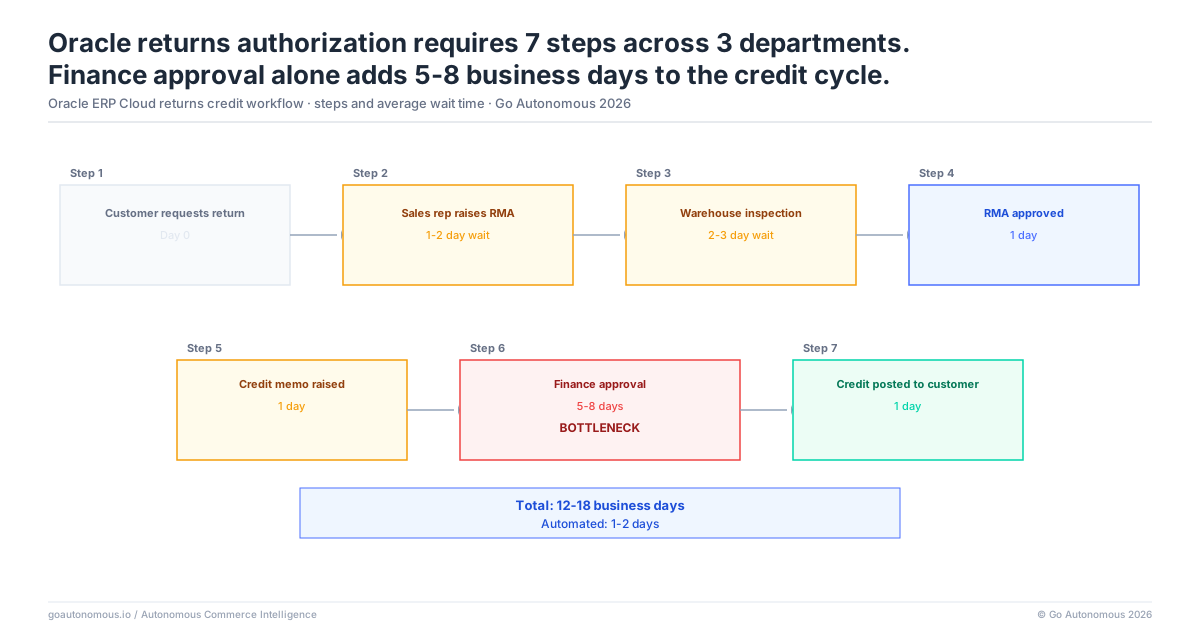
The Asymmetry Between Order Creation and Return Processing in Oracle
In Oracle implementations with EDI or customer portal integration, a sales order can move from receipt to confirmed ERP entry in under an hour. The automation is on the inbound order side: structured inputs trigger configured Oracle workflows with minimal human touch. Returns are the structural opposite. The inbound return request is unstructured (an email describing a problem), requires human interpretation and judgment, and must be manually translated into the specific Oracle RMA fields before any system automation can engage.
The asymmetry is a fundamental design gap, not an Oracle configuration problem. Oracle’s RMA module was built to manage the approval, receipt, and credit workflow, not to read unstructured return requests. Filling that gap with human labor is the default for most Oracle B2B implementations, and the result is a 2–4 week credit cycle that accumulates into a significant customer experience and working capital problem for manufacturers and distributors processing meaningful returns volume.
Each time we added one or two million euros in revenue, we had to add another operator. From a cost perspective, that's an unsustainable way of operating a business.

The Oracle Returns Authorization Workflow Contains 5–9 Manual Steps Before a Credit Note Exists
Step-by-Step: From Return Request Email to Oracle Credit Note
The Oracle returns workflow in a standard B2B manufacturing or distribution environment runs as follows:
- Customer emails or calls with a return request
- Customer service rep opens Oracle, locates the original order, and creates an RMA manually
- RMA is routed for approval if it exceeds a value threshold (common above €500–2,000)
- Approved RMA number is communicated to the customer by the rep
- Customer ships goods with the RMA reference
- Receiving team logs the return receipt in Oracle’s warehouse module
- Inspection team confirms condition and quantity match the RMA
- Oracle records the matched receipt
- Finance creates the credit memo in Oracle
Each step has queue time. Steps 1–4 take 3–5 days in manual environments: longer when the approval threshold is exceeded and the approver is not available. Steps 5–7 depend on transit time but add a minimum of 2–5 days for European shipments. Steps 8–9 take 3–7 days in finance teams that batch credit memo processing rather than processing on receipt confirmation. The total: 2–4 weeks minimum for standard returns. Complex returns requiring partial credits, liability determination, or multi-line order reconciliation extend beyond 4 weeks.
Where Each Step Lives in Oracle and Which Team Owns It
The Oracle returns workflow crosses three functional teams, each with its own queue and priority management. Customer service owns steps 1–4: receiving the request, creating the RMA, managing approval, and communicating with the customer. Warehouse and logistics owns steps 5–7: coordinating receipt, managing the physical return, and logging confirmation. Finance owns steps 8–9: reconciling the Oracle receipt record and creating the credit memo.
Cross-team handoffs add delay even when each team processes its own steps promptly. The finance team cannot create a credit memo until warehouse confirms receipt. Warehouse cannot confirm receipt until the customer ships. The customer cannot ship until customer service provides the RMA number. Each dependency is sequential. There is no parallel processing in the standard Oracle returns workflow. The Mikkel Vindeløv dynamic applies directly: the headcount required to manage this workflow at scale grows proportionally with returns volume, with no natural efficiency improvement from volume increase.
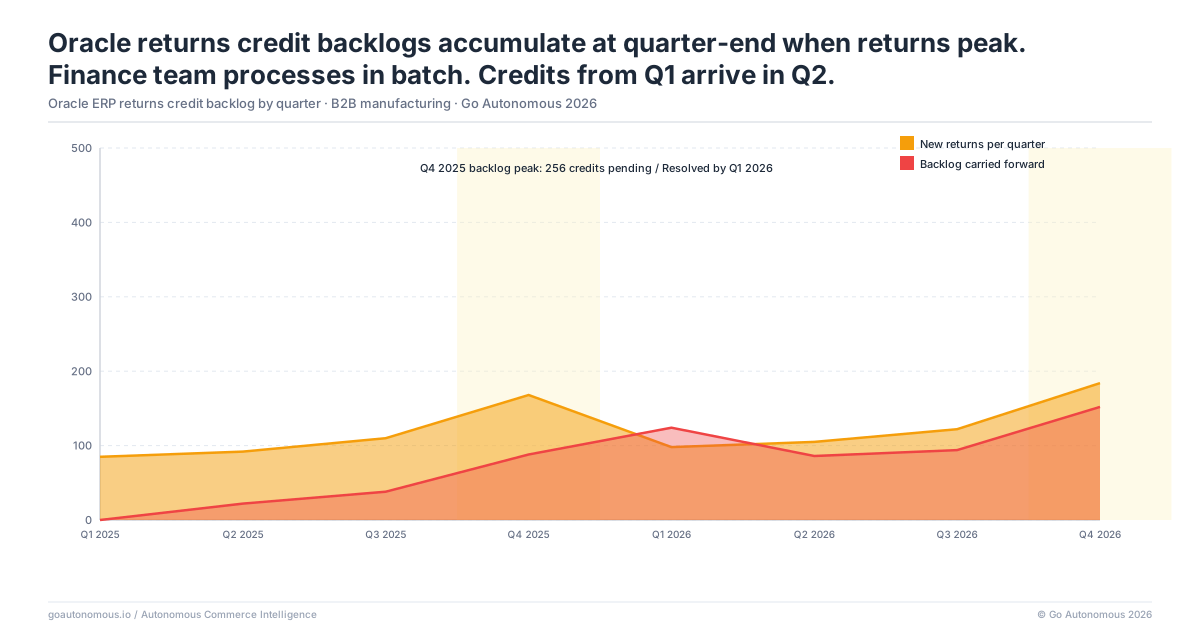
Returns Credit Backlogs in Oracle Accumulate at Quarter-End: What Finance Faces
The Quarter-End Credit Note Crunch: When Returns Volume Meets Finance Close Deadlines
Returns do not arrive at a consistent rate. They cluster around shipment events, quality inspections, and commercial cycles. End-of-quarter is a peak period for return requests: customers closing accounts payable push for outstanding credit resolution before their own financial close. Finance teams managing Oracle credit memo backlogs at quarter-end face simultaneous pressure from multiple customers requesting credit resolution while also running financial close activities in Oracle.
The Oracle credit backlog at quarter-end is a predictable consequence of processing returns through a sequential manual workflow. Returns that arrived in weeks 8 and 9 of the quarter are processed in weeks 11 and 12 as the backlog clears, and some roll into Q+1, creating persistent reconciliation issues between the supplier’s Oracle instance and the customer’s accounts payable system. The efficiency cost of the backlog is not just the processing time: it is the customer escalation management, the accounts reconciliation effort, and the relationship friction that accumulates when customers cannot predict when credits will appear in their accounts.
What Customers Experience When Oracle Credit Notes Are Consistently Late
From the customer’s perspective, a 2–4 week credit cycle means carrying outstanding receivables on their books for the full returns processing period. For customers with multiple outstanding returns at any time, the total outstanding credit balance may represent material working capital tied to supplier process inefficiency rather than legitimate dispute. Customers who escalate, as they inevitably do when credits are 3+ weeks outstanding, consume customer service time that is better deployed on revenue-generating activities.
The customer retention dimension of slow Oracle credit processing is real. In B2B manufacturing and distribution, where customer relationships are long-term and repeat purchase rates drive margin, a supplier known for slow credit processing faces a competitive disadvantage against suppliers who process returns in days. The cost of losing a customer to a competitor with faster credit processing dwarfs the cost of automating the Oracle returns workflow. See the Nilfisk case for a concrete example of what systematic order management improvement delivers on customer experience metrics.
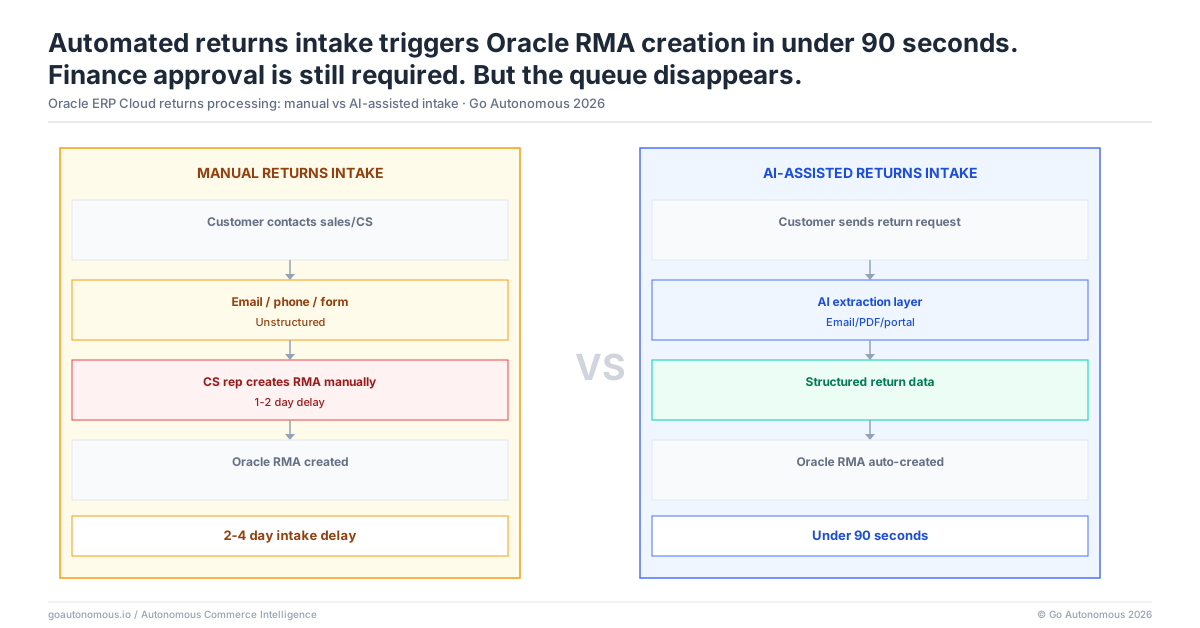
Automated Returns Intake Triggers Oracle RMA Creation Without Manual Initiation
How AI-Assisted Returns Processing Reads Return Requests and Creates Oracle RMAs Automatically
Automating Oracle returns processing addresses the specific gap in the Oracle workflow: the unstructured inbound return request that requires human interpretation before Oracle can engage. AI-assisted returns processing reads the inbound return request, from email, portal message, or EDI transaction, identifies the original Oracle order number, determines the return type and reason code, and creates the RMA in Oracle without human initiation. For standard return scenarios (wrong product, short shipment, standard damage claim), the RMA exists in Oracle within minutes of the customer’s request arriving.
The Oracle workflow then proceeds from the automated RMA: approval routing (where required) triggers automatically based on the RMA value; the RMA number is communicated to the customer without customer service rep involvement; warehouse receipt logging is matched against the RMA automatically upon confirmation; and the credit memo is created in Oracle’s finance module once the matched receipt is confirmed. Customer service teams are notified of RMAs requiring exception handling, returns involving disputed liability, unclear product condition, or partial credit decisions, without touching standard returns at all.
What Oracle Finance Operations Gain When Returns Process in Days, Not Weeks
Compressing the Oracle credit cycle from 2–4 weeks to 3–5 days for standard returns produces three structural improvements in finance operations. First, the quarter-end credit backlog shrinks from weeks of accumulated open RMAs to a small set of genuinely complex cases requiring manual review. Financial close activities in Oracle are no longer competing with backlog clearance. Second, the Oracle accounts receivable aging report clears faster: credits that previously sat in the 30–60 day aging bucket now clear within the first 5–7 days. Third, customer escalation volume drops because credits arrive predictably and within the processing window customers now expect.
The Danfoss deployment demonstrates what systematic Oracle order management automation produces at scale: 42 hours to under 1 minute for order processing, 26 countries coordinated in a single day, and 80% autonomous processing. The same intake-first automation approach that transformed Danfoss order processing applies directly to the Oracle returns workflow. See the full case at Danfoss streamlines order intake and the broader outcomes at success cases. For Oracle manufacturers and distributors ready to close the returns processing gap, book a session with the Go Autonomous team.
Frequently Asked Questions
Why do B2B credit notes in Oracle ERP Cloud take weeks to process?
Oracle ERP Cloud credit notes take weeks because the RMA workflow requires human initiation at each step. Oracle does not automatically read inbound return request emails or create RMAs from unstructured inputs. A customer service rep must manually create the RMA, route it for approval, coordinate with warehouse for receipt confirmation, and trigger credit memo creation in finance. The sequential workflow across three teams accumulates 2–4 weeks of total processing time.
What is the Oracle RMA workflow for B2B returns in manufacturing environments?
The Oracle RMA workflow in B2B manufacturing runs 5–9 sequential steps: (1) receive return request, (2) manually create RMA in Oracle, (3) route for approval if above value threshold, (4) communicate RMA to customer, (5) receive returned goods, (6) log receipt in Oracle warehouse module, (7) inspect and confirm, (8) match receipt to RMA, (9) create credit memo in finance. Each step has queue time and the workflow crosses customer service, warehouse, and finance teams.
How do B2B manufacturers speed up returns processing in Oracle ERP Cloud?
B2B manufacturers speed up Oracle returns processing by deploying AI-assisted intake that reads inbound return requests and automatically creates RMAs in Oracle without manual initiation. The AI identifies the original order, assigns the return reason code, and creates the RMA. Oracle’s standard approval and receipt workflow then proceeds from the automated RMA. This compresses the 2–4 week cycle to 3–5 days for standard returns.
What is the operations cost of slow credit note processing in B2B distribution?
Slow credit note processing costs B2B distributors in three ways: working capital tied up in outstanding returns credits (each 2–4 week delay on a €80,000 return is a direct capital cost), customer service time consumed by credit escalations, and customer retention risk when a competitor processes credits in days. The quarter-end credit backlog in Oracle creates additional finance operations cost as backlog clearance competes with financial close activities.
Can AI automate the Oracle RMA creation process for B2B return requests?
Yes. AI-assisted returns processing reads inbound return requests from email, portal, or EDI, identifies the original Oracle order, determines the return reason code, and creates the RMA in Oracle automatically for standard return scenarios. The AI handles the unstructured-to-structured translation that is the manual bottleneck in the standard Oracle returns workflow. Complex returns requiring liability determination or partial credit judgment remain human-reviewed.