.svg)





Why Order Exceptions Still Need a Human Even After SAP Flags Them
Most SAP environments have exception management workflows configured. Most SAP environments still route those exceptions to humans for resolution. SAP is excellent at identifying that something went wrong; it is not designed to fix it. This post explains why manual exception resolution persists in SAP-heavy operations and what the alternative architecture looks like.
SAP’s order management modules are well-engineered for exception visibility. Pricing holds, credit blocks, missing delivery data, unconfirmed stock: SAP identifies these conditions and routes them to the appropriate work queue. What SAP does not do, and was not designed to do, is resolve them. Resolution requires judgment: contacting the customer to clarify an ambiguous product reference, determining whether a pricing discrepancy reflects an outdated quote or a genuine pricing error, deciding whether to proceed with a partial delivery or hold the order. That judgment requirement is what keeps manual labor embedded in SAP exception management regardless of how well the workflows are configured.
Table of Content
- SAP Flags Order Exceptions: Resolving Them Is Still a Human Activity
- Most SAP Exception Workflows Route Problems to Humans, Not Solutions
- The SAP Exception Backlog Grows Faster Than Operations Teams Can Clear It
- AI Agents That Resolve SAP Exceptions at Intake Eliminate the Backlog
- The Autonomous Execution Fabric: How SAP Exception Handling Fits a Larger Commercial Gap
- Frequently Asked Questions
- How do you reduce order exception handling in SAP without replacing the ERP?
- Why do SAP exception workflows still require manual resolution in B2B manufacturing?
- Can AI automatically resolve order exceptions in SAP environments?
- What is the best way to reduce SAP order management exceptions for B2B distributors?
- How do manufacturers eliminate order exception backlogs in SAP order management?
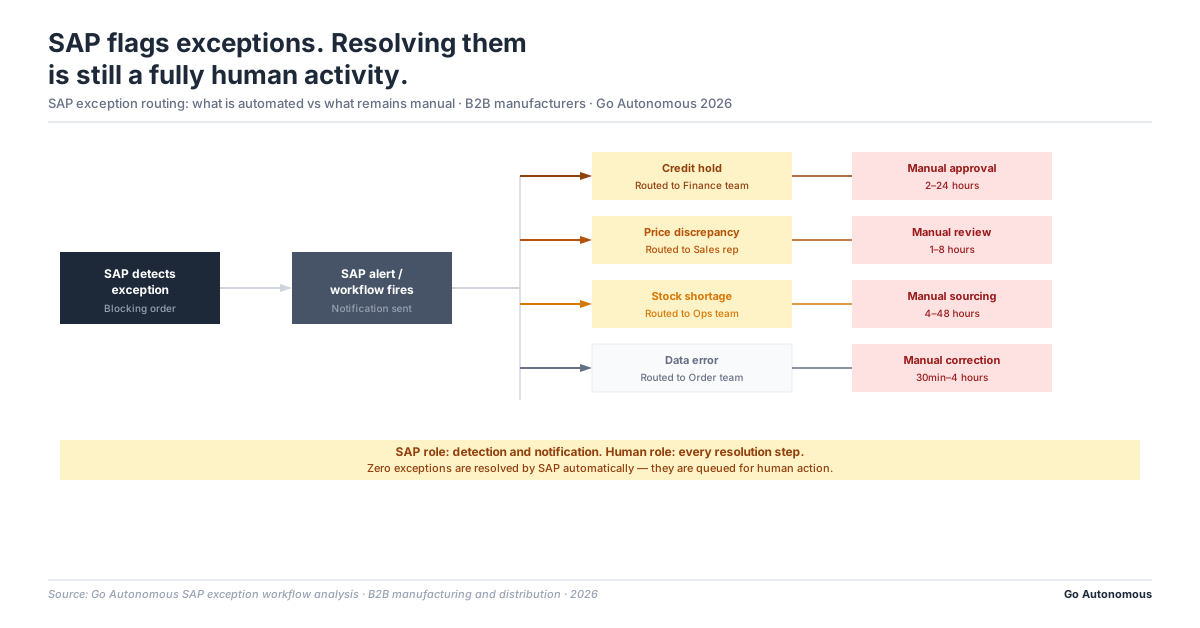
SAP Flags Order Exceptions: Resolving Them Is Still a Human Activity
What SAP’s Exception Management Workflows Actually Do: Route, Not Resolve
SAP’s order management modules have robust exception identification: holds, alerts, and workflow routing for blocked orders, pricing discrepancies, credit limits, and missing data. This visibility is genuinely useful, without it, exceptions would be discovered only when customers follow up on missing shipments. The problem is that visibility is not resolution. SAP routes an exception to a work queue. A human opens the work queue. The human investigates the exception. The human contacts the customer or internal department. The human resolves it and re-processes the order. SAP’s role in resolution is to display the problem and record the fix. It cannot supply the judgment required to determine what the correct fix is. Comparing this to actual AI-driven resolution makes the gap clear: see the RPA vs AI comparison for a full breakdown of what rule-based tools can and cannot do in this context.
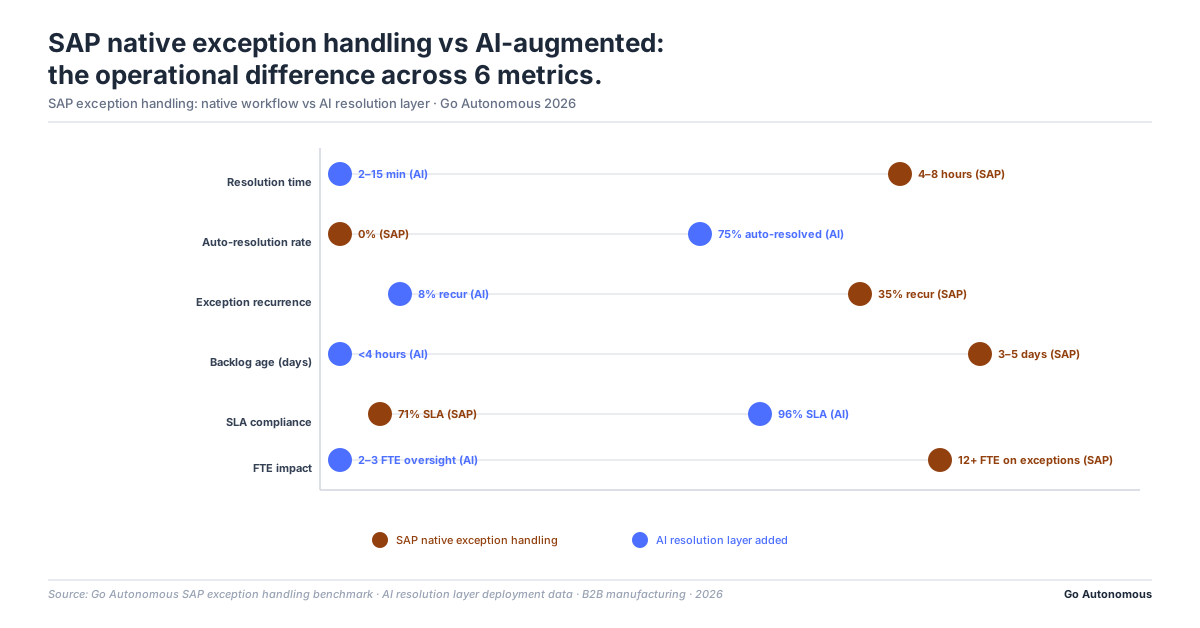
The Gap Between SAP Exception Visibility and Exception Resolution Capacity
The gap between SAP exception visibility and resolution capacity is structural. SAP knows that a product code on an inbound order does not match any record in the material master. It does not know whether the customer used an old internal reference, a competitor’s part number, or a simple typo, and which of those possibilities applies determines the correct resolution action. Each of these resolutions requires accessing information that lives outside SAP: the customer’s order history, their account data, the sales rep’s notes, the quote that was last sent. SAP can display that information once accessed, but the judgment about which resolution applies must come from a person or from an AI system that can reason across multiple data sources simultaneously.
Each time we added one or two million euros in revenue, we had to add another operator. From a cost perspective, that's an unsustainable way of operating a business.

Most SAP Exception Workflows Route Problems to Humans, Not Solutions
Work Queues as Exception Management: What the Daily Triage Actually Looks Like
In most SAP order management environments, the daily workflow for customer service begins with triage: opening the exception work queue, reviewing what is blocked, prioritizing by customer urgency or order value, and beginning the investigation cycle for each item. For operations processing hundreds of orders daily, this triage work can consume the first hour or two of every shift before a single new order has been touched. The work queue is the visible symptom of the underlying architecture: every exception that enters SAP requires a person to exit SAP (to check email history, review past orders, contact the customer), resolve the ambiguity, re-enter SAP, and clear the hold. The system is the record of truth; the resolution happens outside it.
Why SAP Configuration Improvements Do Not Reduce Exception Volume
Operations teams in SAP environments often invest in optimizing exception workflows: better routing rules, clearer work queue views, faster approval flows, automated notifications to the responsible parties. These improvements reduce the time to handle an exception once it is in the queue. They do not reduce the number of exceptions. The exceptions originate at intake, before SAP sees the order. A customer sends an email with a non-standard product reference. The order is keyed into SAP with a best-guess field mapping. SAP flags a discrepancy. The exception workflow routes it to a work queue. A rep resolves it. Configuration of SAP workflows is downstream from the problem. See the Autonomous Commerce platform for what changes upstream of SAP.
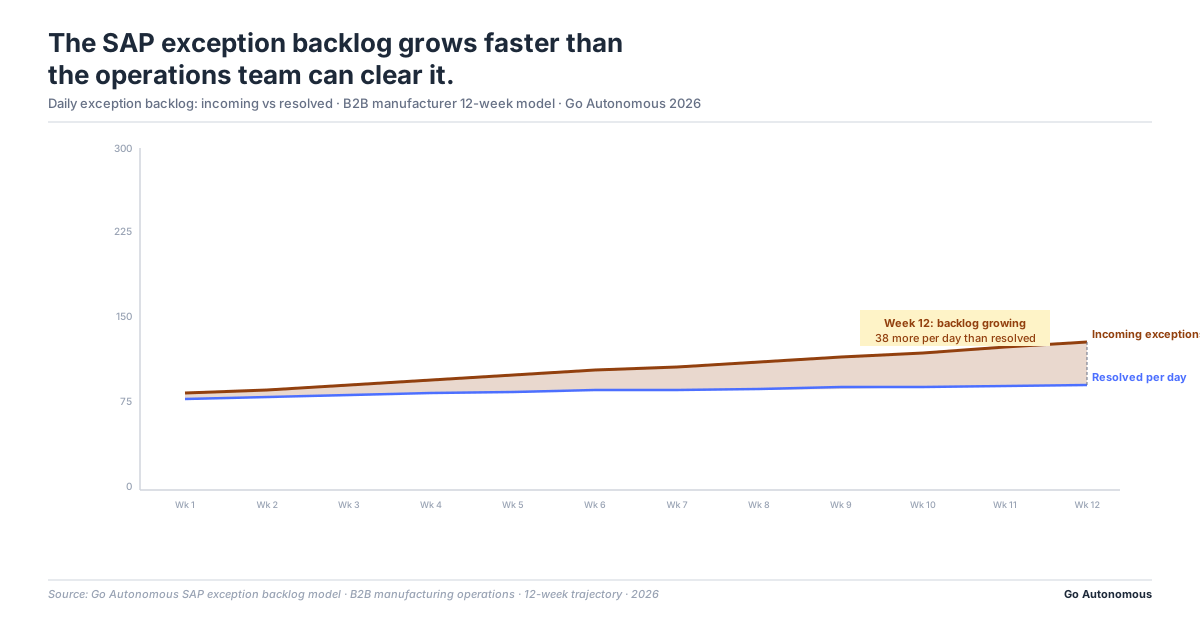
The SAP Exception Backlog Grows Faster Than Operations Teams Can Clear It
Volume Spikes, Seasonal Peaks, and the Exception Queue That Never Empties
Exception backlogs in SAP environments are structural, not incidental. During normal volume periods, a well-staffed team can roughly keep pace with incoming exceptions. Any volume spike, end-of-quarter pushes, seasonal demand peaks, promotional periods, new market launches, creates a backlog that takes days or weeks to clear. The backlog itself creates a second-order problem: customers with orders in the exception queue follow up, generating additional inbound contacts that consume the same team’s time without clearing any exceptions. The follow-up traffic adds load precisely when capacity is most constrained. Teams that have invested in SAP exception workflow optimization often find that their improvement reduces resolution time per exception by 20–30%, but that total exception backlog and customer follow-up volume have continued to grow with revenue, leaving the net position unchanged.
Why Experienced SAP Users Spend More Time on Exceptions as They Get More Experienced
Experienced SAP operators are valuable for exception handling precisely because they know how to resolve complex exceptions efficiently: they know the customer base, they know the common ambiguities, and they can move through the resolution cycle faster than junior staff. This creates a structural problem: the most experienced staff are allocated to the most difficult exceptions, while junior staff handle the routine ones. As the team grows and volume increases, the proportion of complex exceptions reaching senior staff increases because junior staff escalate anything they cannot resolve quickly. Experienced operators spend an increasing share of their time on the hard cases rather than on the high-value work that benefits most from their knowledge. Mikkel Vindeløv’s observation at Hempel captures this: each additional €1–2M in revenue required adding another operator not because the work was harder, but because the volume of work requiring human judgment scaled with revenue.
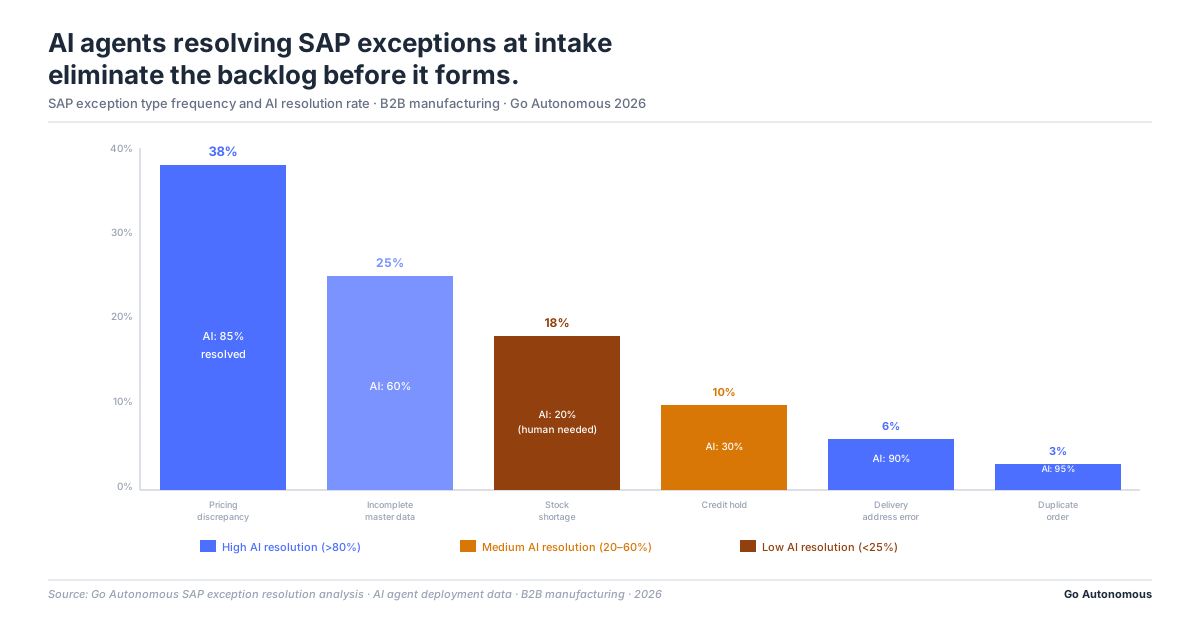
AI Agents That Resolve SAP Exceptions at Intake Eliminate the Backlog
How Exception Prevention at Intake Is Different From Exception Management in SAP
The shift from SAP exception management to intake prevention is architectural. Instead of configuring better workflows for exceptions that have already entered SAP, the focus moves upstream: preventing exceptions before the order reaches SAP. An AI layer reads each inbound order, validates fields against SAP master data before entry, resolves ambiguities using order history and customer profile data, and confirms the order or flags only genuine exceptions requiring human judgment. The exception rate that reaches SAP drops from 20–40% to a fraction of that. What remains in the SAP work queue are the genuinely complex cases, the ones where a person’s judgment actually adds value, rather than the routine format mismatches and data gaps that make up the majority of current exception queues. The Nilfisk implementation demonstrates what this looks like in practice for a complex global manufacturing operation.
What SAP Operations Look Like When AI Handles Exceptions Before They Reach the Queue
The Autonomous Execution Fabric: How SAP Exception Handling Fits a Larger Commercial Gap
The SAP exception handling problem described in this post is one component of a broader execution gap that the Autonomous Execution Fabric is designed to close. The Autonomous Execution Fabric is a full commercial execution layer that connects directly to your SAP environment and executes every inbound commercial transaction without human assembly. It does not sit beside SAP or replace it. It operates upstream of SAP, reading inbound orders, validating fields against SAP master data, resolving ambiguities using order history and customer profile data, and creating clean sales orders that SAP can process without exceptions.
SAP exception handling is the most visible symptom of a gap that spans every commercial transaction type. The Fabric handles more than inbound orders. It processes pricing requests, assembles quotes, authorizes returns, processes credit notes, and handles contract tenders, all across every intake channel: email, EDI, customer portal, and direct API. Each of these transaction types generates the same class of exception when the incoming data does not cleanly match SAP master records. Each is preventable through the same upstream validation logic.
The root cause of SAP order exceptions is not deficient workflow configuration. It is that commercial transactions arrive from external systems using external data, and no configuration investment within SAP changes that. The Autonomous Execution Fabric addresses this structurally: by resolving the data matching problem at intake, before any transaction type reaches SAP, the exception rate drops across every commercial workflow simultaneously. The operations team stops managing exception queues and starts managing exceptions that genuinely require judgment.
Manufacturers running this model at scale report exception queues cut to a fraction of prior volume, with 99% first-time-right accuracy on the orders the system resolves automatically. The Danfoss implementation covers 26 countries with order confirmation times under 1 minute, reducing what was a 42-hour process to under 60 seconds at scale. The success cases across manufacturing and distribution consistently show the same pattern: SAP as the system of record remains unchanged, while the intake layer upstream removes the volume of exceptions that would otherwise flow into it. The SAP exception work queue becomes a genuine exception queue rather than a general-purpose manual processing queue. Customer service teams shift from daily triage to exception oversight and continuous improvement. The architecture that makes this possible is described in full at Autonomous Commerce. If your SAP exception queue is growing despite workflow investment, the root cause is almost certainly at intake. Book a conversation with the Go Autonomous team to assess what an intake prevention architecture would change for your operation.
Frequently Asked Questions
How do you reduce order exception handling in SAP without replacing the ERP?
Reducing order exception handling in SAP without replacing the ERP requires addressing the problem upstream of SAP, not within it. An AI layer that reads inbound orders, validates fields against SAP master data before entry, and resolves ambiguities using order history and customer profile data prevents exceptions from entering SAP in the first place. SAP remains the system of record; the intake layer upstream removes the volume of exceptions that would otherwise flow into the work queue.
Why do SAP exception workflows still require manual resolution in B2B manufacturing?
SAP exception workflows require manual resolution because SAP is designed to identify and route exceptions, not to resolve them. Resolution requires judgment: determining whether a product code mismatch is a typo, an old reference, or a catalog gap; deciding whether a pricing discrepancy reflects an outdated quote or a genuine error. SAP displays the problem and records the fix, but the information required to determine the correct fix lives outside SAP, in order history, customer profile data, and sales correspondence, and requires a system or person that can reason across those sources.
Can AI automatically resolve order exceptions in SAP environments?
AI can resolve the majority of order exceptions in SAP environments by operating upstream of SAP at the intake layer. By reading inbound orders, validating against SAP master data before entry, and resolving ambiguities using order history and customer profile data, AI prevents 80–95% of exceptions from entering the SAP work queue. Genuine exceptions, those requiring human judgment, still reach the queue, but at a fraction of current volume. Manufacturers running this model report 99% first-time-right accuracy on automatically resolved orders.
What is the best way to reduce SAP order management exceptions for B2B distributors?
The most effective way to reduce SAP order management exceptions for B2B distributors is to deploy an AI intake layer that validates orders against SAP master data before entry. This approach prevents exceptions at the source rather than managing them after they have entered the system. Configuration improvements to SAP exception workflows reduce handling time per exception but do not reduce exception volume, because the exceptions originate in the intake process before SAP receives the order.
How do manufacturers eliminate order exception backlogs in SAP order management?
Manufacturers eliminate order exception backlogs in SAP by shifting from exception management within SAP to exception prevention at intake. When an AI layer resolves ambiguities in inbound orders before they enter SAP, the volume of exceptions reaching the work queue drops substantially. The SAP work queue shifts from a general-purpose manual processing queue to a genuine exception queue containing only the complex cases that require human judgment. Backlogs driven by volume spikes and seasonal peaks no longer accumulate because the majority of exception resolution happens automatically at intake.