.svg)





B2B Order Exception Rate: Industry Benchmarks and What It Actually Costs
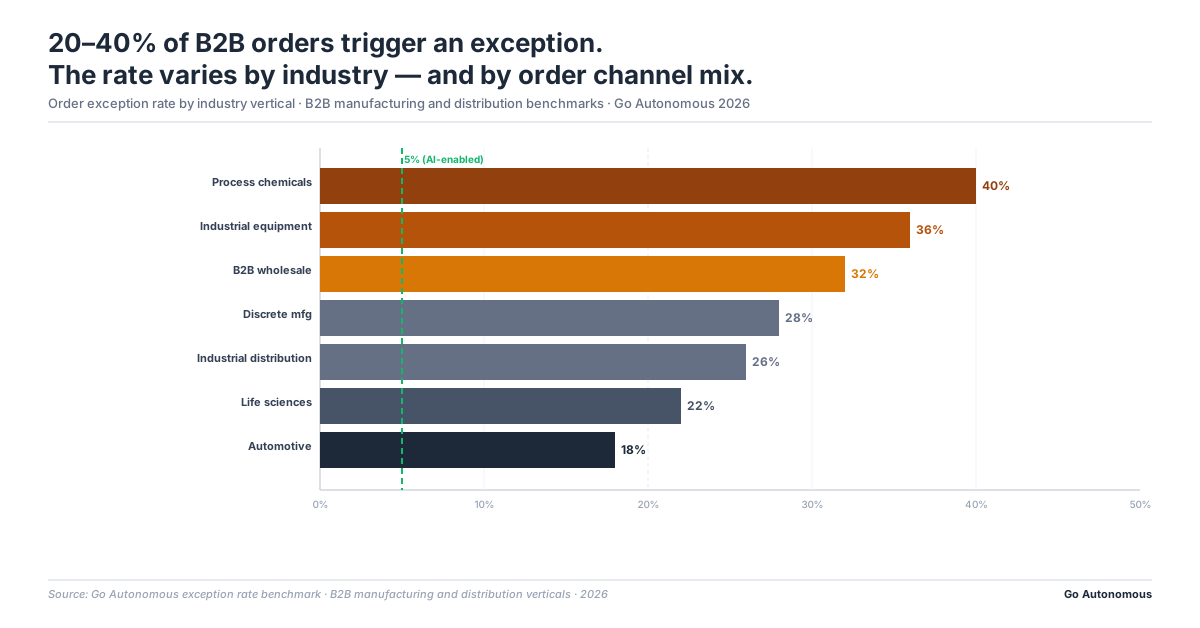
Between 20% and 40% of B2B orders trigger at least one exception — a range that sounds wide until you understand what drives it. This post benchmarks order exception rates across manufacturing and distribution, breaks down what puts operations at the top or bottom of that range, and calculates what each percentage point of exception rate costs annually.
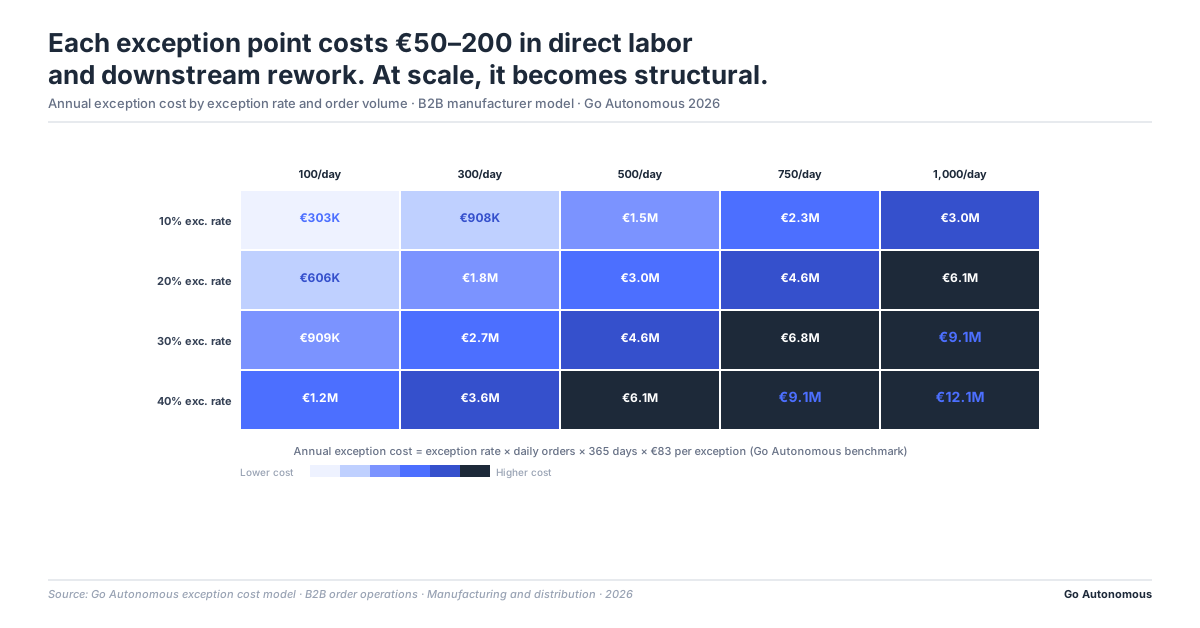
Between 20% and 40% of B2B orders trigger at least one exception. That range is not statistical noise — it maps directly to how orders arrive and who is sending them. For a manufacturer processing 500 orders per day, a 10-percentage-point difference in exception rate is the difference between 100 and 200 manual interventions daily, costing €2.7M or more per year. Understanding where your operation sits on that range, and why, is a prerequisite for reducing it.
Table of Content
- 20–40% of B2B Orders Trigger an Exception: The Range Is Not Random
- Exception Rate Correlates With Order Channel Mix: High Email Volume Means High Exceptions
- Each Exception Point Costs €50–200 in Direct Labor and Downstream Rework
- Operations Below 5% Exception Rate Share One Common Architecture
- Frequently Asked Questions
- What is a normal order exception rate for B2B manufacturers in 2026?
- What are the most common causes of order exceptions in B2B manufacturing and distribution?
- How do you reduce B2B order exception rates without adding operations headcount?
- What does a 1% reduction in order exception rate save a B2B manufacturer annually?
- How does AI reduce order exception rates in B2B manufacturing operations?
20–40% of B2B Orders Trigger an Exception: The Range Is Not Random
What Puts Operations at 40%: High Email Volume, Diverse Customer Base, Low Standardization
Operations at the top of the exception rate range share a consistent profile: a large share of orders arriving via email or unstructured channels, a diverse customer base using inconsistent product references and non-standard formats, and limited EDI coverage. When 60–70% of inbound order volume arrives as free-text email or PDF attachments, exceptions are not a quality problem — they are an architecture problem. Every format mismatch, every non-catalog product code, every price discrepancy from an outdated quote becomes an exception that a person must resolve. Rapid account growth compounds this: each new customer adds new format conventions and new potential mismatch points before any standardization is possible.
What Puts Operations at 20%: Higher EDI Coverage, Tighter Master Data, Fewer New Accounts
Operations at the lower end of the range tend to have high EDI penetration among their largest accounts, mature master data governance, and a stable customer base that has settled into consistent ordering patterns. When structured channels handle the majority of volume, error rates are low and system-flagged immediately. The 20% floor is not zero because exceptions still originate from the edges: smaller accounts not on EDI, new customers, one-off orders from unusual geographies, and the occasional master data gap that surfaces only when a specific combination of product, customer, and shipping address is requested for the first time.
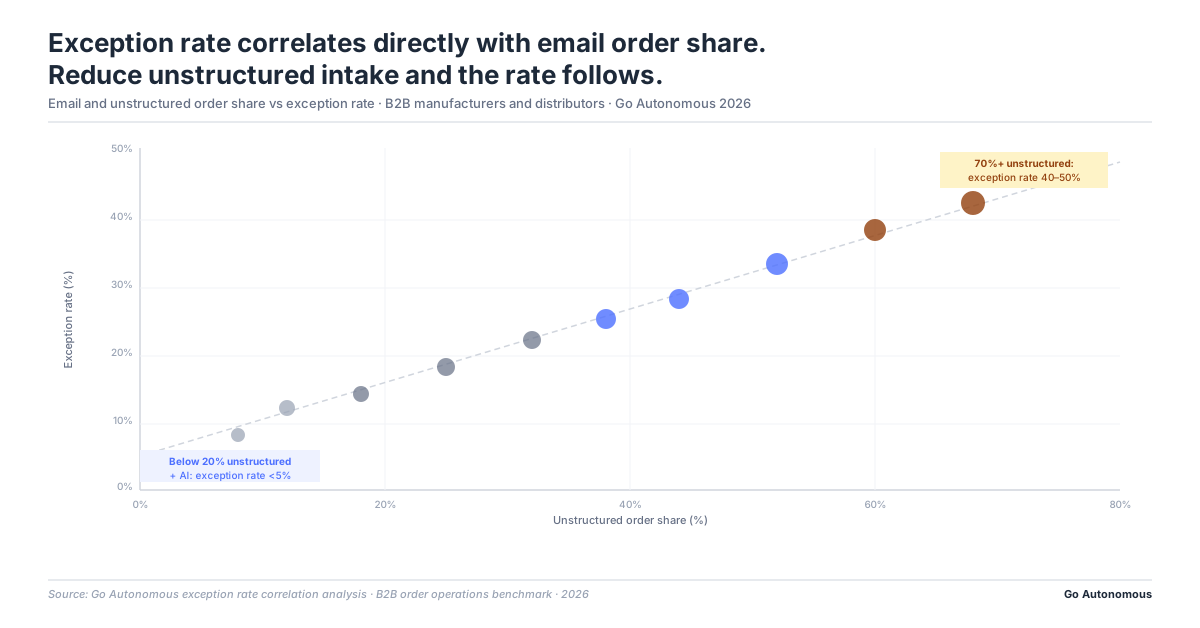
The single strongest predictor of exception rate is the share of orders arriving via email and unstructured channels, which accounts for 50–70% of B2B volume for most manufacturers. Reducing exception rate without addressing that channel mix is treating symptoms rather than the underlying cause. The Autonomous Commerce platform changes the underlying architecture by reading unstructured orders the same way it reads structured ones, removing format mismatch as a root cause.
Each time we added one or two million euros in revenue, we had to add another operator. From a cost perspective, that's an unsustainable way of operating a business.

Exception Rate Correlates With Order Channel Mix: High Email Volume Means High Exceptions
The Email-to-Exception Pipeline: Why Unstructured Intake Creates Structural Exceptions
The mechanics are direct. EDI orders arrive with structured fields pre-mapped to the ERP’s data model. Errors are rare and surface immediately through system validation. Email orders arrive as natural language or PDF documents — customer product references that may not match your catalog, quantities in different units of measure, pricing from an old quote, delivery addresses not in your master data. Each mismatch is an exception. When 50–70% of your inbound volume is email-based, an exception rate above 30% is not a performance failure. It is the predictable output of an architecture that asks humans to bridge the gap between unstructured input and structured ERP records.
EDI and Portal Orders: Why Structured Channels Have Lower Exception Rates
EDI and customer portal orders arrive with fields already mapped to your data model. The customer-side system handles the translation. Exceptions that do arise, typically pricing disagreements or delivery date conflicts, are clean and resolvable with a single outbound contact. The contrast with email orders is structural: the field-level validation that EDI builds in upstream has to be performed by a human downstream when orders arrive unstructured. Reducing exception rate without addressing channel mix means accepting that 30–40% of your volume will always require manual intervention, regardless of how well your ERP exception workflows are configured. Fixing the channel architecture — or adding an intake layer that handles unstructured input without exceptions — addresses the root cause rather than the symptom.
Each Exception Point Costs €50–200 in Direct Labor and Downstream Rework
The Annual Cost Calculation: Exception Rate × Volume × Cost per Exception
Manual order processing costs €15–35 per order. Each exception adds 4–8x the base processing time, bringing the fully loaded cost per exception to €50–200 depending on complexity and resolution path. That cost includes: initial identification (someone checks why the order is held), investigation (looking up the discrepancy), outbound contact (calling or emailing the customer), wait time for a response, re-entry, and any downstream corrections if the error propagated into fulfillment or invoicing. For an operation processing 500 orders per day with a 30% exception rate, that is 150 exceptions daily. At a conservative €75 average cost: €11,250 per day, €2.8M per year. One percentage point of exception rate reduction at that scale is worth approximately €375K annually.
Why Operations Teams Consistently Underestimate Exception Cost by 3–5x
Standard time-tracking captures the re-entry step. It rarely captures the investigation, the outbound contact, the wait time, or the rework downstream. Teams that measure exception cost by counting resolution minutes arrive at figures that are 3–5x lower than the fully loaded cost. This systematic underestimation makes exception rate reduction look less valuable than it is — and makes the business case for addressing it harder to build. The efficiency gains from exception rate reduction are real; they are just not fully visible in most operations reporting. Building a complete cost model, including downstream rework and the opportunity cost of experienced staff handling routine exceptions, consistently reveals that exception management is among the highest-cost activities in order operations.
Operations Below 5% Exception Rate Share One Common Architecture
Validation at Intake: Catching Exceptions Before They Enter the System
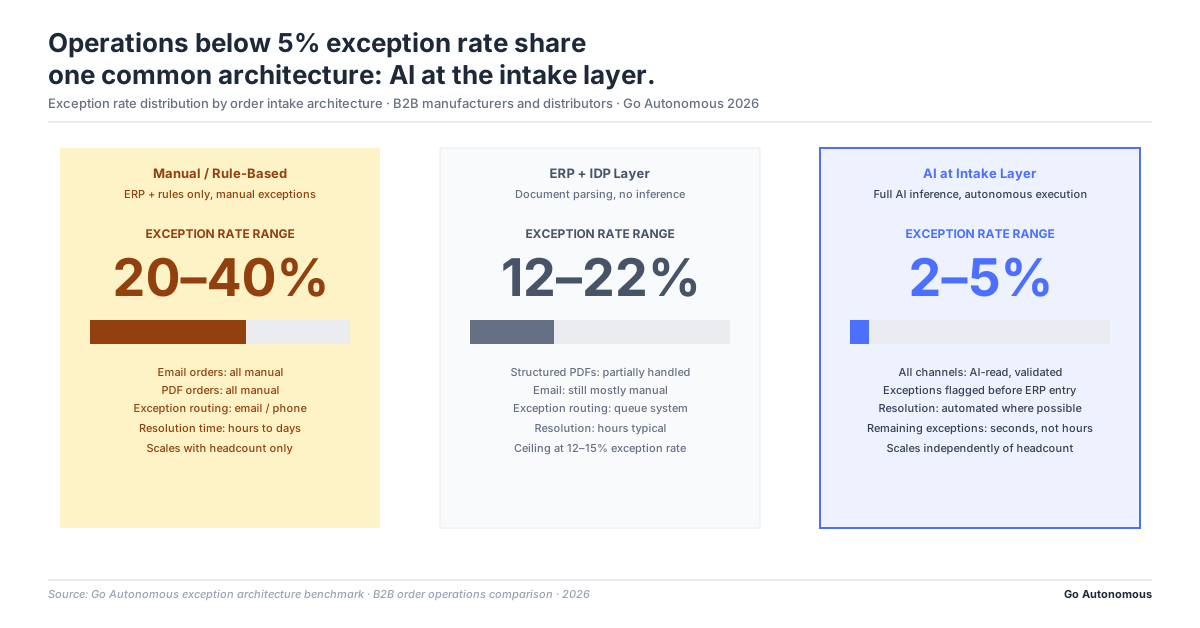
The operations running below 5% exception rates are not running more rules or better-trained staff. They are validating orders at intake before they enter the ERP. An AI layer reads each inbound order, maps fields against master data, identifies ambiguities, and resolves them using order history and customer profile data. Orders that match enter the ERP clean. Only genuine exceptions, those that actually require a judgment call, reach the human work queue. The signal-to-noise ratio is transformed: the exceptions that surface are complex and consequential, not routine mismatches that a system could have resolved. Rule-based automation plateaus at approximately 60% touchless rate because rules cannot handle the variability in unstructured input. AI-driven intake can push touchless rates far higher by handling that variability directly.
The Operational Profile of a Sub-5% Exception Rate Environment
VELUX processes 130,000+ orders across 9 markets with 88% decision autonomy. When you cross the 5% threshold, exception management shifts from daily fire-fighting to a continuous improvement process. The customer service team handles edge cases and relationship-sensitive decisions rather than routine format mismatches. Senior operators focus on the exceptions that genuinely require judgment rather than reviewing junior staff work on predictable problems. The success cases across manufacturing and distribution consistently show the same operational profile: fewer people handling more volume, with better outcomes on order accuracy, confirmation time, and customer satisfaction. The architecture is what changes — not the effort.
If your operation is running above 20% exception rate and has not mapped the share of volume arriving via email and unstructured channels, that is the first diagnostic step. The second is calculating what a 10-point reduction in exception rate is worth annually at your volume. The third is understanding what architecture produces that reduction without scaling headcount. Book a conversation with the Go Autonomous team to work through the numbers for your specific operation.
Frequently Asked Questions
What is a normal order exception rate for B2B manufacturers in 2026?
A normal order exception rate for B2B manufacturers in 2026 is 20–40%. Operations at the lower end typically have higher EDI coverage, mature master data, and a stable customer base. Operations at the upper end tend to have high email and unstructured order volume, diverse international customers, and rapid account growth. The range reflects architecture and channel mix more than operational quality.
What are the most common causes of order exceptions in B2B manufacturing and distribution?
The most common causes of order exceptions in B2B manufacturing and distribution are: non-catalog product references from customers, pricing discrepancies between the order and current pricing, unit of measure mismatches, missing or incorrect delivery addresses, and ambiguous order quantities. Most of these originate from unstructured order channels — primarily email and PDF orders — where customer-side data is not pre-mapped to the supplier’s ERP data model.
How do you reduce B2B order exception rates without adding operations headcount?
Reducing B2B order exception rates without adding headcount requires addressing the problem at intake rather than in the work queue. AI that reads inbound orders, validates fields against ERP master data before entry, and resolves ambiguities using order history and customer profile data prevents exceptions from entering the system rather than routing them to humans after they have already caused a hold. This approach can push exception rates below 5% without increasing team size.
What does a 1% reduction in order exception rate save a B2B manufacturer annually?
For a B2B manufacturer processing 500 orders per day with an average exception cost of €75, a 1% reduction in order exception rate saves approximately €375K annually. This calculation is based on 500 daily orders × 1% × €75 per exception × 250 working days. The actual figure depends on order volume, current exception rate, and the fully loaded cost per exception including investigation, outbound contact, wait time, re-entry, and downstream rework.
How does AI reduce order exception rates in B2B manufacturing operations?
AI reduces order exception rates in B2B manufacturing by validating orders at intake before they enter the ERP. Instead of routing unstructured order data to a human for interpretation, an AI layer reads each inbound order, maps fields to master data, identifies ambiguities, and resolves them against order history and customer profile data. Only genuine exceptions — those requiring human judgment — reach the work queue. This prevention-at-intake approach produces far lower exception rates than workflow optimization within the ERP, which only manages exceptions after they have already been created.