.svg)





Why 50–70% of B2B Orders Sit in an Inbox Oracle Can’t See
Oracle Order Management Cloud is designed to process structured transactions. Customer emails are not structured transactions. The gap between what Oracle requires as input and what customers actually send is entirely manual, and for most manufacturers running Oracle, it is also invisible. This post maps the gap and explains what closes it.
Oracle Order Management Cloud processes structured transactions. Customer purchase orders arrive as emails and PDF attachments. The gap between those two realities is entirely manual: a human reads the email, translates the content into Oracle’s data model, and keys the order into the system. For manufacturers running Oracle at scale, this gap is not an edge case: it is the dominant intake workflow for the majority of daily order volume, and it operates entirely outside Oracle’s visibility.
Table of Content
- Oracle Order Management Requires Structured Input: Email Delivers Free Text and Attachments
- Every Email Order Travels Through 3–7 Manual Steps Before Oracle Sees It
- The Hidden Backlog: Oracle Does Not Know About Orders Sitting in Inboxes
- An AI Extraction Layer Between Email and Oracle Closes the Gap
- The Autonomous Execution Fabric: Beyond Email Orders Into Every Oracle Transaction Type
- Frequently Asked Questions
- How does Oracle Order Management handle email purchase orders from customers?
- Can Oracle Order Management automatically process orders sent by email?
- What is the best way to automate email order processing for Oracle Order Management users?
- How do B2B manufacturers reduce manual order entry in Oracle Order Management?
- Why do Oracle Order Management users still need customer service reps for order processing?
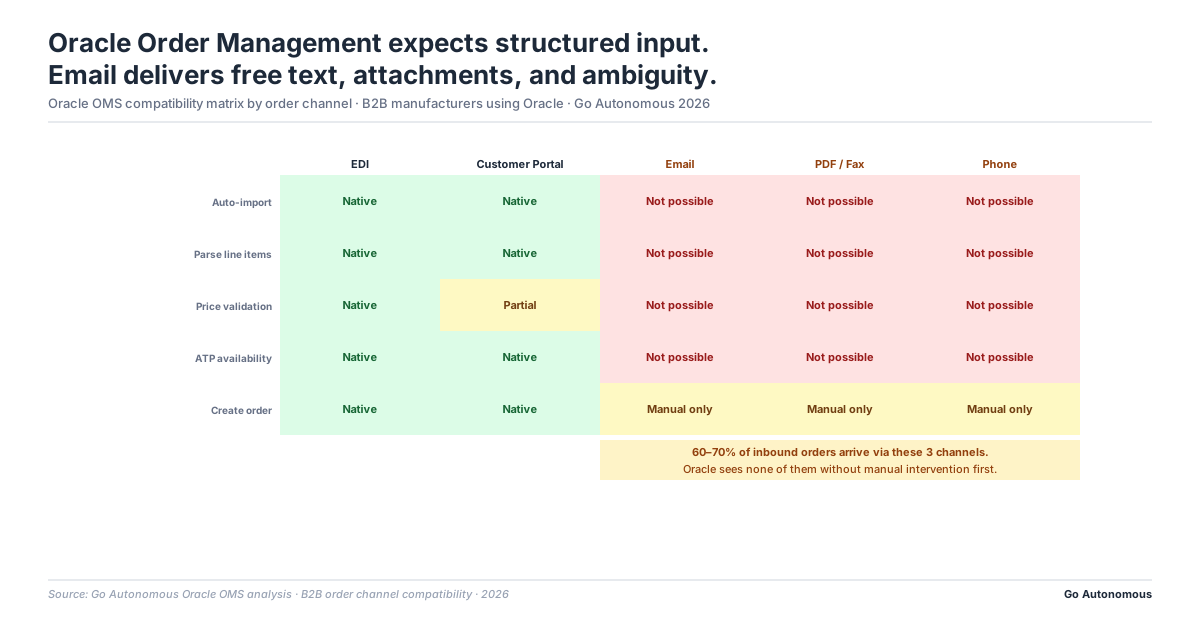
Oracle Order Management Requires Structured Input: Email Delivers Free Text and Attachments
What Oracle Order Management Needs to Create a Sales Order
Oracle Order Management Cloud operates on a structured data model. To create a sales order, the system requires a validated customer ID mapped to the Oracle customer master, internal item numbers for every ordered product, quantities expressed in Oracle’s unit-of-measure codes, pricing references that match the active price list or customer contract, and delivery instructions mapped to Oracle’s ship-to address records. Every field must conform to Oracle master data. An unrecognised item number, a price that does not match the active price list, or a delivery address that does not exist in the system will stop the order. Oracle does not make inferences. It does not interpret. It validates against its own data model and rejects what does not fit.
What a Customer Email Purchase Order Actually Contains
A customer email purchase order contains none of what Oracle needs in machine-readable form. It contains a PDF attachment with a purchase order document formatted to the customer’s own template. The document includes the customer’s internal part numbers, which may or may not correspond to the manufacturer’s catalog. It includes a price derived from the customer’s records, which may or may not match the current Oracle price list. It includes a delivery address in free-text form, which may or may not match the Oracle ship-to record. Oracle cannot open the PDF. Oracle cannot read the email. A human must extract every relevant field, translate the customer’s data to Oracle’s data model, validate each field, and create the order manually. The gap is not a configuration problem. It is architectural: email is free text, Oracle requires structure, and nothing in Oracle bridges the two.
Each time we added one or two million euros in revenue, we had to add another operator. From a cost perspective, that's an unsustainable way of operating a business.

Every Email Order Travels Through 3–7 Manual Steps Before Oracle Sees It
The Standard Email-to-Oracle Workflow: What Each Step Costs
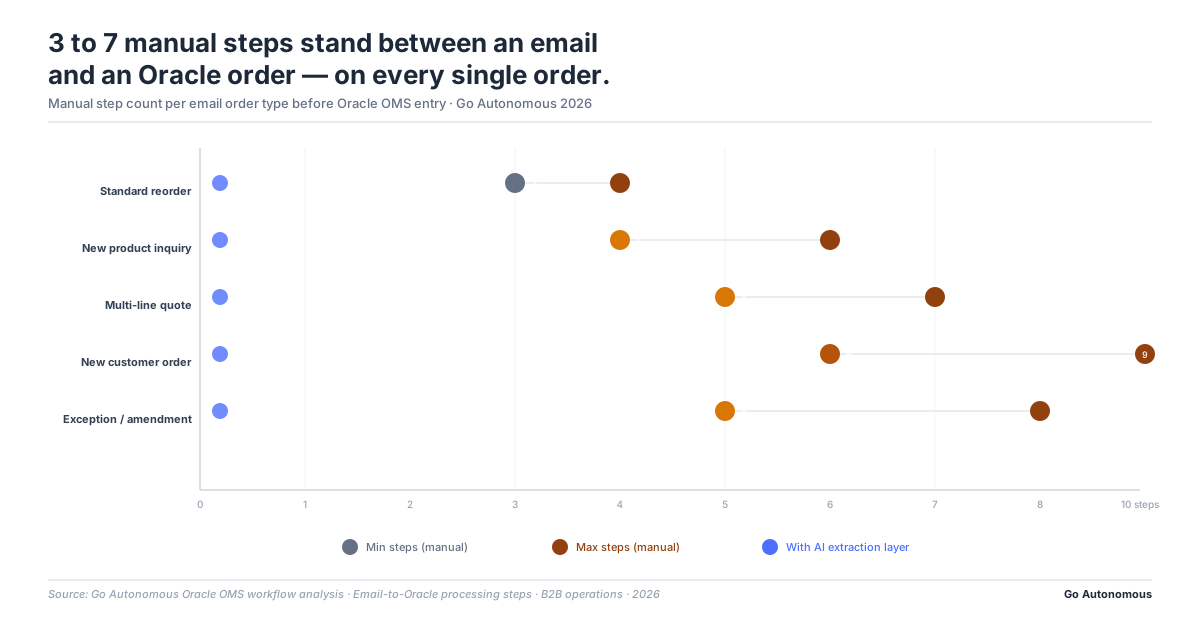
The standard workflow for processing an email purchase order into Oracle follows the same sequence across manufacturers, regardless of industry or geography. A customer service representative monitors the shared order inbox. On identifying an incoming purchase order, they open the email, download the PDF attachment, identify the customer, and locate the corresponding Oracle customer record. They then work through the order line by line: reading the customer’s product description, searching the Oracle item catalog for the matching internal number, verifying the unit of measure, checking the quantity against any minimum order or packaging constraints, and confirming the price against the Oracle price list or customer contract. Once all lines are validated, they create the sales order in Oracle and send a confirmation email to the customer. The fully loaded cost of this workflow is €15–35 per order, with a processing time of 20–45 minutes for a clean order.
Where the Workflow Breaks: Non-Standard References, Pricing Disputes, Missing Fields
On average, 20–40% of B2B orders contain at least one exception that prevents straight-through processing. In an Oracle environment, the most common exception types are: customer part numbers that do not exist in the Oracle item cross-reference table, pricing that does not match the current Oracle price list or customer-specific contract, quantities that violate Oracle’s minimum order quantity or packaging unit rules, and delivery addresses in free-text form that do not match any Oracle ship-to record. Each exception requires the customer service representative to stop, investigate the discrepancy, make a determination, and frequently contact the customer to resolve it before continuing. Each exception adds 4–8x the base processing time to that order. The exception rate is not a reflection of customer quality: it reflects the structural incompatibility between how customers order and what Oracle requires.
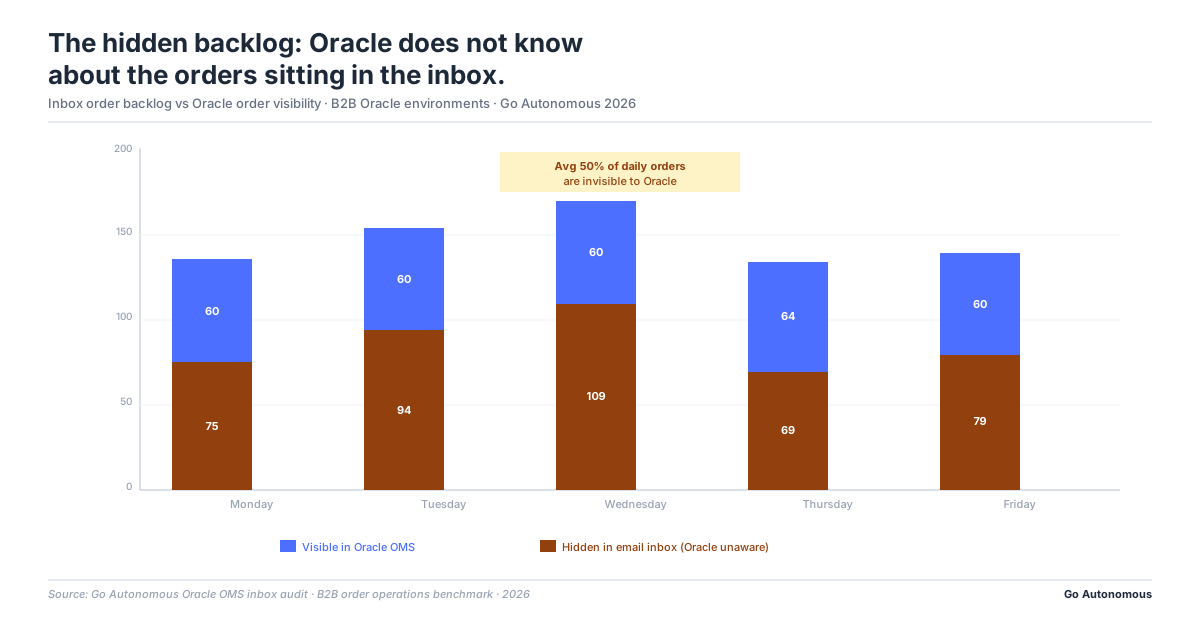
The Hidden Backlog: Oracle Does Not Know About Orders Sitting in Inboxes
Why Order Confirmation Delays Are an Oracle Visibility Problem, Not a Processing Problem
Oracle’s reporting is accurate with respect to orders Oracle has seen. It has no visibility into the queue of purchase orders sitting in the shared inbox, waiting for a customer service representative to process them. Oracle cannot report on how many orders were received today that have not yet been entered. It cannot report on the average elapsed time between customer send and Oracle entry. When operations leadership looks at order confirmation time in Oracle dashboards, the clock starts when the sales order is created in Oracle, not when the customer sent the email. The actual delay, which may be 4–24 hours depending on inbox volume and staffing, is invisible in every Oracle report. The system appears to be performing well because it is only measured from the moment it first sees the order.
What Customers Experience When Your Oracle Intake Is Manual
Customers sending purchase orders by email experience the delay in full. They send the order and wait. If they call to check status, the customer service representative must check the inbox, not Oracle. If the order has not been entered yet, the representative cannot give a confirmed status, a delivery date, or an order number. If the order has been entered but an exception is under resolution, the status in Oracle may show as incomplete or on hold. The customer experience impact of manual Oracle intake is direct: slower confirmation, higher uncertainty, more status inquiry calls, and a customer-perceived reliability problem that has nothing to do with Oracle’s capabilities, only with the manual gap in front of it.
An AI Extraction Layer Between Email and Oracle Closes the Gap
How AI Reads Email Orders and Writes to Oracle Without Human Intervention
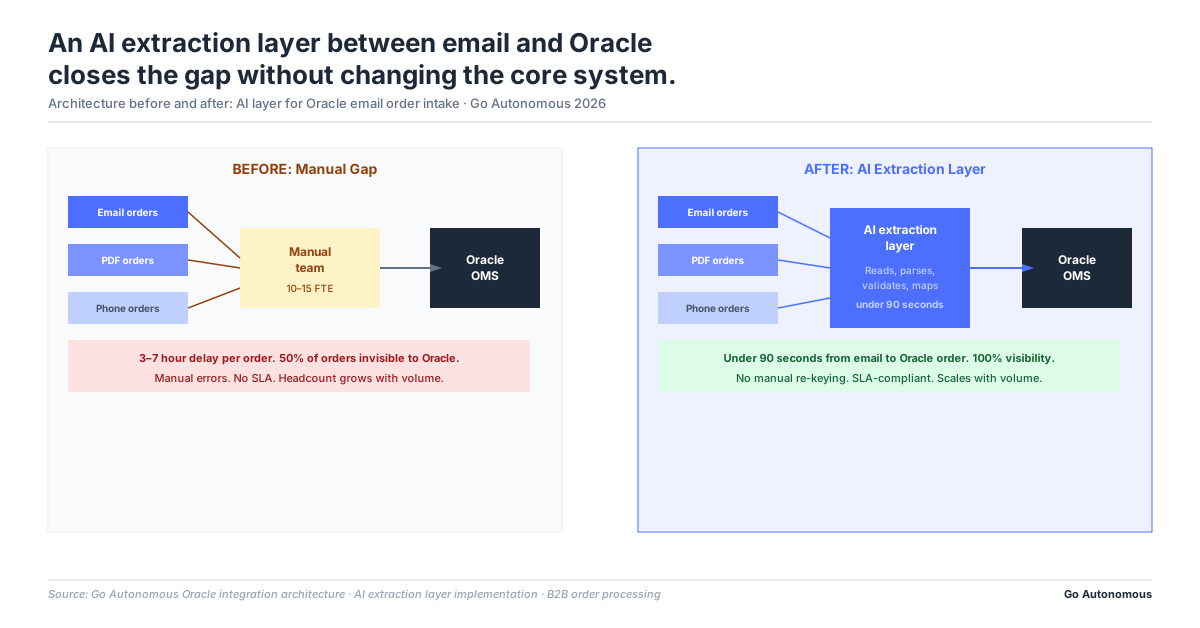
The architectural solution is an AI extraction layer that sits between the email channel and Oracle. When a purchase order arrives by email, the AI reads the email body and any attached documents. It extracts all required fields: customer reference, product descriptions, quantities, unit of measure, delivery address, requested delivery date, pricing. It maps the customer’s product references to Oracle item numbers using the cross-reference table and historical order data. It validates pricing against the Oracle price list and customer contract. It resolves standard exceptions using configurable business rules. It then calls Oracle’s order management API to create the validated sales order. The order lands in Oracle within seconds of the customer sending the email. No human has touched it. This is categorically different from RPA: RPA scripts replicate human keystrokes and break on format variation. AI extraction understands order content regardless of how the customer formatted their document.
What Oracle Operations Teams Gain: Confirmation Time, Accuracy, Capacity
The Autonomous Execution Fabric: Beyond Email Orders Into Every Oracle Transaction Type
The AI extraction layer described in this post is the order intake component of the Autonomous Execution Fabric. The Autonomous Execution Fabric is a full commercial execution layer that connects directly to Oracle Order Management and processes every inbound commercial transaction without human assembly. The gap between what Oracle requires as input and what customers actually send applies not just to orders; it applies to every commercial transaction type that a B2B customer initiates through unstructured channels.
The Fabric handles more than email purchase orders. The same customers who send purchase orders by email also request quotes via email, initiate returns via email, dispute invoices via email, and submit pricing inquiries via email. Each of these requires the same manual translation process: open the message, interpret the request, look up the relevant Oracle records, and create or update the transaction. The Autonomous Execution Fabric processes quote requests, returns authorizations, credit notes, and contract tenders through the same AI-driven extraction and Oracle API integration that handles orders, eliminating the manual workflow across the full commercial transaction stack.
Oracle operations teams that close the email order gap typically find the same structural gap in adjacent transaction types. The shared inbox that queues purchase orders also queues return requests, quote inquiries, and pricing disputes. Addressing one transaction type in isolation leaves the rest of the commercial execution layer on manual workflows. The Autonomous Execution Fabric closes the gap across all transaction types simultaneously. That is how Oracle operations teams achieve scalability without headcount growth: not by optimizing one workflow in isolation, but by replacing the manual layer that sits between every customer transaction and Oracle.
When an AI extraction layer processes email orders into Oracle, three metrics change immediately. Order confirmation time drops from 4–48 hours to under 60 seconds. Oracle entry accuracy improves because AI does not make keying errors: the data that enters Oracle is extracted directly from the customer document, mapped consistently, and validated against Oracle master data before submission. Customer service capacity is freed from inbox monitoring and manual entry, and redirected to exception management, customer escalations, and commercially valuable interactions. Nilfisk applied this approach to their order management operations, eliminating the manual entry workflow that had previously required significant customer service headcount. The full pattern across manufacturing and distribution customers is consistent: faster confirmation, lower error rate, and a customer service team no longer constrained by inbox volume. To understand how this applies to your Oracle environment, book a session with the Go Autonomous team.
Frequently Asked Questions
How does Oracle Order Management handle email purchase orders from customers?
Oracle Order Management cannot read email purchase orders directly. Oracle requires structured input: validated customer IDs, internal item numbers, Oracle unit-of-measure codes, and pricing references mapped to Oracle master data. Email purchase orders contain none of that in machine-readable form. A human must read the email, extract the order data, translate it to Oracle’s data model, and manually create the sales order in the system.
Can Oracle Order Management automatically process orders sent by email?
Oracle Order Management Cloud does not include native email order processing capability. It is designed to receive structured transactions via EDI, API, or direct entry. Processing email orders in Oracle requires either manual entry by a customer service representative or a third-party AI extraction layer that reads the email, maps the data to Oracle fields, and creates the sales order via Oracle’s API.
What is the best way to automate email order processing for Oracle Order Management users?
The most effective approach is an AI extraction layer between the email channel and Oracle’s API. The AI reads inbound email purchase orders and PDF attachments, extracts all required fields, maps customer product references to Oracle item numbers, validates pricing and quantities against Oracle master data, and creates the sales order in Oracle without human intervention. This reduces confirmation time from hours to under 60 seconds and eliminates manual entry errors.
How do B2B manufacturers reduce manual order entry in Oracle Order Management?
Manufacturers reduce manual Oracle order entry by implementing AI-based order intake automation that processes email and PDF orders directly into Oracle via API. This eliminates the inbox-to-ERP manual workflow: inbox monitoring, attachment handling, item lookup, line keying, and price validation. The result is sub-60-second order creation in Oracle, with the customer service team redirected to exception management and customer-facing work rather than data entry.
Why do Oracle Order Management users still need customer service reps for order processing?
Oracle Order Management users need customer service representatives for email order processing because Oracle cannot read unstructured inputs. The system requires data in a specific format that customer emails do not provide. Until an AI extraction layer is placed between the email channel and Oracle, a human must manually translate each inbound order into Oracle’s data model. Most Oracle-using manufacturers process 50–70% of their order volume through this manual workflow.