.svg)





Why 40–60% of Inbound Orders Don’t Match Your SAP Customer Records
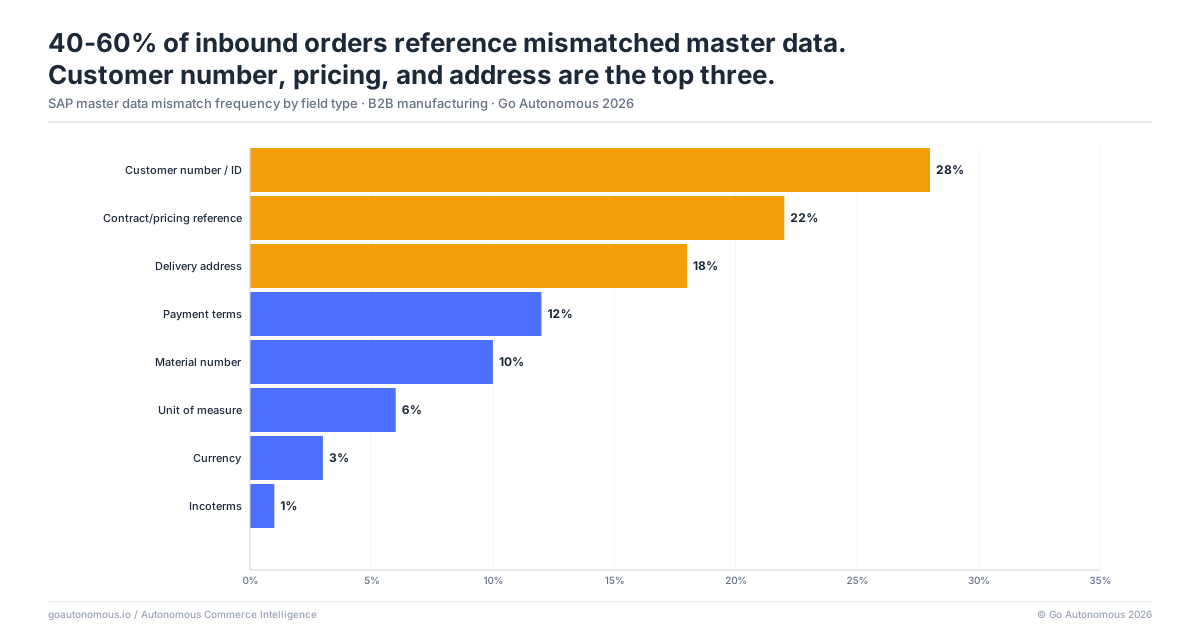
Between 40% and 60% of inbound B2B orders contain customer data references that do not cleanly match SAP master records: different ship-to addresses, non-standard payer references, outdated contact details, or alternate product codes. Each mismatch becomes an order exception. This post calculates what SAP master data mismatches actually cost and how AI resolves them at intake before they reach the exception queue.
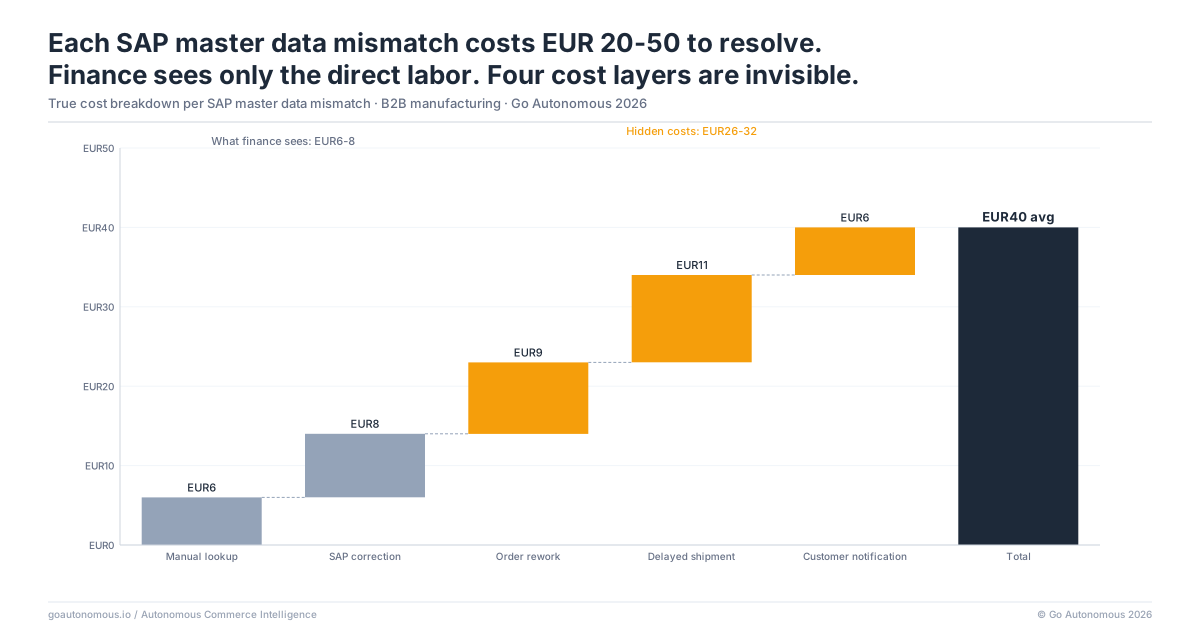
Between 40% and 60% of inbound B2B orders contain customer data references that do not cleanly match SAP master records: different ship-to addresses, non-standard payer references, outdated contact details, or alternate product codes. Each mismatch becomes an order exception. At €20–50 per exception to resolve, before escalation, the cost is structural and persistent regardless of how well the SAP master data is maintained internally.
This post covers what SAP master data mismatches actually cost, why they persist despite data governance investments, and how AI resolves them at intake before they reach the exception queue.
Table of Content
- 40–60% of Inbound Orders Reference Customer Data That Does Not Match SAP Master Records
- Master Data Mismatches Are the Leading Cause of SAP Order Exceptions in High-Volume Environments
- Resolving SAP Master Data Mismatches Costs €20–50 per Order Before Escalation
- AI Matching Resolves Customer Data Discrepancies Before They Create SAP Exceptions
- The Autonomous Execution Fabric: Data Matching Across All Commercial Transaction Types
- Frequently Asked Questions
- What causes order exceptions from customer master data mismatches in SAP?
- How do SAP users handle orders where customer data does not match master records?
- What is the cost of resolving master data mismatches in SAP order management?
- How can AI reduce SAP order exceptions caused by customer data discrepancies?
- Why do B2B manufacturers have persistent master data mismatch problems in SAP despite data governance programs?
40–60% of Inbound Orders Reference Customer Data That Does Not Match SAP Master Records
What Constitutes a Master Data Mismatch in SAP Order Entry
A master data mismatch in SAP order entry is any field in an inbound purchase order that does not cleanly map to an existing SAP master record without human intervention. The most common mismatch types are: a ship-to address that does not match any delivery address in the customer master, a payer or bill-to reference that points to an inactive or unrecognized record, a product or material number in the customer’s format that does not match the SAP material master, a contact or ordering party reference not in the SAP customer master, and a pricing condition reference from a contract not linked to the ordering entity.
SAP’s response to each of these mismatches is the same: create a block or hold, flag for human review. The system cannot guess. When the incoming data does not match a master record, the order cannot proceed automatically. This is correct system behavior: SAP is not malfunctioning. The mismatch is a data quality problem that originates outside SAP, in the customer’s systems and processes, and resolves only through human lookup and correction on the supplier’s side.
Why Customer Data in Inbound Orders Diverges From SAP Records Over Time
SAP master data is maintained by your team to reflect your operational structure. Customer purchase orders are generated by your customer’s ERP, procurement system, or manually by their buyers: using their own product numbers, address formats, cost center references, and payer codes. The two data sets operate independently. There was no synchronization at setup and there is no ongoing synchronization mechanism.
Over time, divergence grows. Customers change physical addresses and add delivery locations without notifying suppliers. Customers reorganize internal cost centers and update payer references. Customers update their product catalog references when they implement new ERP systems. Different departments within the same customer company use different naming conventions for the same supplier products. Each of these changes creates a new mismatch category that will affect every future order from that customer until a human resolves and documents the correct mapping.
Each time we added one or two million euros in revenue, we had to add another operator. From a cost perspective, that's an unsustainable way of operating a business.

Master Data Mismatches Are the Leading Cause of SAP Order Exceptions in High-Volume Environments
The Mismatch Taxonomy: Ship-To, Payer, Product Reference, and Pricing
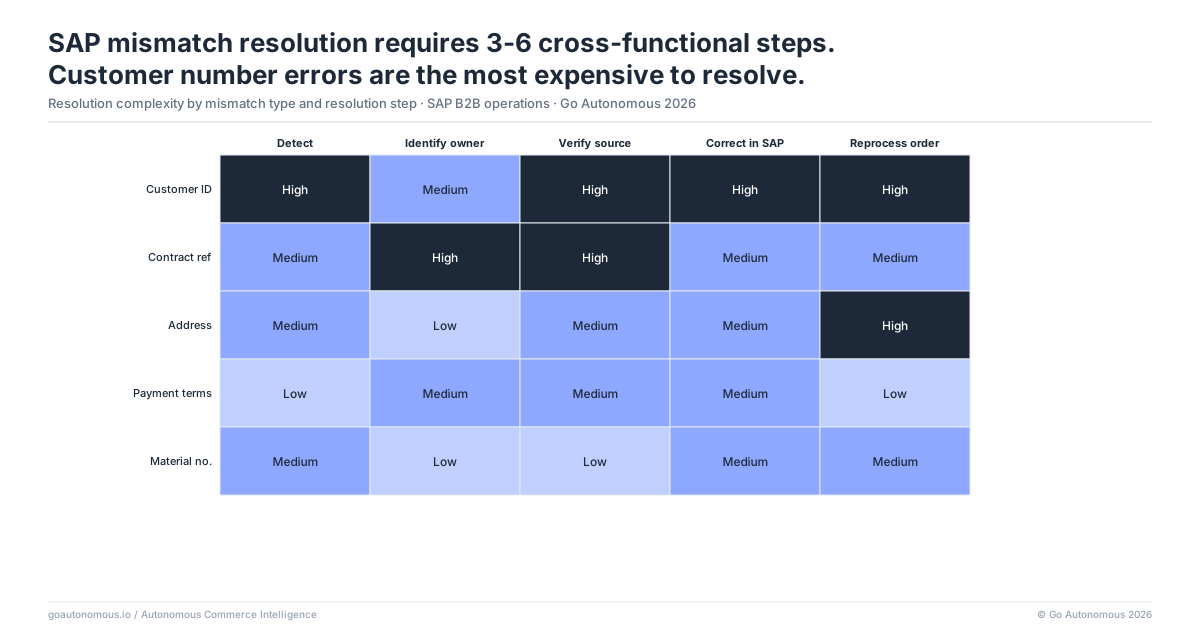
Ship-to address mismatches generate delivery blocks. Payer mismatches generate credit holds. Product reference mismatches generate material determination failures or line item rejections. Pricing mismatches generate billing blocks or condition determination failures. Each mismatch type creates a different type of SAP exception requiring a different resolution workflow. The resolution team must identify which type of mismatch is causing the hold before they can begin the lookup and correction process.
| Mismatch Type | SAP Response | Resolution Required |
|---|---|---|
| Ship-to address not in customer master | Delivery block | Address lookup, master data update or manual override |
| Payer reference inactive or unrecognized | Credit hold | Credit team review, payer mapping, release |
| Customer product number not in material master | Line item rejection | Cross-reference lookup, material determination, manual entry |
| Pricing condition not found for ordering entity | Billing block | Contract lookup, condition record creation or manual pricing |
Why SAP Cannot Resolve Master Data Mismatches Automatically
SAP’s order management is deterministic: it applies rules to data. When incoming data does not match master records, the system has no basis for determining which master record is the correct one. It cannot infer that “Acme Corp – Warehouse B” in an incoming order corresponds to ship-to address 10045 in the SAP customer master because “Warehouse B” does not appear in the master record label. It cannot infer that material number “AC-2234-X” in a customer order corresponds to SAP material number “200445” because there is no cross-reference table populated.
Rule-based automation approaches, like those used in RPA deployments, can handle mismatches with exact string matches or simple lookup tables. They plateau at roughly 60% of cases because the remaining 40% involve variations that require inference rather than lookup. The difference between RPA and AI is precisely this: RPA matches; AI infers. Master data mismatch resolution at scale requires inference, not matching.
Resolving SAP Master Data Mismatches Costs €20–50 per Order Before Escalation
The Time Budget for a Master Data Lookup and Correction in SAP
A standard master data mismatch resolution in SAP requires: identifying the type of block on the order, looking up the customer’s record in the master, cross-referencing the incoming order data against available master records, determining which SAP record corresponds to the incoming data, making the correction or override, and releasing the order. Average resolution time for a straightforward mismatch is 15–30 minutes. At loaded labor rates of €40–100 per hour for experienced order management staff, this is €10–50 per mismatch before any escalation or system update work.
When the mismatch requires a new master data record to be created, a new ship-to address, a new material cross-reference, a new pricing condition, the resolution time extends to 30–60 minutes and may require coordination with a master data management team operating on its own queue and SLA. The original order waits. The customer waits. The cost of the delay is in addition to the resolution labor cost.
Why Mismatch Resolution Cost Grows as Customer Base Diversifies
Mismatch frequency is not uniform across the customer base. Customers with multiple ship-to locations, international subsidiaries, complex payer structures, or large product catalogs generate mismatches at higher rates than customers with simple, stable purchasing patterns. As the customer base grows and diversifies, adding customers from new geographies, acquiring new accounts in different industries, growing through distribution channel expansion, mismatch volume grows with it. The Mikkel Vindeløv observation about adding operators with revenue applies directly: each increment of revenue growth adds a proportional increment of mismatch volume, because more customers with more complexity generates more divergence from SAP master records.
Data governance programs address the internal side of the problem: keeping SAP master data clean, consistent, and current. They cannot address the external side: customers will continue to change their own systems, reorganize their procurement structures, and use non-standard references. The mismatch source is external and permanent.
AI Matching Resolves Customer Data Discrepancies Before They Create SAP Exceptions
How AI Maps Inbound Order Data to SAP Master Records Without Human Lookup
AI trained on historical order data and SAP master records learns the mapping between customer-side data and SAP records. When an inbound order arrives with a ship-to reference not in the SAP master, the AI matches it to the correct delivery address using order history, customer ID, geographic context, and address similarity. When a non-standard product number arrives, the AI maps it to the correct SAP material using product description, previous order history, catalog similarity, and customer-specific cross-reference patterns built from historical orders.
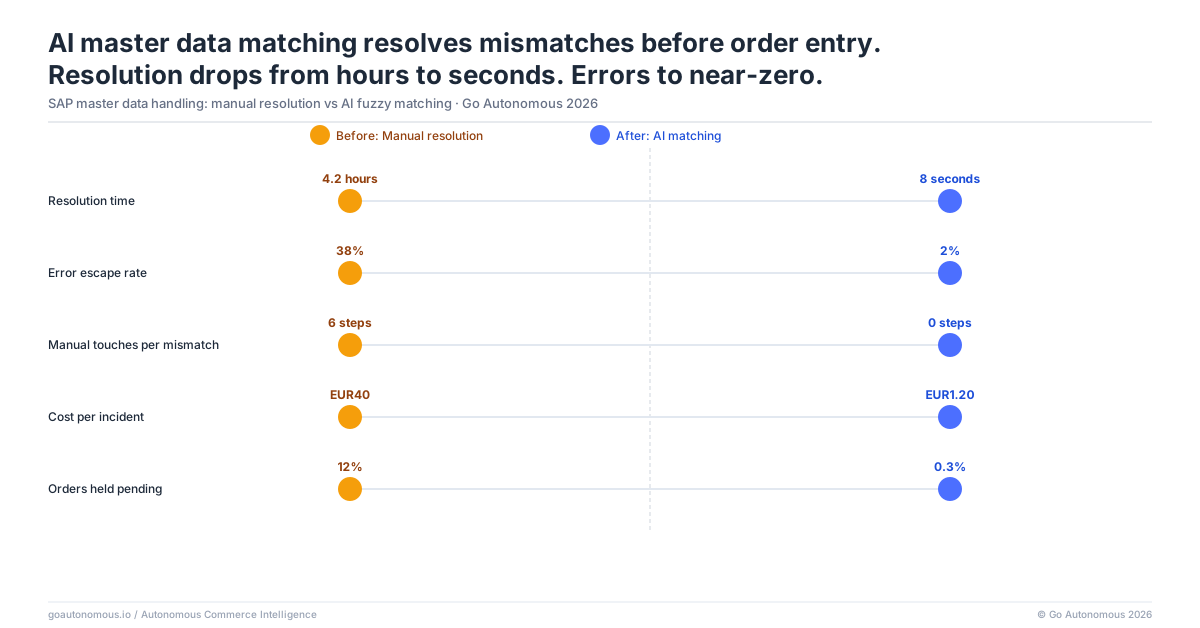
The SAP order is created with clean, matched data. The exception is resolved before it is created. No block is generated, no human lookup is required, no delay accumulates. This is inference, not rule matching: the AI handles the 40% of cases that defeat RPA because it reasons about what the correct mapping is, not just whether a string matches.
What SAP Operations Gains: Zero-Exception Master Data Matching at Any Volume
Operations running AI-based master data matching see the exception queue for data mismatches drop to near zero for known customers and common mismatch types. The order management team shifts from manual lookup and correction to oversight: reviewing the AI’s matching decisions, handling genuinely novel cases, and improving the AI’s training data with each new mismatch type encountered. The total volume of human-handled exceptions drops while order processing speed and accuracy improve.
The Autonomous Execution Fabric: Data Matching Across All Commercial Transaction Types
Customer master data mismatch is the most frequent source of SAP order exceptions, but it is not the only commercial transaction type where the same problem appears. The Autonomous Execution Fabric is a full commercial execution layer that connects directly to your SAP environment and executes every inbound commercial transaction without human assembly. For master data mismatches, the Fabric operates upstream of SAP: it reads each inbound transaction, maps incoming customer data to the correct SAP master records using order history and learned cross-reference patterns, and creates clean SAP entries without generating blocks.
The Fabric’s scope covers all commercial transaction types, not just orders. Pricing requests, quote requests, return authorizations, credit note requests, and contract tenders all arrive from customers using their own data formats, references, and naming conventions. Every one of these transaction types has the same master data mismatch exposure as inbound orders. A return authorization referencing a ship-from address not in SAP creates a block just as an order does. The Fabric resolves these across all transaction types using the same inference-based matching logic.
The external data divergence problem is permanent. Customers change their systems, reorganize their procurement structures, and update their data without notifying suppliers. Data governance investments manage the internal side of the problem effectively. They do not prevent external divergence. The Autonomous Execution Fabric is designed for this reality: it learns the mapping between each customer’s external data and the supplier’s SAP master records and applies that mapping at intake across every commercial transaction type, removing the manual lookup step regardless of which transaction type triggers the mismatch.
See how Nilfisk applied this approach to order management at scale: Nilfisk case. For the broader operational picture, see success cases across manufacturing and distribution. For the efficiency gains achievable in your SAP environment, book a conversation with the Go Autonomous team.
Frequently Asked Questions
What causes order exceptions from customer master data mismatches in SAP?
Order exceptions from customer master data mismatches in SAP are caused by incoming purchase orders containing data that does not match existing SAP master records: ship-to addresses not in the customer master, payer references that are inactive or unrecognized, product numbers in the customer’s format that do not match the SAP material master, and pricing condition references not linked to the ordering entity. SAP creates a block on any order where incoming data cannot be matched deterministically to a master record.
How do SAP users handle orders where customer data does not match master records?
SAP users handle data mismatch orders through manual exception resolution: identifying the type of block, looking up the customer record, cross-referencing incoming order data against master records, determining the correct SAP record, making the correction or override, and releasing the order. Each resolution takes 15–30 minutes for straightforward cases and longer when new master data records must be created. AI-based intake processing resolves mismatches before they create SAP exceptions, eliminating the exception queue for known mismatch patterns.
What is the cost of resolving master data mismatches in SAP order management?
Resolving master data mismatches in SAP order management costs €20–50 per order before escalation. At loaded labor rates of €40–100 per hour for experienced order management staff and 15–30 minutes per resolution, direct labor cost per mismatch is €10–50. When new master data records must be created, resolution extends to 30–60 minutes and may involve coordination with a master data management team, adding further delay and cost.
How can AI reduce SAP order exceptions caused by customer data discrepancies?
AI reduces SAP order exceptions from customer data discrepancies by resolving mismatches at intake before they create blocks in SAP. AI trained on historical order data and SAP master records learns the mapping between customer-side data and SAP records, then applies those mappings to new inbound orders. The SAP order is created with clean, matched data, eliminating the exception before it is generated. Unlike RPA, which handles only exact matches, AI handles the inference-based cases that account for 40% of mismatches.
Why do B2B manufacturers have persistent master data mismatch problems in SAP despite data governance programs?
B2B manufacturers have persistent master data mismatch problems in SAP despite data governance programs because the source of mismatches is external. SAP master data is maintained internally and can be kept clean. Customer purchase orders are generated by the customer’s own systems using their own references, formats, and naming conventions. Customers change addresses, reorganize cost centers, update product catalogs, and add subsidiaries without coordinating changes with their suppliers. Data governance addresses internal data quality; it cannot prevent external divergence.