.svg)





Average Order Confirmation Time: Manufacturing vs Distribution Benchmark
B2B manufacturers take 24–48 hours on average to confirm an order — a window their customers increasingly treat as a competitive differentiator. This benchmark post compares confirmation times across manufacturing and distribution, explains what drives delays, and shows what operations running autonomous execution achieve.
B2B order confirmation averages 24–48 hours across manufacturing and distribution — but the customer-experienced time is often 36–72 hours once email intake lag is counted. In 2026, B2B buyers compare their supplier experience to consumer-grade commerce, and slow confirmation has measurable consequences: follow-up calls, order amendments, and in competitive markets, churn to faster suppliers. This post benchmarks confirmation times across manufacturing and distribution, explains what drives the gap, and shows what operations running autonomous execution achieve.
Table of Content
- B2B Order Confirmation Takes 24–48 Hours on Average: Customers Now Expect Same-Day
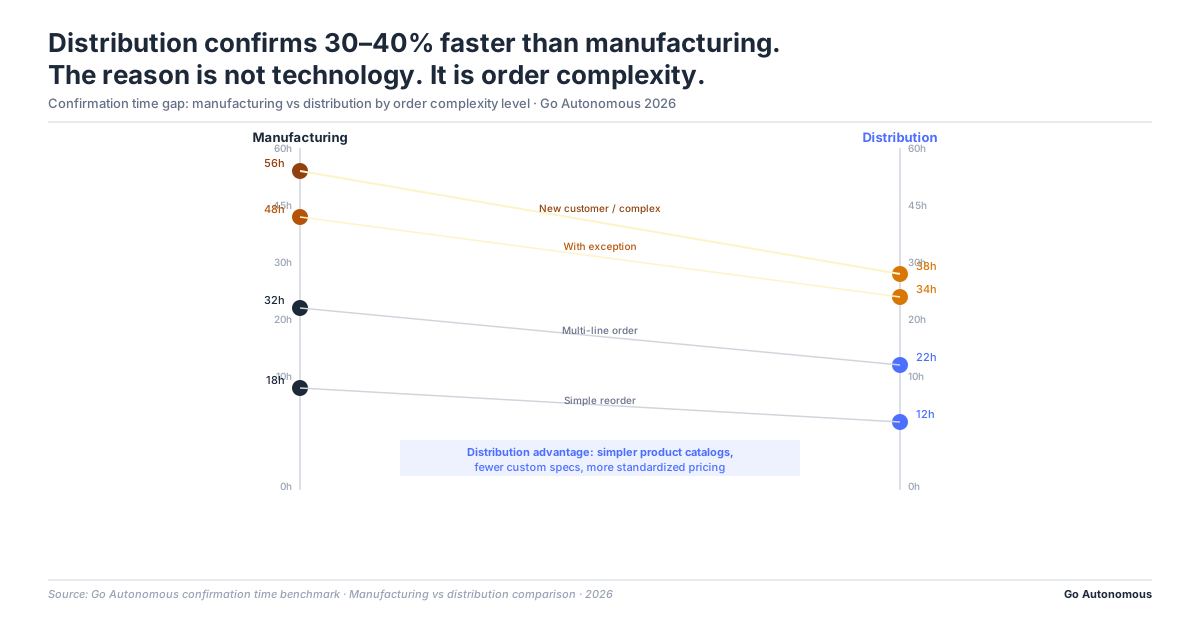
- Distribution Operations Confirm 30–40% Faster Than Manufacturing: Why the Gap Exists
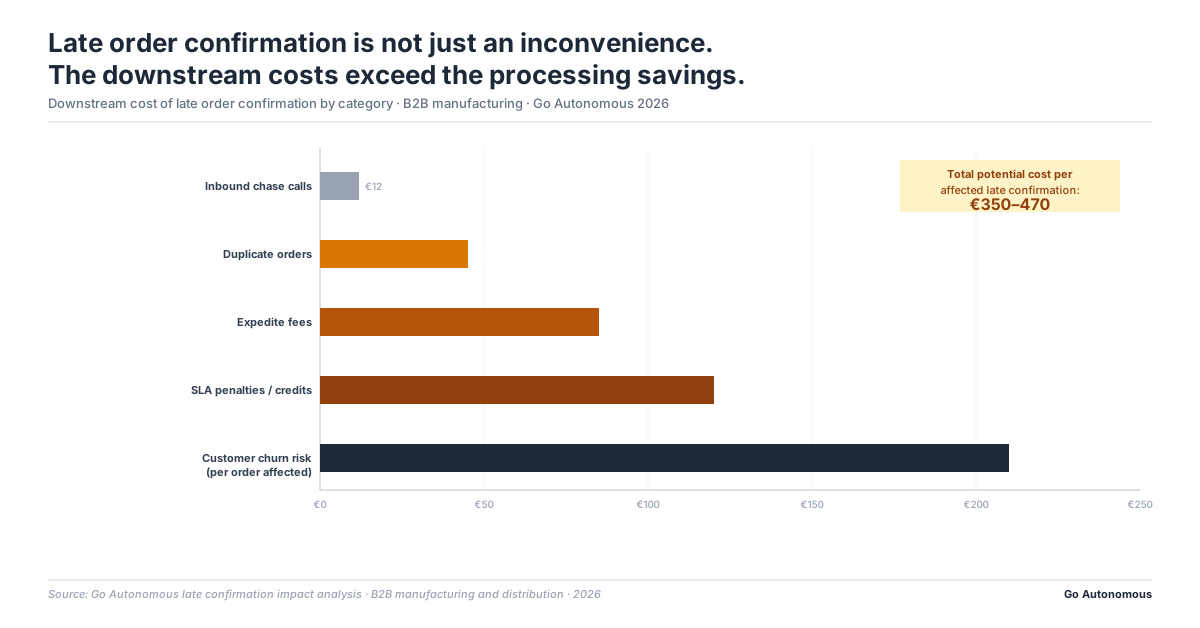
- Late Confirmation Generates Downstream Costs That Dwarf the Processing Savings
- Autonomous Execution Confirms Orders in Under 60 Seconds at Any Volume
- Frequently Asked Questions
- What is the average order confirmation time for B2B manufacturers?
- How does slow order confirmation affect customer retention in B2B manufacturing?
- What is the difference in order confirmation time between B2B manufacturing and distribution?
- How can B2B manufacturers reduce order confirmation time without increasing headcount?
- What order confirmation time should B2B distributors target to stay competitive in 2026?
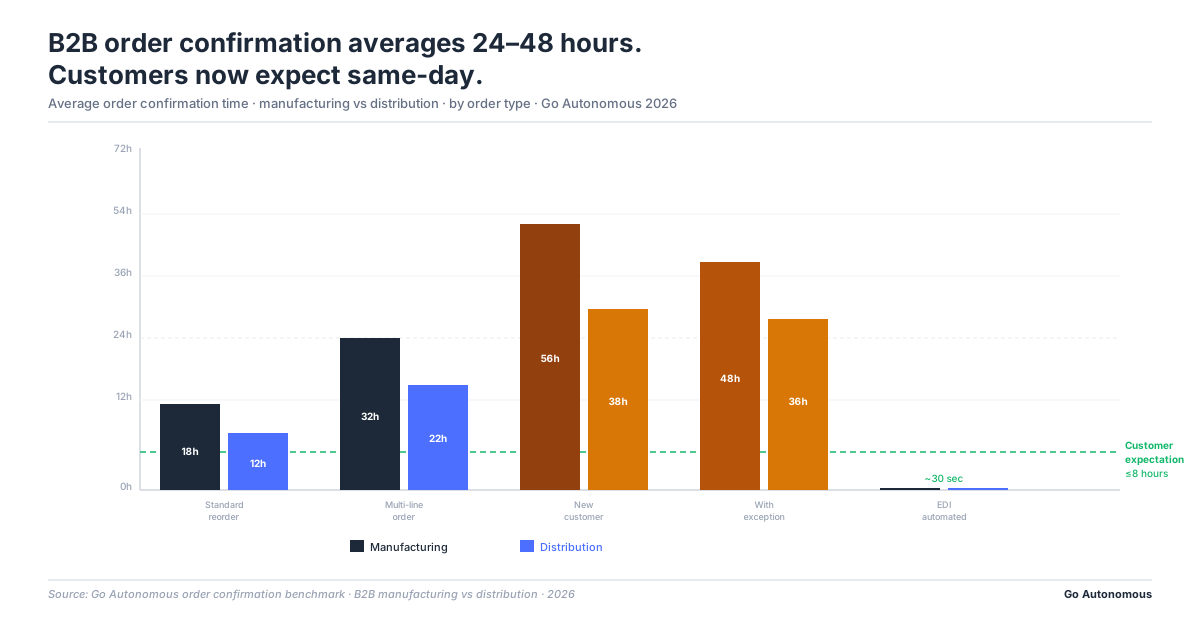
B2B Order Confirmation Takes 24–48 Hours on Average: Customers Now Expect Same-Day
How Confirmation Time Is Measured — and Where Most Operations Measure Wrong
Most operations teams measure order confirmation time from when the order enters the ERP to when the confirmation is sent. This is a useful internal metric, but it is not the metric that matters to the customer. The gap between when the customer sent the order and when it actually reached the ERP — commonly 4–12 hours for email-based orders — is invisible to this measurement. An order sent at 4 PM on a Tuesday may not be opened until 8 AM Wednesday. It enters the ERP at 9 AM. The confirmation goes out at 11 AM. Internal measurement: 2 hours. Customer-experienced time: 19 hours. When 50–70% of B2B order volume arrives via email or unstructured channels, this intake lag is not an edge case — it is systematic. The true customer-experienced confirmation time is often 36–72 hours, well above what internal dashboards report.
Why 24–48 Hours Was Acceptable in 2015 and Is a Competitive Risk in 2026
In 2015, 24–48 hours was an industry norm. Customers had few alternatives and limited visibility into how quickly competitors confirmed. That has changed. B2B buyers have consumer experience as a reference point: Amazon confirms in seconds, not hours. Procurement teams now select suppliers partly on operational responsiveness. A supplier that confirms in 4 hours wins points over one that confirms in 36 hours, all else equal. In markets where products are increasingly comparable and relationships are under pressure from digital-native distributors, confirmation speed is a differentiator. Slow confirmation creates customer anxiety, drives inbound status calls, and in competitive verticals, drives customers to suppliers who confirm faster. This is no longer a back-office efficiency problem — it is a commercial one.
Each time we added one or two million euros in revenue, we had to add another operator. From a cost perspective, that's an unsustainable way of operating a business.

Distribution Operations Confirm 30–40% Faster Than Manufacturing: Why the Gap Exists
Distribution Advantages: Simpler Product Configuration, More Standardized Order Formats
Distributors operate with a structural advantage in confirmation speed. Their orders are more standardized: known products, known prices, published lead times, minimal custom configurations. A distributor receiving an order for 200 units of a stocked SKU can confirm in minutes with minimal human intervention. The decision logic is simple: check stock, check price, check delivery date, confirm. Standard order formats — even PDF-based ones — map predictably to catalog entries. The exception rate is lower, the escalation paths are shorter, and the confirmation process is closer to a lookup than a judgment call.
Manufacturing Complexity: Custom Configurations, Multi-Level BOMs, Lead Time Variability
Manufacturers face structurally different conditions. Orders frequently involve specifications, tolerances, custom configurations, or materials that depend on production availability. Confirming a lead time requires checking the production schedule, not just a warehouse inventory count. A custom-configured order may need engineering review before a lead time can be committed. Multi-level bills of materials create confirmation dependencies: before the finished good can be confirmed, component availability must be verified. Each decision point adds time. The confirmation process becomes a coordination task spanning sales, operations planning, and sometimes procurement. This is why manufacturers confirm 30–40% slower than distributors on average — not because of inefficiency, but because the underlying decision is genuinely more complex. The gap is narrowing as manufacturers adopt AI that handles standard configurations autonomously, reserving human review only for genuinely complex orders. Mediq, for example, processes 4,000 orders per week with 75% faster processing — the same team, significantly more throughput. See efficiency outcomes from operations running autonomous execution.
Late Confirmation Generates Downstream Costs That Dwarf the Processing Savings
Customer Escalations: The Cost of Inbound Status Calls
A customer who has not received confirmation in 4 hours calls to check. The customer service rep stops processing new orders to look up the status. Finding the answer requires checking the ERP, possibly contacting the warehouse, possibly checking with sales if there is a pricing hold. The interrupted workflow has a direct cost — the rep’s time — and an indirect cost: every minute spent on a status call is a minute not spent processing new orders. At volume, inbound status calls become a material burden. Operations teams in mid-market manufacturing often spend 15–25% of customer service capacity on order status inquiries that would not exist if confirmation were faster. Reducing confirmation time is, in practice, one of the highest-leverage ways to reduce inbound call volume.
Order Amendments and Cancellations That Happen Because Confirmation Was Slow
Slow confirmation allows order conditions to change. A customer who has not heard back in 24 hours may adjust their quantity, split the order across multiple suppliers, or cancel entirely. Each amendment is another manual processing event. Each cancellation is lost revenue and wasted processing effort. More seriously: a customer who cancels a €50,000 order because confirmation was slow is now a customer who has found an alternative supplier — and may not return. The downstream cost of a slow confirmation often exceeds the cost of the original manual processing by an order of magnitude. The real ROI of faster confirmation is not just efficiency — it is revenue retention. Operations teams rarely model this because the cancelled orders show up in commercial reporting, not operations reporting. The connection between slow confirmation and lost revenue stays invisible.
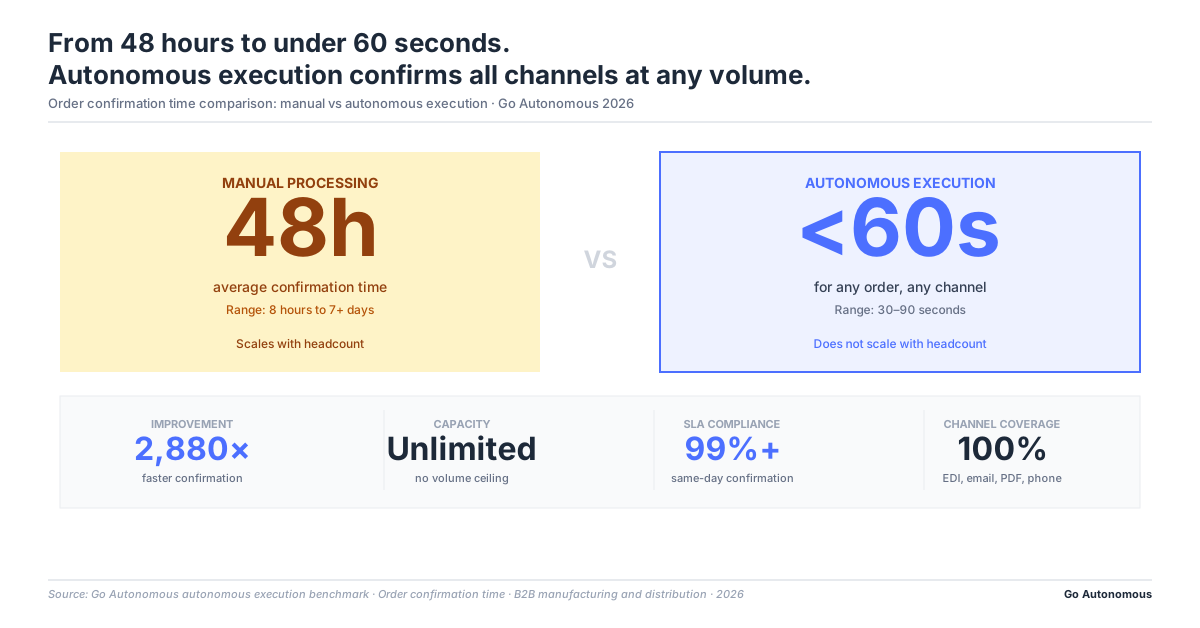
Autonomous Execution Confirms Orders in Under 60 Seconds at Any Volume
How AI Achieves Sub-Minute Confirmation: Parallel Processing, No Queue
Autonomous order processing eliminates the queue. There is no inbox to monitor, no rep to be occupied with another order, no shift handover that delays overnight submissions. Orders arriving at 3 AM are confirmed by 3:00:59 AM. Orders arriving in volume spikes — end-of-month rushes, post-promotion surges, sudden demand events — are processed at the same speed as low-volume periods. The system does not get tired, does not get interrupted, and does not have a capacity ceiling that fills up. Manual processing costs €15–35 per order; autonomous execution brings this below €2, at any volume, on any schedule. This is not a marginal improvement — it is a structural change in how confirmation time behaves as a function of volume.
What the Operations Team Does Differently When Confirmation Is No Longer a Constraint
Danfoss reduced confirmation time from 42 hours to under 1 minute and now covers 26 countries in a single day. The operations team’s role shifted from processing and status management to exception handling and process improvement — a fundamentally different and more valuable activity. When confirmation time drops to under 60 seconds, the customer service team stops fielding status calls. They stop chasing approvals on held orders. They start focusing on the 5–10% of orders that genuinely require human judgment: complex custom configurations, new customer relationships, commercial exceptions. The throughput of the team — measured in value created, not orders keyed — increases substantially. See what this looks like in practice at Go Autonomous success cases.
If your operations team is measuring confirmation time in hours and your competitors are measuring it in seconds, the gap is not a technology gap — it is a decision gap. Book a session with Go Autonomous to benchmark your current confirmation time and model what autonomous execution would change.
Frequently Asked Questions
What is the average order confirmation time for B2B manufacturers?
B2B manufacturers average 24–48 hours for order confirmation measured from ERP entry to confirmation sent. The customer-experienced time is often 36–72 hours once email intake lag is included, as orders sent outside business hours may not enter the ERP until the next morning.
How does slow order confirmation affect customer retention in B2B manufacturing?
Slow confirmation drives inbound status calls, order amendments, and cancellations. Customers who have not received confirmation within a few hours may split orders across suppliers or cancel entirely. In competitive markets, confirmation speed is increasingly a factor in supplier selection, making slow confirmation a direct retention risk.
What is the difference in order confirmation time between B2B manufacturing and distribution?
Distribution operations typically confirm 30–40% faster than manufacturing. Distributors deal with more standardized products, known pricing, and predictable lead times. Manufacturers face more complex confirmation requirements: custom configurations, production schedule dependencies, and multi-level bill of materials checks that add decision steps to the confirmation process.
How can B2B manufacturers reduce order confirmation time without increasing headcount?
Autonomous order execution processes orders in under 60 seconds without additional headcount. AI handles standard configurations, validates orders against ERP data, and sends confirmations automatically — reserving human review only for genuine exceptions. Operations like Danfoss reduced confirmation time from 42 hours to under 1 minute using this approach.
What order confirmation time should B2B distributors target to stay competitive in 2026?
Best-in-class B2B distributors using autonomous execution confirm in under 60 seconds. A practical interim target for distributors still running manual processes is same-day confirmation for all orders received during business hours. In 2026, 24–48 hour confirmation is increasingly a competitive disadvantage, particularly for distributors facing pressure from digital-native competitors.