
.svg)





Autonomous Commerce for Electronic Component Distributors.
Thousands of SKUs. Constant obsolescence. Customer-specific part numbers. Go Autonomous executes every order against your live catalog.








Electronic Catalogs Move Faster Than Teams.
Electronic Catalogs Move Faster Than Teams.
Why Component Distribution Needs Execution Speed
Obsolescence cycles outpace manual order handling.
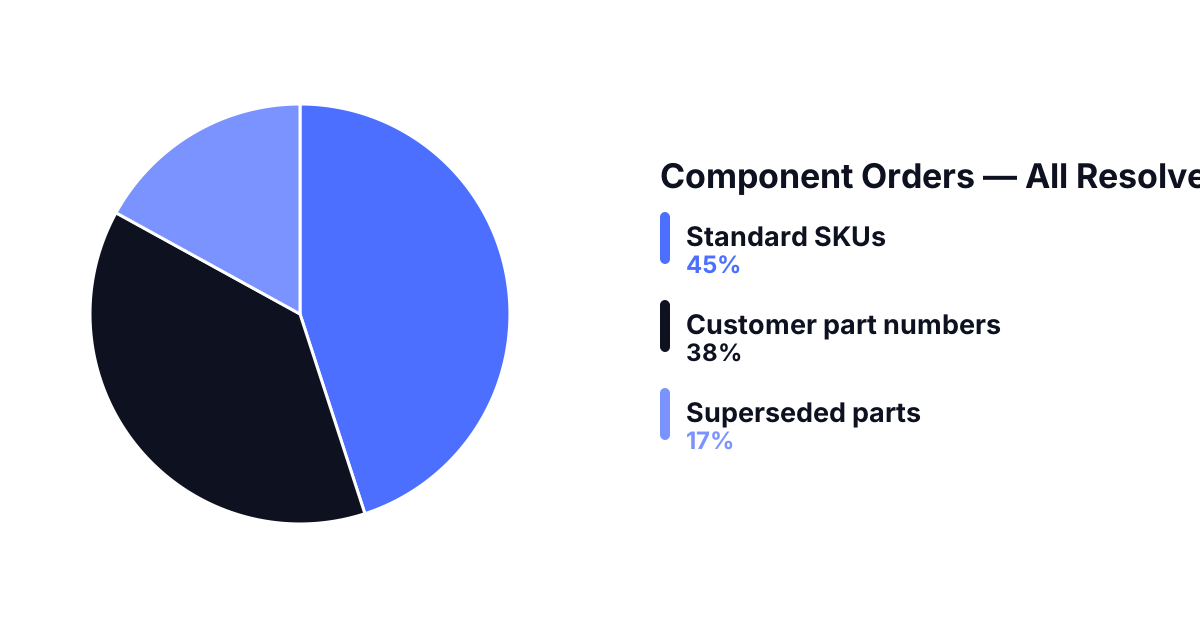
Electronic component catalogs change daily. Parts go end-of-life, replacements shift availability, and customer cross-references multiply. When orders arrive referencing outdated codes or customer-specific part numbers, manual resolution creates a queue that costs you the sale.
Your catalog has 50,000 SKUs. Your customer just ordered by their part number, not yours.
Why SKU Complexity Defeats Manual Processing
Why SKU Complexity Defeats Manual Processing
The Cross-Reference Challenge Generic Tools Miss
Every unknown part number routes to a manual queue.
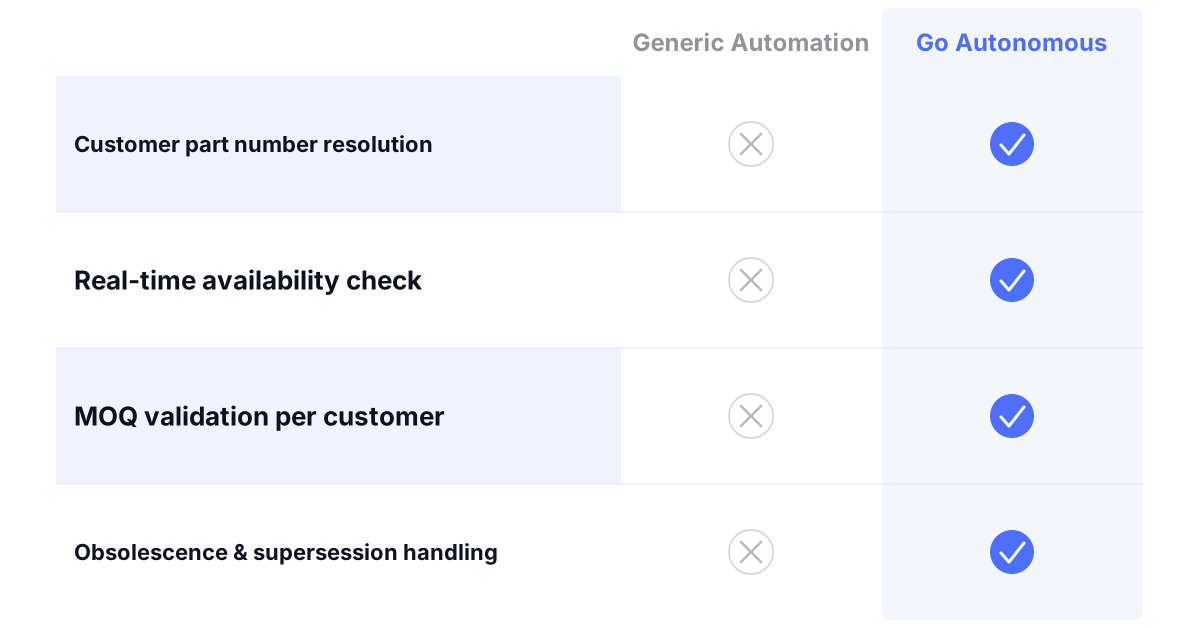
Generic automation cannot resolve customer part numbers against your catalog in real time. It cannot check availability across product families when the exact SKU is discontinued. Each unresolved line item becomes a manual task. In components, orders average dozens of lines.
Electronic Component Execution. By the Numbers.
Electronic Component Execution. By the Numbers.
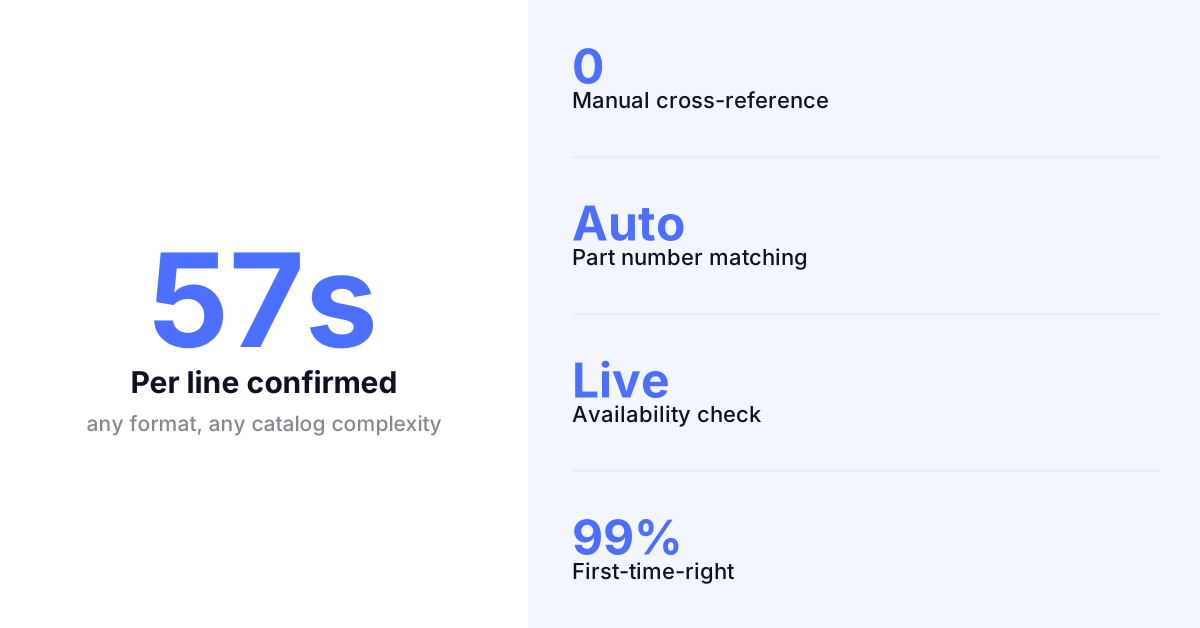
Accuracy on parts orders
Capacity freed from entry
Average order processing
More throughput per rep
Every Part Number Resolved. Every Line Confirmed.
Every Part Number Resolved. Every Line Confirmed.
Cross-Reference Intelligence Built Into Execution.
Customer codes, obsolete parts, MOQs. All resolved.
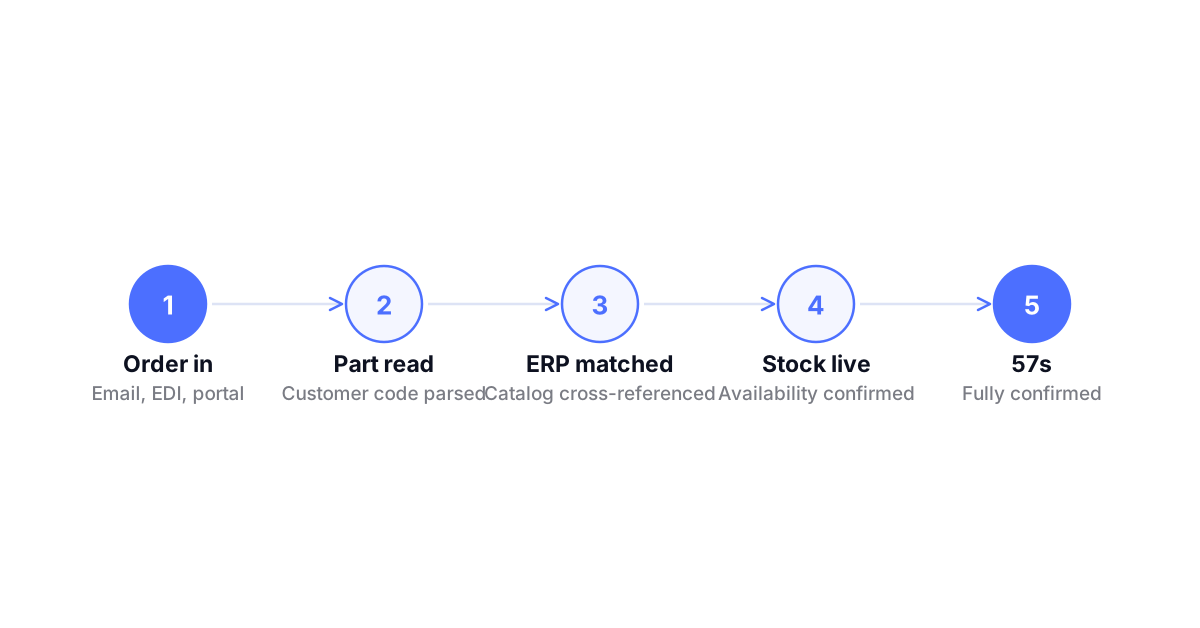
Go Autonomous resolves customer part numbers against your catalog using cross-reference intelligence, checks availability across product families, validates MOQ and packaging constraints, and confirms to your ERP. Your team handles the exceptions. The system handles the catalog.
What Changes for Electronic Component Distributors.
Customer part numbers resolved without manual lookup.
Cross-reference intelligence matches customer codes to your internal catalog automatically.
Obsolete components matched to current replacements.
End-of-life products resolved against your supersession data before the order stalls.
MOQ and packaging constraints applied at execution.
Minimum quantities, reel and tape rules validated automatically per line item.
Multi-line orders processed line by line in parallel.
Each of 50 lines validated independently. One consolidated response. No manual work.
This is not a product search. It is execution.
A product search finds the part. Autonomous Commerce resolves the customer code, checks the replacement, validates the MOQ, confirms availability, and writes the order to your ERP across every line, every channel, in seconds.

A product search finds the part. Autonomous Commerce resolves the customer code, checks the replacement, validates the MOQ, confirms availability, and writes the order to your ERP across every line, every channel, in seconds.
Part Numbers Matched. No Manual Cross-Reference.
Part Numbers Matched. No Manual Cross-Reference.
Autonomous Cross-Reference Resolution for Components
Go Autonomous reads incoming orders with customer-specific part numbers, matches them against your product master using cross-reference intelligence built from order history, and confirms to your ERP automatically. Unknown codes escalated with the best match suggestion.
Component Quotes Returned. No Pricing Lookup.
Component Quotes Returned. No Pricing Lookup.
Autonomous Quote Execution for Electronic Sales
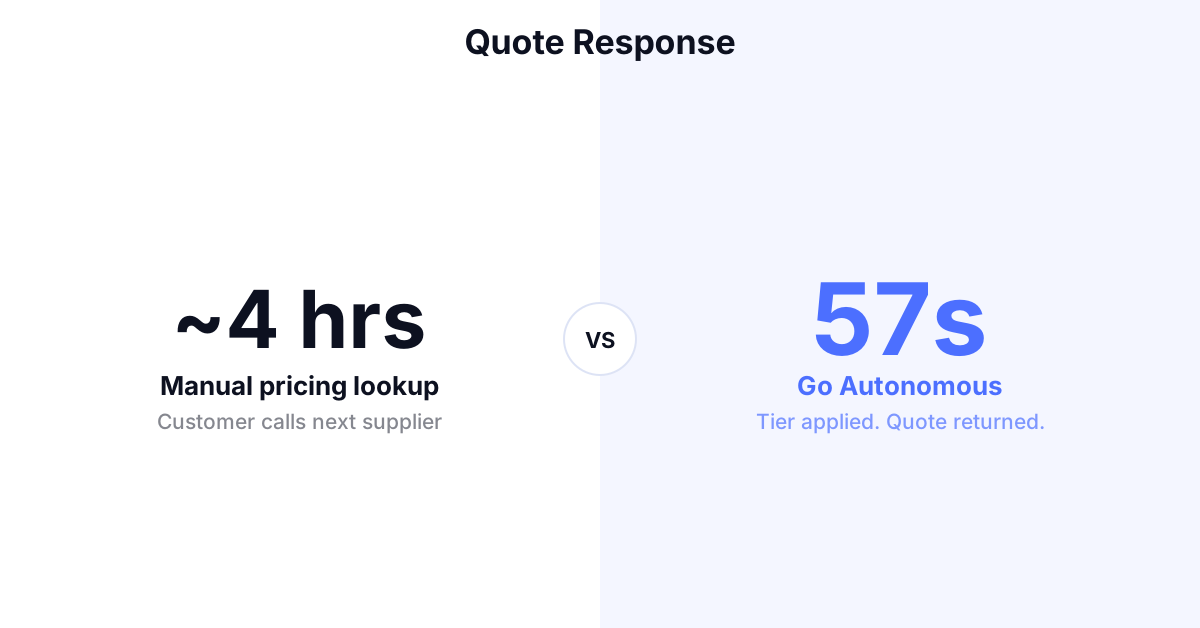
Go Autonomous captures incoming RFQs, applies customer-specific pricing and volume tiers from your ERP, validates availability across your warehouse network, and returns accurate quotes automatically. Standard requests never reach your sales desk.
Obsolete SKUs Resolved. No Catalog Specialist.
Obsolete SKUs Resolved. No Catalog Specialist.
Autonomous End-of-Life and Supersession Handling
Go Autonomous reads your supersession tables. When an order references a discontinued component, the current replacement is identified and availability confirmed automatically. Substitutions requiring customer approval are escalated with full context attached.
Multi-Line Orders Confirmed. Line by Line.
Multi-Line Orders Confirmed. Line by Line.
Autonomous Multi-Line Order Processing for Components
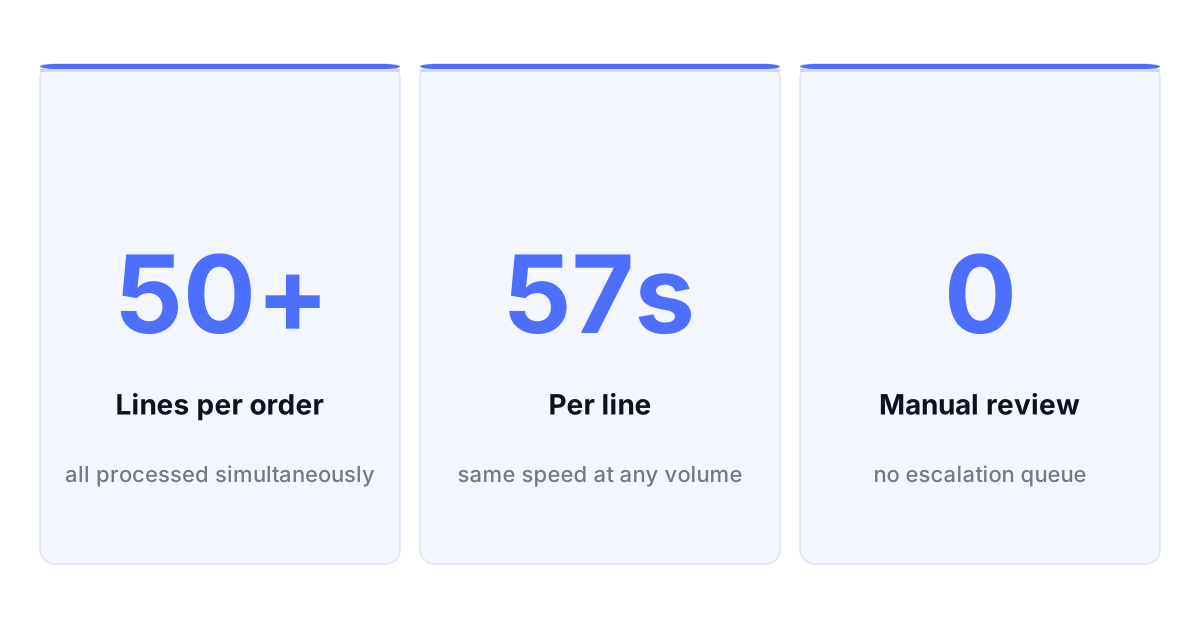
Go Autonomous processes each line independently against real-time stock, pricing, and MOQ data. A 50-line order receives the same processing speed as a single line. The consolidated response returns per-line availability, pricing, and lead time detail.
Results From the Field.
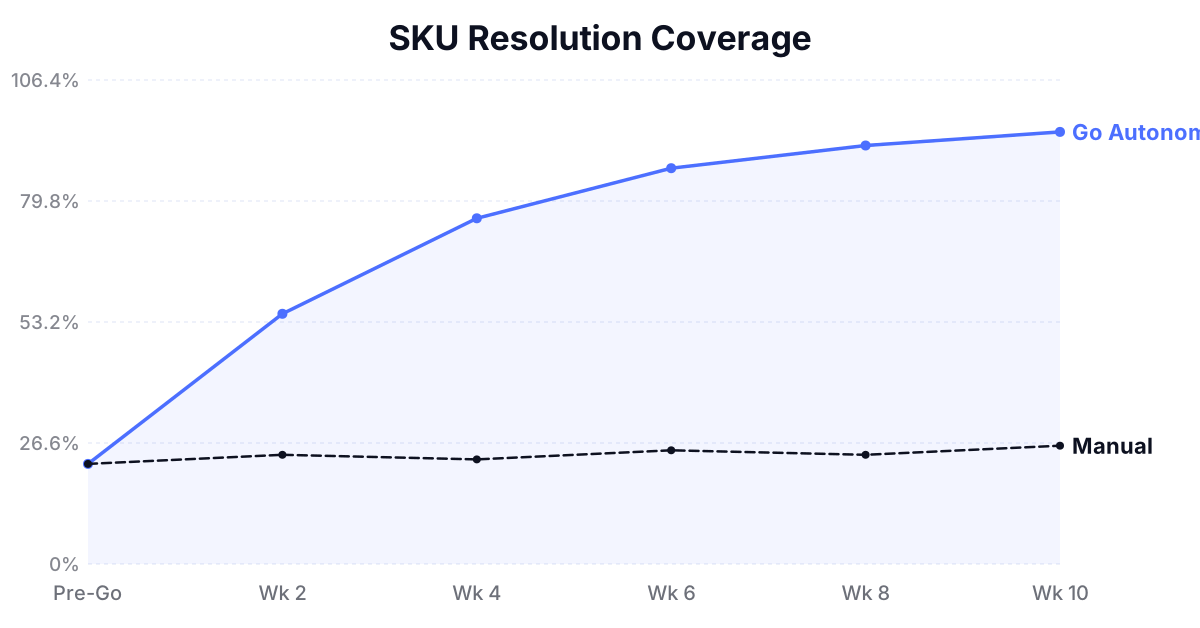
IFM Electronic — Digital order revenue grew from 22% to 95% of total volume within two months of deploying autonomous commerce for complex product variant handling. Read the story
Danfoss — Autonomous order execution deployed across 26 countries simultaneously, processing customer-specific pricing rules per market with orders confirmed in under one minute. Read the press release
Nilfisk — Scaled order volume across multiple markets without growing the customer service team by moving to autonomous execution connected directly to ERP. Read the press release
Autonomous Commerce Product Suite

Workstation Where your team handles exceptions, reviews complex quotes, and manages edge cases. Full context on every escalation. No chasing information.
Flow Where every inbound channel connects to your ERP. Email, EDI, portal unified into one execution layer from the moment a request arrives.
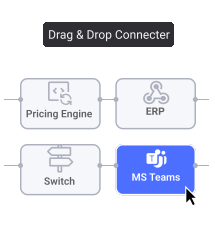
Pulse Where performance is tracked in real time. Every transaction monitored, every exception flagged before it becomes a customer problem.
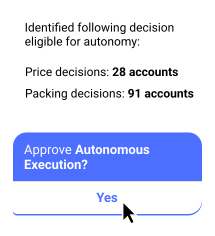
Decision Analytics Where patterns become decisions. Pricing gaps, capacity constraints, and demand signals surfaced automatically before you ask for them.
Common Questions
How does Go Autonomous resolve customer-specific part numbers?
Go Autonomous builds a cross-reference layer from your order history and product master. When an incoming order uses a customer part number instead of your internal code, the system matches it automatically using historical patterns and cross-reference tables. Unresolvable codes are escalated with the best match suggestion attached.
Can it handle orders with 50 or more line items?
Yes. Go Autonomous processes each line independently and in parallel against real-time stock, pricing, and MOQ data. A 50-line order receives the same processing speed as a single-line order. The consolidated response is returned as one confirmation with per-line detail.
How does Go Autonomous handle end-of-life and obsolete components?
Go Autonomous reads your supersession and end-of-life tables. When an order references a discontinued component, the system identifies the current replacement, checks availability, and either confirms the substitution or escalates for customer approval if required by your rules.
What happens with MOQ and packaging unit constraints?
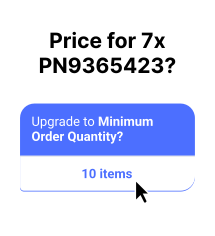
Minimum order quantities, reel and tape packaging requirements, and standard pack sizes are read from your product master. Go Autonomous validates every line against these constraints and either adjusts to the nearest valid quantity or escalates the deviation for review.
Can Go Autonomous process orders from multiple channels simultaneously?
Yes. Flow ingests orders from email, EDI, customer portals, and direct API connections into one execution layer. Every order is validated against the same pricing, stock, and product rules regardless of how it arrives. There is no channel-specific queue or processing delay.
Voice of the Customers



Explore what autonomous execution means for your operations.
Talk to an expert or see Go Autonomous in action.

Talk to an expert or see Go Autonomous in action.