
.svg)





Autonomous Commerce for Construction Materials Distributors
Construction orders don’t arrive steadily. They arrive in waves. Manual operations buckle. Autonomous execution doesn’t.








Construction Demand Does Not Arrive Steadily.
Construction Demand Does Not Arrive Steadily.
Why Construction Distribution Has a Scale Problem
Orders arrive in waves. Manual operations cannot scale.
Construction demand arrives in concentrated bursts tied to project starts, planning approvals, and contractor schedules. When a project mobilises, your team may receive more orders in two days than they handle in a typical week. Go Autonomous processes every order at the same speed regardless of volume.
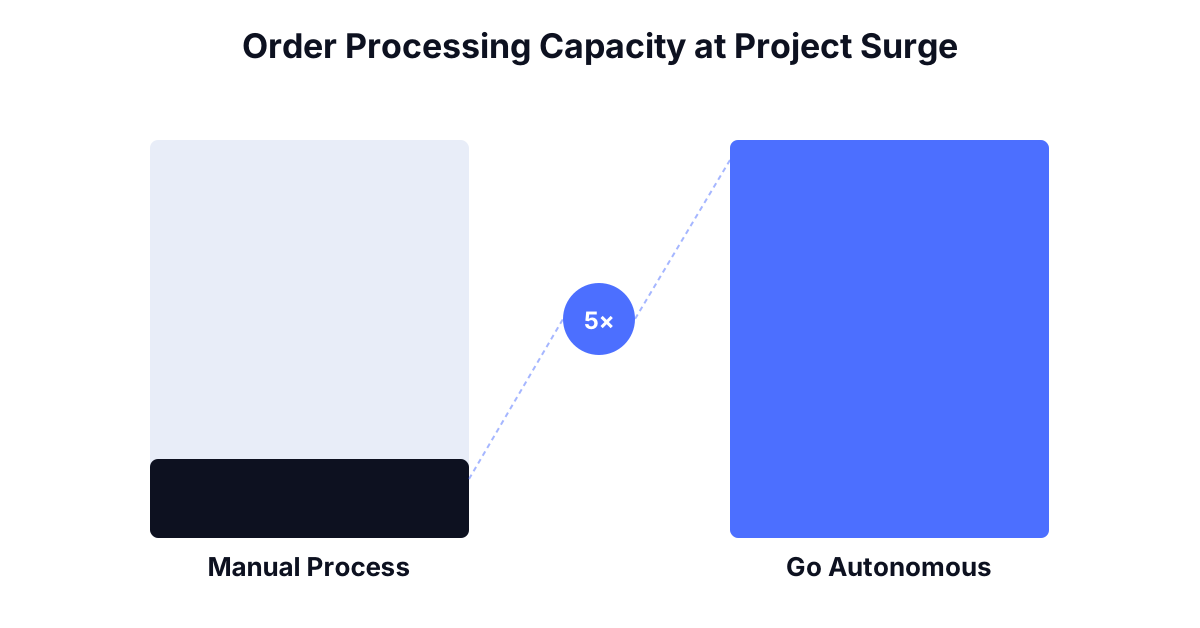
When a project mobilises, thirty orders arrive at once. Your team cannot scale in an hour.
Why Peak Staffing Cannot Match Demand Spikes
Why Peak Staffing Cannot Match Demand Spikes
Why Surge Staffing Is a Structural Dead End
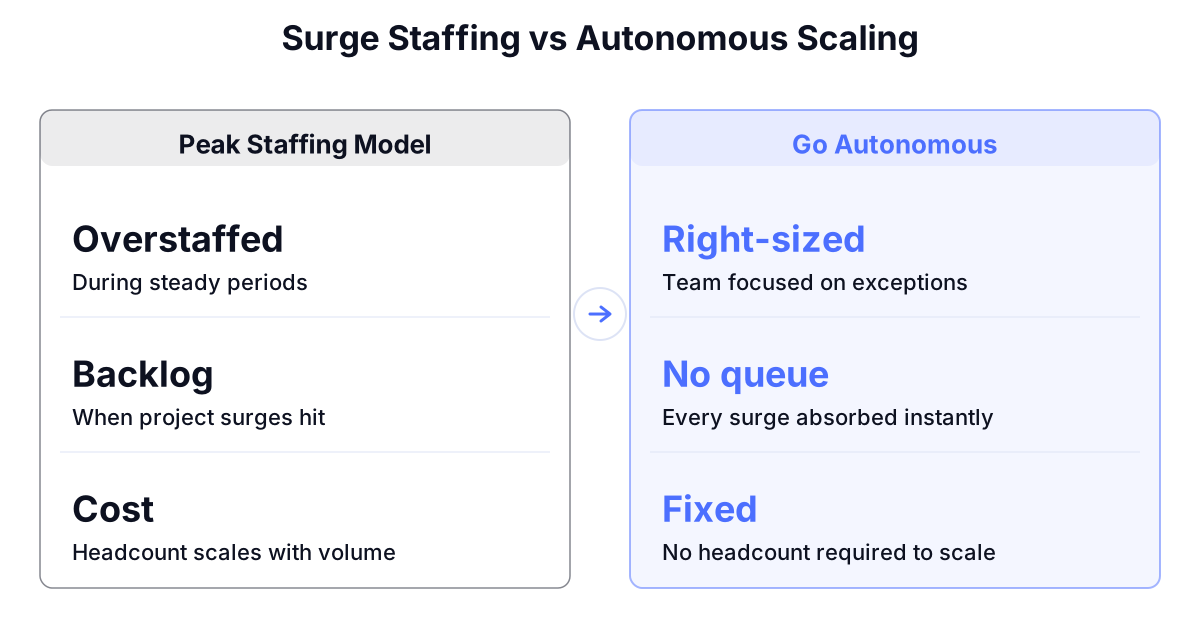
Throughput scales with headcount. Demand does not.
Hiring to handle peak demand means overstaffing during steady-state periods. Not hiring means delayed confirmations during surges — exactly when contractors are most sensitive to response time. The problem is not capacity. It is that manual execution scales linearly and demand does not.
Construction Orders. Volume Without Limits.
Construction Orders. Volume Without Limits.
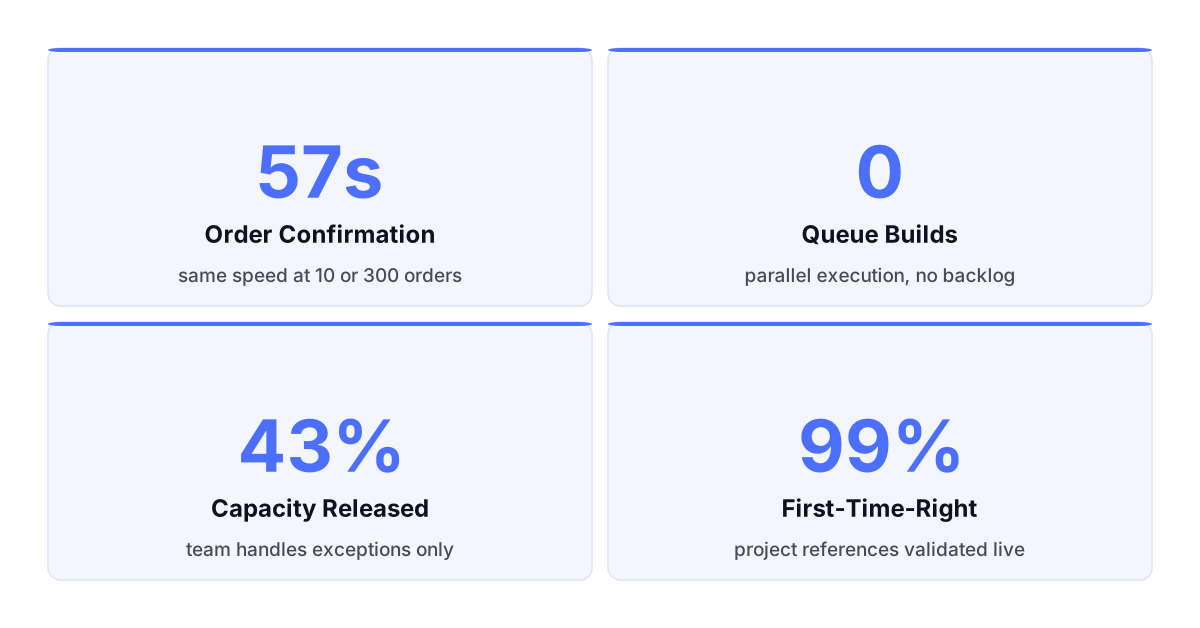
Capacity released during peak project periods
First-time-right regardless of order volume
Order response whether ten or three hundred arrive
More orders processed per team member
Same Execution Speed. Any Order Volume.
Same Execution Speed. Any Order Volume.
From Operator Knowledge to System Logic.
Same processing speed whether 10 orders or 300.
Go Autonomous moves project reference validation, multi-site delivery rules, substitution logic, and volume discount tracking from operator knowledge to system logic. Your team handles judgment calls. The system handles everything else — at the same speed on any volume.
What Changes for Construction Materials Distributors.
Surge volume absorbed without adding headcount.
Peak demand hits your execution layer, not your hiring plan.
Multi-site orders confirmed per site in one transaction.
Delivery site details, schedules, and logistics rules applied automatically for each location.
Delivery commitments accurate the first time.
No errors introduced under volume pressure. Every confirmation validated against live stock.
Project pricing tracked and applied automatically.
Volume thresholds, project codes, and tiered discounts applied correctly from your ERP without lookup.
This is not surge staffing. It is execution.
Surge staffing adds cost, introduces errors, and cannot scale in under an hour. Autonomous Commerce processes every order at the same speed whether a project mobilises with ten orders or three hundred.

Surge staffing adds cost, introduces errors, and cannot scale in under an hour. Autonomous Commerce processes every order at the same speed whether a project mobilises with ten orders or three hundred.
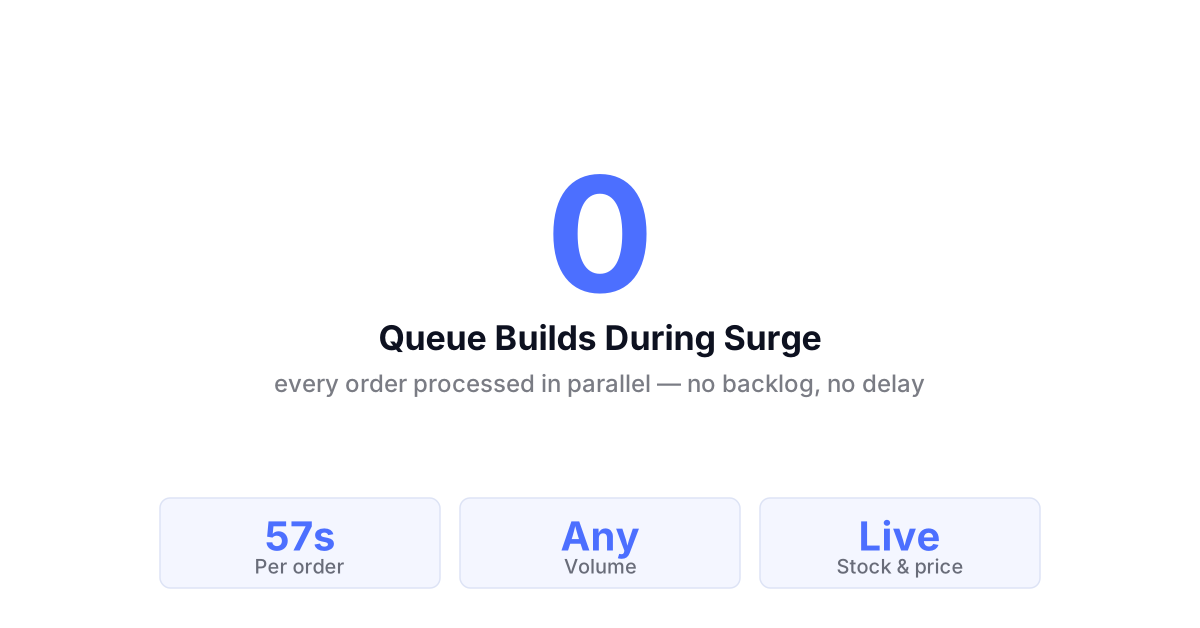
Surge Orders Confirmed. No Queue Builds.
Surge Orders Confirmed. No Queue Builds.
Autonomous Order Execution Under Volume Surges
Go Autonomous processes every incoming order independently and in parallel. When a project mobilises and orders arrive in a burst, each one is confirmed against your pricing, stock, and delivery rules automatically. No backlog. No temporary staffing required.
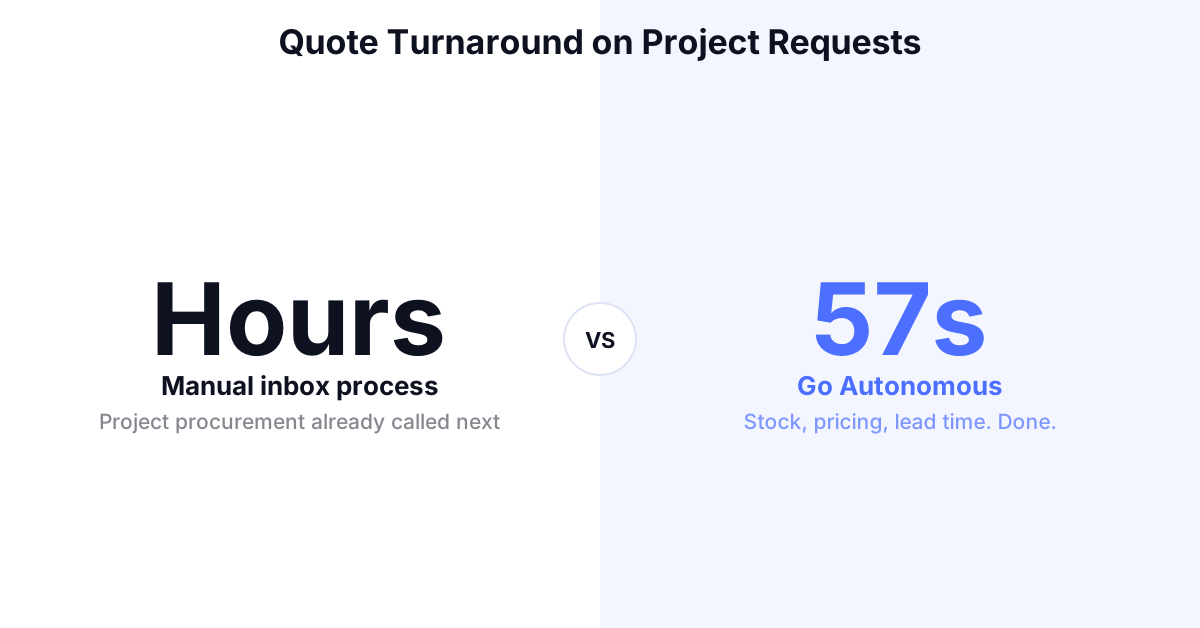
Material Quotes Returned. No Inbox Delay.
Material Quotes Returned. No Inbox Delay.
Autonomous Quote Execution for Project Procurement
Go Autonomous captures incoming quote requests, resolves pricing, stock availability, and delivery lead times from your ERP, and returns accurate quotes automatically. Project procurement quoting happens in seconds, not business hours.
Mid-Project Changes Resolved. Automatically.
Mid-Project Changes Resolved. Automatically.
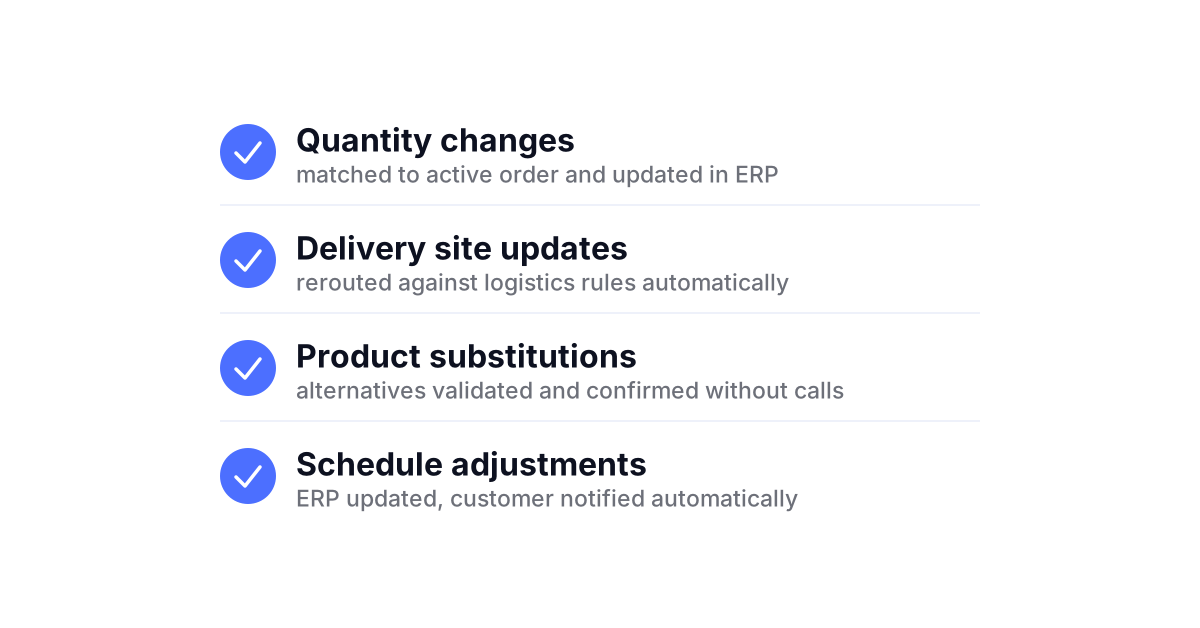
Autonomous Order Amendment for Active Projects
Go Autonomous reads incoming change requests, matches them to active orders in your ERP, and applies the amendment if it falls within your rules. Delivery reschedules, site changes, and material substitutions are resolved at the same speed as original orders.
Multi-Site Delivery Confirmed. Per Site.
Multi-Site Delivery Confirmed. Per Site.
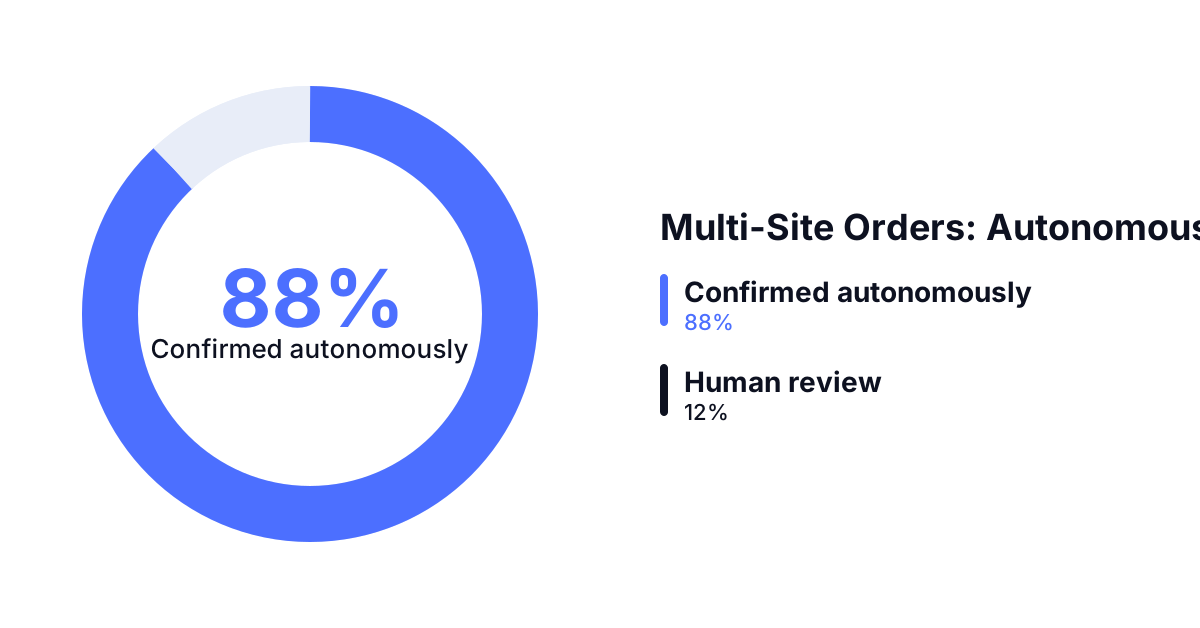
Autonomous Multi-Site Project Order Management
Go Autonomous reads delivery site information from incoming orders, validates feasibility against your logistics rules, and confirms site-specific schedules automatically. Multi-site project orders are handled as one transaction with per-site fulfilment detail.
Results From the Field.
Velux — 28% of all UK customer orders processed fully autonomously, including during high-volume seasonal periods. See success cases
Nilfisk — Scaled order volume across multiple markets without growing customer service operations. Read the press release
IFM Electronic — Moved from fragmented manual ordering to a single autonomous execution layer, growing digital order share from 22% to 95%. Read the story
Autonomous Commerce Product Suite
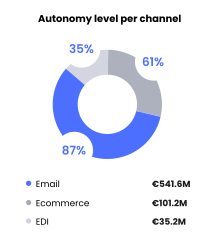
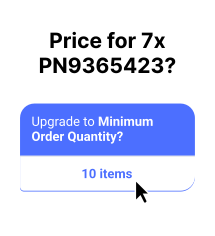
Workstation Where your team handles exceptions, reviews complex quotes, and manages edge cases. Full context on every escalation. No chasing information.
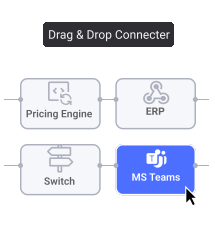
Flow Where every inbound channel connects to your ERP. Email, EDI, portal unified into one execution layer from the moment a request arrives.
Pulse Where performance is tracked in real time. Every transaction monitored, every exception flagged before it becomes a customer problem.
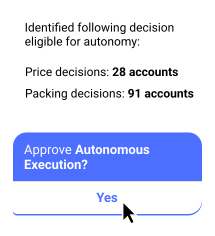
Decision Analytics Where patterns become decisions. Pricing gaps, capacity constraints, and demand signals surfaced automatically before you ask for them.
Common Questions
How does Go Autonomous handle sudden volume surges from multiple project starts?
Go Autonomous processes every incoming order independently and in parallel. There is no queue mechanism that creates a backlog under volume. Ten orders or three hundred orders receive the same processing speed, validated against live ERP data and confirmed automatically.
Can it manage orders with multiple delivery sites and staggered delivery dates?
Yes. Go Autonomous reads delivery site information from incoming orders, validates delivery date feasibility against your logistics rules, and confirms site-specific delivery schedules automatically. Multi-site project orders are handled as a single transaction with per-site fulfilment detail.
What happens when a requested material is out of stock and a substitution is needed?
Go Autonomous checks your product substitution rules and alternative SKU mappings when the requested material is unavailable. If a substitution is permitted under the customer agreement, Go Autonomous proposes it and confirms. If customer approval is required first, the order is escalated with the substitution recommendation attached.
How does it handle project-specific pricing and volume discount structures?
Project pricing agreements and volume discount schedules are read directly from your ERP. Go Autonomous applies the correct project price list to each order automatically, including tiered discounts that activate at specific cumulative order volumes across the project lifecycle.
Can Go Autonomous process orders that reference project codes or contractor PO numbers?
Yes. Go Autonomous reads project reference codes and contractor PO numbers from incoming orders, validates them against the project master or customer account in your ERP, and tags confirmed orders with the correct project reference automatically.
Voice of the Customers



Explore what autonomous execution means for your operations.
Talk to an expert or see Go Autonomous in action.

Talk to an expert or see Go Autonomous in action.