.svg)





The Real Cost of Order Status Inquiry Calls in B2B Customer Service
Order status inquiries make up 30–40% of inbound call volume for B2B customer service teams in manufacturing and distribution. Each call costs €8–15 in direct handling time and interrupts the processing of a new order. The root cause is not customer behavior — it is slow order confirmation. This post calculates the real cost of status inquiries and explains what eliminates them.
Order status inquiries account for 30–40% of inbound call volume for B2B customer service teams in manufacturing and distribution. Each call costs €8–15 in direct handling time. The root cause is not customer behavior: it is slow order confirmation. Operations that reduce confirmation time to under one hour report status call volume dropping by 80–90%. The calls are preventable.
Table of Content
- Order Status Calls Are 30–40% of Inbound B2B Customer Service Volume
- Each Status Inquiry Costs €8–15 and Interrupts an Active Processing Workflow
- Status Calls Are a Confirmation Time Problem, Not a Customer Service Staffing Problem
- Autonomous Confirmation Eliminates the Information Vacuum That Generates Status Calls
- The Autonomous Execution Fabric: Confirmation Speed Across Every Commercial Channel
- Frequently Asked Questions
- Why do B2B customers call to check order status so frequently?
- What is the cost of handling order status inquiries in B2B customer service?
- How do B2B manufacturers reduce order status inquiry call volume?
- How does order confirmation time affect customer service call volume in B2B distribution?
- What percentage of B2B customer service calls are order status inquiries?
Order Status Calls Are 30–40% of Inbound B2B Customer Service Volume
Why Customers Call for Status: Slow Confirmation Creates an Information Vacuum
A customer who has not received order confirmation within their expected window calls to check. This is rational behavior. In B2B manufacturing, where orders may represent significant production commitments or resale inventory, uncertainty about order status creates operational risk for the buyer. If the customer does not know whether the order was received, accepted, or is being processed, they face a choice: wait and risk a production disruption, or call and confirm.
The information vacuum opens the moment the customer sends an order and receives no acknowledgment. In operations where confirmation takes 24–48 hours, customers begin calling at hour four. They are not being impatient. They are managing their own operations. The call is a symptom of an information gap that the supplier created by not confirming the order promptly.
The Call Volume Pattern: Status Inquiries Peak When Confirmation Time Peaks
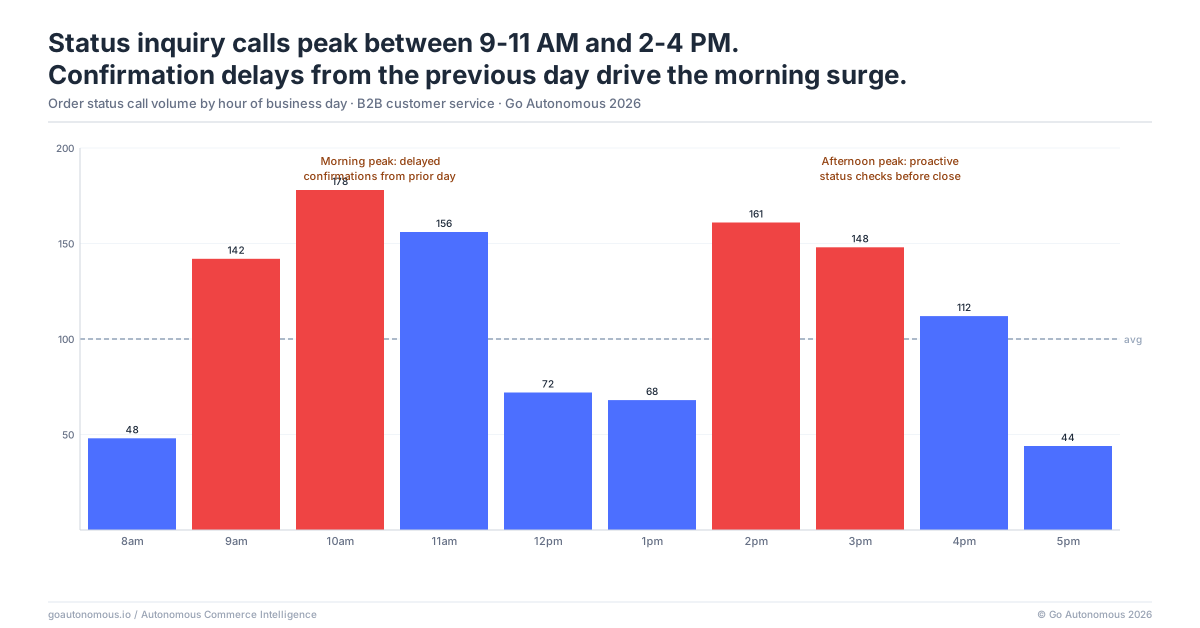
The correlation between confirmation time and status call volume is consistent across B2B manufacturing and distribution operations. When confirmation time exceeds four hours, status calls become a significant portion of inbound volume. When confirmation time drops below one hour, status call volume drops toward zero.
This pattern has a direct implication for customer service operations. Status call volume is not a fixed cost of running a B2B customer service team: it is a variable that responds to confirmation speed. Operations that treat status calls as a permanent feature of their workload are absorbing the cost of their confirmation time problem in their customer service budget.
The relationship between confirmation time and status call volume also explains why status call volume tends to increase seasonally. During peak order periods, confirmation times lengthen because the processing queue backs up. Longer confirmation times generate more calls. More calls interrupt the processing workflow, which lengthens confirmation times further. The cycle is self-reinforcing. For a detailed view of how customer experience degrades under manual processing load, the dynamic is consistent across operations of all sizes.
Each time we added one or two million euros in revenue, we had to add another operator. From a cost perspective, that's an unsustainable way of operating a business.

Each Status Inquiry Costs €8–15 and Interrupts an Active Processing Workflow
The Double Cost: Direct Call Handling Plus Context-Switch Interruption
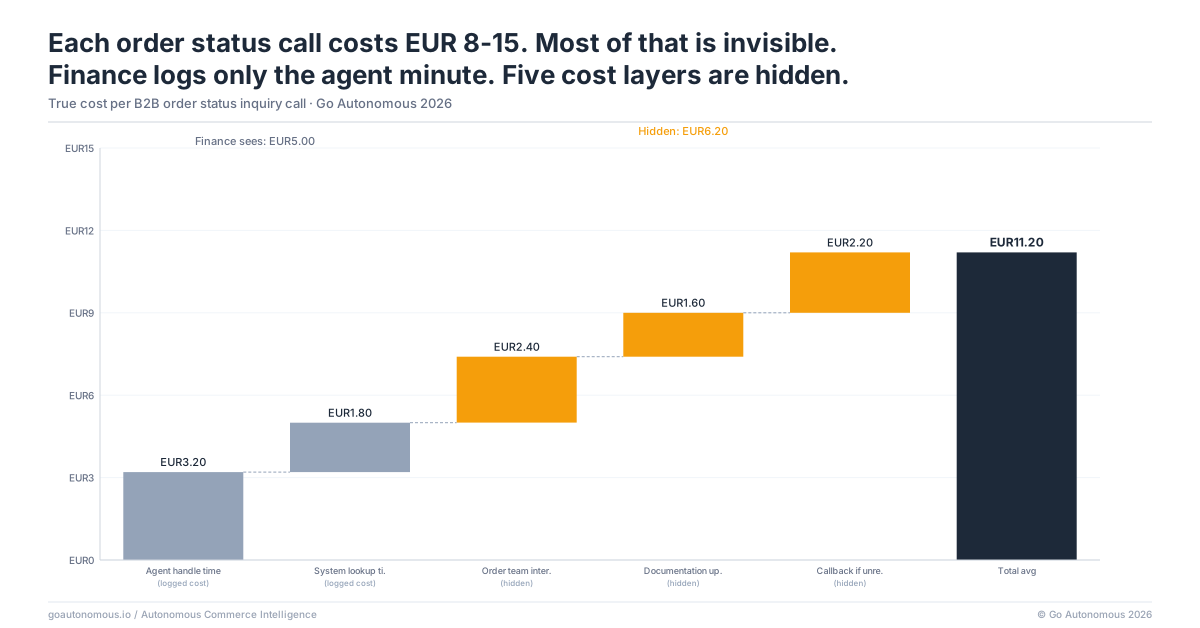
A status inquiry call runs 4–8 minutes: the customer service rep answers, pulls up the order in the ERP, checks the status, communicates it, and closes the call. At loaded labor rates typical for B2B manufacturing and distribution operations, this is €8–15 per call in direct handling cost. That figure is the number most operations track, when they track it at all.
The true cost includes interruption. A customer service rep processing an inbound order stops mid-workflow to handle a status call. The order being processed requires the rep to hold a mental model of multiple data points: product codes, customer account status, delivery requirements, applicable pricing. When a status call interrupts that workflow, the rep must set that context aside, handle the call, and then rebuild the context before continuing. This re-orientation takes 3–5 minutes. The interruption cost can equal the direct call handling cost.
The Cumulative Impact: Status Call Volume at Scale in B2B Manufacturing
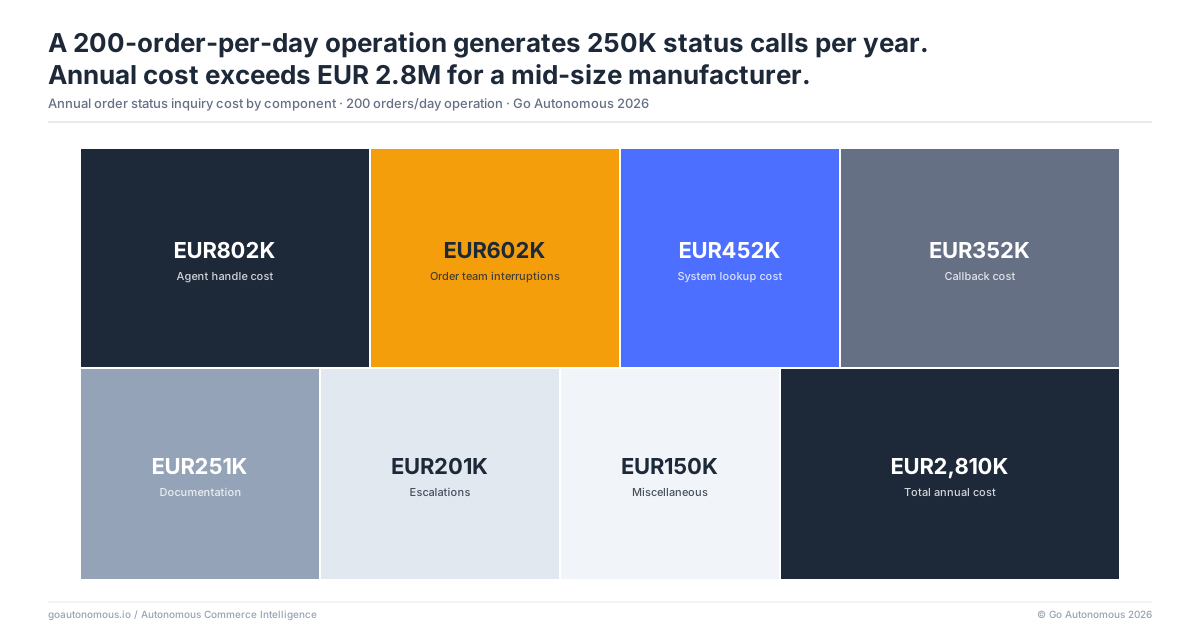
For an operation receiving 50 status calls per day, the direct cost is €400–750 daily. Add interruption cost of €300–500. Annualized at 250 working days: €175,000–312,500 in direct handling cost, plus an equivalent amount in productivity loss from workflow interruption. For larger operations, the figures scale proportionately.
This is the cost of a process problem expressed as a customer service budget line. The customer service team is absorbing the overhead of slow confirmation on behalf of the operations that could not deliver confirmation faster. The Mikkel Vindeløv observation is directly applicable: each increment of revenue adds more orders, more confirmation delays, more status calls, and more customer service capacity required to handle them.
Manual order processing costs €15–35 per order at full loaded labor rate. When a portion of that cost is being re-spent on status calls generated by the same orders, the true per-order cost is substantially higher than the direct processing figure suggests.
Status Calls Are a Confirmation Time Problem, Not a Customer Service Staffing Problem
Why Adding Customer Service Headcount Does Not Solve the Status Call Problem
The management reflex when status call volume is high is to staff the customer service team to handle it. This absorbs the cost but does not eliminate the problem. Status calls will continue at the same volume as long as confirmation times remain slow. Staffing to absorb status calls means paying for the confirmation time problem twice: once in the cost of slow confirmation and again in the cost of handling the calls that slow confirmation generates.
Each additional customer service headcount added to handle status calls is a capitalized version of the confirmation time problem. The headcount cost recurs every year. The problem does not get smaller; it grows with order volume. This is the dynamic Mikkel Vindeløv describes: revenue growth that adds cost at the same rate it adds revenue is structurally unsustainable.
The CRM Data That Shows Status Call Peaks Correlating With Confirmation Delays
Operations that have instrumented their CRM and call center data consistently find the same pattern: status call volume peaks in the days following order intake spikes. When order volume surges, confirmation times lengthen, and 48–72 hours later, status call volume spikes. The lag reflects the window between order receipt and the point at which customers begin to worry about confirmation.
This correlation is diagnostic. It tells operations leadership that the customer service workload is downstream of the order processing workload. Managing the customer service team harder does not address the upstream constraint. Efficiency gains in order processing are the only lever that reduces status call volume structurally. Operations that have reduced confirmation time to under one hour report status call volume dropping by 80–90%. The remaining volume comes from customers who call regardless, not from customers responding to an information vacuum.
Autonomous Confirmation Eliminates the Information Vacuum That Generates Status Calls
Sub-60-Second Confirmation: The Customer Receives Confirmation Before They Think to Call
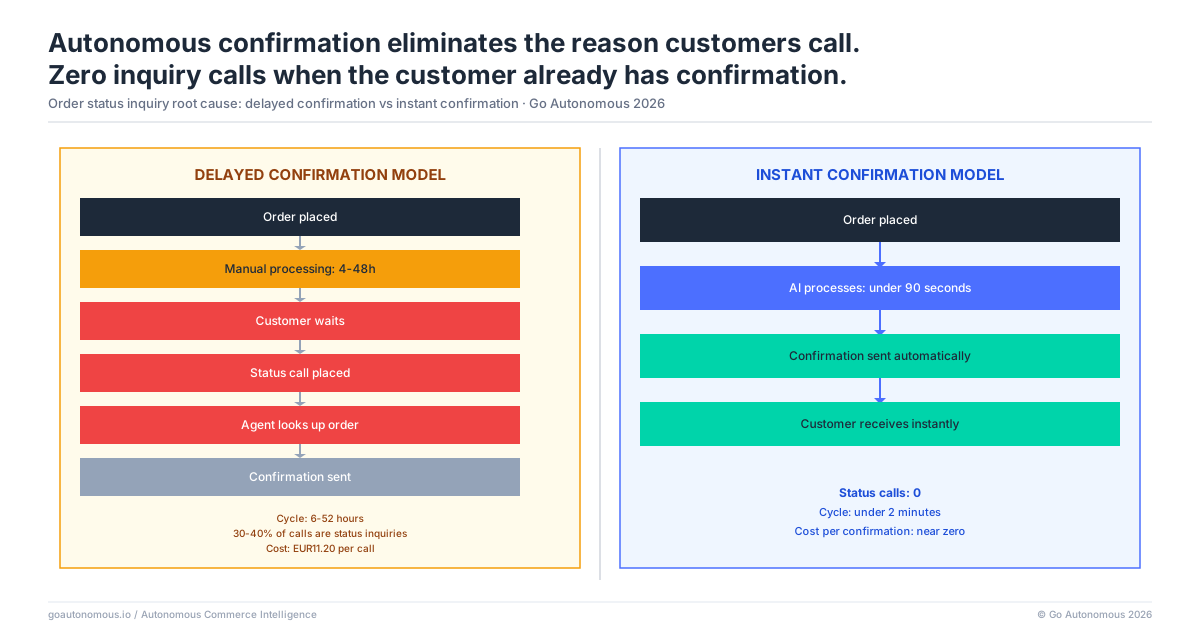
When order confirmation happens in under 60 seconds, the information vacuum never opens. The customer sends the order and receives confirmation before they have had time to form a concern. There is nothing to call about. Status calls do not happen because the customer already knows the order status: confirmed, priced, scheduled for fulfillment.
This is not a marginal improvement in confirmation time. It is a categorical change in the information dynamic between supplier and customer. A customer who receives confirmation in under a minute does not need to monitor the order, follow up, or call for status. The autonomous commerce model processes orders at the moment they arrive, regardless of channel, and delivers confirmation immediately.
Danfoss confirms orders in under one minute across 26 countries. The confirmation time that previously ran 42 hours is now under 60 seconds. Status call volume at that confirmation speed is structurally near zero. The customer does not have a window in which uncertainty exists.
What the Customer Service Team Does When Status Calls Drop by 80–90%
When status call volume drops by 80–90%, the customer service team recovers a substantial portion of its daily capacity. A team that previously handled 50 status calls per day, each consuming 4–8 minutes plus interruption overhead, recovers 5–8 hours of productive time daily across the team.
That recovered capacity is available for work that creates commercial value: proactive account management, upsell and cross-sell conversations, resolution of genuinely complex exceptions, and customer relationship development. The customer service function shifts from reactive call handling to proactive account coverage. The same headcount covers more accounts more effectively.
For the commercial outcomes that this shift enables, see the Go Autonomous success cases. The pattern is consistent: when the reactive workload drops, the proactive workload expands, and customer outcomes improve alongside operational efficiency.
The Autonomous Execution Fabric: Confirmation Speed Across Every Commercial Channel
The status inquiry problem has a single root cause: slow confirmation. The Autonomous Execution Fabric is a full commercial execution layer that connects directly to your SAP, Oracle, or Microsoft Dynamics environment and executes every inbound commercial transaction without human assembly. For order-to-confirmation, the Fabric reads each inbound order at the moment it arrives, regardless of channel, validates it against ERP master data, resolves ambiguities using order history, and delivers confirmation in under 60 seconds. The information vacuum that generates status calls does not open because confirmation arrives before the customer forms a concern.
The Fabric handles more than order confirmation. It processes every commercial transaction type: orders across every intake channel (email, EDI, customer portal, and direct API), pricing requests, quote delivery, return authorizations, credit note issuance, and contract tender responses. Each of these transaction types generates its own class of status inquiry when the customer does not receive timely confirmation. A quote that takes 48 hours generates follow-up calls. A return authorization pending for days generates escalations. The Fabric delivers fast confirmation across every transaction type, not just orders.
Status calls are a downstream symptom of a processing architecture that cannot confirm transactions at the speed commercial relationships require. The same operations that generate high order-status call volume typically generate follow-up calls on quote status, return authorization status, and pricing request status. The root cause is identical across all of them: slow confirmation from a manual process. The Autonomous Execution Fabric closes the confirmation gap across all commercial transaction types simultaneously, reducing inbound inquiry volume structurally rather than managing it with additional customer service headcount.
If your customer service team is spending 30–40% of its time on status calls, the constraint is not the team: it is the confirmation time. Book a session to see what sub-60-second confirmation looks like for your operation.
Frequently Asked Questions
Why do B2B customers call to check order status so frequently?
B2B customers call for order status when they have not received confirmation within their expected window. In manufacturing and distribution, an unconfirmed order represents operational risk: the buyer cannot plan production or inventory without knowing the order is accepted. When confirmation takes 24–48 hours, customers call at hour four. The calls are rational responses to an information gap the supplier created by not confirming faster.
What is the cost of handling order status inquiries in B2B customer service?
Each status inquiry call costs €8–15 in direct handling time, covering 4–8 minutes of a customer service rep’s time at loaded labor rates. The true cost is higher because each call interrupts an active order processing workflow, adding 3–5 minutes of re-orientation time. For operations receiving 50 status calls per day, the combined direct and interruption cost runs €300,000–400,000 annually.
How do B2B manufacturers reduce order status inquiry call volume?
The most effective approach is reducing order confirmation time. Operations that confirm orders in under one hour report status call volume dropping by 80–90%. When orders are confirmed in under 60 seconds through autonomous processing, status call volume approaches zero because customers receive confirmation before they have time to form a concern. Adding customer service headcount absorbs status call cost but does not reduce volume.
How does order confirmation time affect customer service call volume in B2B distribution?
The relationship is direct: longer confirmation times generate higher status call volumes. In B2B distribution, when confirmation takes 24–48 hours, customers call for status starting around hour four. Status call volume peaks 48–72 hours after order intake spikes, reflecting the window between order receipt and the point where customers begin to worry. Reducing confirmation time below one hour typically reduces status call volume by 80–90%.
What percentage of B2B customer service calls are order status inquiries?
Order status inquiries typically account for 30–40% of inbound call volume for B2B customer service teams in manufacturing and distribution. This figure varies by operation: organizations with slow confirmation times (24–48 hours) see status inquiry volumes at the higher end of this range or above. Operations with fast confirmation (under one hour) see status inquiry volumes drop to near zero.