.svg)





Why Supplier-Side Order Processing Stays Manual Even When Customers Use SAP Ariba
SAP Ariba is a buyer-side procurement platform. It streamlines purchase requisitions, approvals, and vendor selection for the buying organization. What it does not do is process orders on the supplier side. For manufacturers receiving Ariba-generated purchase orders, the intake problem persists: Ariba POs still arrive in formats that require manual translation before the supplier's ERP can process them. This post explains the supplier-side processing gap that Ariba creates and what closes it.
SAP Ariba is one of the most widely adopted procurement platforms in global manufacturing, with hundreds of thousands of buying organizations using it to manage purchase requisitions, approvals, and vendor relationships. For the buyers who use it, Ariba delivers genuine efficiency: structured PO issuance, spend visibility, and approval workflow automation. For the suppliers who receive those purchase orders, Ariba delivers a different experience: a structured document that still requires manual translation before it can enter the supplier’s ERP. The buyer-side efficiency gain does not transfer to the supplier side. This post explains why, and what the supplier architecture looks like that closes the gap.
Table of Content
- SAP Ariba Optimizes the Buyer's Procurement: Suppliers Are a Data Source in That System, Not a Beneficiary
- Ariba Purchase Orders Use Buyer-Side Item Numbers That Do Not Match Supplier ERP Master Data
- The Supplier Processing Cost Ariba Moves Upstream Without Eliminating
- An AI Layer That Reads Ariba Outputs and Writes to Supplier ERP Without Manual Translation
- Frequently Asked Questions
- Why do B2B suppliers still need manual order processing when customers use SAP Ariba?
- How does SAP Ariba affect supplier-side order processing costs?
- Can AI automatically process SAP Ariba purchase orders into a supplier's ERP?
- What is the best way for B2B manufacturers to automate processing of SAP Ariba purchase orders?
- How do B2B distributors handle item number mismatches between SAP Ariba buyer catalogs and supplier ERP master data?
SAP Ariba Optimizes the Buyer’s Procurement: Suppliers Are a Data Source in That System, Not a Beneficiary
What Ariba Does for the Buyer: Requisition, Approval, and Vendor Management Automation
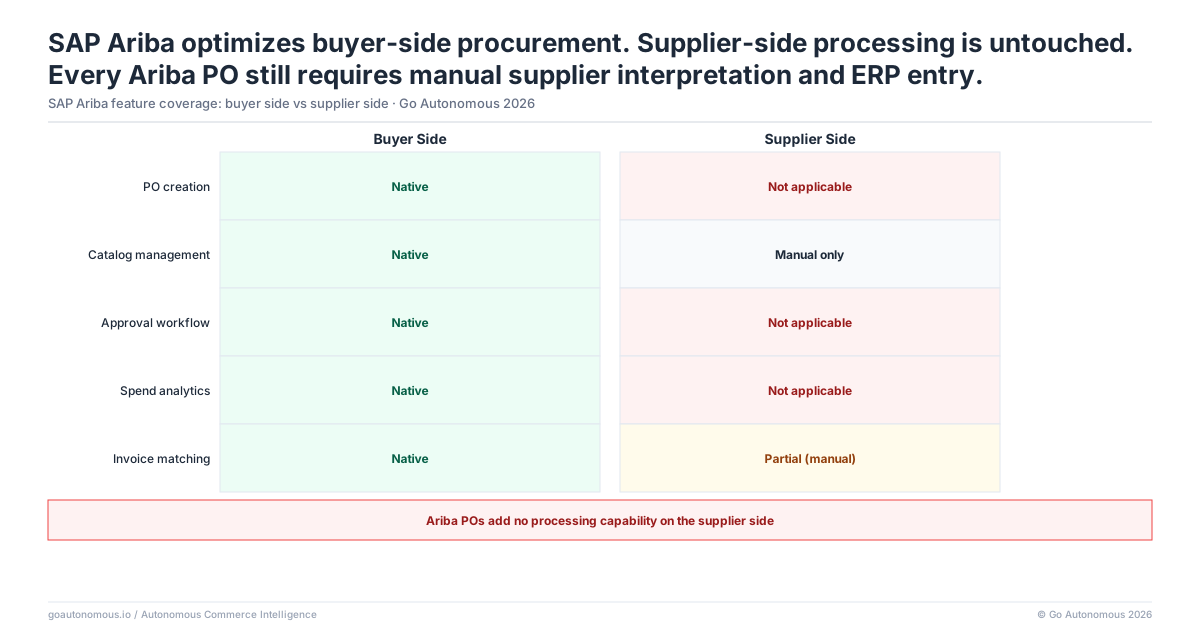
SAP Ariba is designed to solve the buyer’s procurement problem. Buyers use it to create purchase requisitions, route them through internal approval workflows, manage vendor catalogs, issue RFPs, compare bids, and ultimately issue purchase orders to selected suppliers. The system gives the buying organization visibility into spend, compliance with procurement policies, and a consolidated record of all purchasing activity. From the buyer’s perspective, Ariba is a genuine procurement transformation: unstructured purchasing conversations become structured, auditable workflows. The buying organization’s efficiency gain is real and measurable.
What Ariba Does for the Supplier: Delivers a Structured Purchase Order, and No More
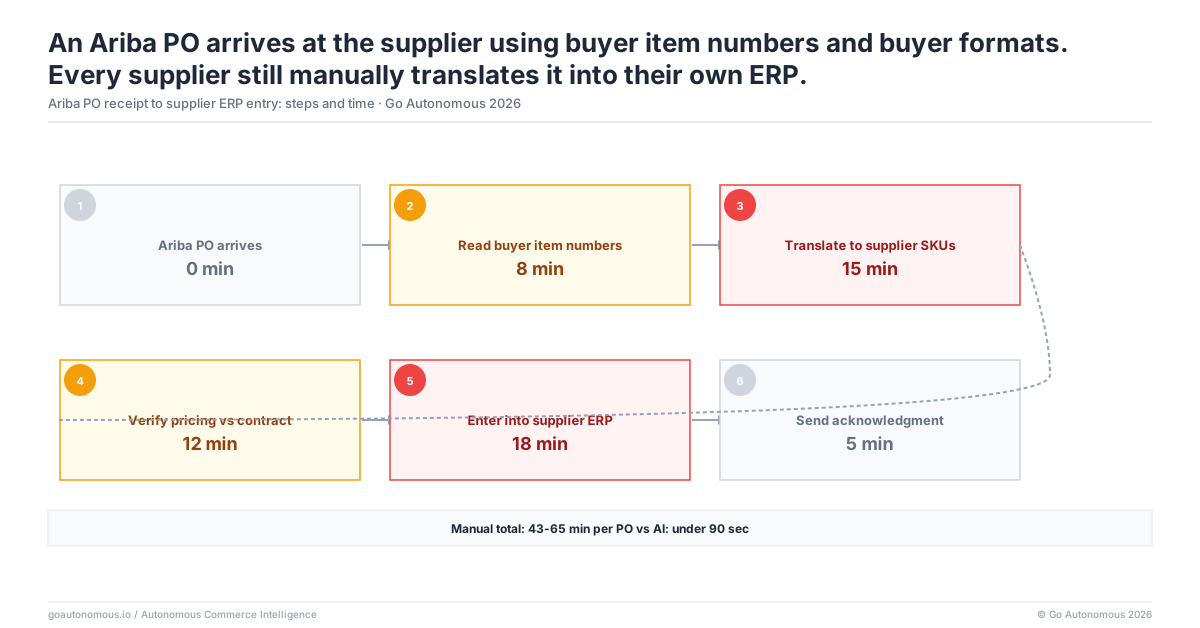
From the supplier’s perspective, Ariba’s role ends at PO delivery. The buying organization issues a purchase order through Ariba, and the supplier receives it. The PO is more structured than a PDF email: it arrives in cXML format, with consistent field labeling and machine-readable data. That structure is an improvement. But the supplier must still process that order through their own ERP, and the Ariba PO contains the buyer’s item numbers, the buyer’s cost center references, and the buyer’s internal approval codes. None of these map automatically to the supplier’s SAP material master, customer master, or pricing conditions. A human must bridge that gap. Autonomous Commerce is built specifically for this translation layer: the gap between how buyers send orders and how supplier ERPs receive them.
Each time we added one or two million euros in revenue, we had to add another operator. From a cost perspective, that's an unsustainable way of operating a business.

Ariba Purchase Orders Use Buyer-Side Item Numbers That Do Not Match Supplier ERP Master Data
The Catalog Item Reference Problem: Buyer Catalog vs. Supplier Material Master
SAP Ariba purchase orders reference buyer-side catalog items. When a buyer’s procurement team selects a product from their Ariba catalog, the resulting PO carries the buyer’s internal item number for that product: the identifier the buyer assigned when they loaded the product into their procurement catalog. That number is not the supplier’s material number. It is not the supplier’s part number. It is not any identifier that appears in the supplier’s ERP master data. To create a sales order in the supplier’s ERP, the customer service team must look up the buyer’s catalog item number, find the corresponding supplier material number in a translation table or from memory, and enter the supplier’s number into the ERP. For suppliers receiving Ariba orders from dozens of different buying organizations, each maintaining their own catalog with their own item numbering conventions, this translation is a significant ongoing maintenance task, and a consistent source of errors when the translation table is outdated.
The cXML Format That Ariba Generates: Structured for Buyer Systems, Not Supplier ERPs
Ariba purchase orders are typically transmitted in cXML (Commerce XML), a structured data format designed to support machine-to-machine commerce. The format is consistent and parseable: a technical improvement over a PDF email. But the data fields in a cXML PO are populated with buyer-side content: the buyer’s Ship-To location code (an internal identifier in the buyer’s system, not a shipping address in the supplier’s customer master), the buyer’s contract reference number, the buyer’s cost center or project code, and the buyer’s blanket order identifier. Each of these fields contains valid, structured data that refers to entities that do not exist in the supplier’s ERP. The structure is clean. The content requires translation before the supplier’s system can act on it.
The Supplier Processing Cost Ariba Moves Upstream Without Eliminating
What the Supplier’s Order Processing Team Does With Every Ariba PO
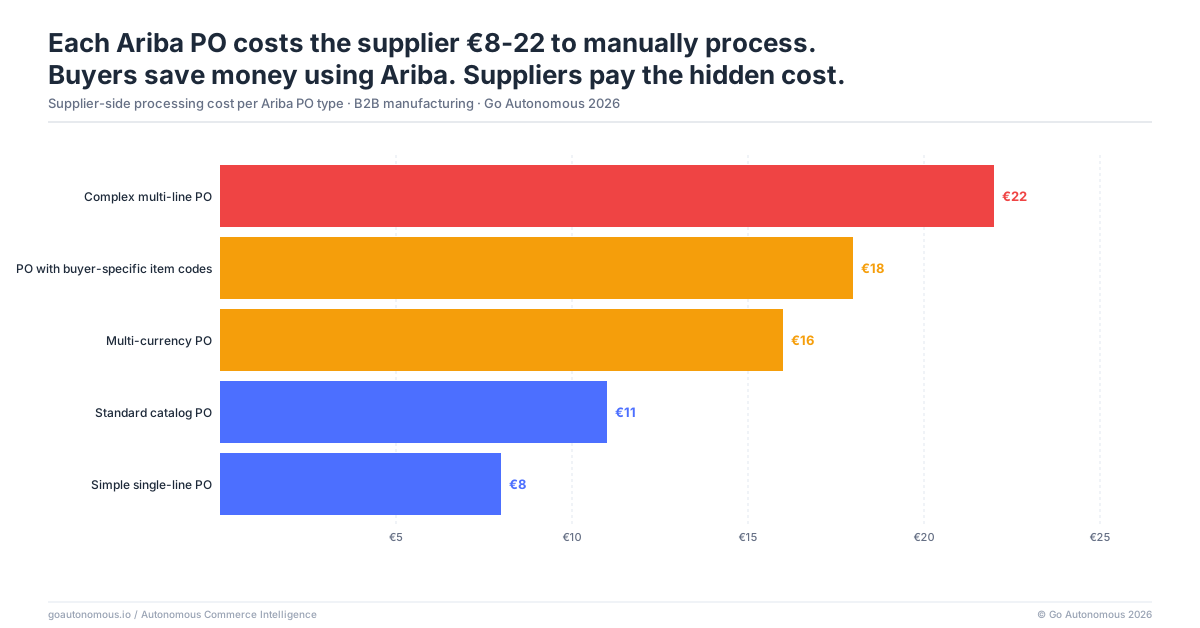
When an Ariba PO arrives at a supplier without a dedicated Ariba integration, the processing workflow is almost identical to the email PDF workflow. The customer service representative opens the cXML-generated PDF rendition of the PO, reads the buyer item numbers, consults the customer’s item mapping in the ERP or a separate spreadsheet, identifies the corresponding supplier material numbers, checks availability and pricing against the applicable contract or price list, and creates the sales order in the supplier’s ERP. The steps are the same as email processing. The per-order cost is the same. The exception rate is similar: mismatches between buyer catalog items and current supplier material numbers are a persistent source of exceptions, because buyers do not always update their Ariba catalogs when suppliers change product numbers or discontinue products. Customer Ariba adoption creates zero processing benefit for suppliers who have not built dedicated integrations.
Why Ariba Adoption by Your Customers Does Not Reduce Your Per-Order Cost
Suppliers sometimes expect that customer Ariba adoption will reduce their processing burden, that the structured format will somehow make intake easier. The expectation is logical but wrong. Structured format reduces the parsing ambiguity that makes email processing difficult, but it does not eliminate the translation requirement between buyer-side and supplier-side data. The cost that drives manual processing is not the format of the document; it is the mismatch between the buyer’s references and the supplier’s ERP master data. Ariba delivers a more consistently formatted document with the same fundamental mismatch. The inbox may look different. The processing workflow does not. For growing manufacturers receiving Ariba orders from an expanding customer base, the per-order cost stays fixed even as the customer experience appears to become more structured.
An AI Layer That Reads Ariba Outputs and Writes to Supplier ERP Without Manual Translation
How AI Maps Ariba Buyer Item Numbers to Supplier Material Masters
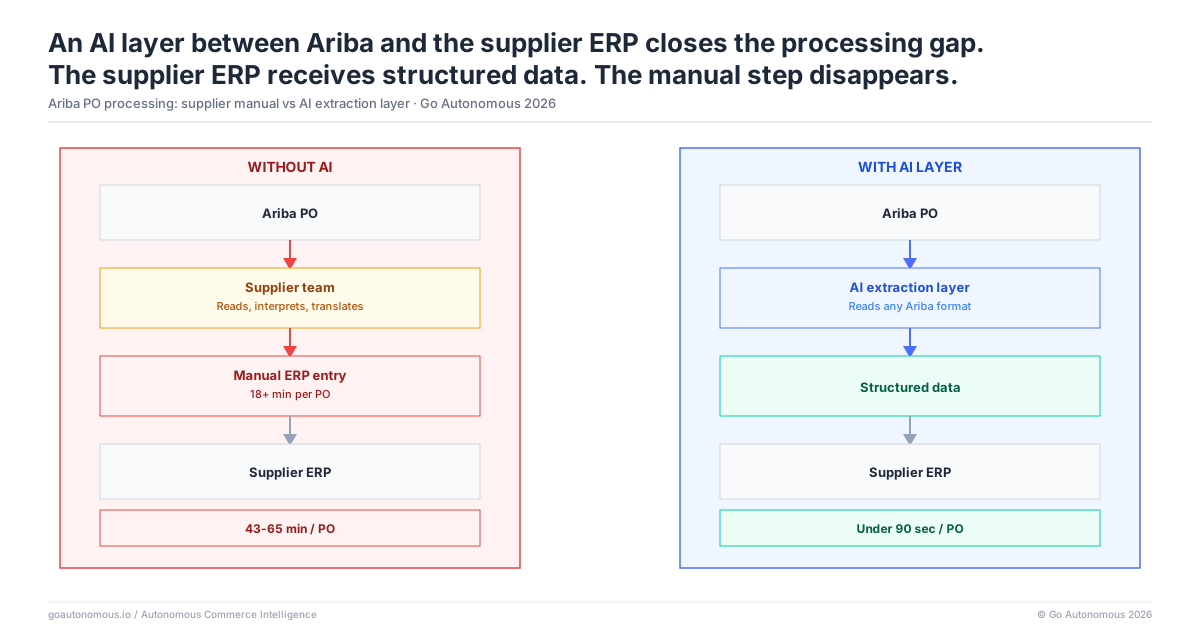
An AI intake layer trained on the order history between a buyer and supplier builds a working model of the mapping between the buyer’s catalog item references and the supplier’s material master. When a new Ariba PO arrives, the AI reads the cXML document, identifies the buyer item numbers, and maps them to supplier material numbers using the learned translation, validated against the supplier’s current ERP master data. Pricing is validated against the contracted rate in the supplier’s ERP. The delivery location is mapped from the buyer’s ship-to code to the supplier’s customer master address. The result is a pre-validated sales order ready for ERP creation, without human translation at any step. New buying organizations that adopt Ariba do not require the supplier to build a new dedicated integration: the AI learns the new customer’s catalog references from the first orders and improves its mapping confidence as volume accumulates.
What Supplier Operations Gain When Ariba Orders Process as Cleanly as EDI Orders
When Ariba orders process at the same speed and accuracy as EDI orders, the supplier gains the same operational benefits that EDI delivers for the structured customer segment: sub-60-second confirmation, exception rates below 5%, and per-order cost below €2. The customer service team that previously spent significant time translating buyer references is freed for exception handling, relationship management, and supporting commercial growth. Nilfisk applied autonomous order intake to close exactly this kind of gap between incoming order formats and ERP processing requirements. See how comparable manufacturers have eliminated intake costs at the Go Autonomous success cases. The gap that Ariba leaves on the supplier side is a structural intake problem, and it has a structural solution. Book a session to assess the specific Ariba processing cost in your operation and what closing the gap looks like in practice.
Frequently Asked Questions
Why do B2B suppliers still need manual order processing when customers use SAP Ariba?
SAP Ariba is a buyer-side procurement platform. It delivers purchase orders to suppliers in a structured cXML format, but the content of those POs uses buyer-side item numbers, buyer-side location codes, and buyer-side contract references. None of these map automatically to the supplier’s ERP master data. The supplier’s customer service team must translate every Ariba PO from buyer-side references to supplier-side data before the ERP can create a sales order. The format is more structured than email; the processing workflow is nearly identical.
How does SAP Ariba affect supplier-side order processing costs?
For suppliers without dedicated Ariba integrations, customer Ariba adoption does not reduce per-order processing costs. Ariba delivers a more consistently formatted document, cXML rather than PDF email, but the fundamental processing step (translating buyer item references to supplier ERP master data) is unchanged. Per-order costs remain at the €15–35 range that characterizes manual B2B order processing. The format change does not address the translation problem that drives the cost.
Can AI automatically process SAP Ariba purchase orders into a supplier’s ERP?
Yes. An AI intake layer trained on the order history between a buyer and supplier learns the mapping between buyer catalog item references and supplier material numbers. When an Ariba PO arrives, the AI reads the cXML document, maps buyer item numbers to supplier material numbers, validates pricing against contracted rates, and maps delivery locations from buyer ship-to codes to supplier customer master addresses. The result is a pre-validated sales order ready for ERP creation, without manual translation.
What is the best way for B2B manufacturers to automate processing of SAP Ariba purchase orders?
The most effective approach for B2B manufacturers is an AI-driven intake layer that sits between the Ariba PO delivery and the supplier’s ERP. Rather than building point-to-point EDI integrations for each buying organization, an AI system learns the buyer-to-supplier item mapping from order history and handles the translation automatically. This approach covers all Ariba buying organizations with a single system, improves over time as order history accumulates, and processes Ariba orders at the same speed and cost as EDI orders.
How do B2B distributors handle item number mismatches between SAP Ariba buyer catalogs and supplier ERP master data?
Without automation, B2B distributors handle Ariba item number mismatches manually: maintaining translation tables mapping each customer’s catalog item numbers to the distributor’s material numbers, reviewing each PO against the current table, and flagging exceptions when buyer catalog items do not match any current supplier product. With an AI intake layer, the translation is automated: the AI builds and maintains the item number mapping from order history, identifies mismatches automatically, and routes genuine exceptions for human review while processing clean orders without intervention.