.svg)





What Happens When a Key Customer Changes Their Order Format
When a strategic B2B customer upgrades their ERP, switches procurement platforms, or changes their purchase order format, every custom integration or translation workflow built for that customer breaks simultaneously. The operational disruption is immediate and the commercial risk is real: orders from a major account start failing at the worst possible moment. This post maps what actually happens when a key customer changes their format and what architecture makes it irrelevant.
85–90% of B2B revenue still requires human facilitation to process, and a significant portion of that friction originates not from high-complexity orders but from format inconsistencies that should never reach a human queue. When a strategic customer changes their purchase order format, every custom mapping built for that account breaks simultaneously. The operational disruption is immediate. The commercial risk is real. This post maps what happens when a key customer changes their format and what architecture makes it irrelevant.
Table of Content
- When a Key Customer Changes Their Order Format, Your Processing Workflow Breaks Immediately
- Rebuilding Custom Processing Workflows Takes 2–6 Weeks: Revenue Risk During the Rebuild
- The Operational and Commercial Risk of Being Unable to Process a Changed Format
- Format-Agnostic Processing Makes Customer Format Changes Irrelevant to Operations
- Frequently Asked Questions
- What happens to B2B order processing when a key customer changes their purchase order format?
- How long does it take to rebuild a custom EDI integration after a customer changes their format?
- What is the commercial risk of a B2B order processing disruption during a customer format change?
- How do B2B manufacturers process orders from customers who frequently change their procurement systems?
- Can AI-based order processing handle customer format changes in B2B manufacturing without custom rebuilds?
When a Key Customer Changes Their Order Format, Your Processing Workflow Breaks Immediately
What Triggers Customer Format Changes: ERP Upgrades, Procurement Platform Switches, Policy Changes
Customer format changes happen for reasons entirely outside the supplier’s control. The customer upgrades from SAP ERP to SAP S/4HANA, changing their purchase order field structure. The customer migrates from a legacy procurement system to Ariba or Coupa, changing the output format entirely. The customer’s IT team changes internal cost center codes, breaking item reference mappings. The customer’s procurement policy changes, adding new mandatory fields that the supplier’s translation logic does not recognize.
None of these decisions involve the supplier. All of them break the supplier’s processing workflow on the first order submitted under the new format. The supplier learns about the change when exception queues fill and customer service reps begin diagnosing why a well-established account is suddenly generating errors. This is the first cost: unplanned diagnostic time on an account that was previously frictionless.
How Quickly the Break Manifests: From First Failed Order to Operations Alert
The break is not gradual. The customer submits their first order in the new format. The translation workflow fails to map it correctly. The order enters exception status. Within hours, an operations alert is generated. Within a day, the account manager is contacted. The customer, who assumed their supplier could handle their new format, is now being told that orders are delayed pending a technical investigation.
For manufacturers and distributors managing high-volume accounts, this sequence plays out at the worst possible moment: during the customer’s own procurement cycle, when they need confirmed orders quickly. Autonomous Commerce architectures that process any format without custom mappings eliminate this sequence entirely. Custom integration architectures do not.
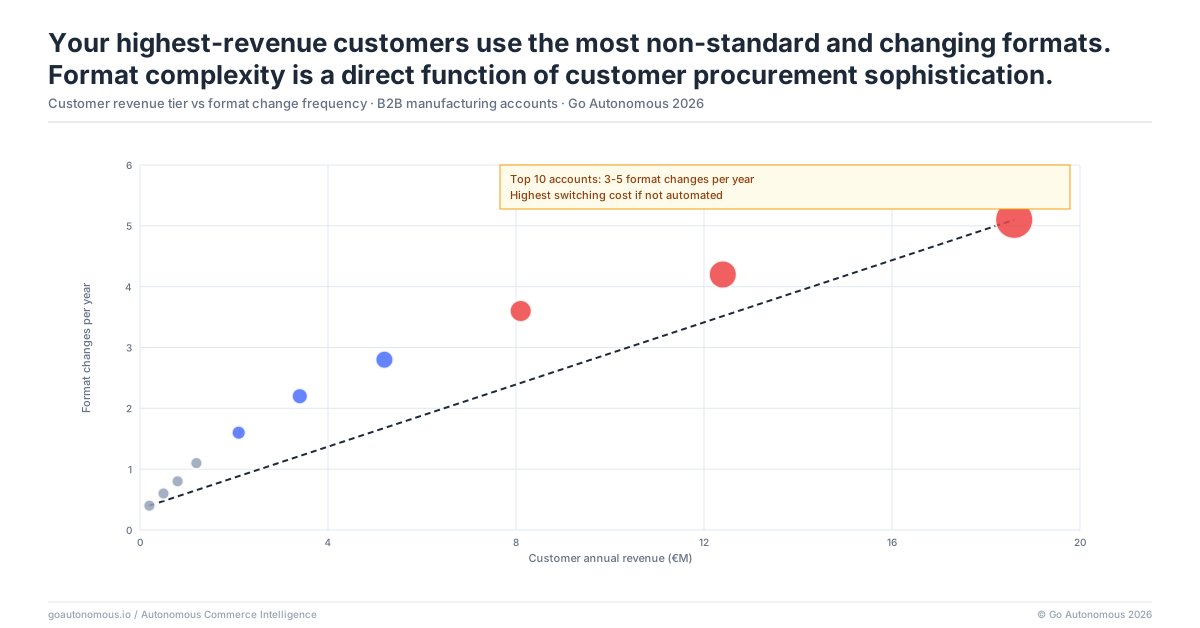
Each time we added one or two million euros in revenue, we had to add another operator. From a cost perspective, that's an unsustainable way of operating a business.

Rebuilding Custom Processing Workflows Takes 2–6 Weeks: Revenue Risk During the Rebuild
What Rebuilding an EDI Mapping or Translation Table Actually Involves
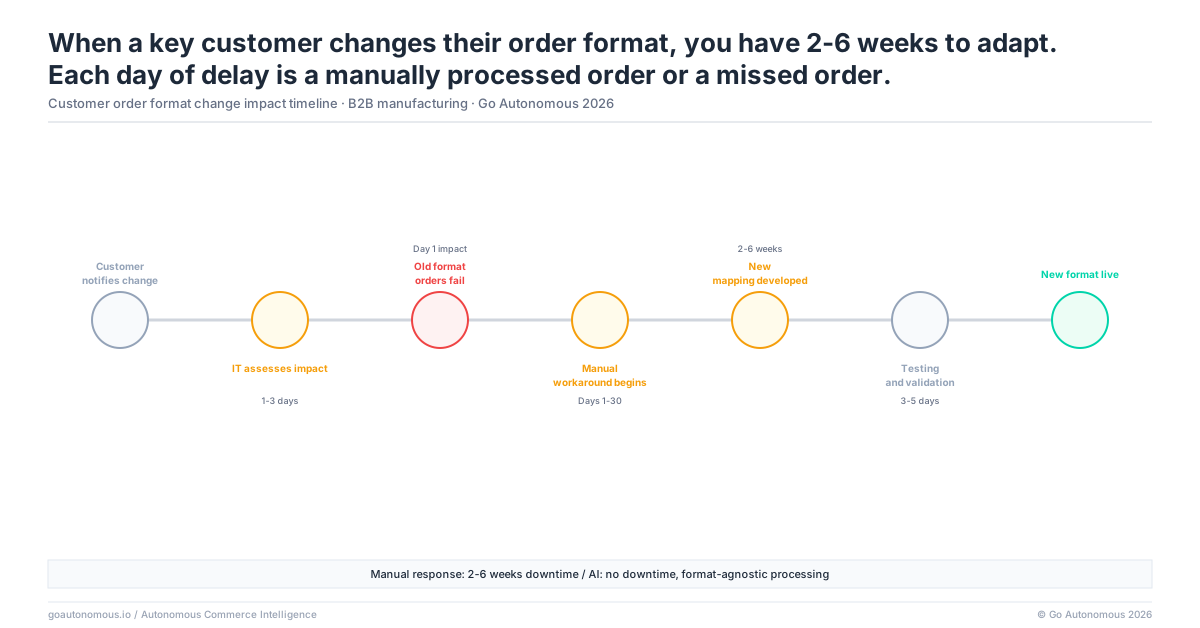
Rebuilding a custom integration or translation workflow after a format change is not a quick fix. The process requires: obtaining the new format specification from the customer’s technical team, analyzing the field mapping differences between the old and new formats, rebuilding and testing the translation logic against sample orders, validating the logic against test orders with the customer’s confirmation, and deploying to production with monitoring in place to catch edge cases.
For EDI-based integrations, this process typically takes 2–6 weeks and requires coordinated involvement from the supplier’s IT team, the operations team, and the customer’s technical contacts. The timeline is not the result of poor execution. It is the inherent complexity of custom integration maintenance. Every custom mapping is a liability that must be rebuilt each time the customer changes their format.
What the Customer Experiences During the 2–6 Week Rebuild Period
During the rebuild period, orders from the affected customer are processed manually. Manual processing costs €15–35 per order versus under €2 with automated execution. Error rates are higher. Confirmation times extend from under 60 seconds to hours or days. The customer, who initiated the format change as part of their own internal improvement program, is now receiving degraded service from a supplier who was previously reliable.
This degradation is not the supplier’s fault in any commercial sense. But it is the supplier’s problem to solve. The customer does not distinguish between the technical cause and the service outcome. They experience slower confirmations, more errors, and more manual follow-up from an account they expected to run smoothly. The account manager is fielding calls while the technical team is still in the specification phase of the rebuild.
The operational disruption that Nilfisk eliminated by removing custom mapping dependencies illustrates how significant this risk is at scale. The 2–6 week rebuild window is not an edge case. It is the standard consequence of custom integration architecture when customers evolve.
The Operational and Commercial Risk of Being Unable to Process a Changed Format
What Operations Escalates During a Major Account Format Break
A format break at a strategic account generates a specific escalation pattern. The operations team identifies the exception volume and flags the account. The IT team is engaged to diagnose the root cause. The account manager is notified and contacts the customer. The customer’s procurement team, who assumed the transition was transparent to their suppliers, is now being told that orders are delayed. Operations is managing a crisis on an account that was never supposed to generate crises.
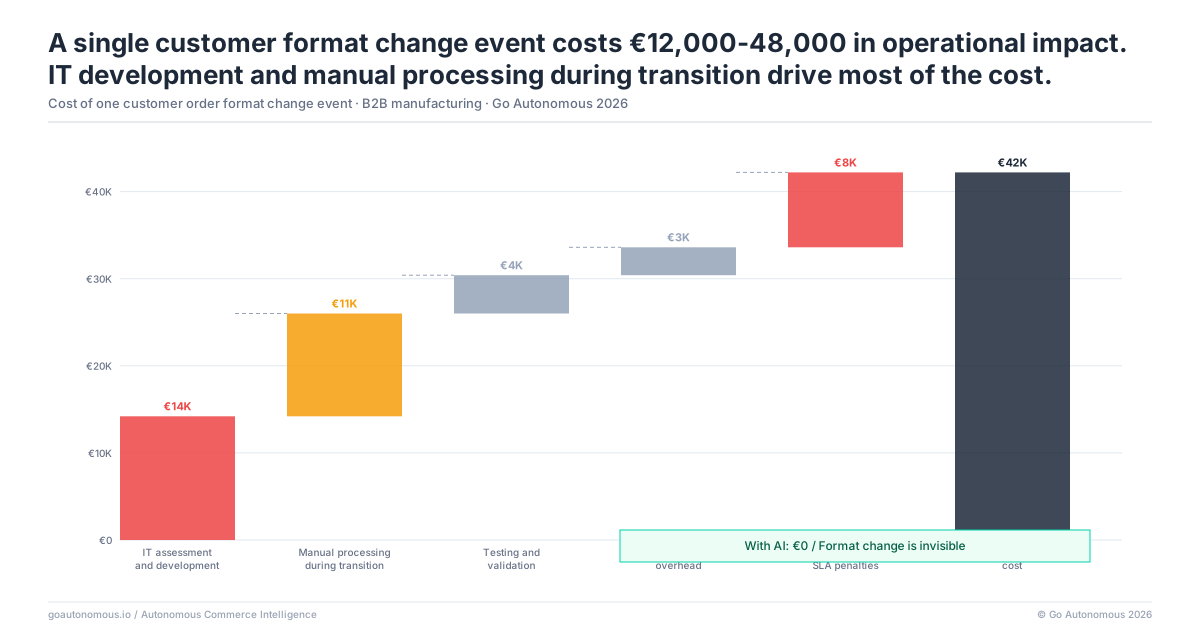
The cost is not just the manual processing time. It is the management attention diverted from normal operations, the account manager time spent on service recovery rather than commercial development, and the IT resources pulled from other priorities to execute an emergency rebuild. Rule-based automation and EDI mappings are particularly vulnerable here: they process perfectly until the format changes, then break completely.
How Competitors Position When a Strategic Account Relationship Is Disrupted
A format break creates a window of commercial vulnerability. When orders from a major account fail for 2–6 weeks, the customer’s procurement team is directly experiencing the supplier’s technical limitations. Competitors who do not have custom integration dependencies present themselves during this window as lower-risk suppliers: they can process any format, they do not have rebuild timelines, their confirmations are consistent regardless of the customer’s procurement system.
In B2B, where switching costs are real but not insurmountable, a prolonged processing disruption during a major account’s format transition creates an opening for competitive displacement. The commercial risk of custom integration dependency is rarely included in the original build decision. The build decision is evaluated on the cost of building and maintaining the integration. The cost of a strategic account relationship disrupted during a customer-initiated format change is not on the evaluation sheet.
20–40% of orders trigger an exception in traditional processing environments, and each exception adds 4–8x the base processing time. A format change at a major account can push the exception rate for that account to 100% for the duration of the rebuild. The commercial exposure from a single format change at a major account can exceed the cost of the original integration build several times over.
Format-Agnostic Processing Makes Customer Format Changes Irrelevant to Operations
How AI Adapts to New Customer Formats Without Requiring Rebuilt Mappings
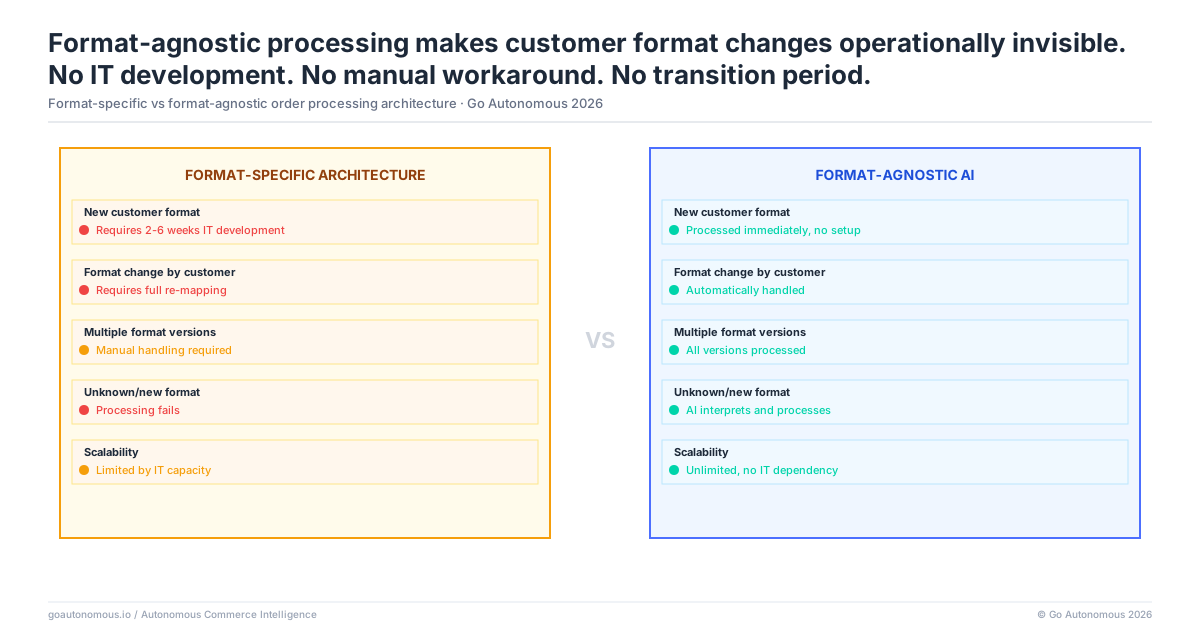
Format-agnostic AI intake does not have custom mappings that break. When a customer changes their format, the AI reads the new format the same way it read the old one: by understanding the content of the order rather than matching it against a pre-defined structure. New fields are identified and assessed for relevance. Changed item references are mapped to historical order data for that customer. The AI does not require a format specification document before it can process the first order in the new format.
The first order in the new format may require one review by an operations rep to confirm the mapping interpretation is correct. Subsequent orders process automatically. No 2–6 week rebuild. No emergency IT engagement. No service disruption for the customer. The format change from a strategic account is handled as a routine variation, not as a system failure requiring coordinated multi-team response.
Danfoss processes orders across 26 countries with 80% autonomous execution. Scaling across that many markets and procurement environments is only possible when the system does not require custom integration maintenance for each customer’s format. VELUX manages 130,000+ orders across 9 markets with 88% decision autonomy — the same principle applied at a different scale.
What Operations Teams Gain When Customer Format Changes Are Not Risk Events
When customer format changes are not risk events, operations teams gain something more valuable than the avoided cost of individual rebuilds: they gain the ability to manage strategic accounts without the recurring anxiety that the customer’s next internal improvement project will break the supplier’s processing workflow.
Account managers can have conversations about commercial development without format change incidents in the background. Operations can scale to new accounts without calculating the IT resource cost of maintaining a custom integration for each one. Geographic expansion into new markets does not require a format mapping exercise for each customer’s local procurement platform. The 30B+ transactions processed through autonomous intake at scale demonstrate what this looks like in practice.
The full capability is documented at goautonomous.io/autonomous-commerce. Customer outcomes across manufacturing and distribution are at goautonomous.io/success-cases. If processing resilience against customer format changes is a priority for your operations, book a conversation with the team.
Frequently Asked Questions
What happens to B2B order processing when a key customer changes their purchase order format?
When a key customer changes their purchase order format, any custom EDI mapping or translation workflow built for that customer breaks on the first order submitted in the new format. Orders enter exception queues, manual processing resumes, and IT teams must rebuild the integration from the new specification. The rebuild typically takes 2–6 weeks during which the customer experiences degraded service.
How long does it take to rebuild a custom EDI integration after a customer changes their format?
Rebuilding a custom EDI mapping or translation workflow after a customer format change typically takes 2–6 weeks. The process requires obtaining the new format specification, analyzing field mapping differences, rebuilding and testing translation logic, and validating with test orders before deploying to production. This requires coordinated involvement from IT, operations, and the customer’s technical contacts.
What is the commercial risk of a B2B order processing disruption during a customer format change?
A 2–6 week processing disruption during a customer format change creates direct commercial exposure: the customer experiences degraded service, account managers are diverted to service recovery, and competitors can present themselves as lower-risk alternatives. In B2B manufacturing and distribution, where switching costs are real but not insurmountable, a sustained processing failure at a strategic account creates an opening for competitive displacement.
How do B2B manufacturers process orders from customers who frequently change their procurement systems?
B2B manufacturers that rely on custom EDI integrations face recurring rebuild cycles each time a customer changes their procurement system. Format-agnostic AI intake eliminates this problem: the AI reads order content rather than matching it against a fixed format structure, so when a customer upgrades their ERP or changes their procurement platform, the first order in the new format is processed without requiring a rebuilt mapping.
Can AI-based order processing handle customer format changes in B2B manufacturing without custom rebuilds?
Yes. AI-based order intake processes orders by understanding their content rather than by matching against pre-defined format mappings. When a customer changes their format, the AI reads the new format using the same logic applied to any unstructured or semi-structured order input. The first order in the new format may require one operations review to confirm the interpretation; subsequent orders process automatically with no rebuild cycle required.