.svg)





B2B Customer Self-Service Order Adoption: 2026 Benchmark
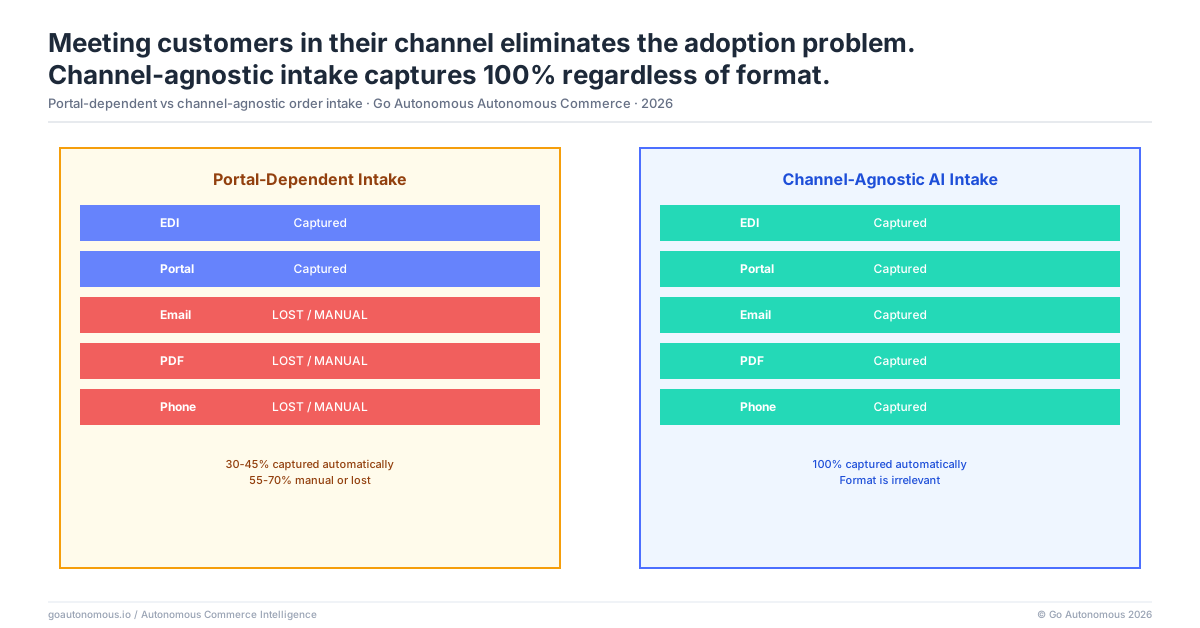
B2B manufacturers and distributors have invested significantly in customer self-service portals, expecting to shift order volume away from manual channels. Average portal adoption sits at 30–45% of order volume. The remaining 55–70% stays in email, phone, and unstructured channels. This benchmark post covers what drives the adoption gap, what it costs, and what operations that have closed it have done differently.
B2B customer self-service portals capture an average of 30–45% of order volume for manufacturers and distributors. The remaining 55–70% continues to arrive via email, phone, and unstructured channels. Portal adoption rates have improved over the past decade but have plateaued for most organizations. The cause is not customer resistance: it is channel design. Customers use email because it is easier for them than the portal. The operations that have closed the adoption gap did not force it. They automated the email channel instead.
Table of Content
- B2B Customer Portals Capture 30–45% of Order Volume: The Other 55–70% Stays in Email
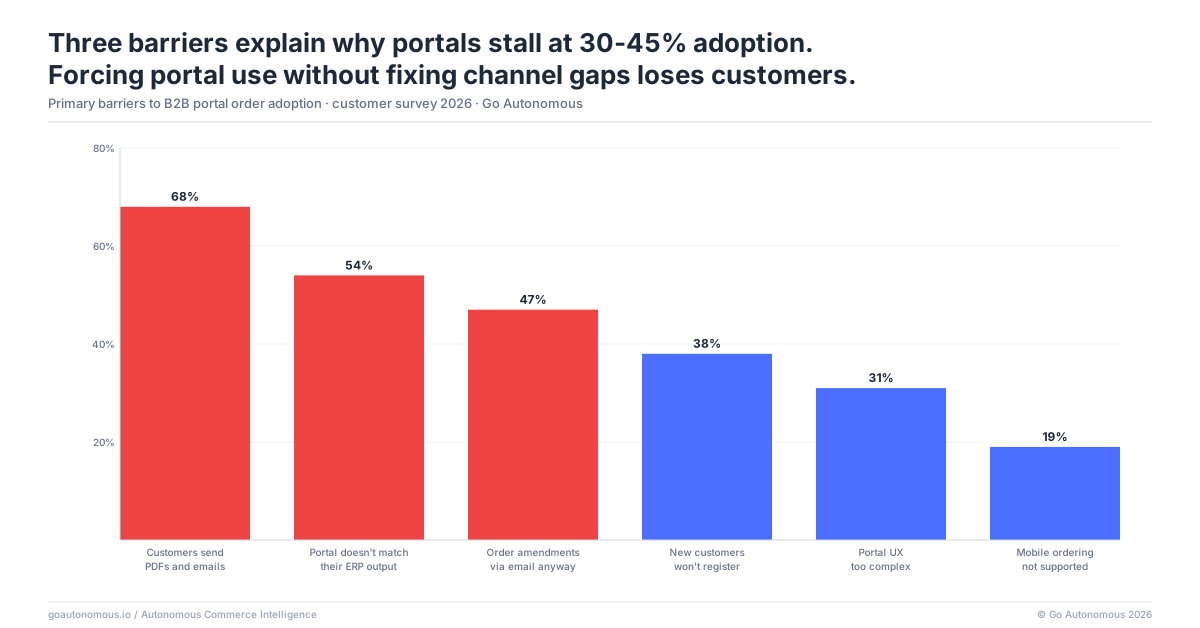
- Customers Do Not Adopt Portals for Three Reasons: Friction, Format, and Familiarity
- Mandating Portal Adoption Risks Customer Relationships: The Revenue Cost of a Hard Cutover
- Meeting Customers in Their Preferred Channel While Automating the Intake
- The Autonomous Execution Fabric: Channel-Agnostic Execution Across Every Commercial Transaction
- Frequently Asked Questions
- What is the average B2B customer portal adoption rate for manufacturers and distributors in 2026?
- Why do B2B customers not use self-service ordering portals despite supplier investment?
- What is the cost of low portal adoption for B2B manufacturers?
- How do B2B distributors increase customer self-service order adoption without mandating it?
- What happens to email order volume after a manufacturer automates their email channel?
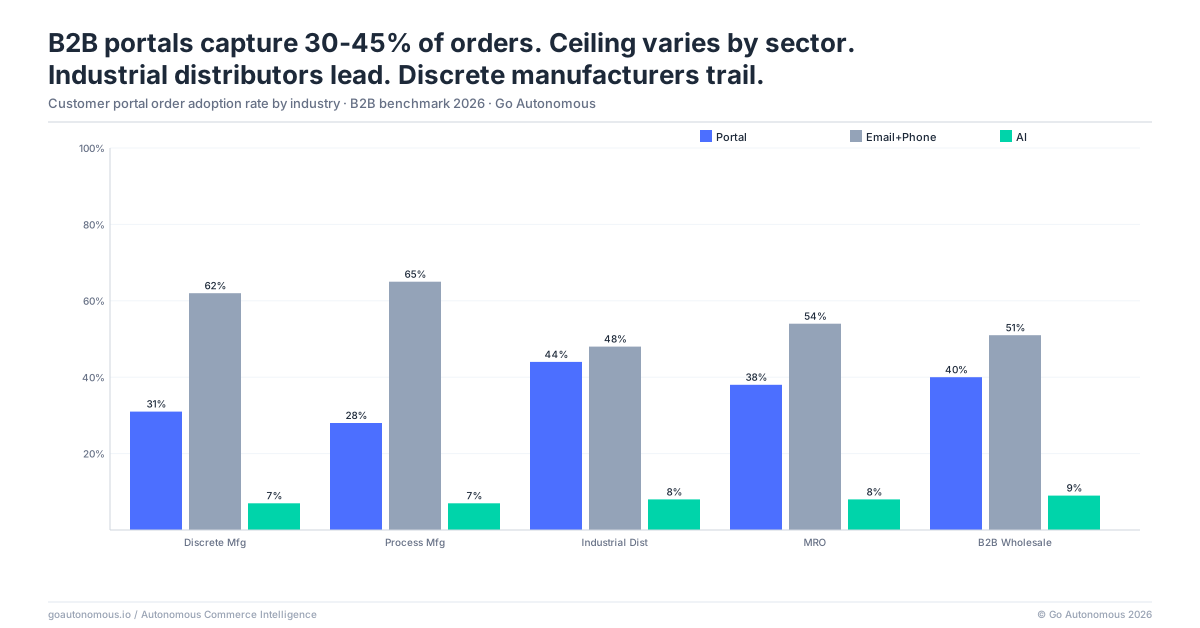
B2B Customer Portals Capture 30–45% of Order Volume: The Other 55–70% Stays in Email
Why Portal Adoption Benchmarks Matter: Adoption Is a Proxy for Processing Cost
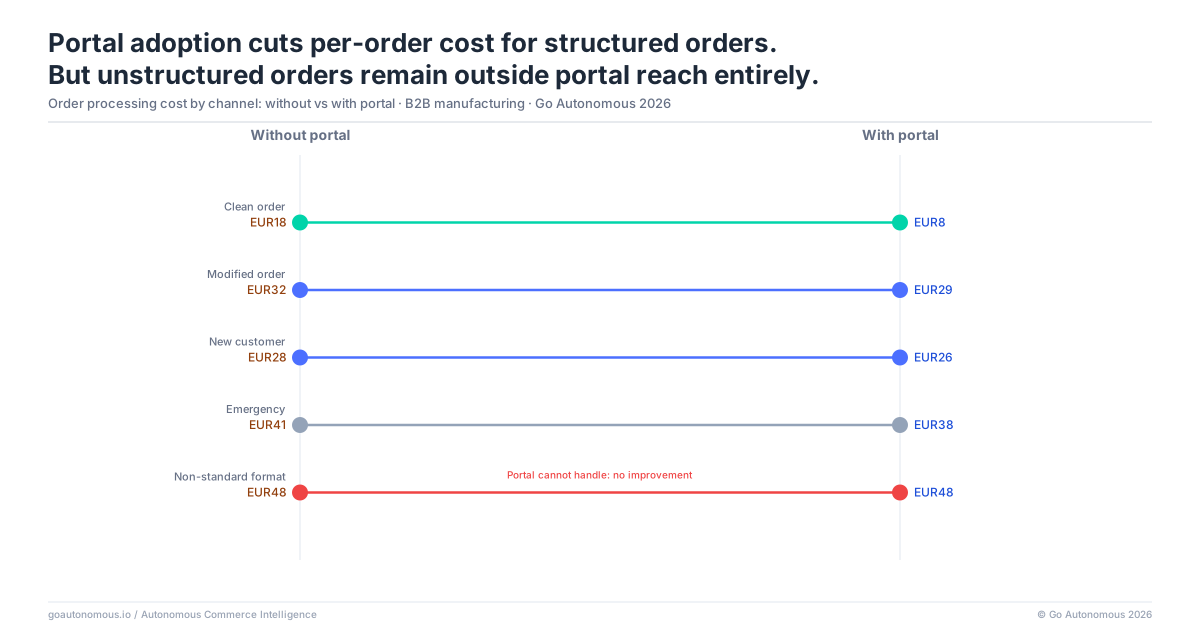
B2B customer portal adoption, measured as the percentage of order volume placed through a supplier’s self-service channel, is a direct proxy for per-order processing cost. A portal order enters the system in structured format and requires minimal human handling before it becomes a sales order in the ERP. An email order requires a customer service rep to read it, extract the order details, validate them against customer and product records, and enter them manually. The cost difference is €15–35 per order for manual processing versus below €2 for an automated channel.
At 30–45% portal adoption with 55–70% remaining in manual channels, most B2B manufacturers and distributors are paying the full manual processing cost on more than half their order volume. This is not a marginal inefficiency: it is the primary cost driver in order-to-cash operations. Every percentage point of portal adoption that does not materialize is a permanent per-order cost that scales with revenue growth.
The Adoption Gap Across Industries: Distribution vs Manufacturing vs Process Industries
Portal adoption rates vary by industry and customer base. B2B distributors with large numbers of SME customers tend to see lower adoption rates: smaller customers have less procurement infrastructure and are more likely to order by email or phone. Manufacturers with a concentrated customer base of large accounts see higher adoption among those accounts, often because procurement systems at large buyers can be integrated directly, but still face significant email volume from mid-market and smaller accounts.
Process industries and specialty manufacturers with complex, engineered-to-order products see the lowest portal adoption rates because their products do not lend themselves to self-service configuration. In these segments, the email gap is not a portal design failure: it is a structural feature of how customers communicate complex requirements. The autonomous commerce model accounts for this: the goal is not portal adoption but efficient processing of orders regardless of how they arrive.
Each time we added one or two million euros in revenue, we had to add another operator. From a cost perspective, that's an unsustainable way of operating a business.

Customers Do Not Adopt Portals for Three Reasons: Friction, Format, and Familiarity
Friction: The Login, the Learning Curve, and the Format Incompatibility
Portal adoption requires the customer to change their behavior. For customers who order infrequently, the portal login, navigation, and product search steps add more time than sending an email. For customers who order regularly but have established email workflows with specific team members, the portal is a disruption to a process that already works for them. The portal may offer features the customer values: order history, tracking, self-service returns. But the ordering step itself must be faster and easier than the alternative, and for many customers it is not.
Friction in the first portal experience is particularly damaging to adoption. A customer who encounters a product search that does not recognize their part numbers, a pricing display that does not match their contracted rate, or a configuration option that is not available in the portal will return to email immediately and is unlikely to retry the portal for months. First-experience failure rates are high in B2B portal launches, and they establish email as the default channel for that customer’s subsequent orders.
Format: Why Customers Send What Their Procurement System Generates, Not What Your Portal Accepts
The most common reason large B2B customers continue ordering by email is procurement system format incompatibility. A buyer using SAP Ariba, Coupa, or an internally built procurement system generates purchase orders in a specific format: a structured document that their procurement team, budget approval process, and accounting integration all depend on. The supplier’s portal requires the buyer to re-enter this information manually in a different format.
Asking the buyer to re-key a purchase order their procurement system already generated adds work for the buyer with no benefit. The portal is faster for the supplier. It is not faster for the buyer. Buyers send the procurement system output by email because it is the path of least resistance. This is not a failure of portal design that better UX can solve: it is a structural incompatibility between how buyers generate purchase orders and how supplier portals expect to receive them. Addressing it through customer experience design requires meeting customers in their format, not requiring them to adopt yours.
Mandating Portal Adoption Risks Customer Relationships: The Revenue Cost of a Hard Cutover
What Happens to Order Volume When Suppliers Force Portal-Only Ordering
Some manufacturers attempt to mandate portal adoption by announcing that email orders will no longer be accepted after a cutover date. In competitive markets, this approach reliably produces the same outcome: mid-size accounts with alternatives begin evaluating other suppliers before the cutover date. Accounts without alternatives comply, but the relationship deteriorates. The accounts that stay through a forced cutover are the ones with no better option, not the ones who prefer to do business with you.
Order volume attrition from forced cutovers is rarely attributed to the cutover in post-mortem analysis. Accounts that reduce order volume are recorded as market factors or competitive losses. The connection to the portal mandate is often invisible in the data. This makes forced cutover policies look lower-risk than they are.
Why the Portal Adoption Gap Is a Long-Term Problem, Not a Training Issue
Portal adoption programs that focus on customer training and onboarding improve adoption rates temporarily but do not close the adoption gap long-term. Customers who were trained to use the portal and still default to email are not failing to remember what they learned: they are making a rational choice based on what is easier for them in the moment they need to place an order.
The portal adoption gap is a channel design problem. Customers use email because email is easier for them than the portal. The solution is not to make email harder or invest in training programs that customers complete once and then ignore. The solution is to automate the email channel to the same standard as the portal, removing the operational penalty for non-portal customers. Efficiency gains come from processing efficiency, not channel mandates. The Mikkel Vindeløv dynamic applies: revenue growth adds more orders via all channels, including email, and requires adding operators unless the non-portal channels are automated.
Meeting Customers in Their Preferred Channel While Automating the Intake
Format-Agnostic Processing: Email Handled With the Same Efficiency as a Portal Order
The alternative to mandating portal adoption is automating the email channel to the same operational standard as the portal. When AI processes email orders with the same speed, accuracy, and integration as portal orders — under 60 seconds from receipt to ERP entry, with immediate confirmation, automated exception detection, and the same downstream fulfillment workflow — the operational penalty for non-portal customers disappears.
An email order costs the same to process as a portal order. Confirmation arrives at the same speed. Exception handling follows the same workflow. The customer receives the same quality of service regardless of which channel they used. At this point, portal adoption becomes a customer preference metric rather than an operations efficiency variable. Whether customers use the portal or email no longer determines per-order cost or processing speed.
What Portal Adoption Metrics Look Like When the Email Channel Is Automated
Operations that have automated the email channel consistently report the same outcome: portal adoption rates stop being a key performance indicator because they stop mattering operationally. The email share of order volume remains stable or even increases as customers realize they no longer have to adapt their behavior for the supplier’s operational convenience. But the cost per order across all channels drops to below €2 regardless of how the order arrived.
Mediq handles 4,000 orders per week with 75% faster processing and zero headcount increase, processing orders regardless of the channel through which they arrive (see Go Autonomous success cases). Danfoss covers 26 countries in a day, processing orders at scale without requiring customers to adapt to a specific channel format. The Nilfisk implementation also demonstrates the channel-agnostic model in practice. The email channel is automated. Customers use whatever channel they prefer.
The Autonomous Execution Fabric: Channel-Agnostic Execution Across Every Commercial Transaction
The portal adoption gap reveals a structural truth about B2B commercial operations: customers communicate through diverse channels and formats, and requiring them to adapt to a single channel creates friction that limits adoption. The Autonomous Execution Fabric is a full commercial execution layer that connects directly to your SAP, Oracle, or Microsoft Dynamics environment and executes every inbound commercial transaction without human assembly, regardless of the channel through which the transaction arrives. An email order is processed with the same speed, accuracy, and cost as a portal order. The channel mix stops being an efficiency variable.
The Fabric handles all commercial transaction types across every channel: orders from email, EDI, customer portal, and direct API; pricing requests submitted by email or form; quote requests in any format; return authorizations via email or portal; credit note requests; and contract tender responses. Customers send what is easiest for them. The Fabric reads, validates, and executes regardless of format. There is no channel that requires manual intervention to translate into ERP-compatible data. The operational cost per transaction is the same whether the customer uses the portal, sends an email, or transmits an EDI message.
The portal adoption problem is a symptom of an intake architecture that has different processing costs for different channels. When those cost differences disappear, the portal adoption target loses its operational significance. The Autonomous Execution Fabric closes the cost gap across all channels and all commercial transaction types. Operations teams stop managing channel mix and start managing commercial outcomes. Customers use whatever channel fits their procurement workflow. The supplier processes every transaction type at the same cost and speed regardless.
If your operation is measuring portal adoption as a proxy for processing efficiency, there is a more direct path to the outcome you are targeting. Book a session to see how channel-agnostic automation applies to your order volume and customer mix.
Frequently Asked Questions
What is the average B2B customer portal adoption rate for manufacturers and distributors in 2026?
B2B customer self-service portal adoption averages 30–45% of order volume for manufacturers and distributors in 2026. This figure has improved over the past decade but has plateaued for most organizations. The remaining 55–70% of order volume arrives through email, phone, and other unstructured channels that require manual processing. Adoption rates vary by industry, with distributors serving large numbers of SME customers typically seeing lower adoption than manufacturers with concentrated large-account bases.
Why do B2B customers not use self-service ordering portals despite supplier investment?
B2B customers avoid self-service portals primarily due to friction, format incompatibility, and familiarity with existing workflows. Buyers using procurement systems like SAP Ariba or Coupa generate purchase orders in formats their internal processes depend on, and re-entering that data into a supplier portal adds work with no benefit to the buyer. Smaller customers find email faster and more familiar. Customers adopt portals when portals are genuinely easier than their alternatives, not as a result of training programs.
What is the cost of low portal adoption for B2B manufacturers?
Low portal adoption means a higher percentage of order volume is processed manually. Manual order processing costs €15–35 per order at loaded labor rates, compared to below €2 for automated channel orders. At 55–70% of order volume remaining in email and manual channels, most manufacturers and distributors are paying the full manual processing cost on more than half their order volume. This cost scales directly with revenue growth: each additional order through a manual channel adds the full processing cost.
How do B2B distributors increase customer self-service order adoption without mandating it?
The most effective approach is not increasing portal adoption but automating the email channel to the same operational standard. When email orders are processed with the same speed, accuracy, and cost as portal orders — under 60 seconds from receipt to ERP entry, with immediate confirmation and the same exception handling — the operational penalty for non-portal customers disappears. Portal adoption rates become a customer preference metric rather than an efficiency variable.
What happens to email order volume after a manufacturer automates their email channel?
Email order volume typically remains stable or increases slightly after manufacturers automate their email channel, because customers no longer face pressure to change their ordering behavior. However, the cost per email order drops to match the cost of portal orders, below €2, making the channel mix operationally irrelevant. Operations that have implemented channel-agnostic automation report that total order processing cost drops significantly while customer satisfaction improves because customers can order in whatever format is most convenient for them.