
.svg)





B2B Claims and Dispute Automation
Disputed invoice. Unpaid queue. Resolved the day it arrives.








Three Weeks in AR Is Three Weeks of Trapped Cash.
Three Weeks in AR Is Three Weeks of Trapped Cash.
The Working Capital Cost of Slow Claims Resolution
150 claims per month. 300K outstanding. Always.
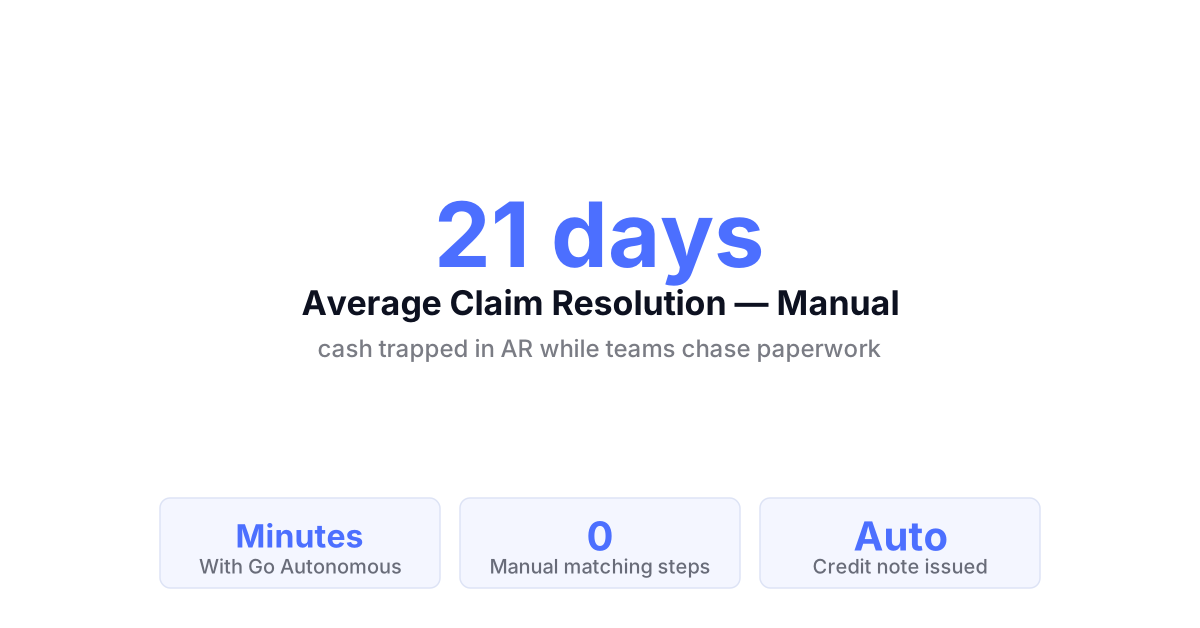
At 30-day average resolution time and 150 claims per month at 2,000 euros average claim value, your business has 300,000 euros in disputed invoices outstanding at any moment. That cash is earned — goods have shipped — but it is not collectable until the dispute resolves.
Ticketing Systems Route Claims. Not Resolve Them.
Ticketing Systems Route Claims. Not Resolve Them.
Why Claims Queues Have Not Shrunk Despite Tools
The ticket is created. The manual work remains.
Ticketing tools ensure claims reach the right queue faster. They do not resolve them. The CSR still opens ERP, locates the original order, validates the discrepancy, and raises the credit note. Routing improved. The manual work is unchanged.
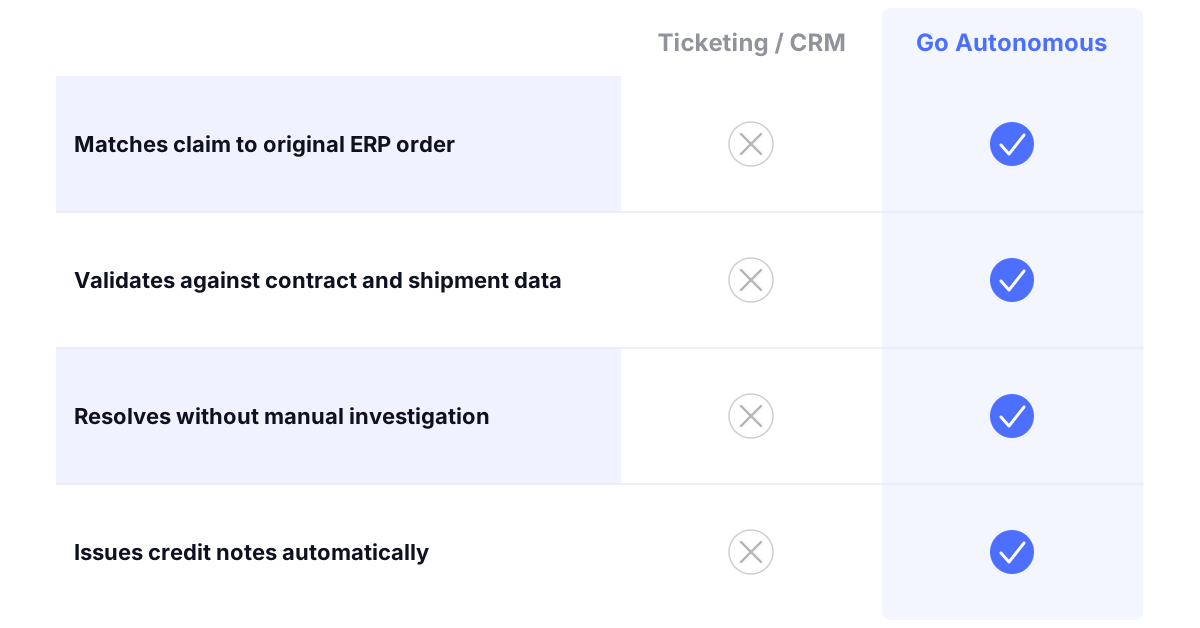
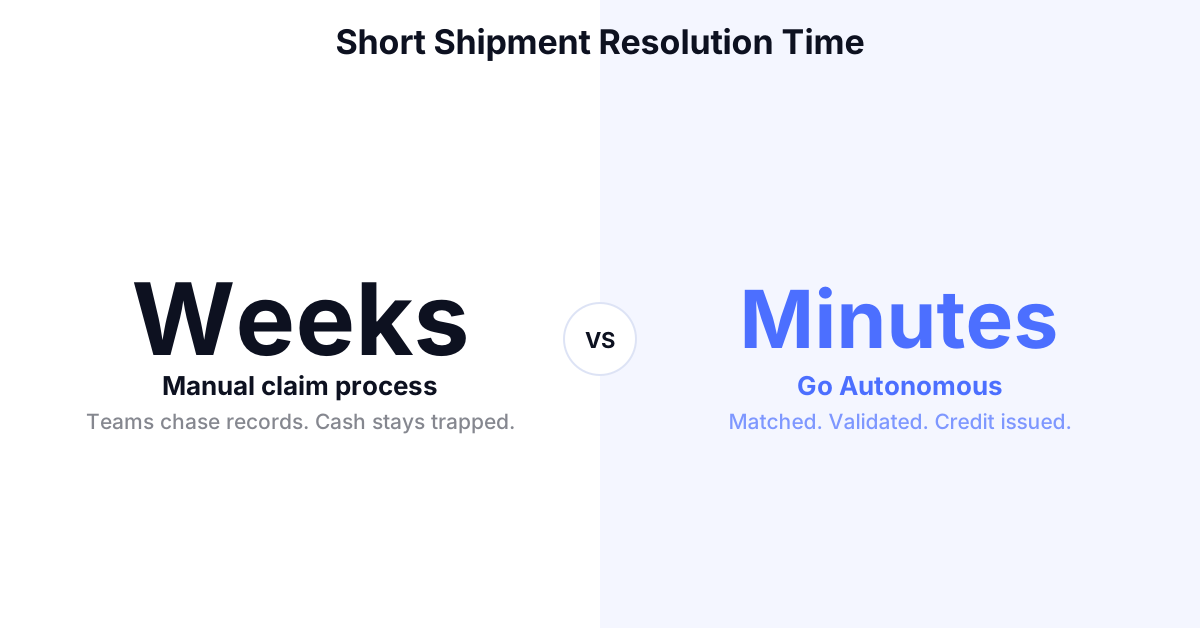
The credit note is not the cost. The 14 days to issue it is.
Unresolved claims create three compounding problems: the buyer withholds payment, the relationship erodes, and your team spends hours on a transaction that should take minutes. Autonomous claims resolution closes standard disputes the same day they arrive — intake through credit note, no manual queue.

The credit note is not the cost. The 14 days to issue it is.
Unresolved claims create three compounding problems: the buyer withholds payment, the relationship erodes, and your team spends hours on a transaction that should take minutes. Autonomous claims resolution closes standard disputes the same day they arrive — intake through credit note, no manual queue.
Claim Received, Matched, Validated, Resolved.
Claim Received, Matched, Validated, Resolved.
Same day. Without a manual queue in between.
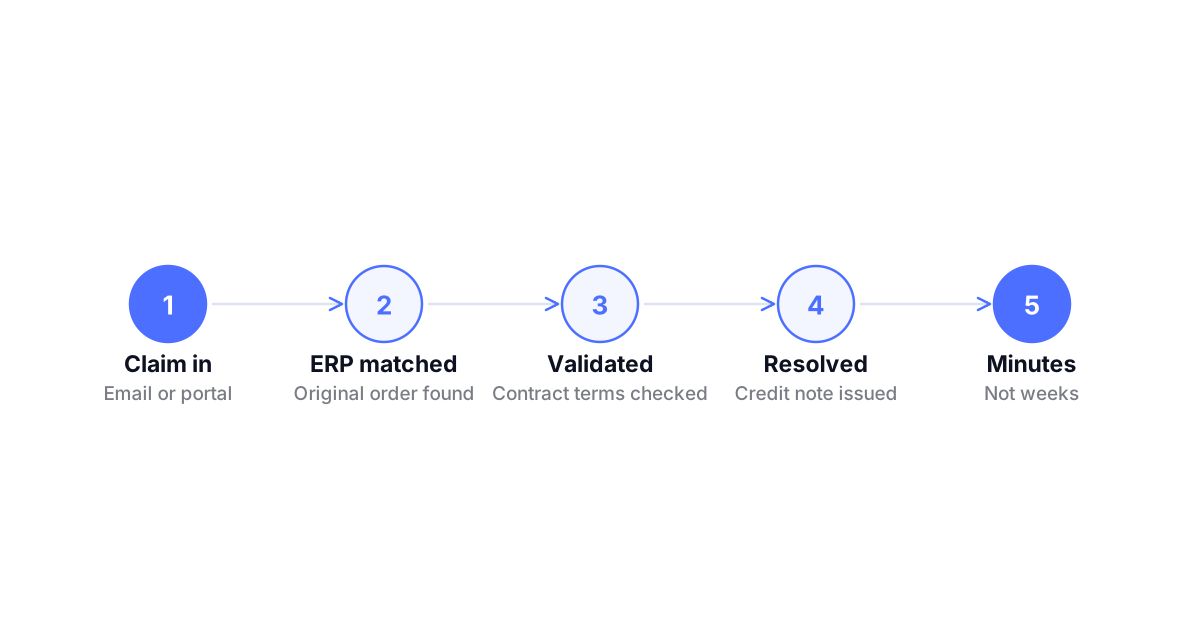
Go Autonomous receives the claim, matches it to the original order in your ERP, validates the discrepancy, determines the resolution, and issues the credit note — all on the day the claim arrives. No queue. No manual investigation.
Disputed Invoices Re-Enter the Payment Cycle.
Disputed Invoices Re-Enter the Payment Cycle.
Resolved today. Paid this month. DSO shortens.
Disputed invoices sit outside your payment terms for as long as the dispute remains open. When resolution drops from 30 days to same-day, those invoices re-enter normal collection activity immediately. Cash you have already earned starts flowing again.
What Changes When Claims Resolve the Same Day.
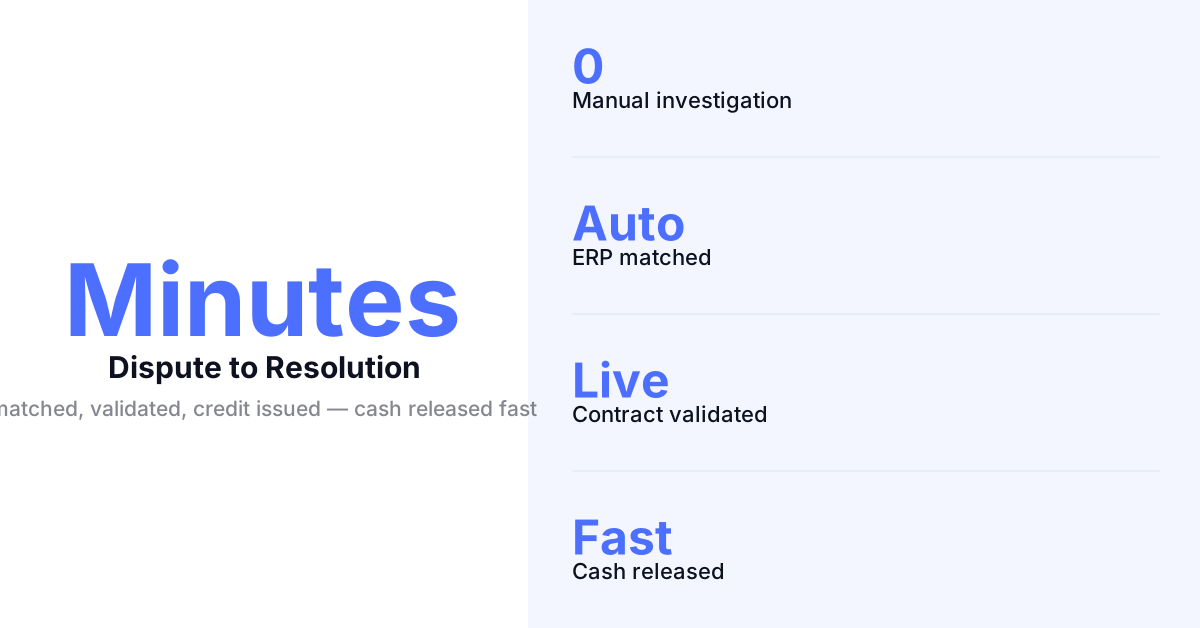
Resolution time from weeks to hours.
Standard claims — short shipments, pricing disputes, standard returns — resolved the day they arrive.
Working capital released from disputed AR.
Invoices that resolve quickly re-enter the payment cycle. The 300K-plus sitting in disputed AR starts flowing.
Error rate on credit notes falls.
Autonomous execution from validated ERP data eliminates the transcription errors manual credit note creation introduces.
Customer satisfaction at renewal.
Customers who receive claim resolutions the same day do not escalate. They do not reconsider the supplier relationship.
Claims Resolution. By the Numbers.
Claims Resolution. By the Numbers.
Accuracy on credit notes
Capacity freed in claims
Claim intake to ERP match
Faster claims resolution
Short Shipments Resolved. Credit Note Issued.
Short Shipments Resolved. Credit Note Issued.
Quantity claim. Validated. Credit note in ERP.
For short shipment claims, Go Autonomous matches the claimed quantity against the pick note and invoice, validates the discrepancy, issues the credit note in your ERP, and notifies the customer automatically. No CSR investigation required.
Pricing Disputes Resolved From Contract Data.
Pricing Disputes Resolved From Contract Data.
Invoiced price. Contract price. Difference credited.
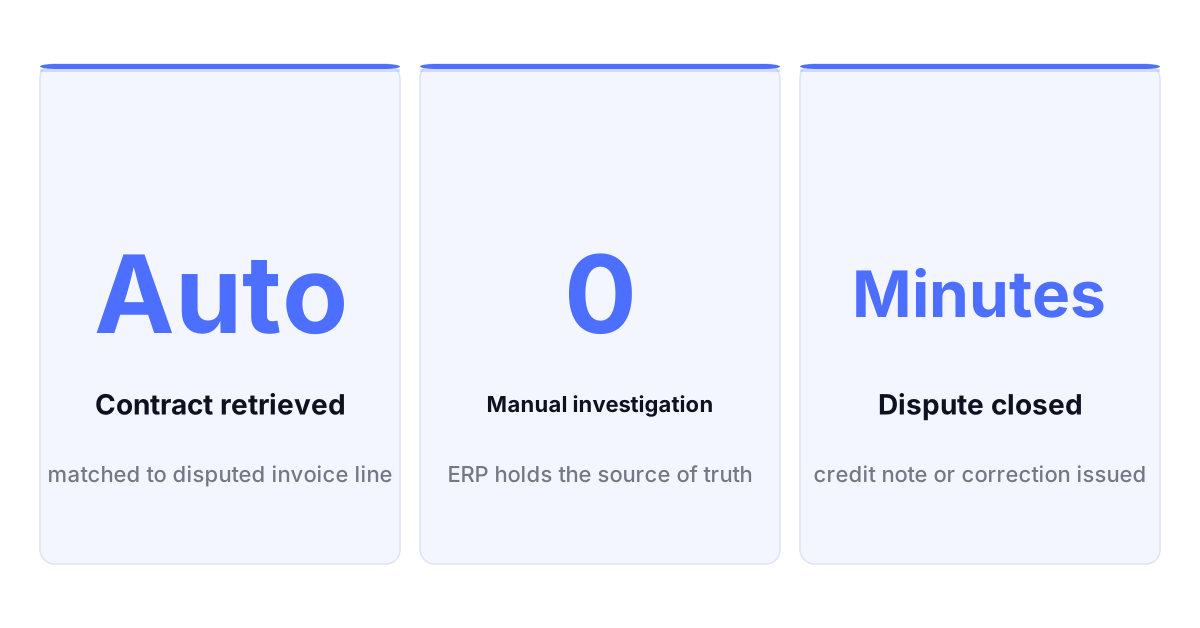
When a customer disputes an invoiced price, Go Autonomous retrieves their active contract pricing, compares it to the invoice, and credits the validated difference. The credit arrives the same day they submitted the claim.
Claims Closed the Day They Arrive.
Danfoss — Commercial operations executed across 26 countries including post-transaction resolution, in a single deployment day. Read the press release
Mediq — 91% of commercial transactions processed autonomously, including post-order claims and resolution workflows. See the success case
Nilfisk — Working capital position and commercial operations scaled after deploying autonomous commerce across their operations. Read the press release
Common Questions
What types of B2B claims can be resolved autonomously?
The claim types that lend themselves most directly to autonomous resolution are those where the resolution can be determined by comparing structured data: short shipment claims, pricing disputes where the invoiced price differs from the contract price, delivery date discrepancies, and standard return and RMA requests with clear business rules. Deduction claims — where a customer has deducted an amount from a remittance — can also be matched and validated autonomously. More complex disputes involving contractual interpretation or quality issues requiring physical inspection are surfaced to the appropriate team member with all relevant context already assembled.
How does autonomous claims resolution affect DSO?
Disputed invoices sit outside normal payment terms for as long as the dispute remains open. When resolution time drops from an average of 30 days to same-day or next-day, those invoices re-enter the normal payment cycle immediately. For a business with 150 claims per month at an average claim value of 2,000 euros, resolving disputes 25 days faster releases approximately 300,000 euros from the disputed AR bucket and returns it to normal collection activity.
How are resolutions and communications sent to customers?
Once a claim is validated and a resolution is determined, Go Autonomous generates the customer-facing communication and sends it via the appropriate channel — email, portal, or EDI. The communication includes the claim reference, the resolution detail, and the credit note number where applicable. Customers receive a complete, professionally formatted response — not a holding message.
How does Go Autonomous issue credit notes in ERP?
Go Autonomous integrates directly with your ERP — SAP, Oracle, Microsoft Dynamics, or the relevant system in your environment. When a credit note is to be issued, Go Autonomous creates the credit note document in ERP directly, using the validated claim data and the original order references. No separate manual step is required. The credit note appears in your AR and is linked to the original invoice, enabling reconciliation in the normal course.
What happens to claims that cannot be resolved autonomously?
Claims that fall outside configured resolution rules — because the claim amount does not match any validated discrepancy, because the claim involves a product quality issue requiring physical assessment, or because the claim references a contract dispute requiring human judgement — are surfaced as exceptions. They appear in a prioritised exception queue with all relevant context assembled: the original claim, the matched order record, the validation result, and a recommended action where one can be inferred.
How quickly can Go Autonomous be deployed for claims processing?
For standard claim types — short shipments, pricing disputes, returns — integration and rule configuration typically takes weeks, not months. Go Autonomous connects to existing systems rather than replacing them, which means there is no ERP migration or data model change required. Day one of operation, standard claims begin resolving autonomously.
How does claims automation connect to O2C performance?
Claims that arrive today are frequently the consequence of errors that occurred earlier in the order cycle — a short shipment traces back to a fulfilment exception, a pricing dispute to a contract price not correctly applied at order entry. Autonomous order execution reduces the upstream error rate that generates claims. When claims do occur, autonomous resolution closes them faster and prevents disputed invoices from extending DSO beyond credit terms.
What is the ROI for autonomous claims resolution?
ROI in claims automation comes from three sources: direct labour reduction in claims processing, working capital released from faster dispute resolution, and customer retention protected by same-day resolution. For a business generating 150 claims per month at 60 minutes average manual processing time, the direct labour saving alone exceeds 40,000 euros per year. The working capital released from disputed AR — at 30-day average resolution time — is typically a multiple of the direct labour savings.
Voice of the Customers



Explore what autonomous execution means for your operations.
Talk to an expert or see Go Autonomous in action.

Explore what autonomous execution means for your operations.
Talk to an expert or see Go Autonomous in action.