
.svg)





Sales Order Automation
Receipt to ERP. No human in the loop.








The Daily Cost of Manual Order Processing.
The Daily Cost of Manual Order Processing.
Manual Order Entry: What the Numbers Say
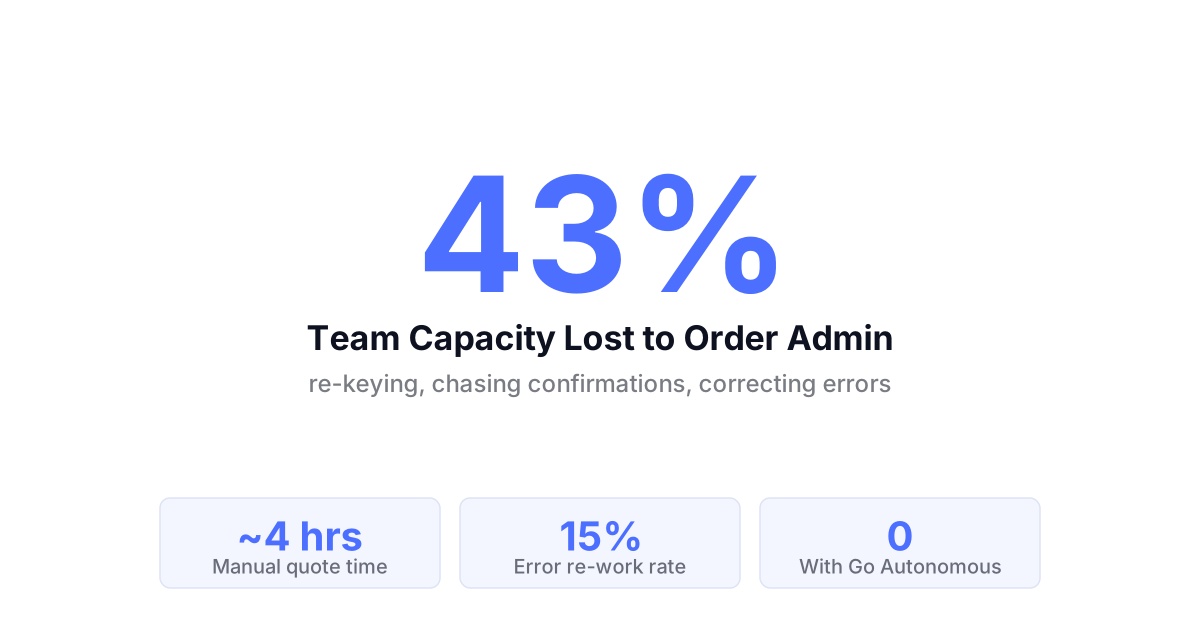
33 person-hours daily. Same data entered twice.
At 200 orders per day, 10 minutes each, that is 33 person-hours consumed re-entering data customers already typed. At 50,000 euros fully loaded, two permanent FTEs doing work that produces zero commercial output — every year, without change.
ERP, RPA, and Portals Did Not Fix This.
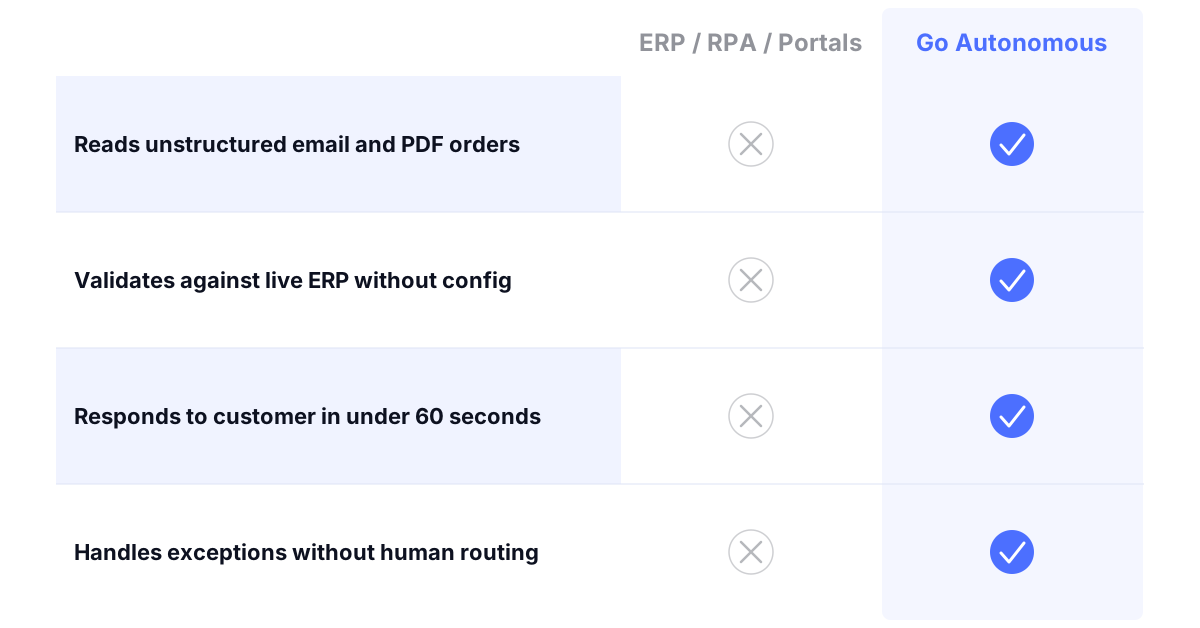
ERP, RPA, and Portals Did Not Fix This.
Why Every Previous Attempt Fell Short
RPA broke. Portals went unused. The inbox grew.
ERP records confirmed transactions — it was never built to read an unstructured email. RPA required fixed formats and failed when customers sent anything else. Portals got low adoption. The inbox kept filling and manual processing continued.
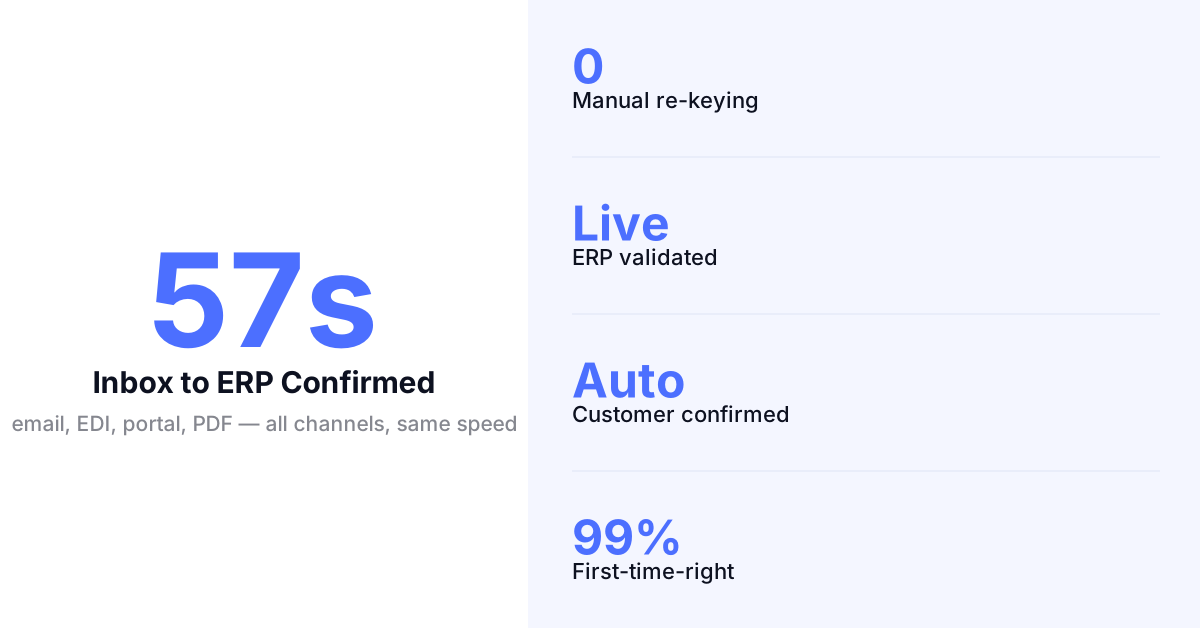
Your ERP can confirm this order in 57 seconds. The queue is four hours.
SAP, Dynamics, Oracle — your ERP is not the bottleneck. The order sits in an inbox, waiting for a human to validate and key it in. Go Autonomous removes the queue entirely: intake through ERP confirmation, with no human step between them.

Your ERP can confirm this order in 57 seconds. The queue is four hours.
SAP, Dynamics, Oracle — your ERP is not the bottleneck. The order sits in an inbox, waiting for a human to validate and key it in. Go Autonomous removes the queue entirely: intake through ERP confirmation, with no human step between them.
From Inbox to ERP. No Human Required.
From Inbox to ERP. No Human Required.
Any format. Real-time validation. 57-second confirmation.
Go Autonomous reads every incoming order — email, PDF, EDI, portal — interprets intent, validates pricing, stock, and customer terms against your live ERP, and writes confirmed orders back automatically. Your team only touches the exceptions.
Exceptions Surface Preloaded and Ready.
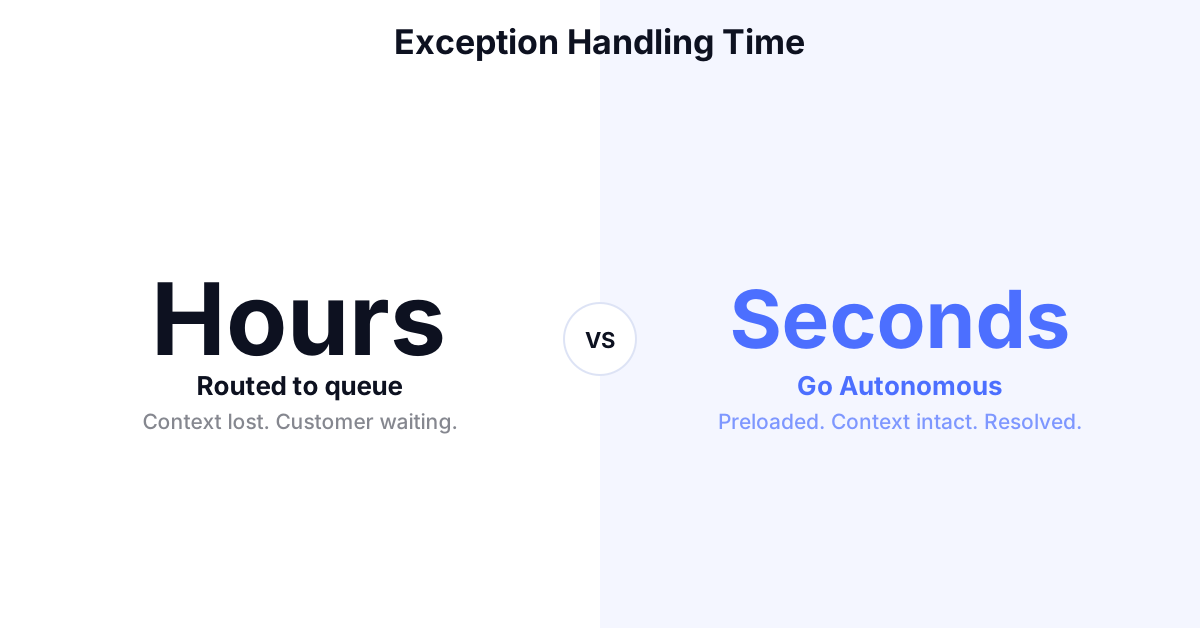
Exceptions Surface Preloaded and Ready.
5-15% of orders need judgment. They take seconds.
Orders outside autonomous rules arrive with the original request, the validation result, the specific issue flagged, and a recommended resolution already assembled. No cold-start investigation. Judgment applied in seconds, not after an hour of manual digging.
What Changes on Day One.
70-90% of orders autonomous from month one.
Standard repeat and catalogue orders process without your team from the day the platform goes live.
Confirmation time: hours become under two minutes.
Customers who waited hours receive confirmations within minutes. That reliability compounds in renewal conversations.
Order errors down 40-60% within the first quarter.
Validation at intake eliminates the entry errors that cause fulfilment failures, credit notes, and customer escalations.
Working capital improves structurally.
Every day removed from the order-to-invoice cycle releases capital previously trapped in the pipeline.
Sales Order Execution. By the Numbers.
Sales Order Execution. By the Numbers.
Order intake to ERP match
Right on all sales orders
Capacity freed from entry
Higher throughput per rep
Multi-Format Orders. One Execution Layer.
Multi-Format Orders. One Execution Layer.
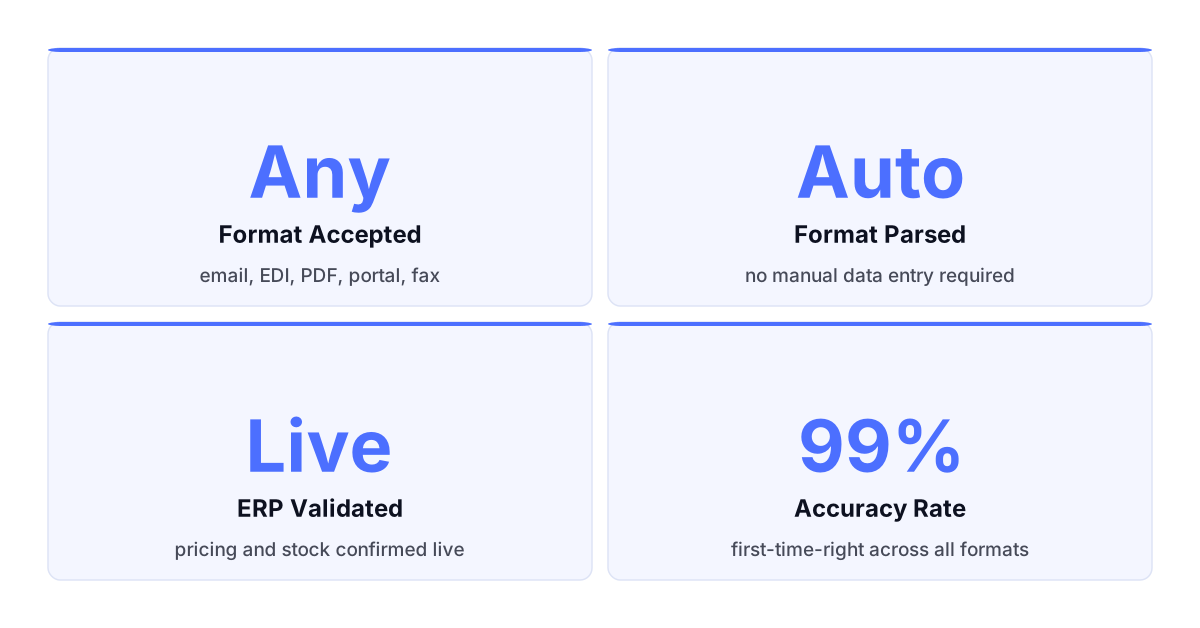
Email, PDF, EDI, portal — all processed identically.
Go Autonomous handles every format customers use — not just structured EDI. Orders written in German, Dutch, or English. Multi-line PDFs with customer part codes. All validated against your ERP and confirmed at the same speed, regardless of format.
26 Countries. One Deployment Day.
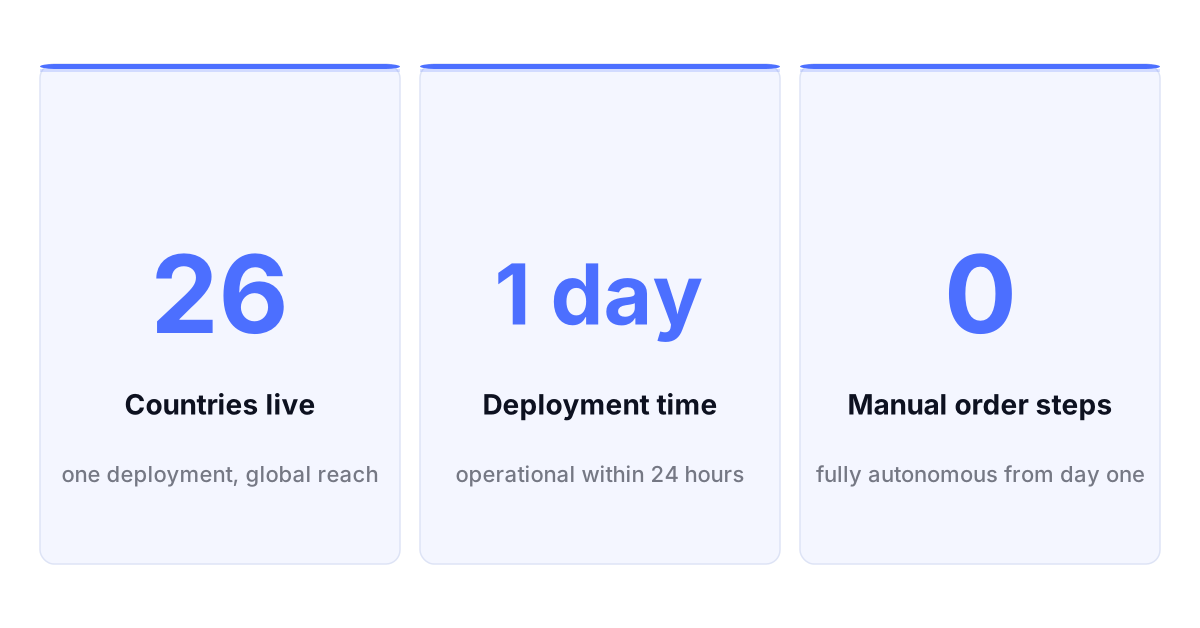
26 Countries. One Deployment Day.
Danfoss. Under one minute per order. 26 markets.
Danfoss deployed autonomous order execution across 26 countries simultaneously — each with local pricing, language, and customer-specific terms — in a single deployment day. Orders confirmed in under one minute from receipt, at every volume.
Orders Confirmed. Team Unblocked.
Danfoss — Orders confirmed in under one minute, across 26 countries, in a single deployment day. Read the press release
Mediq — Thousands of orders processed autonomously per week, including complex order types, with zero added headcount. See the success case
Nilfisk — Scaled order volume across multiple markets without growing the customer service team. Read the press release
Common Questions
What is sales order automation?
Sales order automation is the use of software to process incoming purchase orders without manual human intervention — from order receipt through validation, ERP entry, and order confirmation. Autonomous order processing replaces the manual execution layer entirely: the AI reads the order, validates it against pricing, stock, and customer terms in your ERP, and confirms it back to the customer without anyone on your team touching it.
What order formats does Go Autonomous handle?
Go Autonomous handles the full range of B2B purchase order formats: email-submitted orders in plain text and PDF attachments, EDI transactions, customer portal submissions, and orders via messaging channels. The platform handles standard catalogue orders, multi-line orders, orders with customer-specific product codes, and repeat orders across any customer account. Complex or exception orders are surfaced for supervised resolution.
How long does deployment take?
Most manufacturers and distributors go live with autonomous order processing within 6 to 12 weeks of contract signature. Deployment does not require ERP migration — Go Autonomous integrates with your existing ERP including SAP, Oracle, Infor, IFS, and Microsoft Dynamics and reads from your existing customer master, pricing agreements, and product catalogue.
What happens to orders the AI cannot process?
Orders outside autonomous processing rules are surfaced in the supervised execution interface with the original order, the validation result, the specific issue requiring judgment, and a recommended resolution. The exception rate is typically 5 to 15 percent of total volume and decreases as the platform learns your transaction patterns.
How is Go Autonomous different from RPA for order processing?
RPA tools require consistent input formats and fail when customers send orders in unexpected formats. Go Autonomous uses AI trained on B2B transaction data to interpret intent from unstructured inputs: emails in natural language, non-standard PDFs, customer-generated spreadsheets. It also goes beyond extraction — it validates against live ERP data and executes the transaction end-to-end without a human in the loop.
Does Go Autonomous work with SAP?
Yes. Go Autonomous integrates with SAP as the ERP system of record. The platform reads pricing master data, customer-specific agreements, material master, and stock from SAP and writes confirmed orders back as clean records. SAP integration is live across multiple enterprise manufacturing and distribution customers including Danfoss.
How does autonomous order processing affect working capital?
Every day removed from the order-to-invoice cycle releases working capital previously trapped in the processing gap. Divide your annual revenue by 365 — that is the working capital your business funds for each extra day in the cycle. Autonomous processing eliminates the queue delay between order arrival and ERP entry, compressing the cycle structurally from day one of deployment.
Can it handle blanket orders and call-offs?
Yes. Go Autonomous reads incoming call-off releases and validates them against blanket agreement terms in your ERP. Releases within agreed tolerances confirm automatically. Quantity deviations or date conflicts outside agreed tolerances are escalated to your team with the original request and the specific deviation highlighted.
Voice of the Customers



Explore what autonomous execution means for your operations.
Talk to an expert or see Go Autonomous in action.

Explore what autonomous execution means for your operations.
Talk to an expert or see Go Autonomous in action.