
.svg)





What Autonomous Commerce Means for Modern Manufacturers and B2B Distributors
Most B2B manufacturers and distributors have spent years modernizing their commercial operations. Systems were upgraded, workflows were refined, and channels were digitized. Yet despite all of this investment, revenue still moves slower than it should. Quotes stop when someone needs to interpret an email. EDI orders wait for manual validation. Portal submissions sit in review queues. Pricing needs to be checked across several systems. Small errors turn into downstream disputes that delay cash.
Operations teams work incredibly hard to keep everything moving, but effort alone cannot scale with growing demand. For CFOs, the impact shows up quickly in the cash conversion cycle, margin inconsistencies, and a rising cost-to-serve.
Digital transformation made the work digital. It did not make the execution autonomous. That shift is now beginning.
The Real Reasons B2B Orders Slow Down Inside Commercial Operations
Even in organizations that consider themselves advanced in digitalization, most revenue still enters the business through channels that slow everything down. Email threads, spreadsheets, PDF attachments, procurement portals, and EDI messages often arrive with missing details or inconsistent formats. This creates unstructured demand that must be interpreted and corrected before anything can move forward.
These daily frictions accumulate quickly. Teams become the glue between systems, manually validating data, cleaning up errors, and chasing information across channels. Throughput depends on how many people are available, and cycle times shift based on workload rather than business needs. When volumes increase, SLAs become difficult to maintain and backlogs form faster than they can be cleared.
The financial impact follows. Orders cannot move until someone reviews them, which slows down the entire order-to-cash process. Working capital remains delayed. Margins fluctuate when decisions vary between individuals, or when corrections are missed during periods of high activity. Labor costs rise because each new customer, market, or channel adds more manual work.
Customers feel this too. Response times stretch. Confirmations take longer. Small errors turn into disputes. Reliability becomes inconsistent, especially during peak periods. Even strong teams struggle to maintain the level of accuracy and speed customers expect.
The issue is not the people doing the work. It is the dependence on people for tasks that should move through the system with clarity, consistency, and speed. Autonomous execution is designed to close this gap and eliminate the frictions that keep revenue from flowing.
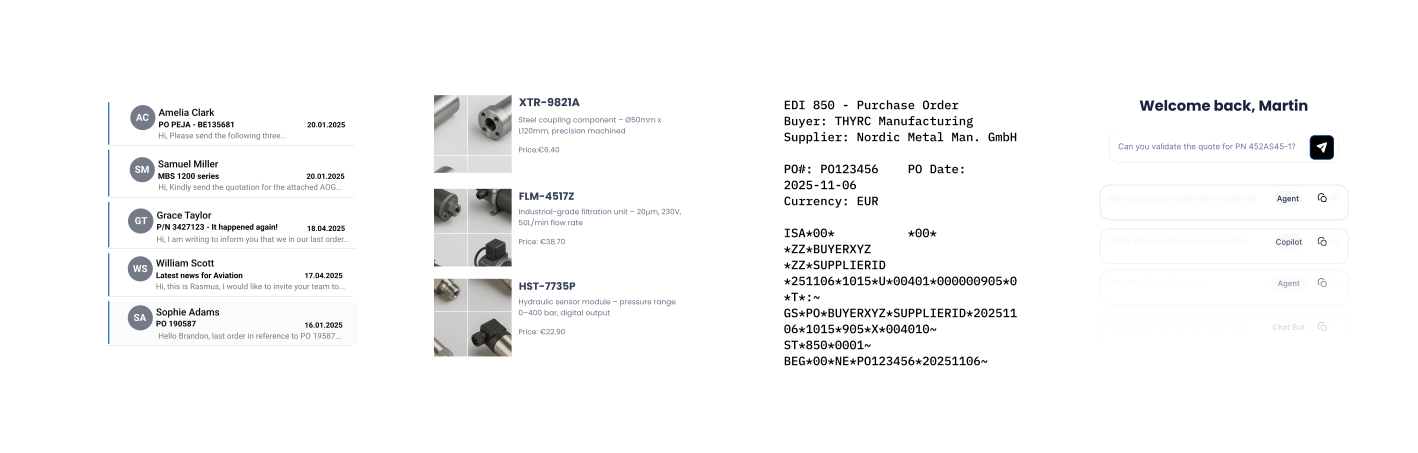
Why EDI, AI Agents, RPA, and Automation Cannot Fix B2B Commerce’s Real Problem
Most manufacturers and distributors have already invested heavily in automation, workflow tools, and now AI-driven agents. These solutions can help in isolated areas, but they do not change the core problem. They improve individual steps, yet the end-to-end execution still relies on human interpretation.
Automation Speeds Up Tasks, Not the Flow of Revenue
Automation can move data between systems or trigger predefined actions, but it cannot interpret incomplete customer requests or resolve the inconsistent formats that arrive daily. When information varies from the expected pattern, the process stops and waits for manual review. This keeps cycle times unpredictable and throughput tied to staffing levels instead of actual demand.
AI Agents Imitate Human Actions Without Understanding the Business Context
AI agents can read documents or generate responses. They can assist with individual parts of the process, but they still require orchestration, oversight, and exception handling. Most importantly, they do not unify the commercial logic that governs products, pricing, agreements, and operational rules. When decisions depend on tacit knowledge or complex context, human intervention becomes necessary again.
The Result Is More Tools, More Touchpoints, and More Operational Noise
As automation expands, teams often find themselves managing workflows, monitoring exception queues, and maintaining connection points between systems. Instead of reducing friction, this creates additional layers that demand attention. SLAs remain fragile during busy periods, and financial outcomes remain inconsistent when decision quality varies across teams and regions.
Automation and AI agents improve parts of the process. They do not transform the entire flow. To unlock true speed, reliability, and financial stability, the operating model must move beyond task automation toward autonomous execution that can understand intent and act across systems in a consistent way.
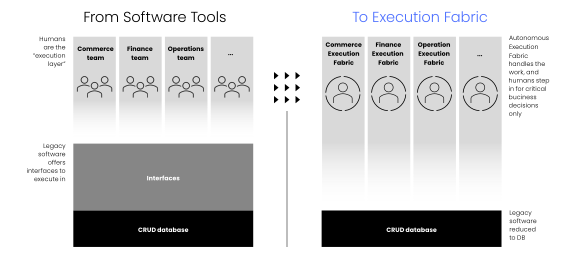
Why Speed and Revenue Velocity Now Matter More Than Ever in B2B Commerce
Across manufacturing and distribution, expectations for operational performance have shifted. Customers want faster responses. Sales depend on instant clarity to secure deals. Supply chains run on accurate, timely information. Finance needs predictable cycles, not surprises. In this environment, speed is no longer efficient. It has become a core competitive driver.
When commercial processes slow down, the impact moves across the business. Delays create uncertainty, complicate planning, and limit the company’s ability to scale without increasing cost. The faster an organization can interpret customer intent and transform it into execution, the stronger its performance becomes.
Faster Execution Strengthens Operational and Financial Outcomes
Speed links operations and finance in a way that is central to decision-making. When processes run quickly and consistently, operations can maintain stability even when demand fluctuates. The same stability reduces downstream rework, supports margin protection, and shortens the order-to-cash cycle. Faster execution helps free working capital and reduces the financial risk from late decisions or errors.
What Customers and Partners Expect Today
External expectations have moved faster than internal processes. The people you serve now expect:
- Accurate confirmations within minutes
- Timely updates on product availability or delivery
- Clear pricing without back-and-forth
- Reliable commitments that do not change midway
When these expectations are not met, customers lose confidence. A slow response becomes a missed opportunity. A delayed confirmation can weaken relationships with distributors, suppliers, or channel partners. Reliability has become as important as the product itself.
Why Scaling Through People Alone No Longer Works
As product portfolios grow and order flows increase, many organizations try to protect performance by adding more staff. This may help in the short term, but it does not solve the underlying problem. Manual processes remain slow and unpredictable. Tribal knowledge remains concentrated in a few experts. Cost grows in direct proportion to volume.
To stay competitive, manufacturers and distributors need an operating model where speed and consistency come from the system rather than human capacity. Traditional digital transformation cannot deliver this shift alone. A new approach to execution is required.
How Autonomous Commerce Solves the Core Execution Challenges in B2B
Manufacturers and distributors have reached the limits of traditional digital transformation. Most systems can collect data, route information, or automate simple tasks, but they cannot understand customer intent or execute commercial work from start to finish. This gap is why cycle times remain slow, exceptions keep growing, and teams stay overloaded even in well-designed processes.
Autonomous Commerce introduces a different approach. It is a model where the system interprets incoming demand, understands what the customer is trying to achieve, and completes the work without requiring people to manage each step. Instead of relying on teams to read emails, review EDI messages, check product details, or validate pricing, the execution layer becomes intelligent and independent.
This shift creates a consistent and predictable flow across every commercial channel. Email requests, portal orders, EDI transactions, and document-based submissions are all processed through one unified layer that applies the same logic, rules, and context every time. The result is a faster, more accurate, and more reliable commercial process that does not depend on how many people are available on a given day.
For manufacturers and distributors, this means operations can finally scale without adding more complexity or cost. Cycle times shorten because decisions do not wait in queues. Customer experience improves because responses arrive quickly and accurately. Financial outcomes stabilize because every decision follows the same policy and pricing structure. This is why Autonomous Commerce is becoming the next operating model for B2B enterprises that want to increase revenue velocity and improve operational performance at the same time.
Top 5 Reasons Why B2B Enterprises Are Adopting Autonomous Commerce
Manufacturers and distributors are adopting Autonomous Commerce because their current operating models cannot keep pace with rising customer expectations, growing product complexity, and the pressure to move revenue faster while keeping cost under control. Leaders want an operating model that improves speed, accuracy, and financial outcomes at the same time.
- Unify all B2B commerce channels: Email, EDI, portals, and documents flow into one autonomous execution layer that removes fragmentation and improves response times.
- Move revenue faster with autonomous execution: Customer intent turns into end to end execution without manual intervention, which accelerates quote turnaround and order processing.
- Protect margins through consistent commercial decisions: Pricing, product logic, and policies are applied reliably across every transaction, reducing leakage and improving financial predictability.
- Scale operations without adding headcount: System driven execution increases capacity and stabilizes SLAs, even when demand grows or complexity increases.
- Reduce cost to serve and improve customer experience: Fewer errors, fewer handoffs, and faster confirmations create a smoother experience for customers while lowering operational costs.
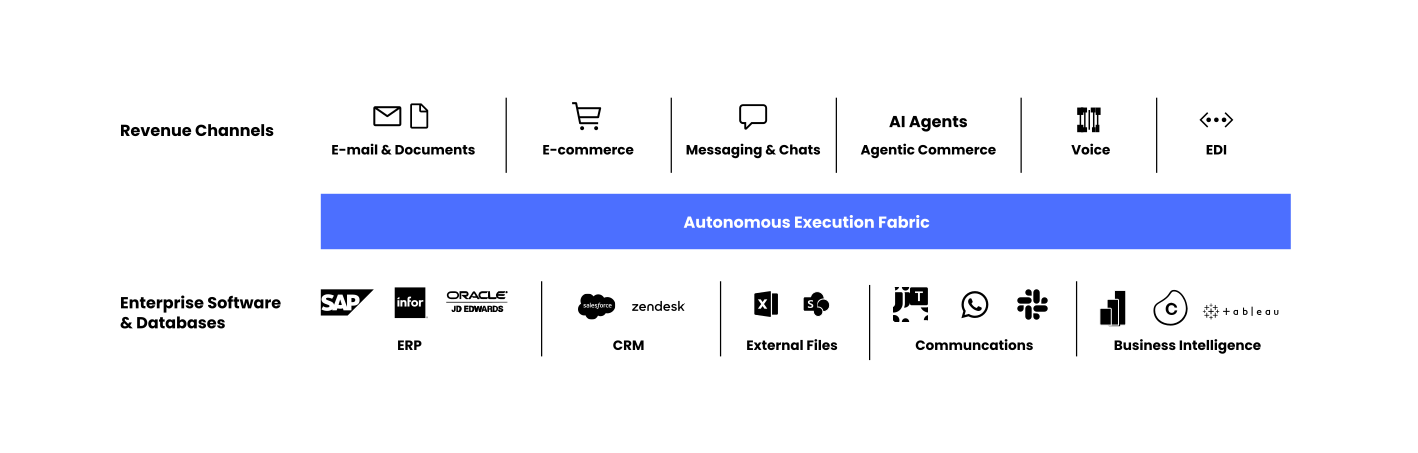
How Autonomous Execution Fabric Unifies All B2B Commerce Channels
The Autonomous Execution Fabric is the system layer that turns incoming demand into execution without manual intervention. It works by connecting every commercial channel to one unified flow that understands intent, validates information, and completes the work from start to finish. Instead of separate processes for email, EDI, portals, and documents, all requests enter the same intelligence layer that applies the same rules, logic, and context.
The Fabric interprets what the customer is asking for, checks the details against data in ERP and CRM, resolves common gaps, and carries out the required actions. This creates a single way of working that remains stable even when volumes increase, formats vary, or products become more complex. It removes the handoffs and repetitive steps that slow down cycle times and create cost in traditional operations.
For manufacturers and distributors, this means faster order processing, fewer exceptions, and more predictable outcomes. Execution becomes consistent across every region, channel, and customer type. The Fabric allows the business to grow without adding layers of manual effort, while improving both operational performance and financial stability.
How Autonomous Execution Improves Efficiency, Margin, and Revenue Velocity in B2B
Autonomous execution has a clear and measurable impact on how manufacturers and distributors run their commercial operations. When work moves through one autonomous flow instead of multiple manual steps, the improvements show up quickly across the business.
Efficiency rises because teams no longer spend time correcting errors, validating data, or clearing backlogs. Margin becomes more stable because decisions follow the same logic every time. Revenue moves faster because quotes, confirmations, and updates do not wait in queues. Customers notice the improved speed and accuracy, which reinforces trust and increases the likelihood of repeat business.
Operational teams gain more capacity without adding headcount. Finance benefits from fewer disputes, shorter order to cash cycles, and more consistent outcomes. Leadership gains a clearer view of performance because execution becomes predictable, not dependent on who happens to be available on a given day.
This shift changes how the organization performs at every level. Autonomous execution creates a stronger, more resilient business that can grow without adding complexity or cost.
How to Evaluate If Your Organization Is Ready for Autonomous Commerce
Autonomous Commerce is becoming a realistic next step for manufacturers and distributors that want to move revenue faster, reduce operational friction, and improve financial stability without changing their entire system landscape. It creates a more reliable way to manage commercial work by turning intent into execution with speed and accuracy. If you want to understand how this operating model could fit into your own environment and where it can create the most value, you can request an executive briefing. It is an opportunity to explore the impact, feasibility, and practical starting points for adopting an autonomous execution layer in your operations.