
.svg)





Oracle Integration: End-to-End Autonomous Execution
Process every quote request and purchase order from every channel and write the confirmed record to Oracle automatically. No Oracle reconfiguration. No middleware. No manual entry.

Oracle Manages Your Orders. It Does Not Execute Them.
Oracle Cloud OMS and ERP Cloud are powerful systems of record. Order execution from unstructured channels is not what they were built to do.
Every quote request and purchase order arriving by email, EDI exception, or phone still requires a human to read it, validate it, and enter it into Oracle. IFM solved this and went from 22% to 95%+ digital revenue in two months.
The Autonomous Execution Fabric is the execution layer Oracle is missing.
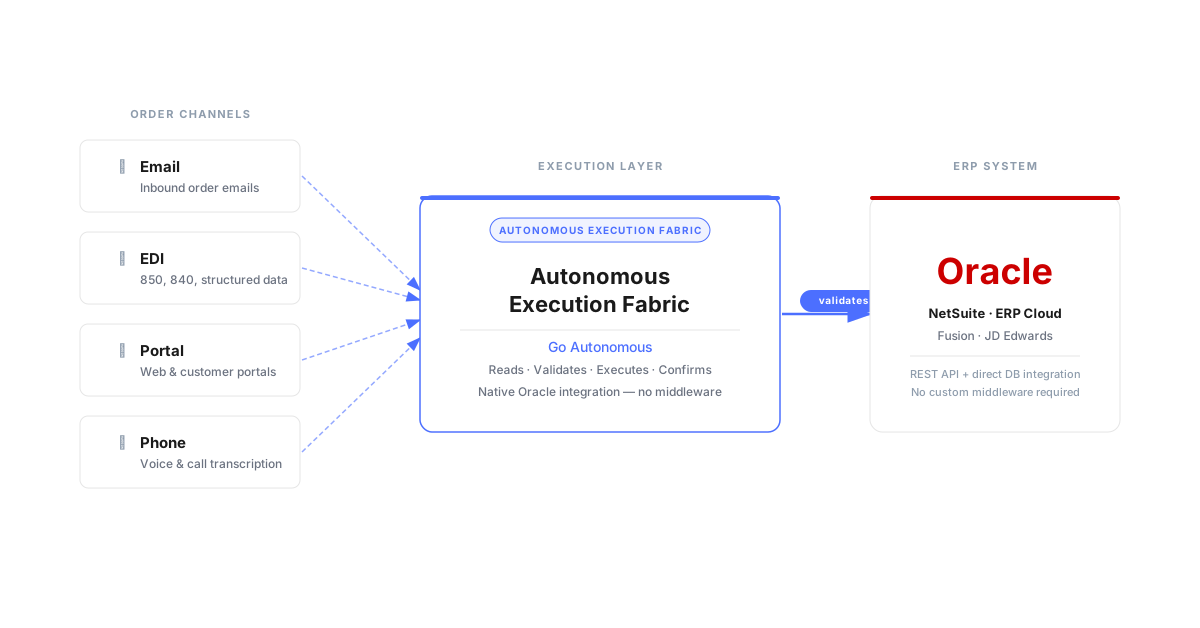
It connects to Oracle, reads every inbound channel, validates against your Oracle data, and creates confirmed order records automatically. See all integrations.
What Autonomous Execution Delivers on an Oracle Stack
What Autonomous Execution Delivers on an Oracle Stack
Digital revenue in 2 months (IFM)
Fewer order errors (Nilfisk)
Countries live in 1 day (Danfoss)
Orders fully autonomous (Velux)
Six Ways Autonomous Execution Strengthens Oracle OMS
Execute every RFQ and order the moment it arrives: any channel, any format
Quote requests and purchase orders processed in seconds. Oracle receives validated records automatically.
Validate every order against Oracle pricing and ATP before record creation
Every line item checked against Oracle master data. No duplicate records, no pricing errors.
Eliminate manual entry between inbound channels and Oracle OMS
No operator time spent rekeying email, PDF, or EDI exception data into Oracle fields.
Scale order volume on Oracle without new seats or additional headcount
Handle 10x order growth on the same Oracle infrastructure. Execution scales instantly.
Connect EDI, email, portal, phone, and API channels to Oracle uniformly
Every channel validated through one execution layer before it writes to Oracle OMS.
Maintain Oracle audit trail and compliance with zero process deviation
Every execution logged and traceable. Compatible with Oracle workflow approvals and controls.
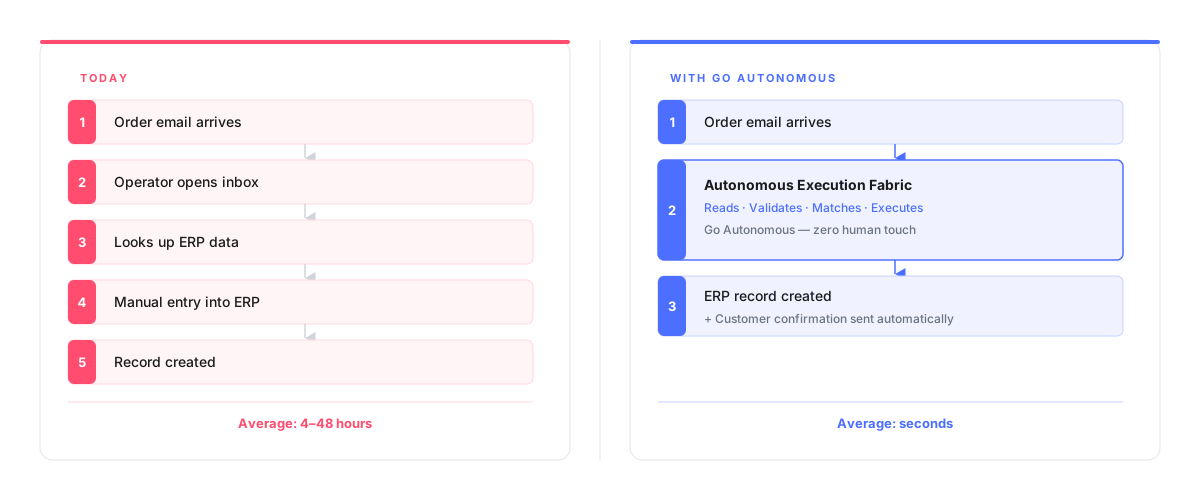
The Old Way: Manual Entry Into Oracle After Every Order
The Old Way: Manual Entry Into Oracle After Every Order
Email arrives. Operator opens it. Looks up Oracle pricing. Enters manually. Creates record.
Average: 4-48 hours per order batch. 3-5% error rate on manual entry. Every exception route handled differently. This is the reality for every order channel that is not EDI or portal.
The Autonomous Way: Every Channel Into Oracle in Seconds
The Autonomous Way: Every Channel Into Oracle in Seconds
Channel arrives. Execution Fabric reads it. Validates against Oracle. Record created. Confirmation sent.
Every quote request and order processed in under 10 seconds. Oracle receives a clean, validated record every time. See how email orders work.
Want to See What End-to-End Execution Looks Like?
Want to See What End-to-End Execution Looks Like?
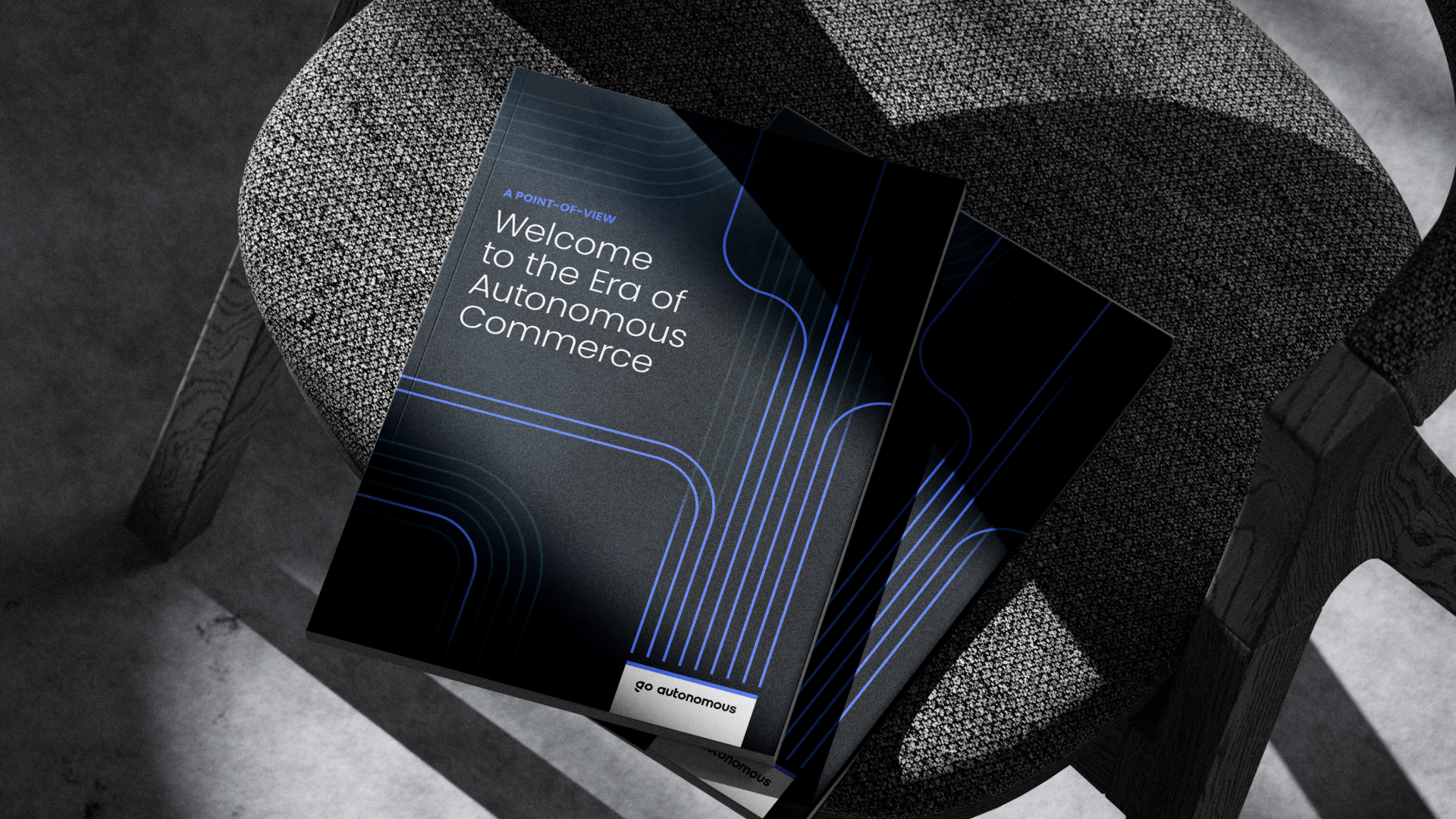
Download the white paper on autonomous quote and order execution.
The complete playbook for B2B manufacturers and distributors running Oracle. Quote intake, validation, ERP record creation, and customer confirmation: one continuous flow.

From Quote Request to Oracle Record: End-to-End Execution
From Quote Request to Oracle Record: End-to-End Execution
A live walkthrough of the full execution flow on Oracle.
A quote request arrives by email, is validated against Oracle OMS pricing and ATP, and the confirmed order record appears in Oracle in seconds. No demo data, no simulations.
No content available.
Frequently Asked Questions About Oracle Order Management
What does autonomous execution on Oracle actually mean?
Autonomous execution on Oracle means every inbound quote request and purchase order is read from its source channel, validated against Oracle OMS or ERP Cloud data, and written as a confirmed order record automatically, without manual entry.
Does Go Autonomous require Oracle Cloud reconfiguration?
No. The Execution Fabric connects to Oracle via standard REST APIs available in Oracle Cloud OMS and Oracle ERP Cloud. No modifications to your Oracle instance, no new modules, no changes to your pricing or fulfillment configuration.
Which Oracle products does Go Autonomous support?
Go Autonomous supports Oracle Cloud OMS, Oracle ERP Cloud (Fusion), and Oracle E-Business Suite using standard Oracle REST and SOAP interfaces.
How long does it take to deploy Go Autonomous on an Oracle stack?
Typical deployment is 2-4 weeks. IFM went from 22% to 95%+ digital revenue in two months on an Oracle stack.
What order and quote channels connect to Oracle through Go Autonomous?
Email (Outlook, Gmail, dedicated order inbox), EDI 850 and exceptions, customer self-service portals, phone orders, API integrations from distributor platforms, and file-based uploads. All channels feed through one validated execution layer before writing to Oracle.
How does Go Autonomous handle RFQs in Oracle Cloud?
When an RFQ arrives by email or EDI 840, the Execution Fabric extracts the request, matches it against Oracle pricing and ATP data, generates the quote response, and creates the Oracle quotation record automatically.
How is Go Autonomous different from Oracle Order Management?
Oracle Order Management handles fulfillment orchestration and record management. It does not process orders arriving outside of structured EDI or portal. Go Autonomous is the execution layer that reads every channel and writes validated records to Oracle.
What B2B Leaders Say About Autonomous Execution on Oracle





See the Autonomous Execution Fabric in Action
Connect every quote and order channel to your ERP. No reconfiguration. Live in days.
See the Autonomous Execution Fabric in Action
Connect every quote and order channel to your ERP. No reconfiguration. Live in days.